Mainstream Online Web Portal
LoginInvestors can view their accounts online via a secure web portal. After registering, you can access your account balances, periodical statements, tax statements, transaction histories and distribution statements / details.
Advisers will also have access to view their clients’ accounts online via the secure web portal.

Pendal: The sectors shaping the 2026 investment landscape
As 2025 wraps up, Pendal portfolio managers outline the trends set to shape 2026 – including AI, resources and a wave of corporate deals. Here’s what to watch as the new year dawns
- AI and resources dominate 2026 outlook
- Tight property pipeline prompts increased M&A
- Find out more about Pendal’s investment strategies
AI
AI CAPEX is an incredibly strong theme right now, according to Paul Wimborne, senior fund manager for Pendal’s Global Emerging Markets Opportunities Fund.
“The biggest thing we’ve seen in emerging markets this year – which will also be very important next year – is similar to what we’ve seen in other developed markets: the current strength of the AI capex trade,” says Wimborne.
“There’s a lot of money that has been spent on building out globally hyperscale data centres, and it’s taking up a lot of capacity from these chip manufacturers. They’re doing incredibly well.
“They run monopolistic or oligopolistic positions, and they’re generating huge amounts of free cash flow and returns.”
Pendal’s London-based EM team is invested in Taiwan Semiconductor, Korea’s SK Hynix and Samsung Electronics.
Some of the best-performing stocks in emerging markets have been the memory chip manufacturers, says Wimborne.
ASX small caps and midcaps
When it comes to small caps, the resources sector has done the heavy lifting, says Lewis Edgley, portfolio manager of Pendal’s Smaller Companies Fund.
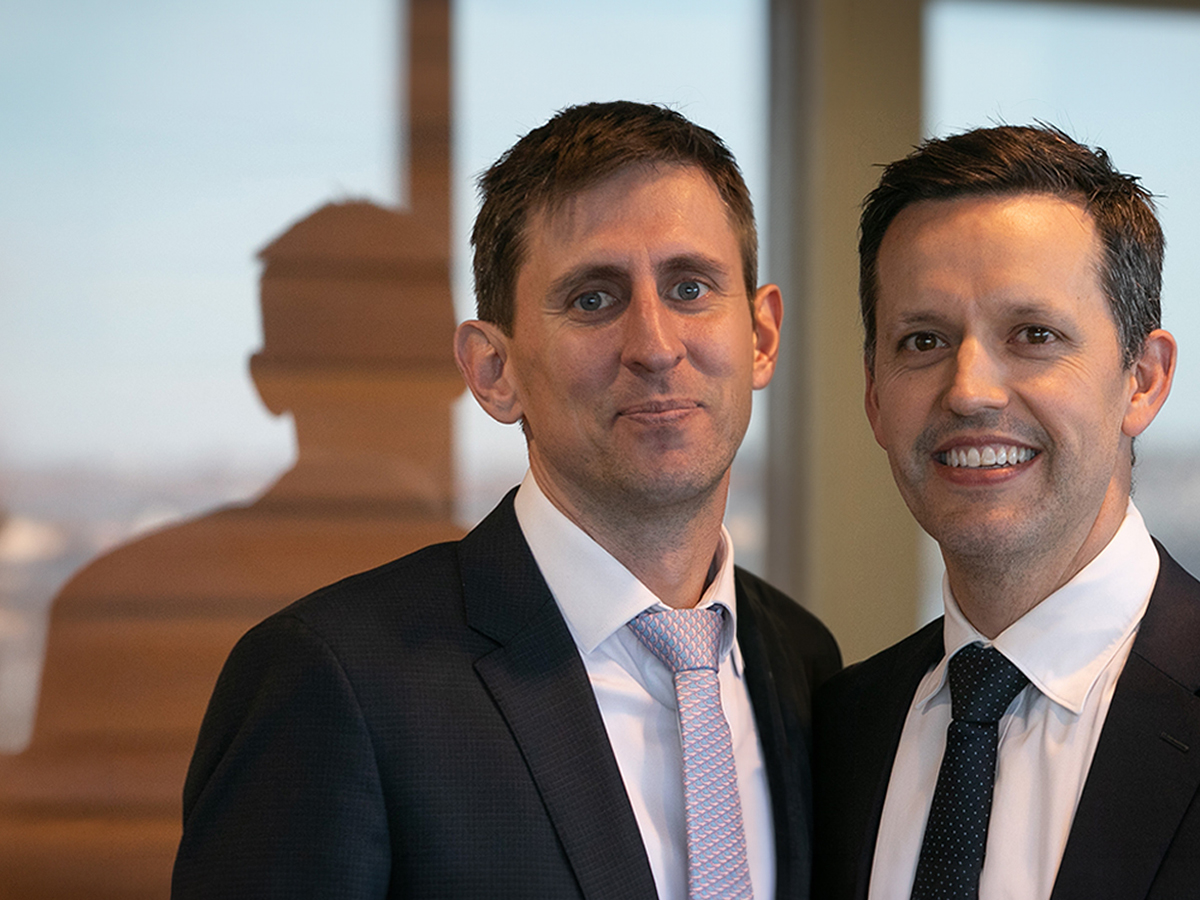
Find out about
Pendal Smaller Companies Fund
Patrick Teodorowski & Lewis Edgley,
Portfolio Managers
“The strength has really been in resources and very much driven by gold – that’s has been a very strong theme in the last 12 months,” says Edgley.
Despite a prolonged run in the gold price, he still sees opportunities in the space.
“At around nine times price-to-earnings (PE) you could argue they are continuing to look attractive.
“The small ordinaries average PE is north of 20 times, so they’re less than half the valuation of the average small ordinary stock,” says Edgley.
“But they should be cheap. These are highly cyclical businesses with key drivers that are not in the control of the management teams that run these businesses.
“So our opportunity is to make sure we understand the drivers, we understand what’s in control of the management teams, we understand the thematics that are creating value here, but we don’t get too far over our skis in how we’re positioned for that.”
While it’s good to have adequate exposure to a popular thematic like gold, Brenton Saunders, portfolio manager of Pendal’s MidCap Fund, cautions that avoiding the bad stocks is just as important as picking the right stocks.
“Almost half of the active attribution for the Pendal MidCap Fund in the past year has been not being in stocks that haven’t done well – so avoiding bad stocks as well as choosing really good stocks,” explains Saunders.
“That comes back to research and identifying the stocks that we shouldn’t be in as opposed to just identifying stocks that we should be in.
“I think as active fund managers we have a very strong responsibility for both of those areas when representing these portfolios for clients.”

Gold, lithium and rare earths stay topical
While gold is expected to continue in favour in 2026, lithium is coming out of a three-year downtrend and rare earths will also likely remain topical, according to Saunders.
“I think gold still has relevance from here in the right stocks. The gold price is high and that’s enabling good companies to continue to add value,” notes Saunders.
“Rare earths has had quite a big tailwind for some time and stocks in that space have done really well, but that’s another thematic that I think will continue to be very topical over the course of the next 12 months.
“Lithium hopefully should, if not rocket exponentially like it has done a couple of times historically, be a more constructive backdrop for lithium companies.
“Most of them are still on their knees and slowly getting off their knees in terms of profitability and cash flows.”
A rise in corporate action is driving interest in asset-rich companies, as has been seen with the recent bids for National Storage (NSR) and Qube Holdings (QUB).
Macquarie tabled an $11.6 billion bid for logistics operator Qube, while a consortium comprising Brookfield and Singapore’s sovereign wealth fund, GIC, offered $4 billion to acquire National Storage.
“These are all private transactions or private buyers coming into the market to buy these companies. So that’s something we’re paying more attention to than we have for a while now,” says Saunders.
Listed property and REITs
Julia Forrest, co-portfolio manager of Pendal Property Securities Fund, says rising construction costs in Australia have contributed to a tighter pipeline of new property assets and is a key contributor of increased M&A activity.
“Construction costs from 2019 to 2024 are up 40 per cent, so it’s uneconomic to build new assets,” she explains.
“We all know how undersupplied the housing market is in Australia, but it’s the same with commercial real estate.
“It’s very difficult to make a new development stack up. So that puts the sector in a good light in terms of rental growth going forward, because you don’t have a big supply pipeline.”
Property prices shot up dramatically post-Covid as inflation came down and the RBA started cutting rates.
But this year has seen a stabilisation in property values, with a big uptick in inflation and a normalisation of rates, according to Forrest.
“The outlook for earnings growth is actually pretty strong. Prospectively, earnings growth is somewhere between 4 and 6 per cent in the next year, which is around the same as the All Industrials,” says Forrest.
“Given that real estate is locked in through long-term leases, you don’t have the same risk in terms of that earnings growth profile.
“So we are expecting a good return for 2026 – values have dropped, rental growth looks intact, and the supply pipeline continues to be very muted.”
Pendal’s REIT portfolio comprises established assets as well as development assets, including shopping centres, office, industrial, residential development, petrol stations, pubs and storage.
Year-to-date the sector has gained 6-7 per cent following a strong mid-year performance, according to Forrest.
“We’ve had quite a number of deals this year.
“If the market doesn’t recognise the value and it continues to trade below replacement cost or below net tangible assets, you will see groups coming in and buying these portfolios of assets because they’re impossible to replicate,” she says.
“Most listed REITs have very good quality assets, so if equity investors continue to ignore the sector, then you’ll have other investors that will buy it.”
This information has been prepared by Pendal Fund Services Limited (PFSL) ABN 13 161 249 332, AFSL No 431426 and is current at December 10, 2025. PFSL is the responsible entity and issuer of units in the Pendal Focus Australian Share Fund (Fund) ARSN: 113 232 812. A product disclosure statement (PDS) is available for the Fund and can be obtained by calling 1300 346 821 or visiting www.pendalgroup.com.
The Target Market Determination (TMD) for the Fund is available at www.pendalgroup.com/ddo. You should obtain and consider the PDS and the TMD before deciding whether to acquire, continue to hold or dispose of units in the Fund. An investment in the Fund or any of the funds referred to in this web page is subject to investment risk, including possible delays in repayment of withdrawal proceeds and loss of income and principal invested.
This information is for general purposes only, should not be considered as a comprehensive statement on any matter and should not be relied upon as such. It has been prepared without taking into account any recipient’s personal objectives, financial situation or needs. Because of this, recipients should, before acting on this information, consider its appropriateness having regard to their individual objectives, financial situation and needs. This information is not to be regarded as a securities recommendation. The information may contain material provided by third parties, is given in good faith and has been derived from sources believed to be accurate as at its issue date.
While such material is published with necessary permission, and while all reasonable care has been taken to ensure that the information is complete and correct, to the maximum extent permitted by law neither PFSL nor any company in the Pendal group accepts any responsibility or liability for the accuracy or completeness of this information. Performance figures are calculated in accordance with the Financial Services Council (FSC) standards. Performance data (post-fee) assumes reinvestment of distributions and is calculated using exit prices, net of management costs. Performance data (pre-fee) is calculated by adding back management costs to the post-fee performance.
Past performance is not a reliable indicator of future performance. Any projections are predictive only and should not be relied upon when making an investment decision or recommendation. Whilst we have used every effort to ensure that the assumptions on which the projections are based are reasonable, the projections may be based on incorrect assumptions or may not take into account known or unknown risks and uncertainties. The actual results may differ materially from these projections. For more information, please call Customer Relations on 1300 346 821 8am to 6pm (Sydney time) or visit our website www.pendalgroup.com