Mainstream Online Web Portal
LoginInvestors can view their accounts online via a secure web portal. After registering, you can access your account balances, periodical statements, tax statements, transaction histories and distribution statements / details.
Advisers will also have access to view their clients’ accounts online via the secure web portal.

Crispin Murray: What’s driving Aussie equities this week
Here are the main factors driving the ASX this week, according to Pendal’s head of equities CRISPIN MURRAY. Reported by portfolio specialist Chris Adams
THE selloff in semiconductors/AI sectors seemingly reached a nadir on investor liquidation, with a strong bounce late last week.
We also saw Kevin Warsh’s second meeting as Fed Chair confuse the market and erode Fed credibility, leading to a steeper yield curve and 30-year Treasury yields reaching 20+ year highs.
The Iranian situation continues to oscillate from aggressive rhetoric to conciliatory signals with the growing perception that the oil price drives strategy.
Elsewhere two hyperscalers (Microsoft and Amazon) reported last week, with the results largely well received. Capex continues to be revised higher, but there is more evidence of payback with accelerating cloud revenues at both companies.
The S&P 500 rose 1.1%, while the S&P/ASX 300 gained 2.3%.
Australia performed well as relatively benign inflation data raised optimism that rates may not need to be raised again, reflected in a 20-basis-point fall in domestic two-year yields.
The ASX also benefitted from weakness in the semiconductor/AI trade as shorts in Australia – used to fund some of the rotation to Asian AI-stocks – were unwound.
The refining/fuel retail stocks (Viva Energy and Ampol) upgraded earnings, resource results were generally constructive, and tech and healthcare were the best performers on rotation in positions.
Overall July returns were okay; the S&P/ASX 300 gained 2.3% and the S&P 500 was flat (-0.1%) despite the dramatic sell-off in semis.
Semi/momentum unwind
The rotation away from momentum/AI/semi stocks seemed to reach a final phase last week.
At the depths, SK Hynix had fallen 55% from its June peak, Coreweave -48%, Micron -39%, the iShares Semiconductor ETF (SOXX) -29%.
While hard to pinpoint the catalysts for the plunge, it reflected a combination of:
- The semi theme was hugely overbought; the SOXX was up 124% from late March to the June peak
- Concerns over the funding of AI investment; Alphabet raising US$85 billion of capital on 2nd June, the SpaceX IPO on 11th June, and Amazon issuing US$25 billion in bonds in early July all drew liquidity from the market. Ongoing capital calls saw credit spreads widen in AI-related companies, reinforcing funding concerns.
- Noise around cheaper Chinese open-sourced models; raised questions around revenue models and therefore the ability for AI capex to generate adequate returns.
- The IPO of Chinese semi company CXMT; this rose 520% from the IPO price and is a US$500 billion company. While currently its products are at the low end of the DRAM market – and therefore not a competitor to Samsung and Hynix – it highlights there may be a risk of new supply to affect memory pricing at some point in the future.
- Leverage driving margin calls and forced liquidation; the Korean market was the largest source of this. At its peak it is estimated there was U$26 billion of margin loans and U$18 billion of securities-backed loans (US$45 billion all up). Goldman Sachs estimates that as at 13th July 1.2 million Korean retail accounts faced margin calls with ~350,000 liquidated. Also, we had the high-profile liquidation of the Situational Awareness hedge fund, which was estimated to have sold $16 billion of stock to Citadel.
The semi sector was heavily oversold on technical measures at the lows last week, so the combination of the news that Situational Awareness had been forced to liquidate led to a strong rally in the sector, which was reinforced by largely positive results from the hyperscalers.
US Federal Reserve
The Fed held rates at 3.75%, with three of the 12 voters dissenting in favour of a hike.
The market had gone into the meeting with odds of a hike at 35% and initially the reaction to the hold was benign.
However, the press conference shifted sentiment to this being a dovish, rather than hawkish, hold.
This in turn saw a selloff in the long end of the yield curve, with 30-year yields breaking out to cycle highs at 5.25% (the highest level in 20 years), while 10-year yields also rose to their highest level since January 2025 at 4.75% (but below cycle highs of 4.98%).
The spread between the two and 10-year yield quickly reversed the move in June, suggesting that Warsh may have erased the credibility built at the prior meeting.
of shifting the funding mix or improving the deficit. This likely explains the latest White House pivot with regard to Iran.
The Fed Chair talks tough on inflation, with comments such as:
- “Let me reiterate: There is no soft inflation target, there is no soft implicit target — not on this Committee’s watch. There is only a target, and it is 2 per cent.”
- “We have begun a new chapter, and we understand that the five-plus years of inflation above target cannot be cured in nine weeks — or by a single month of modest price decreases.”
- “This Fed will not waver. Our credibility rests on performing our duties and delivering on our responsibilities.”
The issue is that while this sounds good, it is inconsistent with his actions:
- His 2% inflation target is based off an undefined ‘broader set of inflation data,’ not the traditional measure of the core personal consumption expenditures (PCE) deflator.
- He notes inflation is boosted by tariffs and the effects of the Iran conflict, which are fading, and that AI related inflation is overstated.
- He believes tighter total financial conditions could do the tightening for the Fed, rather than rates.
- He notes a more credible Fed would lead to lower inflation
So there is ambiguity about how the target is measured, the framework they are using to evaluate inflation, and how they assess progress to the target. Nor is there any data to demonstrate why they have confidence inflation is falling back to the target – and this is in the context of the inflation target not being met for five years.
The dissenters reinforced the point that they do not see how inflation returns to the objective, noting the issue is both supply and demand driven.
One source of contention is that Warsh does not believe in forward guidance – he does not think the Fed should ‘spoon feed’ the market and the latter needs to adjust to this.
“Market participants are learning to play the ball, not the referee — and market prices will continue to respond in the direction and magnitude they see fit. This is, in my view, a change for the better — and we are just getting started,” he said.
The issue many have with this approach is that perceptions of US rates cannot be left to “swing in the breeze”; there is a large fiscal deficit which needs funding, there is substantial leverage collateralised against US bonds and any perception that the Fed is no longer trying to shape the outcome could see market confidence lost.
Given Warsh’s belief in the signal provided by markets, he will need to reassess the message as 10- and 30-yields are breaking higher – and the US cannot afford that.
The main critique of Warsh, as articulated by Bill Dudley (former head of the New York Fed) is that the Fed needs to explain its reaction function to the market.
If this is not known, the market may misprice how new data affects policy, making the transmission mechanism less efficient.
Markets price off what they expect the Fed to do – not what it should do – so less transparency can lead to confusion and a higher risk premium. The move in the 30-year yield suggests this is happening.
This leads to the debate about real interest rates in the US, with the 30-year real rate increasing now to 3.1%, which is the highest since 2002. For most of the post-GFC era it was around 1%.
The 10-year real yield is 2.5% – back to the 2022 high and, prior to that, levels not seen since the GFC.
The rise in real yields is being driven by:
- The high US debt and fiscal deficit and concerns over funding and sustainability. This has led to a higher term premium which explains the gap between 10 and 30-year yields.
- Supply shocks and the breakdown of the global optimised supply chain.
- Demand for capital from investment in AI, defence and energy.
- Erosion of central bank credibility following poor policy decisions in recent years, pressure from the Trump administration and the uncertainty over Warsh’s agenda
- Some are concerned that the need for the Bank of Japan intervention to support the Yen (as occurred last week) could lead to them liquidating US bond holdings. The perceived threat itself may lead to the market positioning for this.
This combination means the market needs a greater premium to fund US debt and perceives the real rate required to contain inflation to be higher.
This view does not factor in a productivity boost from the use of AI which Warsh, alongside others in the administration, seemingly expect.
But the market is concerned that the Fed bakes this in before it actually occurs and hence leave monetary policy too loose.
Overall, the rate environment is a building risk to markets.
The last time we saw this, Treasury Secretary Scott Bessent was able to assuage concerns through shifting the funding profile and walking back tariffs.
The current challenge feels harder, as it relates to a market seeking to test the Fed’s credentials, the tension between short and long rates, and whether Warsh is genuinely independent or a vessel for Trump’s agenda.
There is also little more that can be done in terms
US economic data
Recent data suggests that growth remains solid and inflation is not getting worse.
US Q2 real GDP rose 1.5%. This was softer than expected due to net exports, government spend and inventories – which means underlying domestic demand remains firm at +3.2%.
Tech-related investment remains strong. There was also a positive sign that non-tech investment reversed its recent downtrend, with its 7% rise the strongest rate in three years.
The GDP deflator rose sharply (+6.3% annualised) which drove overall nominal annualised GDP to 7.9%. This is clearly too high and even a material slowing in this number would still leave pressure on the Fed to raise rates.
GDP growth is expected to slow in the second half of 2026 as the benefit of tax rebates fades.
Monthly core PCE was also slightly lower than expected at +0.13%, helped by the tariff effects rolling off.
At another time this may have bought the Fed some time and reduced bond yields – however with a strong economy and renewed pressure on fuel prices, the prospect of inflation falling back to target is questionable and compounded by all the concerns over Fed credibility.
Oil and the Iran war
Prospects of a US compromise and a new ceasefire have risen, reflecting the pressure on the US from rising oil prices and bond yields.
Flows through the Strait of Hormuz have slowed to 3.1 million barrels per day (bpd) while the Bab al-Mandab Strait flows from the Red Sea have halved to 1.5 million bpd, with 1 million bpd being re-routed through the Suez Canal.
The market believes that a continued draw-down of Chinese and, to a lesser extent, US inventories can buy another few months – but the balances are getting tighter.
We are also seeing refining margins continue to rise on the combined effects of curtailed product supply from the Gulf, constraints at some refineries in Asia, and the loss of Russian capacity leading to a tight market.
Find out about
Pendal Focus Australian Share Fund
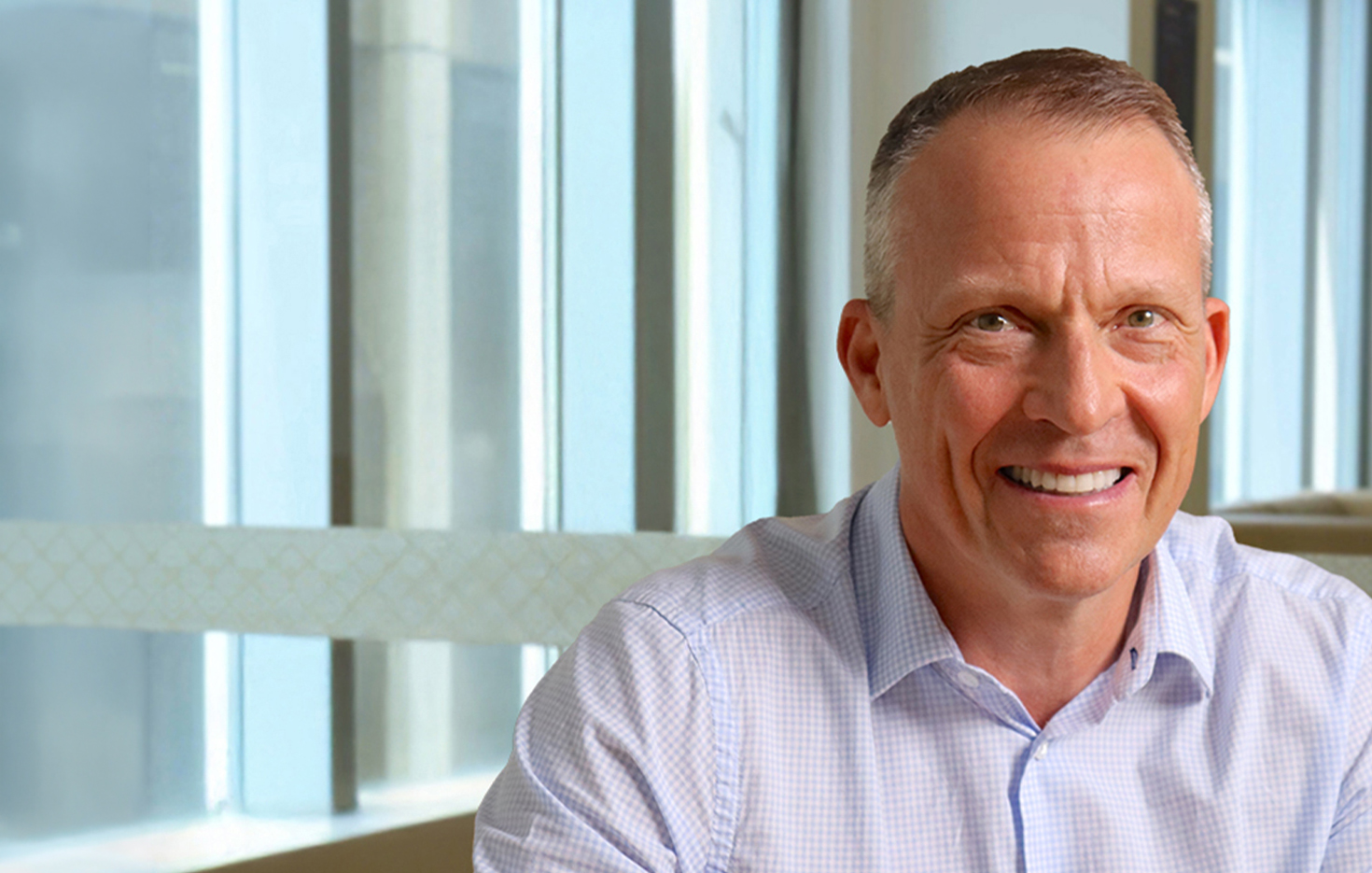
Crispin Murray, Head of Equities
Hyperscaler earnings
We have now had three hyperscalers (Alphabet, Microsoft and Amazon) report earnings and the message was positive in that they are seeing an acceleration in cloud service revenues, suggesting they are seeing a pay back on their AI spend.
Overall, their combined cloud revenues grew 48% year/year in Q2, up from 39% the previous quarter.
- Alphabet (+9% last week having been down on result) grew its cloud business 82% year/year versus 64% expected. The company’s backlog (signed but undelivered computing contracts) rose US$50 billion sequentially to US$514 billion, with half converting to revenue in the next two years. New customer acquisition velocity has doubled year/year. Advertising conversions are up ~15%, leading to an 11% drop in cost per lead. The one area of concern was some margin pressure, which reflected the company having to pay up for third-party compute. Alphabet is saying this is a temporary issue, but still the right strategy when you look at the overall long-term customer relationship.
- Microsoft (+19%) saw Azure revenues accelerating to 43% year/year growth (versus 40% expected) and guiding to 45% in Q3. Copilot paid seats rose from 20 million to 30 million since April. Github Copilot reached 50 million users with revenue +60% quarter/quarter since the move to user-based pricing.
- Amazon’s (+17%) AWS revenue rose 37% year/year versus 31% expected. The company talked to data centre economics and a useful life of 30+ years, enabling five-six generations of servers inside the same building. There is a two-year lag from build to cashflow, given the rate of build out this is why we are not yet seeing free cash flow, but Amazon believes it has the same margin profile as its cloud business. The CEO spoke to AWS having the possibility to be a trillion-dollar revenue business, double previous expectations.
The consensus forecast for total hyperscaler capex in CY26 has risen 4.7% since the start of Q2 earnings season to $793 billion (+93% year/year). The expectation for CY27 capex has risen 13% over the same period.
The prospect for a compute shortage remains in place for probably 12 to 24 months.
This spending continues to see a surge in capex as a proportion of cash flow. Consensus expects this to peak at 110% in 2027, from which point revenue begins to catch up with the spend.
Australian inflation and central bank comments
Domestic bond yields fell as the June consumer price index (CPI) came in below expectations, with the core at 3.8% year/year (versus 4.0% expected) and the trimmed mean at 3.6%, around 0.1% below expectations.
This does not mean the inflation problem is resolved but does buy the RBA some time to see how the interplay of growth and inflation plays out.
Governor Michele Bullock said last week that the RBA was keeping their options open, noting both the importance of getting back to target inflation – but also that, in their opinion, policy was moderately tight and the economy likely slowing. She pointed out that this may help reduce the rate of inflation and they need to see whether that is sufficient.
The fallout from the Federal Budget on the housing market also adds to the uncertainty; while policy is not driven by house prices it does affect activity and provides another reason for the RBA to pause.
The rise in fuel prices is another complicating factor. Anecdotes indicate that the removal of the fuel excise rebate, combined with higher oil price, has led to a slowdown in discretionary spending in July and this will be compounded by the second part of the rebate being removed last weekend.
While that affects growth, Governor Bullock did say that they are concerned persistent supply shocks could impact inflation expectations.
Markets
It was interesting to note that even in a month where there was a large drawdown in semis and other AI investment-related stocks, the US market ended flat due to the rotation to other sectors.
This highlights the captive nature of liquidity in the market, which leads to greater stock and sector specific volatility.
The other feature mid-reporting season is the continued strength in earnings which is helping underpin the US market.
EPS growth for this quarter is set to be +26% on an underlying basis (excluding the “other income” paper profits made by the hyperscalers from investments in private start-ups).
There have been broad-based positive revisions for 2027 EPS, which is also supportive for markets.
The risk remains a weakening economy – of which there is little sign – or the rise in bond yields forcing the Fed’s hand on rates to restore confidence, which could lead to a de-rate in equities.
Australia
The Australian market was +2.3% last week, led by a strong bounce in previously underperforming sectors such as Technology (+7.0%), Health Care (+5.5%), Consumer Discretionary (+4.5%), and Communication Services (+4.2%).
A lot of the move reflected a positional rotation within Asia Pacifc, as the fall in Korean semis forced de-grossing in hedge funds, leading to them covering their funding short in Australia.
The more benign inflation data also supported the market.
The S&P/ASX 300 ended July up 2.1%, led by banks (+7.6%) where the earnings outlook remains supportive with credit growth strong and an unwind of the initial reaction to the budget, as fears of a major housing downturn dissipated.
Elsewhere Energy (+12.1%) reflected the 23% rise in the oil price. Miners were down 0.9% as slowing Chinese growth weighed on iron ore (-2%) and lithium prices (-5%), albeit copper and aluminium prices rose 3% and 2%.
There was significant divergence in resources with lithium stocks hit hard, while S32 rose 17% on the announced sale of the aluminium business and a better quarterly report.
Tech (-4.8%) was the worst performing sector, the rotation away from semis hit the data centre companies despite continued compute demand, while the software names did not benefit from this rotation.
Small caps underperformed (S&P/ASX Small Ordinaires -3.2%) the S&P/ASX 20 (+3.7%) which partly reflected the rotation to banks and away from resources but also suggests some angst about the domestic economic outlook.
Going into reporting season we have seen a very mild shift to negative revisions, but not meaningful.
The areas we are watching this reporting season include:
Progress of turnaround stocks; we are looking for demonstrations of improved operating performance.
How well companies have managed expectations in FY26 and FY27; there are no excuses – other than a material change in operating environment – for management teams failing to ensure expectations have been sufficiently adjusted, given the consequences experienced in recent seasons. If this plays out, we may see less downside volatility.
Domestic economy and forward-looking assessment of the consumer; we will be looking for a gauge on whether the budget has manifested in the spending outlook, particularly from July when the fuel excise returned. In addition, while the banks are likely to have had good earnings performance, the test will be how cautiously they talk to the outlook, specifically on housing and asset quality.
Updates on AI threatened stocks; companies have had six months to adapt and develop a strategic response.
Offshore stocks performance; where the impacts of fuel inflation may be countered by a good US economy.
About Crispin Murray and the Pendal Focus Australian Share Fund
Crispin Murray is Pendal’s Head of Equities. He has more than 27 years of investment experience and leads one of the largest equities teams in Australia. Crispin’s flagship Pendal Focus Australian Share Fund is a high-conviction equity fund with a two-decade track record across a range of market conditions.
Pendal is a global investment management business focused on delivering superior investment returns for our clients through active management.
This information has been prepared by Pendal Fund Services Limited (PFSL) ABN 13 161 249 332, AFSL No 431426 and is current at August 4, 2026. PFSL is the responsible entity and issuer of units in the Pendal Focus Australian Share Fund (Fund) ARSN: 113 232 812. A product disclosure statement (PDS) is available for the Fund and can be obtained by calling 1300 346 821 or visiting www.pendalgroup.com.
The Target Market Determination (TMD) for the Fund is available at www.pendalgroup.com/ddo. You should obtain and consider the PDS and the TMD before deciding whether to acquire, continue to hold or dispose of units in the Fund. An investment in the Fund or any of the funds referred to in this web page is subject to investment risk, including possible delays in repayment of withdrawal proceeds and loss of income and principal invested.
This information is for general purposes only, should not be considered as a comprehensive statement on any matter and should not be relied upon as such. It has been prepared without taking into account any recipient’s personal objectives, financial situation or needs. Because of this, recipients should, before acting on this information, consider its appropriateness having regard to their individual objectives, financial situation and needs. This information is not to be regarded as a securities recommendation. The information may contain material provided by third parties, is given in good faith and has been derived from sources believed to be accurate as at its issue date.
While such material is published with necessary permission, and while all reasonable care has been taken to ensure that the information is complete and correct, to the maximum extent permitted by law neither PFSL nor any company in the Pendal group accepts any responsibility or liability for the accuracy or completeness of this information. Performance figures are calculated in accordance with the Financial Services Council (FSC) standards. Performance data (post-fee) assumes reinvestment of distributions and is calculated using exit prices, net of management costs. Performance data (pre-fee) is calculated by adding back management costs to the post-fee performance.
Past performance is not a reliable indicator of future performance. Any projections are predictive only and should not be relied upon when making an investment decision or recommendation. Whilst we have used every effort to ensure that the assumptions on which the projections are based are reasonable, the projections may be based on incorrect assumptions or may not take into account known or unknown risks and uncertainties. The actual results may differ materially from these projections. For more information, please call Customer Relations on 1300 346 821 8am to 6pm (Sydney time) or visit our website www.pendalgroup.com