Mainstream Online Web Portal
LoginInvestors can view their accounts online via a secure web portal. After registering, you can access your account balances, periodical statements, tax statements, transaction histories and distribution statements / details.
Advisers will also have access to view their clients’ accounts online via the secure web portal.

Crispin Murray: What’s driving Aussie equities this week
Here are the main factors driving the ASX this week, according to Pendal’s head of equities CRISPIN MURRAY. Reported by portfolio specialist Chris Adams
MARKETS are relatively quiet now that US earnings season is over and the northern summer is in full swing.
Oil bounced back last week (Brent crude +5.9% to US$88.52) as it became evident that there may not be any clear solution to the Iran standoff, leaving the market with increased but not full supply. In this environment we expect oil to trade in the US$85-90 range.
Equity markets and bond yields were largely unchanged. The S&P 500 was +0.4% and the NASDAQ +0.2%.
The AI world saw an attempt to resolve its funding challenges with a memorandum of understanding (MOU) between Nvidia and six asset managers to establish a platform seeking access to US$500 billion of third-party capital.
We also saw US neoclouds (specialised companies that rent out GPUs to build and train AI systems) highlighting the tightness of compute supply leading to higher prices and extended contracts on older GPU generations – a positive for the bull case that these business models have longer duration than many fear.
In Australia we had the first substantive week of reporting, skewed to financials, where both banks and insurance disappointed on concerns relating to their outlooks and the cycle.
Companies such as Seek, SGH Group and Cleanaway also noted subdued conditions.
Utilities outperformed, with fears of weak power prices not set to impact earnings as much as feared in FY27, although the problems remain.
There was some M&A action with a private equity bid for Cleanaway, which appears to have board support.
Overall, the S&P/ASX 300 fell 1.5% but remained up 3.9% quarter-to-date.
US macro and policy
July consumer price index (CPI) data was slightly better than expected.
Headline CPI rose 0.07% month/month and 3.4% year/year while core CPI was +0.22% and +2.5% respectively. The three-month annualised rate has dropped below the US Federal Reserve’s 2.0% target.
Core producer price index (PPI) data was firmer at 0.2% month/month with portfolio management fees being the main driver – these are market driven so are of less concern.
Still, the imputed personal consumption expenditure (PCE) index – the Fed’s preferred gauge for inflation – is expected to be 0.32% month/month and +3.4% year/year.
This is too high, but Fed Chair Kevin Warsh apparently plans to resolve this by changing the measure.
The data is unlikely to shift the views of the three members who dissented at the last Fed meeting in favour of higher rates – nor those supporting no hikes for the rest of the committee.
It does take some pressure of Warsh, and we have seen 10-year bond yields hold below the 4.75% resistance level, however 30-year yields remain at their highs.
Elsewhere, July payroll data was soft but the labour market remains healthy, as shown in benign initial jobless claims data versus previous years
There was also some softer retail sales data, though it is worth noting that surveys such as the Evercore ISI measure indicate the economy remains in good shape and may be seeing a pickup in the growth rate.
On balance, this suggests that rate hikes are probably still more likely to happen.
Energy and the Middle East conflict
It looks increasingly likely we will have a standoff through to the US mid-term congressional elections.
Iran appears to believe it has bargaining strength and is pushing for some form of toll on the Strait of Hormuz, reparations for war damage, and to punt the nuclear issue to a later date.
For its part the US is unprepared to capitulate to those terms and believes so long as oil is in the US$80-90 range – relying on the Strait being somewhat porous for flows – it will not be a material election issue.
Sustaining oil at current levels, alongside questions over its missile capability, mean the US is unlikely to launch a new campaign against Iran – leaving a stalemate.
Australia macro and policy
The Reserve Bank of Australia (RBA) held rates at 4.35% as expected. Its tone was slightly hawkish, consistent with our view that it sees risk from inflation’s persistence above target feeding into long-term expectations over time.
The RBA noted the weakening housing market, but also flagged the AI investment boom and higher energy prices from the ongoing disruption to supply.
We note Commonwealth Bank (CBA) indicated the decline in its housing approvals had stabilised in the last few weeks and was down 16% since the May budget, compared to -20% at Westpac, -16% at National Australia Bank and -12% at ANZ.
CBA said the current level was still consistent with around 4% loan growth, which is subdued but no credit crunch.
Housing loan commitment data was -5.4% in the June quarter, with owner-occupier -3.3% and investor -8.6%.
Seek data indicated job listings fell 0.4% month/month in July and 6% year/year, and that applications per ad had hit record levels.
In its result, CBA provided a chart which highlighted the difference in spending patterns from mortgaged to non-mortgaged customers, with the former seeing a decline in real spending (i.e. inflation-adjusted) over the last five years.
The reason is the shift higher in rates from their 2021 lows of 0.1% and the removal of covid stimulus.
This explains some of the significant shift in spending mix towards services and experiences over goods.
AI
There is a lot of focus on AI funding with the joint announcement from Nvidia, BlackRock, Appollo, Blackstone, Goldman, KKR and Brookfield of an MOU to establish an independent compute-financing platform targeting over US$500 billion of third-party capital. To be clear, there is no actual financial commitment made yet.
The novel aspect of the MOU was Nvidia offering to provide partial insurance on the residual value of its hardware (~25%) in return for a usage-linked share of revenue from it.
This adds another layer to the debate over sustainability of AI investment spending.
Bulls say this:
- Addresses funding – which is the largest constraint on the sector;
- Alleviates concerns around funding circularity, with third-party underwriters taking the first loss; and
- Is underpinned by evidence that residual values of hardware are above expectations.
The bears’ concerns are:
- The structure highlights the problem that Nvidia customers cannot afford to pay;
- The funding will enable additional capacity which will erode residual value; and
- The risks are correlated, in that if the US$125 billion liability for Nvidia gets called it will coincide with a fall in demand for their products and therefore revenue.
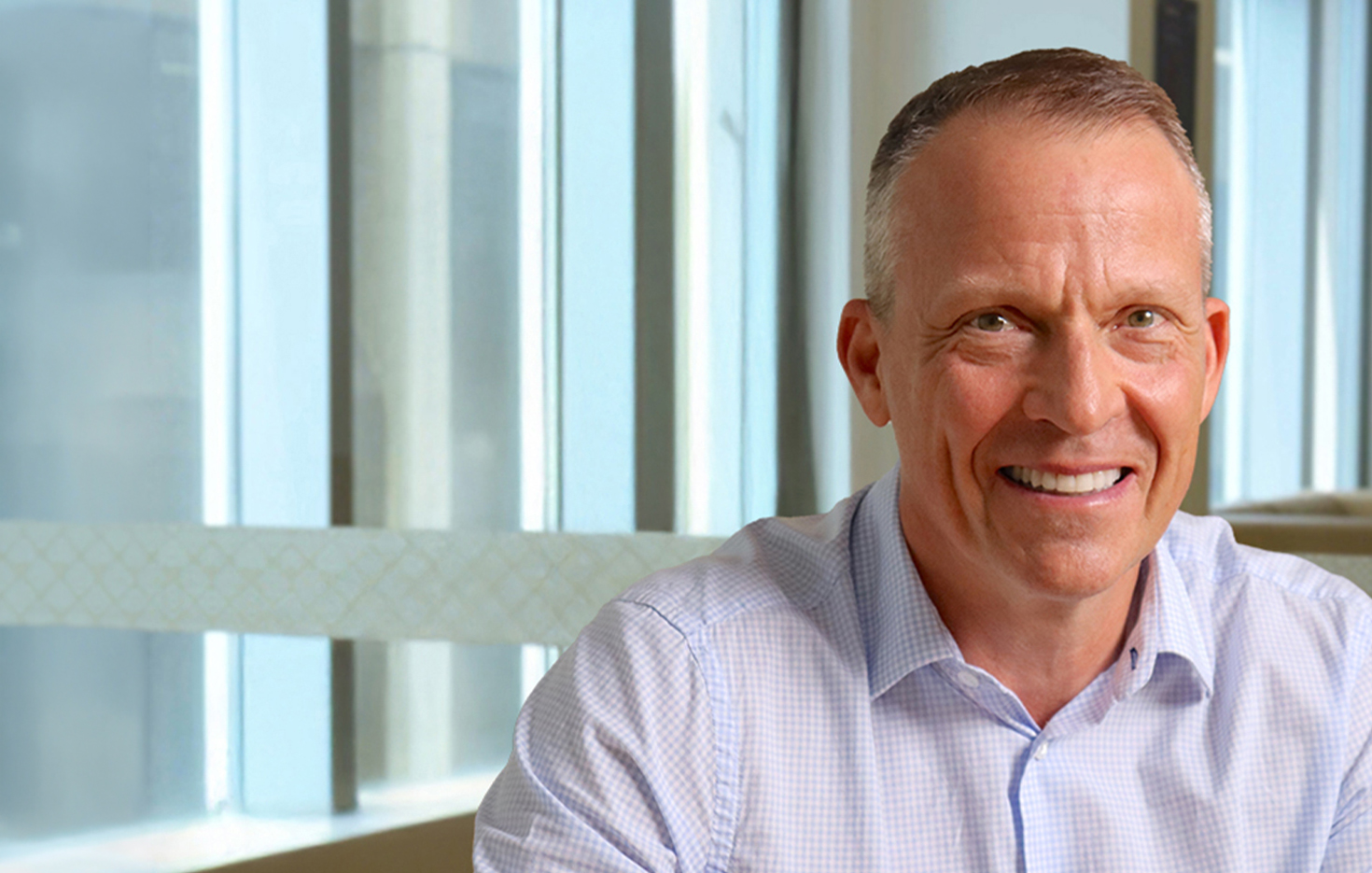
Find out about
Pendal Focus Australian Share Fund
Crispin Murray, Head of Equities
The essence of this debate comes back to the supply and demand issue for compute.
In this vein, last week saw comments from US neoclouds highlighting there is a clear shortage of compute, leading to them signing higher price contracts and extending the life of old chips.
- Coreweave delivered a strong 2Q26 result with revenue more than doubling and FY26 revenue and operating income guidance upgraded by ~2% and ~6% respectively. The most important takeaway was not the modest guidance increase but evidence of materially improving unit economics. Management disclosed a ~25% increase in pricing, noting that new contracts are being signed at contribution margins five-10 points above recent vintages, and highlighted that even older GPU generations continue to be renewed at attractive pricing. The commentary suggests AI compute remains structurally supply constrained, allowing Coreweave to capture increasing economic value as customers monetise inference workloads.
- Nebius delivered an exceptionally strong 2Q26 result, with revenue increasing 454% year/year to US$582 million and adjusted EBITDA margin expanding to 41% from 32% in 1Q26, while reaffirming FY26 revenue guidance of US$3.0-3.4 billion. As with Coreweave, the key takeaway was not the headline growth but further evidence that AI compute pricing remains extremely tight. Management disclosed that its first Blackwell (an advanced GPU) capacity auction cleared 15% above previous peak pricing and 20% above internal expectations, while noting it could effectively sell all planned 2027 capacity today but is intentionally retaining capacity to capture higher future pricing. It also highlighted exceptionally attractive economics on new contracts, with yields of US$20-25 million per megawatt, customer prepayments funding 50-60% of associated capex, and negotiations underway for shorter-duration capacity at US$40-50 million per megawatt. Combined with commentary that capacity continues to sell out as quickly as it comes online, the result reinforced investor confidence that AI compute remains structurally supply constrained and that Nebius is increasingly capturing that value through superior pricing and contract economics.
Looking at neocloud GPU rental rates there have been pricing increases across all generations – even the older ones – since March. This suggests that supply/demand dynamics remain favourable.
Locally, Firmus announced the acquisition of Benmax’s Fabrication Design and Projects business for $300 million, vertically integrating a key component of its AI infrastructure supply chain.
Benmax designs and manufactures Firmus’ HyperCube AI Factory system in regional NSW, enabling rapid deployment of AI data centres while reducing energy and water consumption.
They have capacity to manufacture more than 1GW of HyperCubes each year and were used in Firmus’ CDC Melbourne 42MW GB300 installation.
The deal helps Firmus control delivery timelines, capture a greater share of project economics and support future deployments, including the recently announced 360MW Batam project in Indonesia.
Markets
The US market rose marginally last week and remains in good technical shape, having broken to new highs with good breadth and not too heavily overbought.
At a sector level we are seeing much more constructive trends in the healthcare sector, while financials and tech both have strong breadth.
So the path of least resistance seems higher, however with earnings season complete – and a seasonally weaker part of the year – we may be set for a phase of consolidation before moving higher into the year end. All this is subject to the economy and rates.
The S&P/ASX 300 fell by 1.5% led by the banks (-3.8%), notably Westpac (-6.8%), on indications in their results that competition was a greater headwind to margins than expected.
Insurers also underperformed on some signs that the cycle was also impacting margins – seen most clearly in the IAG result.
Industrials (-2.9%) were also weaker on some signs of slowing economy in the SGH, Seek and Orora results.
Utilities (+7.4%) outperformed on better-than-expected results as weak electricity pricing is not flowing through the P&L as quickly as expected.
Tech (+3.3%) and healthcare (+2.9%) continued their recoveries but remained the worse performing sector CYTD.
About Crispin Murray and the Pendal Focus Australian Share Fund
Crispin Murray is Pendal’s Head of Equities. He has more than 27 years of investment experience and leads one of the largest equities teams in Australia. Crispin’s flagship Pendal Focus Australian Share Fund is a high-conviction equity fund with a two-decade track record across a range of market conditions.
Pendal is a global investment management business focused on delivering superior investment returns for our clients through active management.
This report has been prepared by Pendal Fund Services Limited (PFSL) ABN 13 161 249 332 AFSL 431426.
It is general information only and is not intended to provide you with financial advice or take into account your objectives, financial situation or needs. You should consider whether the information is suitable for your circumstances and we recommend that you seek professional advice.
The product disclosure statement (PDS) for the Pendal Focus Australian Share Fund (Fund), issued by PFSL, should be considered before deciding whether to acquire, dispose, or hold units in the Fund. The PDS and Target Market Determination can be obtained by calling 1300 346 821 or visiting our website www.pendalgroup.com.
To the extent permitted by law, no liability is accepted for any loss or damage as a result of any reliance on this information. No company in the Perpetual Group (Perpetual Limited ABN 86 000 431 827 and its subsidiaries) guarantees the performance of any fund or the return of an investor’s capital. All investing involves risk including the possible loss of principal.