
The WA government – a mining superpower – just announced a green bond. Here Pendal’s MURRAY ACKMAN explains how to size up obvious, and not-so-obvious, sustainable fixed interest opportunities
- Not all green bonds are equal
- Find out about Regnan Credit Impact Trust
- Find out about Pendal Sustainable Australian Fixed Interest fund
AUSTRALIANS invest some $25 billion a year in local green, climate and social impact bonds, according to the Responsible Investment Association’s latest benchmark report.
But only some of these bonds meet the highest standards of sustainable investors. And it’s not always obvious which ones.
Consider these three examples of recent sustainable bond issuers:
- A national electricity network connecting renewables to the grid
- A telco giant reducing power consumption on its network
- Mining super-power Western Australia — the only Australian state that emits more carbon now than it did in 2005
You may be surprised to learn that only the WA bond – announced last week – met with the approval of Pendal’s income and fixed interest team.
“The key to investments like this is understanding the ‘but for’ test,” says Murray Ackman, a credit ESG analyst in Pendal’s Income and Fixed Interest team.
When assessing a new sustainable bond, Murray likes to ask “but for my investment, would this project exist?”
In other words, is the bond simply funding “business-as-usual” activity? Or is it truly making an impact?
“We target green bonds with greater impact,” Ackman says.
Example: electricity distribution network
Ackman uses the example of an electric power distributor where the answer to the “but for” test was “no”.
In this case, the raised funds were earmarked for the replacement of decades-old copper wire, and installation of new high-voltage lines and substations.
That activity supports the transition away from fossil fuels to renewables and reducing carbon emissions.
“But the problem for us is this: connecting generation to the grid, while very important, is very much business-as-usual for a grid owner,” says Ackman.
“Their job is to connect things to the grid.
“Claiming it’s green is kind of like a highway boasting about higher EV usage.”

Pendal Sustainable Australian Fixed Interest Fund
An Aussie bond fund that aims to outperform its benchmark while targeting environmental and social outcomes via a portion of its holdings.
Example: NBN’s green bond
At the National Broadband Network, a $2 billion-plus green bond has been issued to fund a reduction in the emissions generated by Australia’s broadband internet infrastructure.
“Their argument is that fibre optics are more efficient than copper, and so replacing copper with fibre reduces emissions,” says Ackman.
“That may well be true, but it just so happens that their business model also relies on fibre optics, because that means higher internet speeds that they can charge more for.
“There is also the Jevons Paradox to consider — the more efficient something is, the more usage it generates, paradoxically leading to an increase in consumption.
“The NBN’s assumption is electricity usage will go down because the network is more efficient. But if we all watch more Netflix with our higher speed internet, than usage will go up.”
WA’s green bond
So where does that leave WA?

Find out about
Regnan Credit Impact Trust
Murray Ackman,
Sustainable Finance and
Impact Investing Director
WA’s green bond is raising $1.9 billion to decarbonise the state’s electricity grid by investing in battery storage and wind farms alongside charging infrastructure and rebates for electric vehicles.
“For WA, the complaint we get is ‘how can you invest when they dig up so much stuff?” says Ackman.
“The first thing we say is that the stuff that they are digging up is very different to the coal mining that happens in the east coast states. WA’s miners are producing metals like iron ore and lithium spodumene that are essential resources for the transition.
“And the projects funded by the green bond are going to move the dial on the energy transition.
“WA’s policies have progressed significantly, and this green bond is a reflection of that.”
Ackman says the WA projects pass the ‘but for’ test.
“The newness is a huge component of it,” he says.
“A green bond needs to be evidence of your policies — not an apology for them.
“WA’s green bond follows a year after the government’s new sustainability plan and is reflective of the focus of the government to green up their economy and green up their energy usage.
“That’s something that we want to support.”
About Murray Ackman and Regnan
Murray is a Senior ESG and Impact Analyst with sustainable investing leader Regnan.
He also provides fundamental credit analysis on Environmental, Social and Governance factors for Pendal’s Income and Fixed Interest team.
Murray has worked as a consultant measuring ESG for family offices and private equity firms and was a Research Fellow at the Institute for Economics and Peace where he led research on the United Nations Sustainable Development Goals.
Find out more about Regnan here
Regnan Credit Impact Trust is an investment strategy that puts capital to work for positive change.
Pendal Sustainable Australian Fixed Interest Fund is an Aussie bond fund that aims to outperform its benchmark while targeting environmental and social outcomes via a portion of its holdings.
Would you buy a green bond from Albo? Pendal’s MURRAY ACKMAN has a few questions investors should ask before investing in the federal government’s first green bond
- First ever sovereign green bond planned for 2024
- Opportunity to fund catalytic change
- Find out about Regnan Credit Impact Trust
- Find out about Pendal Sustainable Australian Fixed Interest fund
THE Albanese government’s plans for a sovereign green bond program will provide an opportunity to spark transformational projects in hydrogen, batteries and biodiversity, says Pendal’s Murray Ackman.
But investors should carefully scrutinise the plan before investing, says Ackman, a credit ESG expert in Pendal’s income and fixed interest team.
Investors will want to reassure themselves that the government is truly responding to Australia’s needs, and not greenwashing poor climate policies or funding projects that would have been financed regardless, he says.
Sovereign green bonds are issued by governments to fund projects that have a positive impact on the environment.
Treasurer Jim Chalmers outlined the plan to introduce a green bond program at last month’s Investor Roundtable, a government forum designed to engage super funds, banks and asset managers.
“The government is planning to issue its first green bond in 2024 and is using it to frame the whole green and sustainability market,” says Ackman.
“They want to show what ‘good’ looks like and to set expectations about these types of issuances, including potentially aligning with other kinds of regulation including climate reporting.
“We are excited to see the government show interest in green bonds. However, not all green bonds are equal.”
Pendal Sustainable Australian Fixed Interest Fund
An Aussie bond fund that aims to outperform its benchmark while targeting environmental and social outcomes via a portion of its holdings.
Ackman has developed four key questions for investors to ask as they judge the government’s plans:
1. Is the bond supporting genuinely new projects?
Green bonds must support new projects that encourage further investment in that area, he says.
This could include hydrogen, large-scale batteries, maintaining biodiversity and climate-change adaptation.
Capital recycling, funding projects that already exist and projects that would likely have happened anyway fall short of this test, he says.
“Additionality is the key term — funding something that would not have been funded but for this green bond.”
2. Are the projects truly revolutionary?
Green bonds should fund risky projects with the potential for big impact, Ackman says.
Funding social housing that provides underserved people with housing in energy efficient homes with solar panels that reduce ongoing living expenses would fit the bill, he says.
“Government has a different risk profile to the private sector and that gives it an opportunity to fund catalytic change — things that cause a step change.
“This is what the US has done with the Inflation Reduction Act, creating a market for hydrogen by subsidising it significantly.
“Government has always had a role historically in bringing about significant change — the internet, space travel — there’s always been government money put up to change how things work.
“This is what we want to see from this green bond.”
Find out about
Regnan Credit Impact Trust
Murray Ackman,
Sustainable Finance and
Impact Investing Director
3. Is reporting clear and transparent?
The bond issuance should provide an opportunity for the government to set expectations for what meaningful and measurable impact reporting looks like.
“This green bond is an opportunity to put a stake in the ground as to the minimum expectations for reporting and for transparency. This is an evolving space. What was good enough three years ago is not good enough now.
“For the government to say ‘this is this is what good looks like now’ is a powerful thing.”
4. Is the green bond connected to a genuine policy commitment to address climate change?
Finally, Ackman sounds a warning.
Issuing a green bond signals a commitment towards environmental concerns and a promise to continue to support these types of projects.
“Green bonds have a halo effect on the issuer. We will not invest in green bonds from issuers that we do not believe are committed to environmental change and focused on climate stability.
“By issuing a green bond, the Australian Government will be saying that they have a strong commitment.”
Ackman points to Pendal’s exit from a Queensland government green bond after the state’s approval of Indian conglomerate Adani’s new coal mine a few years ago.
“When they approved Adani, we exited the green bond because there was a disconnect between what the green bond was attempting to do and what government policy was attempting to do.
“A green bond should be a reflection of an issuer’s philosophy — not an apology for their actions.”
About Murray Ackman and Regnan
Murray is a Senior ESG and Impact Analyst with sustainable investing leader Regnan.
He also provides fundamental credit analysis on Environmental, Social and Governance factors for Pendal’s Income and Fixed Interest team.
Murray has worked as a consultant measuring ESG for family offices and private equity firms and was a Research Fellow at the Institute for Economics and Peace where he led research on the United Nations Sustainable Development Goals.
Find out more about Regnan here
Regnan Credit Impact Trust is an investment strategy that puts capital to work for positive change.
Pendal Sustainable Australian Fixed Interest Fund is an Aussie bond fund that aims to outperform its benchmark while targeting environmental and social outcomes via a portion of its holdings.
The Albanese government’s revamp of a Coalition-era emissions reduction mechanism raises a number of issues for investors. Pendal’s MURRAY ACKMAN explains
- Winners and lowers from safeguard mechanism
- Find out about Regnan Credit Impact Trust
- Find out about Pendal Sustainable Australian Fixed Interest fund
INVESTORS should keep a close watch on changes to a major Australian carbon emissions policy, which could have wide ramifications for the economy and markets, says Pendal’s Murray Ackman.
The Albanese government is aiming for a 43 per cent cut in emissions by 2030 (compared to 2005) and net zero emissions by 2050 — in line with its new climate change law.
To help achieve this, the government is revamping an old Coalition policy known as the “Safeguard Mechanism“, which was designed to reduce carbon emissions by regulating the amount of greenhouse gases that big industrial facilities could emit.
Originally introduced by Tony Abbott’s Coalition government, the mechanism set emissions “baselines” for 215 of our biggest polluters.
Those that exceeded their baseline were required to offset the excess pollution with carbon credits bought from sources that had reduced their emissions.
But critics say the mechanism hasn’t worked. Baselines were too high, the policy was generally not enforced and since then new polluters have started operating.
From July, the Albanese government will strengthen the mechanism in a number of ways, including a 4.9 per cent annual cut on allowable emissions for the biggest emitters.
You can read more about the safeguard mechanism here.
What it means for investors
Investors and companies could be impacted in a number of ways, says Ackman, a credit ESG analyst in Pendal’s Income and Fixed Interest team.
Find out about
Regnan Credit Impact Trust
Murray Ackman,
Sustainable Finance and
Impact Investing Director
Here are some issues:
1. Policy certainty
“The first thing we’re looking for as investors is policy certainty,” he says.
“One of the challenges for investors is always that policy is proposed and then negotiated with the Greens and cross bench. That uncertainty can spook investors.”
In March, the Albanese government struck a deal with the Greens to implement the safeguard mechanism.
2. The problem with offsets
Under the Safeguard Mechanism, businesses that exceed their baselines can meet their obligations by buying offsets from approved emissions reduction projects.
But sustainable investors will want to take a close look at these offsets, says Ackman.
“There are certain classes of offsets that are pretty dodgy,” he says.
“If you ask a farmer not to clear certain land and get offsets for that, what if they had no intention to clear the land anyway? How do you know it’s not going to be cleared anyway in 10 years?
“Planting trees is also fraught with challenges in Australia — floods, droughts, fires. Just because you plant them doesn’t mean they are going to last to maturity.”
The key for investors seeking to understand the difference between effective and ineffective offsets lies in whether the carbon emission reduction is guaranteed or not, Ackman says.
“One of the offsets allowed in the safeguard mechanism is if you reduce emissions more than target you can sell the excess.
“That seems reasonable because you are measuring something that has actually happened.”
3. New fossil fuel projects can still go ahead
Despite an agreement with the Greens on a hard cap for emissions, the mechanism won’t stop all future fossil fuel projects.
“That’s robbing Peter to pay Paul,” says Ackman.

Modelling suggests emissions from “financially committed new projects” for coal and LNG alone will generate 56 million tonnes of carbon equivalent emissions between 2024 and 2030.
That’s nearly 5 per cent of the mechanism’s entire emissions budget.
That means higher reduction rates could be required from the companies with existing facilities covered by the mechanism.
“This is the complaint of the Greens and the cross bench.
“You need to rule out new fossil fuel production because otherwise the safeguard mechanism is incomplete.”
4. Cost of living pressure
The mechanism is susceptible to cost-of-living pressures.
“Where the rubber hits the road is when these bigger emitters start having an impact on the cost of living,” says Ackman.
He points to two challenges.
“The first is basic supply and demand — if everyone’s doing this at the same time, the costs associated with reducing emissions could be more than we’re expecting.
“The second challenge is that complaints about higher costs in the community could weaken the government’s resolve.
“Every government has strong ideology until its starts to hurt the hip pocket.”
Winners and losers
The safeguard mechanism has the potential to create winners and losers in investment markets, says Ackman.
Companies that can reduce their emissions significantly will have the upside of a new revenue source from selling excess carbon credits.
Pendal Sustainable Australian Fixed Interest Fund
An Aussie bond fund that aims to outperform its benchmark while targeting environmental and social outcomes via a portion of its holdings.
Others face the risk of significant penalties if they don’t invest in cutting their emissions intensity.
“As a fixed income investor, we actually get quite good access to some of these emitters.
“A thorough understanding of a business and its transition plan is important for investors.
“It’s one thing looking at the balance sheet today.
But you also want to know how earnings will be able to be maintained over the policy cycle.”
About Murray Ackman and Regnan
Murray is a Senior ESG and Impact Analyst with sustainable investing leader Regnan.
He also provides fundamental credit analysis on Environmental, Social and Governance factors for Pendal’s Income and Fixed Interest team.
Murray has worked as a consultant measuring ESG for family offices and private equity firms and was a Research Fellow at the Institute for Economics and Peace where he led research on the United Nations Sustainable Development Goals.
Find out more about Regnan here
Regnan Credit Impact Trust is an investment strategy that puts capital to work for positive change.
Pendal Sustainable Australian Fixed Interest Fund is an Aussie bond fund that aims to outperform its benchmark while targeting environmental and social outcomes via a portion of its holdings.
Pendal’s ESG scorecard measures credit risk on state government bonds. MURRAY ACKMAN explains how it works
- ESG factors help understand risk of bond downgrade
- Find out about Regnan Credit Impact Trust
- Find out about Pendal Sustainable Australian Fixed Interest fund
IF you’re investing in state government bonds, you’re probably not too worried about default.
But you might be concerned about a potential credit downgrade – which could result in lower demand for a bond and a drop in its value.
Pendal’s income and fixed interest team has a tool to assess the ESG credentials of state governments – which can help highlight credit risks that might lead to ratings downgrades.
The Australian States SDG Index assesses how each state is addressing the UN’s Sustainable Development Goals – a list of the world’s biggest problems.
The ACT, Tasmania and South Australia lead the index, while Western Australia, Queensland and the Northern Territory lag, says Pendal ESG credit analyst Murray Ackman.
“People always talk about default — the risk of not getting your money back,” says Ackman.
Find out about
Regnan Credit Impact Trust
Murray Ackman,
Sustainable Finance and
Impact Investing Director
“But that’s not all we’re looking at.
“There would have to be something catastrophic for a state government not being able to service its debt.
“What does have an impact on your investment is credit downgrades.”
How it works
The index scores the states on 70 indicators across 16 environmental and social themes.
It assesses how states perform on factors like healthcare and education spending, climate action, water and sanitation and justice and strong institutions.
Ackman uses the example of ratings agencies downgrading Queensland more than a decade ago after it slid into deficit on the back of a big spending program on water security.
“There was a longstanding underspend on water security, so a lot of money had to be spent on a desalination plant. ESG can give us an early warning sign of these kind of issues.”
Today, Ackman says there are signs of underspending in Victoria on health and well-being and in the Northern Territory on justice and strong institutions.
These could flag future problems, he says.
On the upside, the index shows strong environmental scores in the ACT and Tasmania, both already using a high proportion of renewable energy which reduces the risk of the energy transition.
Ackman says ESG scoring also provides an opportunity to engage with governments and seek to directly drive change — even although governments can be less responsive than corporations to the views of the investment community.
“Engaging with a company can be pretty obvious — one has better human rights policies, another might have good oversight of their supply chain and slavery. You can compare the two and make a decision to engage or divest.
“But government bonds are different. Commonwealth government bonds are more than half the index for some of our fixed interest funds.
“We can engage — and we’re pushing for green issuance and we want to see new projects being funded — but we don’t realistically have the opportunity to divest. Having genuine influence over an issuer would require being willing to walk away.”
He says Pendal’s ESG scoring also allows investors to be sure their money is being invested in line with their intentions.
“Our investors want their values reflected in the investment decisions that we make.”
About Murray Ackman and Regnan
Murray is a Senior ESG and Impact Analyst with sustainable investing leader Regnan.
He also provides fundamental credit analysis on Environmental, Social and Governance factors for Pendal’s Income and Fixed Interest team.
Murray has worked as a consultant measuring ESG for family offices and private equity firms and was a Research Fellow at the Institute for Economics and Peace where he led research on the United Nations Sustainable Development Goals.
Find out more about Regnan here
Regnan Credit Impact Trust is an investment strategy that puts capital to work for positive change.
Pendal Sustainable Australian Fixed Interest Fund is an Aussie bond fund that aims to outperform its benchmark while targeting environmental and social outcomes via a portion of its holdings.
What does the collapse of the ambitious Sun Cable solar project say about investing in renewables? Here’s a quick insight from Pendal ESG credit analyst MURRAY ACKMAN
- Sun Cable shows investment in renewable energy is mainstream
- But it raises questions about an Australian export industry
- Find out about Regnan Credit Impact Trust
- Find out about Pendal Sustainable Australian Fixed Interest fund
THE high-profile collapse of the ambitious Sun Cable solar project has sparked debate about the future of renewable energy exports.
What can sustainable investors learn from the failure?
Backed by Atlassian’s Mike Cannon-Brookes and Fortescue’s Andrew Forrest, Sun Cable had grand plans to supply electricity to Singapore from a vast solar array in the Northern Territory (pictured above).
But the venture was placed in voluntary administration in early January amid disagreement between the billionaire backers over the best way to export the energy.
Cannon-Brookes supported the venture’s original plan to run a 4200km high-voltage undersea cable between Darwin and Singapore. Forrest backed an alternative plan of exporting energy in the form of green hydrogen and ammonia.
What can investors learn?
Importantly, the Sun Cable debate demonstrates there is no longer disagreement over the economics of investment in renewable electricity generation, says Pendal credit ESG analyst Murray Ackman.
“The main takeaway for investors is that Sun Cable collapsed over a dispute about exporting – not over the idea of a huge solar array in the Northern Territory.

“That indicates electrification and big investment in renewables has become mainstream.
“No one is ridiculing Sun Cable for building a giant solar farm that even five years ago would have seemed ludicrous.”
Hydrogen investment risks
But the collapse of Sun Cable highlights that nascent technologies like green hydrogen are best left to entrepreneurs and governments until they mature, says Ackman.
“Just like any other boom, a lot of money will be headed into these areas and investors will be wanting to pick the winners and losers out of the transition.
“But historically, it’s governments and private entrepreneurs that are typically best placed to carry the risk of these types of early-stage innovations,” he says.
“For most investors, it’s too early to be thinking about going all-in on hydrogen.”
Find out about
Regnan Credit Impact Trust
Murray Ackman,
Sustainable Finance and
Impact Investing Director
Ackman says the dispute is an example of the wider questions facing investors in the Australian renewables industry, including how green energy can best be exported and whether it is in the country’s best interests to do so at all.
“The federal government policy is to get to 83 per cent renewables by 2030 – that’s quite a lot, so question number one is should we be exporting at all or should we focus on building green industries rather than just shipping off the power,” says Ackman.
“Question number two is then how do we do it – both hydrogen and long cables have challenges when it comes to electricity loss.”
Political debate
Sun Cable’s collapse also comes amid a charged political debate about the role of green hydrogen and natural gas in the energy transition that investors are having to step through.
Natural gas clearly has a role filling gaps in solar and wind power generation because it can be quickly turned on and off when needed, says Ackman.
But there is growing debate about the health effects of burning gas in homes for heating and cooking, with gas cookers now linked to childhood asthma and other respiratory problems.
And the case for blending green hydrogen into gas pipelines also looks shaky.
“You can only get to about 20 per cent hydrogen for household appliances before everything needs to be replaced,” says Ackman.
“It’s more evidence that electrification seems to be the way forward.”

Why bonds, why now
Ausbiz’s Nadine Blayney interviews CBA chief economist Stephen Halmarick and Pendal head of bonds Tim Hext
ON-DEMAND WEBINAR
About Murray Ackman and Regnan
Murray is a Senior ESG and Impact Analyst with sustainable investing leader Regnan.
He also provides fundamental credit analysis on Environmental, Social and Governance factors for Pendal’s Income and Fixed Interest team.
Murray has worked as a consultant measuring ESG for family offices and private equity firms and was a Research Fellow at the Institute for Economics and Peace where he led research on the United Nations Sustainable Development Goals.
Find out more about Regnan here
Regnan Credit Impact Trust is an investment strategy that puts capital to work for positive change.
Pendal Sustainable Australian Fixed Interest Fund is an Aussie bond fund that aims to outperform its benchmark while targeting environmental and social outcomes via a portion of its holdings.
Some say big-polluting companies should be forced to compensate the community for climate change. Pendal Credit ESG analyst MURRAY ACKMAN explains what that means for investors
- Find out about Regnan Credit Impact Trust
- Find out about Pendal Sustainable Australian Fixed Interest fund
YOU might have missed it, but last week in Egypt there was a big meeting discussing the future of the world.
Amid war, floods and endless news from China, the 27th UN Climate Change Conference of the Parties (or “COP27”) didn’t get the same headlines as last year’s COP26.
So what was decided at COP27 – and does it matter for investors?
The big announcement was a fund to help developing nations respond to the loss and damage associated with climate change. This has taken three decades to agree to.
Bigger polluters – rich countries and potentially China and oil-producing countries – will compensate poorer countries that pollute less.
Countries that are net exporters of carbon – including Australia – are asked to use some of the money they’ve gained to help those most affected.
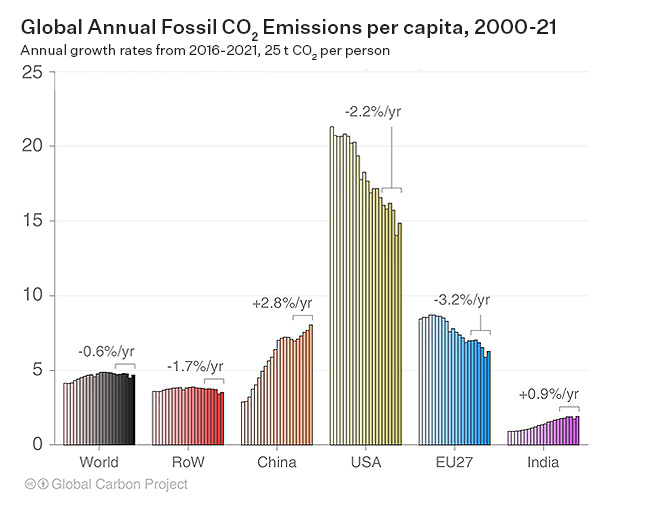
Some are calling for this logic to be applied to companies as well as countries.
Heavy emitters, such as fossil fuel companies, could be forced by policy-makers to channel revenue into mitigation efforts.
There are three options for high-emitting companies:
- Give profits back to shareholders and let them decide whether or not to invest those returns in climate change solutions. As net zero gets closer, these companies phase down activity.
- Heavy emitters invest in transitioning into green companies.
- Policy makers take the decision out of company’s hands and apply a tax on emissions to fund a transition.
What does that mean for investors?
This has obvious implications for investors.
If the logic is high emitters bear responsibility for mitigating the impacts of climate change, this adds credit risk. Therefore investors need to be aware of the implications of policy changes.
Find out about
Regnan Credit Impact Trust
Murray Ackman,
Sustainable Finance and
Impact Investing Director
About Murray Ackman and Regnan
Murray is a Senior ESG and Impact Analyst with sustainable investing leader Regnan.
He also provides fundamental credit analysis on Environmental, Social and Governance factors for Pendal’s Income and Fixed Interest team.
Murray has worked as a consultant measuring ESG for family offices and private equity firms and was a Research Fellow at the Institute for Economics and Peace where he led research on the United Nations Sustainable Development Goals.
Find out more about Regnan here
Regnan Credit Impact Trust is an investment strategy that puts capital to work for positive change.
Pendal Sustainable Australian Fixed Interest Fund is an Aussie bond fund that aims to outperform its benchmark while targeting environmental and social outcomes via a portion of its holdings.
Sustainability-linked bonds are growing fast, but investors should take care they are getting what’s on the label. Pendal’s MURRAY ACKMAN explains
- Sustainability-linked bonds gain traction
- Investors need to understand risks
- Find out about Regnan Credit Impact Trust
- Find out about Pendal Sustainable Australian Fixed Interest fund
MORE and more companies are selling sustainability-linked bonds — but investors should take care issuers are genuinely making changes and not simply greenwashing, says Pendal’s Murray Ackman.
Sustainability-linked bonds are debt securities that pay a coupon linked to the achievement of environmental or social outcomes.
Importantly, these “SLBs” are not linked to a specific project. They instead allow an issuer to set an overarching goal such as reducing emissions or improving diversity at a corporate level.
If an issuer fails to hit its goal, usually it pays a penalty in the form of a higher coupon.
“In theory, they are great — but we’re starting to see some things we are not happy about with these structures,” says Ackman, a credit ESG analyst at Pendal.
“We want to make sure that sustainability-linked bonds don’t turn into greenwashing because that will muddy the whole market,”
Pendal Sustainable Australian Fixed Interest Fund
An Aussie bond fund that aims to outperform its benchmark while targeting environmental and social outcomes via a portion of its holdings.
Fast-growing market
Sustainability-linked bond issuance reached US$103 billion last year — a one-year increase of 803 per cent, according to World Bank research.
That makes SLBs the fastest-growing sustainable debt instrument — with considerable potential to grow further on the back of strong investor, appetite and supportive government policy.
They are starting to gain traction in Australia.
A leading retailer has issued a bond linked to its move to renewable energy, while a telecommunications company has an issue linked to the rollout of solar panels at its retail stores.
Potential flaws
But sustainability-linked bonds have some important flaws that investors need to understand, says Ackman.
Probably the most fundamental flaw is the fact that if an issuer fails to meet the underlying environmental or social goal, the bond no longer meets the criteria to be called sustainable.
This means it has to be divested by most sustainable investment strategies just as the step-up coupon is due to be paid.
“We invest in these SLBs in our sustainable funds — if they don’t meet the target, we get a coupon step-up. But that means the bond is no longer tied to an environmental or social goal,” says Ackman.
“If it is no longer a sustainable bond, we cannot hold it in a sustainable strategy.”
Another emerging flaw is that the typical coupon step-up of 25 basis points made sense when interest rates were next to zero — but it may be less attractive to investors now that the general bond yields are higher.
A third problem is that some Australian companies are issuing bonds that are not sufficiently ambitious in scope.
“The federal government has a target for the grid to be 82 per cent renewable by 2030.
“If you are in a sector that can reduce emissions by changing where your electricity comes from, your corporate target has to be much more ambitious than the grid target.”
Find out about
Regnan Credit Impact Trust
Murray Ackman,
Sustainable Finance and
Impact Investing Director
Early days
Ackman says it’s the right time for investors to discuss how they want sustainability-linked bonds to adapt because its early days in the development of the product.
“It is still a novel idea and just because it is the way it is now doesn’t mean it is the only way it can be.
“What we are trying to do is safeguard this market.
“That means talking to arrangers before deals are shared and speaking in public forums about the things we’re not happy about with these structures.
“We want to make sure that these this structure doesn’t turn into greenwashing.”
About Murray Ackman and Regnan
Murray is a Senior ESG and Impact Analyst with sustainable investing leader Regnan.
He also provides fundamental credit analysis on Environmental, Social and Governance factors for Pendal’s Income and Fixed Interest team.
Murray has worked as a consultant measuring ESG for family offices and private equity firms and was a Research Fellow at the Institute for Economics and Peace where he led research on the United Nations Sustainable Development Goals.
Find out more about Regnan here
Regnan Credit Impact Trust is an investment strategy that puts capital to work for positive change.
Pendal Sustainable Australian Fixed Interest Fund is an Aussie bond fund that aims to outperform its benchmark while targeting environmental and social outcomes via a portion of its holdings.
Can natural gas investors rely on green hydrogen to reduce the risk of stranded assets? Pendal’s MURRAY ACKMAN explains
- Understanding stranded asset risk is critical for long-term investors
- Hydrogen touted as solution for natural gas investors
- Find out about Regnan Credit Impact Trust
- Find out about Pendal Sustainable Australian Fixed Interest fund
REPLACING natural gas with “green hydrogen” is often touted as a way to solve “stranded asset” risk for fossil fuel assets such as gas pipelines.
The International Energy Agency believes hydrogen has the “potential to play a key role in a clean, secure and affordable energy future“.
As part of a renewable energy transition, some natural gas pipeline and storage infrastructure could be repurposed for hydrogen. The clean fuel could even be blended into natural gas.
But is it really a solution for investors worried about holding “stranded” fossil fuel assets that no longer have an economic use due to redundant technology or high costs?
There is no clear-cut answer right now — and advances are required to make hydrogen technology economical, says Murray Ackman, a credit ESG analyst in Pendal’s Income and Fixed Interest team.
Stranded asset risk
“Stranded asset risk is very tangible for fixed income investors when you’re looking at a seven- or 10-year bond,” says Ackman.
Pendal Sustainable Australian Fixed Interest Fund
An Aussie bond fund that aims to outperform its benchmark while targeting environmental and social outcomes via a portion of its holdings.
“You have to take a view on what may or may not happen during that time frame.
“Credit ratings, access to financing, cost of funding, demand for the products, regulation — those are the kind of ESG risks that we’re looking at.”
Some risks are clear cut: “Coal is something that needs to be phased out very quickly, so if you’re coal or coal-adjacent like a train company that hauls coal from the mines, there is a clear stranded-asset risk in the short term.
“The cost of funding might become higher and there could be a chance of default or ratings downgrades.”
But the risks to natural gas assets — and the potential for hydrogen to be a solution — are more difficult to pin down.
A natural gas replacement
Part of the problem is conflating potential industrial and domestic uses for hydrogen.
“There are some very clear uses for hydrogen as a replacement for natural gas in industrial processes like producing fertiliser, powering heavy vehicles and aircraft or making steel,” says Ackman.
“And there’s this moon shot that it will be a one-for-one replacement for natural gas,” says Ackman.
In that scenario, parts of the natural gas pipeline and storage infrastructure can be repurposed for hydrogen, protecting their value well into the future and saving them from becoming stranded assets.
Find out about
Regnan Credit Impact Trust
Murray Ackman,
Sustainable Finance and
Impact Investing Director
“This is what industry is betting big on. It’s tricky because the economics don’t stack up yet — but then that was true for solar panels for a long time too.”
For households, the benefits of hydrogen are less clear cut.
Hydrogen can be blended into the natural gas but above about 10 or 20 per cent it can damage some existing pipes.
“And if you go any higher 20 per cent, you need to change household appliances anyway — if you’re changing your stove to something that can accept hydrogen, why not just change to electricity?”
The weighing of these different views is an important part of the investment process, says Ackman.
“It’s very much a question mark whether it is the solution. In our investable universe, we’ve got some gas distribution networks.
“The question is ‘why are you talking about how good hydrogen is?’
“Is it because you really believe it? Or is it because it’s an existential threat and without it you have a potentially stranded asset in the future?”
About Murray Ackman and Regnan
Murray is a Senior ESG and Impact Analyst with sustainable investing leader Regnan.
He also provides fundamental credit analysis on Environmental, Social and Governance factors for Pendal’s Income and Fixed Interest team.
Murray has worked as a consultant measuring ESG for family offices and private equity firms and was a Research Fellow at the Institute for Economics and Peace where he led research on the United Nations Sustainable Development Goals.
Find out more about Regnan here
Regnan Credit Impact Trust is an investment strategy that puts capital to work for positive change.
Pendal Sustainable Australian Fixed Interest Fund is an Aussie bond fund that aims to outperform its benchmark while targeting environmental and social outcomes via a portion of its holdings.
What will Anthony Albanese’s new climate bill mean for Australian investors? Pendal’s MURRAY ACKMAN explains
- 43 per cent emission reduction by 2030
- Opportunity for investors in electricity grid
- Find out about Regnan Credit Impact Trust
- Find out about Pendal Sustainable Australian Fixed Interest fund
THE Albanese government’s climate bill has cleared parliament, paving the way for a 43% emission reduction target by 2030 – and net zero by 2050.
How will that impact Australian investors?
Investment in electrification and mandated reductions in emissions for big companies will be features of the new plan, says Pendal’s Murray Ackman.
The bill legislates a greenhouse gas emission reduction target of 43 per cent from 2005 levels by 2030 and net zero by 2050, aligned with Australia’s Paris Agreement commitment to helping limit global warming to well below 2°C and ideally to below 1.5°C.
The three biggest sources of emissions in Australia are electricity, industry – which includes gas for industrial processes, domestic heating and the by-products of creating things like cement and fertiliser – and transport.

Electricity is the biggest category, says Ackman, a credit ESG analyst with Pendal’s Income and Fixed Interest team.
“Two thirds of electricity in Australia is generated by burning fossil fuels – mainly coal or gas – and one third is from renewables, mainly wind and solar,” he says.
“Federal Labor policy is to increase the proportion of renewables to 82 per cent.”
This will be done through a $20 billion investment in the electricity grid to increase the amount of renewables and safeguard the load with community batteries that are charged through rooftop solar.
“Removing fossil fuels will require significant spending particularly in utilities and infrastructure,” says Ackman.
“As well as government funding, there will likely be an important role for fixed income investors to provide debt to finance this spend.”
Pendal Sustainable Australian Fixed Interest Fund
An Aussie bond fund that aims to outperform its benchmark while targeting environmental and social outcomes via a portion of its holdings.
Ackman says regulators incentivise investment in the grid, which offers opportunity for investors.
“The way the regulator works is you get a mandated amount that you can get in terms of profit from any investments you make.
“This will be significant for fixed income investors because much of the development will be debt funded.
“And it will be significant for equity investors in the big resource companies who will be digging stuff out of the ground to build things.”
Rewiring the nation
Ackman says the $20 billion in loans or equity to rebuild the electricity transmission network involves establishing a new body, the Rewiring the Nation Corporation (RNC), which will be a government-owned entity.
“It’s a bit like the NBN using the blueprint outlined by the Australian Energy Market Operator. The RNC would partner with the transmission companies to modify and rebuild the network.”
Another implication for investors will be in any mandated emissions reductions from the so-called Safeguard Mechanism that requires Australia’s largest greenhouse gas emitters to keep their net emissions below a baseline.
“The Safeguard Mechanism will begin operation in 2023-24 and apply to 215 entities that currently emit more than 100,000 tonnes of CO2 a year,” says Ackman.
Find out about
Regnan Credit Impact Trust
Murray Ackman,
Sustainable Finance and
Impact Investing Director
“They will be required to reduce aggregate emissions by 5 million tonnes a year to collectively achieve net-zero emissions by 2050.”
These business include power stations, large foundries and mines and will each have a separate emissions reduction trajectory to be negotiated with the Clean Energy Regulator. They can cut emissions or offset them by buying carbon credits.
Still, it’s important to keep in mind that federal government targets are not the only ones that matter, says Ackman.
Most of Australia’s emissions are from energy, industry and agriculture which is primarily the realm of state policy.
“If you add up the state’s policies, Australia already has an effective 2030 target of 37-42 per cent emissions reductions.
“If State renewable and energy targets for 2030 are met, 55 per cent of Australia’s electricity will be from renewables.”
About Murray Ackman and Regnan
Murray is a Senior ESG and Impact Analyst with sustainable investing leader Regnan.
He also provides fundamental credit analysis on Environmental, Social and Governance factors for Pendal’s Income and Fixed Interest team.
Murray has worked as a consultant measuring ESG for family offices and private equity firms and was a Research Fellow at the Institute for Economics and Peace where he led research on the United Nations Sustainable Development Goals.
Find out more about Regnan here
Regnan Credit Impact Trust is an investment strategy that puts capital to work for positive change.
Pendal Sustainable Australian Fixed Interest Fund is an Aussie bond fund that aims to outperform its benchmark while targeting environmental and social outcomes via a portion of its holdings.
Sustainable fixed interest investors should expect fund managers to engage with bond issuers, just as equity managers do with companies. Pendal credit ESG analyst MURRAY ACKMAN explains
- Engagement with issuers is a useful tool for fixed interest investors
- Emissions and climate reporting are top issues
- Find out about Regnan Credit Impact Trust
- Find out about Pendal Sustainable Australian Fixed Interest fund
ESG “engagement” has long been a feature of successful equity investing.
Now it’s becoming an important tool for fixed interest investors seeking to manage risk and drive change, says Pendal’s Murray Ackman.
“Engagement” refers to dialogue between investors and investees that seeks to improve policies or public disclosure on social, environmental and governance matters.
Engagement is not just intended to create a warm, fuzzy feeling — it’s designed to make change. And there’s plenty of evidence such change is linked to better financial performance.
Engagement is not just for equity investors though.
Since large parts of the market are unlisted, fixed income investors are discovering they have a critical role influencing investment decisions and driving change at some of the world’s most important companies.
“Look at the biggest players in the climate transition — most of the utilities, many of the infrastructure owners — they are not listed entities,” says Ackman, a credit ESG analyst at Pendal.
“But they issue debt — so we have access to influence them.”
Pendal Sustainable Australian Fixed Interest Fund
An Aussie bond fund that aims to outperform its benchmark while targeting environmental and social outcomes via a portion of its holdings.
Ackman says Pendal’s Income and Fixed Interest team has undertaken 73 engagements so far this year, topping the figure from the previous year in less than eight months.
A different approach
Fixed income engagement is a different operation to the direct engagement and annual meeting voting rights enjoyed by shareholders, he says.
“We’re not owners. We don’t have that direct line.”
But fixed income investors have some important advantages, he says.
“For starters, we have longer time frames — if we’re looking at 10-year bonds, we want to determine what the risk is of stranded assets in that time.
“In fixed income we don’t have the potential for a big gain in one name to potentially offset a series of losses. When you have a portfolio where you need the cumulative effect of basis points here and there to outperform the benchmark, any downgrade can be significant on performance.”
De-carbonisation
Many of Pendal’s engagements this year have focused on the ambition of an issuer’s carbon emissions targets.
“For companies whose scope one and scope two emissions are mainly related to electricity use, they are going to have a natural reduction in emissions by nature of how the grid is transforming to have more and more renewables.
“For us to be excited, we want you to have a trajectory that is quicker than what the grid is doing anyway.”
Find out about
Regnan Credit Impact Trust
Murray Ackman,
Sustainable Finance and
Impact Investing Director
Better reporting
Another factor is pushing for improved reporting.
“The technical word is ‘additionality’ — if your project did not happen, what would be the difference?”
As well as directly with issuers, fixed income engagement also operates through the banks and other lenders who are the crucial links in both initial lending and the trading of debt on secondary markets.
“By regularly talking to the banks and arrangers about what our expectations are, they can say at the very early stages if a deal is not going to fly.
“We are very explicit about what we want and don’t want to see in deals, and we make that known on investor calls.”
Ackman says ESG expectations are evolving rapidly and new regulations are being introduced, “so what was best practice a couple of years ago might not be in future”.
Pendal’s fixed income engagement is primarily concerned with three issues: the risk of stranded assets, the pricing risk of credit downgrades and the credibility of sustainability-linked issues.
“These discussions have been from the coal face all the way up to the executive level.
“We’ve found issuers are increasingly literate on ESG matters and we’ve seen our frank advice being acted upon,” says Ackman.
About Murray Ackman and Regnan
Murray is a Senior ESG and Impact Analyst with sustainable investing leader Regnan.
He also provides fundamental credit analysis on Environmental, Social and Governance factors for Pendal’s Income and Fixed Interest team.
Murray has worked as a consultant measuring ESG for family offices and private equity firms and was a Research Fellow at the Institute for Economics and Peace where he led research on the United Nations Sustainable Development Goals.
Find out more about Regnan here
Regnan Credit Impact Trust is an investment strategy that puts capital to work for positive change.
Pendal Sustainable Australian Fixed Interest Fund is an Aussie bond fund that aims to outperform its benchmark while targeting environmental and social outcomes via a portion of its holdings.