
Rikisi – Japanese – literally means ‘strong man’; a general term used for sumo wrestlers
Japan has several attractions, too many to enumerate, that I admire. Japanese food is near the top of that list. My first experience of eating sashimi and sushi was in 1995, thanks to an indulgent American boss. On my first ever road-show to New York, he treated me at an upscale sushi restaurant. I was born to a vegetarian family, possessed a limited palate and was uneducated about the subtleties of cuisine. I was flummoxed when he told me sashimi was raw fish. Boy was I glad I went. Since then, like many of you I presume, I have sampled and savoured great Japanese cuisine served across the world.
Yet, to travel to Japan and partake in its culinary expertise is unique. Dyan Machan, writing in last week’s Wall Street Journal on her travels to Fukuoka, started by saying “it feels silly to apply the term ‘life affirming’ to a bowl of noodles” when she extolled the virtues of a pork-based ramen called tonkotsu. I, too, was fortunate to travel recently to Tokyo and relished more than a couple of great meals. I won’t even try describing the experience – it’s best enjoyed in person.
Japanese cuisine – the epitome of change
Which is why I was perplexed when I read reviews of a book by Bee Wilson, a British food journalist, ‘First Bite: How We Learn to Eat’. She discusses different countries’ food cultures and cites various experts who claim that eating is a learned behaviour. In her telling, she showcases Japan as a country whose cuisine epitomises the psychology of change. “The country’s cuisine hasn’t always been fresh fish, flavourful soups and elegant, umami-loaded offerings that look pretty in bento boxes. For centuries the diet was unrefined and carb-heavy — a typical meal consisted of grains with shredded yam leaves, radishes and pickles. After World War II, though, when the country experienced an economic boom, newfound affluence allowed for more refrigerators (therefore more protein) and more variety. Gradually, as borders opened and palates expanded, the Japanese were introduced to the idea of eating for pleasure, and Japanese cuisine as we now know it was formed. It turns out that wherever they are from, people are capable of altering not just what they eat, but also what they want to eat, and their behaviour when eating it. It is startling that Japan, a country whose “flavour principles” included little spice except ginger, should fall in love with katsu curry sauce made with cumin, garlic and chili. A country where people once ate meals in silence has shifted to one where food is obsessively discussed and noodles are loudly slurped to increase the enjoyment. So perhaps the real question should be: if the Japanese can change, why can’t we?”
The heavier you are, the more force required…
In between my meals I managed to catch the first day of a sumo wrestling competition. For the uninitiated like me, sumo is somewhat equivalent to wrestling. But it is rich in history and tradition where wrestlers adhere to a strict lifestyle. It is fascinating to watch these generously built men, bursting at the seams of their mawashi (a loin-like, thick belt about 30 feet in length that is wrapped around the body several times and knotted securely in the back). A contest starts with the ritual of sprinkling salt, sizing up your opponent, some vigorous stretching before going to battle. A couple of starts reminded me of two big horned rams taking on each other for territorial dominance.
While almost everyone in Japan is trim and lean (some studies say the level of obesity in Japan is just 3.6%), isn’t it ironic that the Sumo wrestlers are encouraged to put on weight? They begin their day with a hard practise and do not usually eat breakfast. Lunch is a meal of nutritious, high-calorie stew with large portions of rice and many side dishes. Sumo wrestlers eat huge amounts of food and nap immediately following a meal in order to gain weight. After I saw the games and these imposing men I understood that the nature of the game necessitated these wrestlers to bulk up. After all, Newton’s second law of motion, acceleration = force/mass, means the heavier you are, the more force an opponent needs to get you moving and push you out of the ring.
HSBC: added heft
You might wonder why do I meander from exquisite cuisine to psychology of food to weight gain amongst sumo wrestlers to Newton’s laws and lead you to a couple of paras finishing up with HSBC Holdings (HSBC), the latest addition to our portfolio. It’s quite simple – HSBC now appears to be a bulked up sumo wrestler. Not fattened up in the traditional sense on costs; au contraire, it has shed its flab in the right places by cutting costs aggressively. Where it has added heft is in its capital position. Simply stated, it is over-capitalised.

Generally speaking, laws address the last crisis, never ones that will occur in future. Since 2008, the banking industry has seen tighter regulation and is in much better financial shape today. Chastened by near death experiences and a severe fall in revenues (as interest rates globally have fallen), banks had to cut costs aggressively, pare lending and conserve capital. Two ‘extraordinary’ costs – provisioning for non-performing loans and regulatory fines have, in my view, peaked. Over the next few years, technology will likely be a double-edged sword. Applications like blockchain will help lower the cost curve while start-ups try to disrupt payments and other financial products. No one can predict for sure what the net impact will be. However, from an operational standpoint, HSBC, after cutting costs, is positioned for positive operating leverage. The direction of interest rates over the medium to long run is debatable. Do forces of structural technological disruption keep inflation muted even as the economy stabilises and unemployment rates fall? Or does the recent uptick in commodity prices and recovery in growth in emerging markets as well as the EU suggest that a synchronised global recovery is likely to pressurise inflation upwards? My two cents: any rise in rates will be massively positive for HSBC. If rates do not rise, this current synchronised global recovery, in itself, lends itself to higher credit demand and therefore better top-line growth.

With more than adequate capital, years of cost cutting and optionality, I think HSBC is a good business to own for the next 12-18 months in the least. I do not think we can re-visit the gung-ho years of the 1990s when HSBC grew rapidly and its price-to-book valuation reached well over 2.5x. But at current valuations of just around 1x book value and a 5% dividend yield, we can be paid to wait. With so much weight gain, HSBC is not a pushover anymore.


Headline aggregate results from the FY17 reporting season were strong, with 18% earnings growth recorded. However, the result was heavily supported by the Resources sector. Disruptive and cyclical challenges remain a feature of the market and weighs heavily on the outlook for certain market segments. Strong liquidity, a supportive dividend yield and a focus on capital discipline are key supports for the market, although these characteristics are not uniform across the market.
Key themes emanating from the results season include:
1) Strong headline growth, but patchy underneath
2) Strong free cash flow underpinned capital return and improved balance sheets
3) Disruptive and cyclical challenges persist
The market’s valuation has remained reasonably consistent with longer term measures, but a fair degree of uncertainty remains. Fortunes across the market will be mixed and therefore reliant upon active fundamental analysis and professional portfolio management to yield the best outcomes.
Access our full report
Buying emerging market (EM) equities can improve the outcome of an investor’s global equity allocation. EMs demonstrate higher GDP growth than developed markets (DM), which translates to higher earnings growth and – over the long term – higher total return to the equity investor. However there are periods in which one asset outperforms the other and the disparity between the two can swing significantly in a short period. Maintaining an EM exposure as part of the global equity allocation removes the need to attempt timing shifts between the two and over the long-term delivers a superior outcome to a solely DM exposure.
i) EMs deliver higher GDP growth
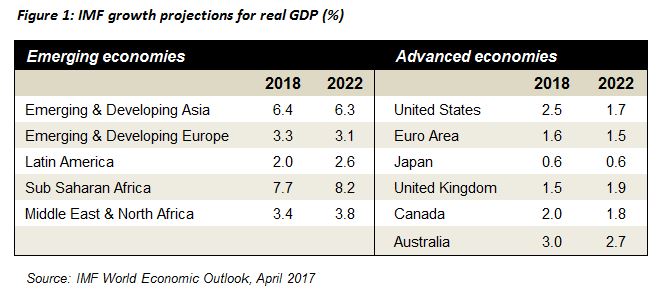
EMs are not homogenous and the countries within the universe exist right along the spectrum of economic development. Levels of GDP growth in EMs can also be more volatile than in developed. Nevertheless, it is possible to demonstrate that there are generally higher levels of GDP growth in EMs, given less mature economies. The IMF’s growth projections are shown in Figure 1.
ii) Higher GDP growth translates to higher equity market returns
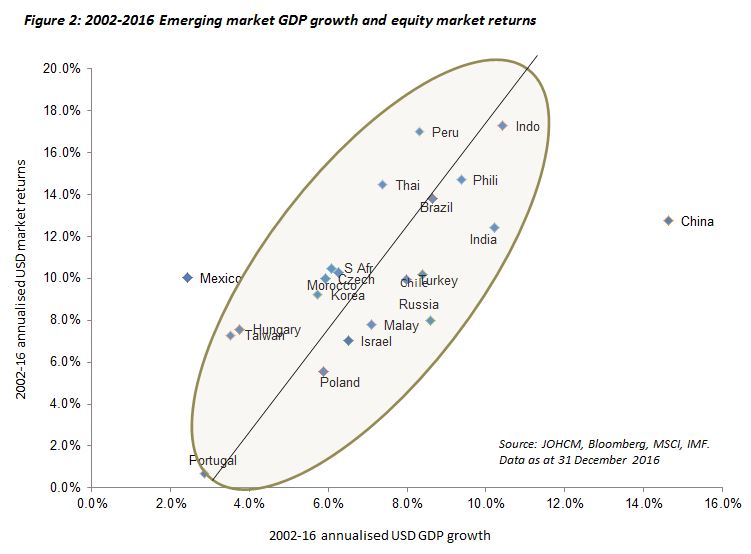
There are ultimately two drivers of equity returns: earnings growth and valuation. Valuations can have a significant impact in the short-term, but are ultimately mean-reverting. Over the long term, however, it is earnings growth which has the greatest effect upon equity returns. The ultimate effect is that – contrary to a common misconception – over the long-term there is an observable and positive relationship between GDP growth (via the medium of growth in corporate earnings) and equity market returns for almost all EMs (Figure 2).
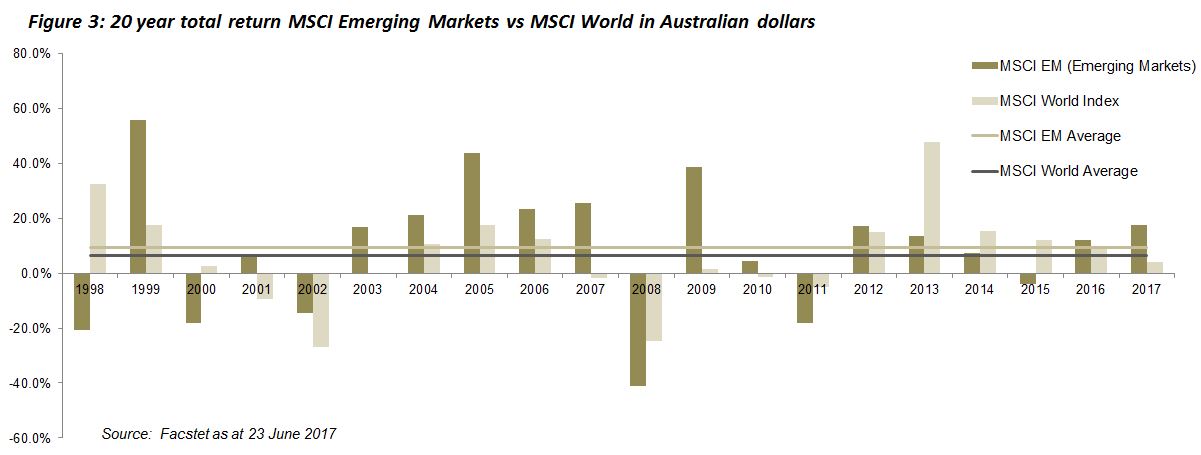
The upshot is that, at an index level, EMs have delivered superior returns to DMs over the last twenty years, as demonstrated in Figure 3. Over this period, the average calendar year return for MSCI Emerging Markets has been 9.13% versus 6.56% for the MSCI World – a difference of 2.57% pa (all AUD). In US dollars, MSCI Emerging Markets has returned 12.39% pa, versus 7.83% for MSCI World, a difference of 4.56%.
iii) Differing growth profiles brings benefits from diversification
Emerging and developed markets have historically displayed different growth profiles. For example, in the period from 2001 to 2007 EMs significantly outperformed DMs. However, more recently, from 2001 to 2015 it has been the other way round. These periods have often included a ‘stand-out’ year where one asset has significantly outperformed the other – such as 2005 and 2009 for EMs and 2008 and 2013 for DMs. Crucially, relative performance between the two can swing quickly. For example, EMs significantly underperformed DMs by 20.9% in 2000, then outperformed by 15.4% the following year. Likewise, in 2008 EMs underperformed DMs by 16.1%, then swung about to outperform by 37.4% the following year (all figures in AUD).
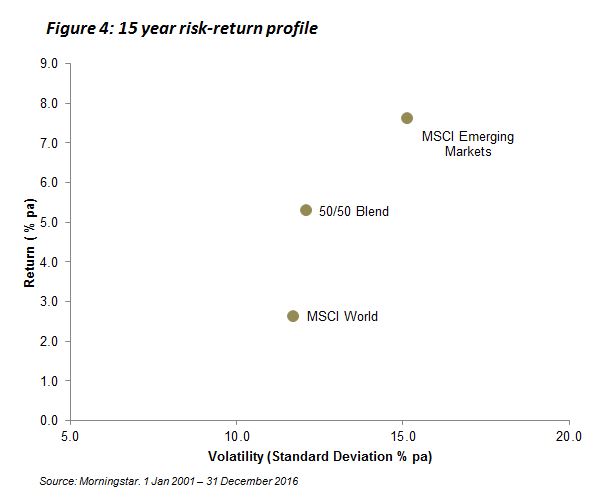
Maintaining an exposure to EMs as part of a global equities allocation removes the imperative to try to time these significant and often swift swings in sentiment. Figure 4 demonstrates that a simple 50/50 split between MSCI World and MSCI Emerging Markets would have delivered a significantly higher return, at a very small increase in risk, than a purely developed market portfolio over the last fifteen years.
BT Wholesale MidCap Fund (APIR code BTA0313AU)
Effective 18 September 2017, the BT Wholesale MidCap Fund’s (Fund) benchmark changed its name from S&P/ASX 150 ex 50 Accumulation Index to BT MidCap Custom Index.
Why has the benchmark name changed?
The benchmark name change has occurred to comply with the terms of BTIM’s licencing agreement with the Fund’s benchmark provider.
What does this mean for investors?
There is no material change to the Fund’s benchmark.
From the Fund’s performance reporting perspective, the benchmark performance history will remain the same and there are no material changes to the benchmark’s calculation methodology or inclusion rules.
If you have any questions, please contact the BT Customer Relations on 1300 346 821 between 8.00am and 5.30pm (Sydney time), Monday to Friday.
New Fees and Costs Disclosure Requirements for Product Disclosure Statements
The Australian Securities and Investments Commission (ASIC) issued new fees and costs disclosure requirements through ASIC Class Order 14/1252 and Regulatory Guide 97 – Disclosing fees and costs in PDSs and periodic statements (RG97). In accordance with these new requirements we have updated our fees and costs disclosure in our Product Disclosure Statements, which should be read together with the Additional Information to the Product Disclosure Statements (collectively the ‘PDS’).
The enhanced fee and cost disclosure requirements aim to provide investors with more consistent and comparable fees and costs across all superannuation and managed investment products.
Changes to BTIM’s PDSs
Under the new fees and costs requirements, the way we disclose management costs in our updated PDSs, issued 18 September 2017, has changed.
Previously, the management costs disclosed consisted of the following components; issuer fee and any expense recoveries and performance fees (if applicable). Management costs disclosed in our PDS now also include indirect costs.
Indirect costs are certain costs which we reasonably estimate have reduced, directly or indirectly, the return of a fund. Indirect costs may include underlying investment manager fees and costs, performance related fees (if applicable) and certain derivative costs. They are reflected in the unit price of the fund and are not charged to investors as a fee or retained by BTIM.
Our updated PDSs also include changes to the disclosure of performance fees and disclosure of transactional and operational costs and borrowing costs (if applicable).
How do these changes impact investors?
It is important to note that although there is added disclosure of fees and costs, there are no new fees or costs, no increases to any fees and costs being charged to investors nor any changes in the way fees and costs are charged. This means that the returns of the Fund (and therefore an investment in the Fund) are not impacted by these changes.
If you have any questions about these changes, please contact BT Customer Relations on 1800 813 886 between 8.00am and 5.30pm (Sydney time), Monday to Friday.
Rubble – waste or rough fragments of stone, brick, concrete, etc, especially as the debris from the demolition of buildings.
It would be logical, looking at the title of this missive, to subconsciously link it to the verbal pyrotechnics between Mr Trump and Mr Kim. But some situations are best left to our imaginations (or nightmares). I thought it better to rummage around with our screens in the markets in Asia. This year a confluence of factors have helped propel Asian equities higher. Invariably, a weakening US dollar trend is a benign setting for risk asset classes. Additionally, a semblance of stability in China’s economy, combined with a synchronised global economic recovery, has helped Asian equities deliver strong returns so far this year.
Malaysia: diamonds in the rough
In any bullish environment, it is a daunting task to find good quality stocks which have not yet caught the fancy of markets. Inevitably, stocks that have not participated in the bull market seem to have lots of flaws, else they would not be the market dregs. Luckily if, like us, you possess patience, that market rubble does throw up some investment opportunities. Most of the time they play into the cyclical part of our portfolio; occasionally I find a diamond in the rough.
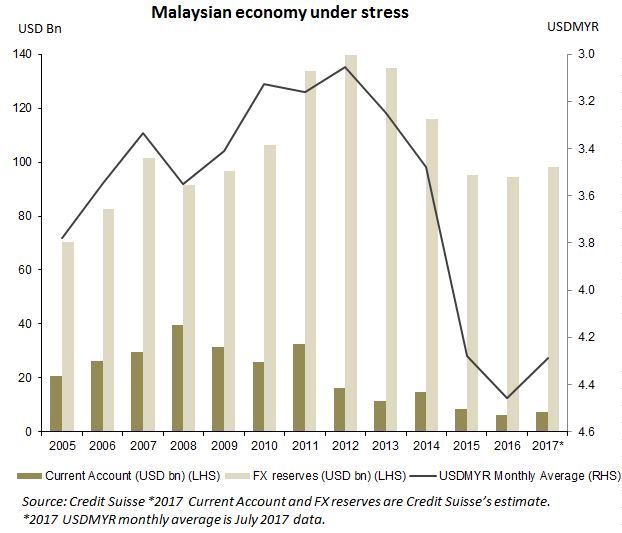
This month I thought it fitting to shed some light on Malaysia. I remained on the side-lines till earlier this year after I had sold out of my last Malaysian holding in mid-2013. The allocation in the portfolio has now risen to over 5%. In the past four years, Malaysia has gone through its fair share of problems: the sell-off in commodities curtailed exports and led to a decline in its current account surplus; the woes of the 1MDB scandal caused investors to lose confidence in the country, leading to capital flight; and, after 2013, the Federal Reserve signalled a tightening bias to monetary policy. These three events contributed to a significant weakening of the currency (approximately 35%) against the US dollar.
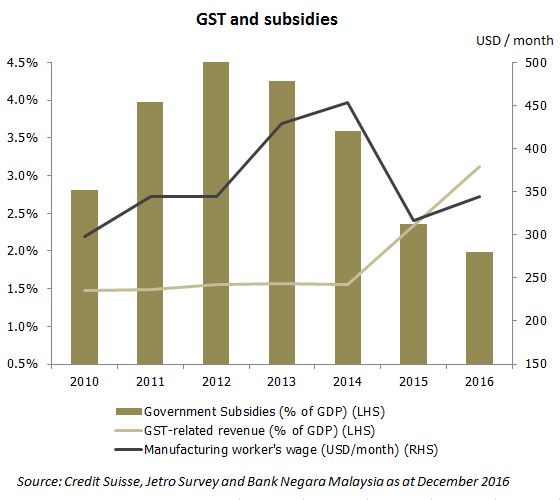
Meanwhile, economic conditions became harsher. Corporate profitability, as well as consumer disposable incomes, has stagnated or declined in the past four years. Under pressure from ratings agencies to control the budget deficit, the Government was forced to cut back on several subsidies. Consumer prices for electricity, LGP, petrol/diesel and sugar, amongst others, were raised significantly. And, in April 2015, a 6% goods and services tax (GST) was introduced for the first time. With a depreciating currency, inflation rose. The result was a big squeeze in consumers’ disposable incomes, while businesses saw a sharp rise in costs.
China swoops
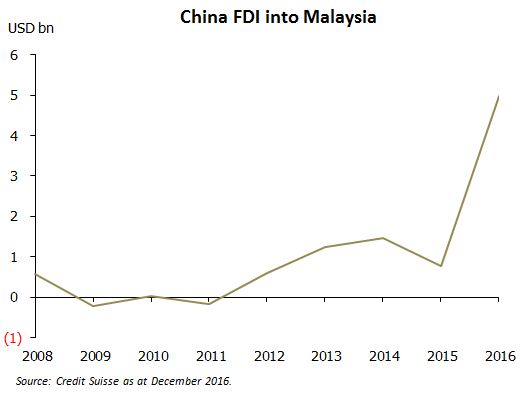
However, I do see some silver linings. China has, in my view, taken advantage of this economic situation in Malaysia. Assisting Malaysia has a geo-political angle, helping China win over one more Asian country in its quest to dominate its perceived sphere of influence. As part of the ‘one belt, one road’ initiative, China is looking to deepen ports (Malacca), build new ones (Penang and Tanjung Pelepas), construct several roads, new rail lines, bridges and industrial parks. A few property companies from the mainland have bought large swathes of land in Johor to build new homes. Some reports suggest China will, over the next five years, invest US$150bn in Malaysia while committing to import US$2trn worth of goods and services from Malaysia. These numbers sound gigantic. It would be naïve to take them at face value, yet the trend is unmistakable. Besides investments, the weaker ringgit has made Malaysia a very attractive holiday destination for Chinese tourists. One of the companies we own, Genting Malaysia, is in the process of completing a theme park in association with 20th Century Fox. Naturally, there is a simultaneous massive expansion of an existing casino next door, just in case the cheap ringgit does not do the job to rope them in.
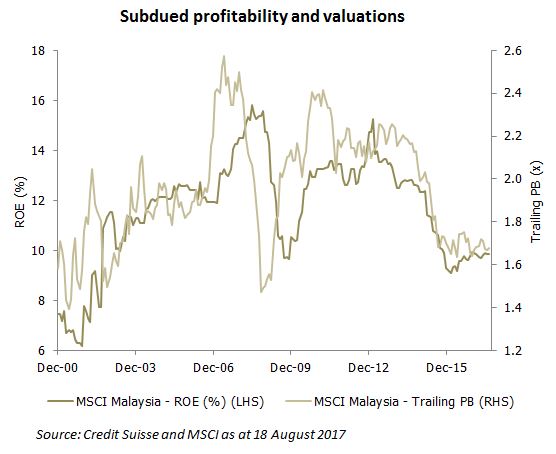
I have no illusions as to why the Malaysian stock market has been a laggard. Valuations of several stocks in Malaysia are cheap for very compelling reasons. Unlike in South Korea, we have not witnessed an earnings upgrade cycle. Unlike in China, there are no internet plays, nor is the consumer market massive. And unlike in India, the GST levy isn’t touted to be the elixir that justifies sky-high valuations because of an impending structural change. You get the drift. There is a price to pay for having no hype. Yet, turned on its head, cheap valuations for someone with patience are a boon.
I can’t say for sure what could or will change in Malaysia. But experience suggests that when a country’s currency sells off, it is the first sign of the purging of excesses. Consumers and businesses have dealt with higher costs for the past 3-4 years. Like any economic participant across the world, they start to adopt and change behaviours to contend with tougher economic conditions. Things don’t stay in the dumps for too long. As China starts to inject capital through direct investment and tourists recognise Malaysia for the bargain it has become, could these be the sparks that ignite investor interest? As always, the only conviction I have is that we won’t lose too much money in Malaysia. Once you are rubble, it’s hard to get crushed further. For a balance in the portfolio, I feel reasonably confident that Malaysia is an excellent risk-reward opportunity.
As the market digests The People’s Bank of China’s (PBoC’s) announcement late last week to scrap the 20% FX reserve requirement on Renminbi (RMB) FX swap and options transactions, it is all too easy to conclude that this necessarily means more volatility for the Chinese Yuan, and that the authorities are opposed to further RMB appreciation. It is unsurprising, therefore, to see knee-jerk reactions in both onshore and offshore RMB against the US dollar. However, as we have been arguing for some time, the analysis of China through the usual market lens results in black-and-white conclusions, when in fact the reality lies somewhere in between the extremes. Whilst the RMB has appreciated over 6% against the US dollar year-to-date, DXY has lost closer to 7%. On a trade-weighted basis, as reflected by the China Foreign Exchange Trade System (CFETS) RMB Index, the RMB remained weaker on the year until last week.
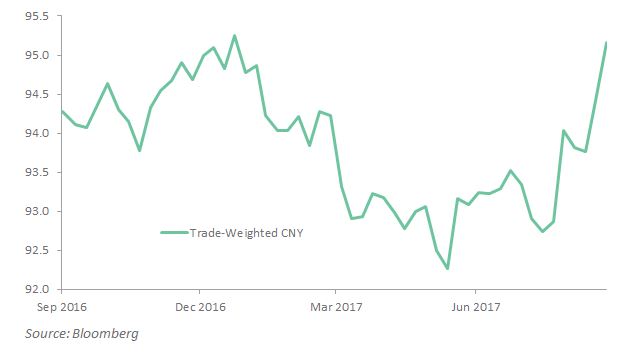
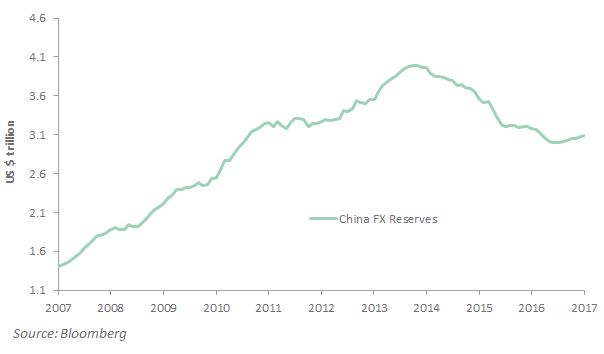
A more rapid pace of currency appreciation over the last month has been driven by a number of factors, including an increased desire by Chinese exporters to convert foreign currency back into RMB, as well as a growing onshore confidence in economic stability. Against the backdrop of Chinese FX reserves holding stable above the $3trn mark, and a local economy continuing to grow at 6.5% in spite of financial deleveraging and regulatory tightening, the relaxing of FX reserve requirements should not be mistaken for a desire to see a weaker currency by the PBoC. Rather, this position of strength provides an opportunity to build on the momentum of the Yuan gaining status as an international reserve currency. Recall that in July, MSCI finally granted inclusion of China A-Shares into the index. China hopes that such decisions which appear to allow free market forces to determine the value of its currency and will eventually lead to China’s inclusion in major global bond indices in time. Whilst these measures are unlikely to be enough, they certainly don’t hurt.
The removal of the 20% reserve requirement reduces the cost of hedging RMB currency risk, but does not by itself create an additional need to hedge. The public shaming of various Chinese corporates and their “conspicuous” offshore investments creates, if anything, a need to convert offshore proceeds back into RMB. Further, the reduction of hedging costs combined with initiatives such as Shanghai-Hong Kong Stock Connect and Hong Kong Bond Connect may in fact entice more foreigners into the onshore Chinese market. Similarly, the PBoC is rumoured to be contemplating the removal of the 17% Reserve Requirement Ratio (RRR) – the amount of cash that banks are required to hold – on major offshore banks’ RMB holdings onshore. This was also once a deterrent to betting against the Yuan, yet with recent CNH liquidity so flush, such a measure is unlikely to produce much response in spot FX rates, but succeeds in making China appear increasingly market friendly.
The PBoC is more concerned with the recent pace of RMB appreciation, rather than currency appreciation itself. Whilst the removal of the FX reserve requirement allows the currency to pause for breath, we believe it is not the PBoC’s intention to reverse the RMB’s course. As the Chinese economy transitions from a growth model reliant on old economy industries to one led by domestic demand, import growth is likely to outpace exports, as we have already started to see. Almost two-thirds of Chinese GDP growth this year has been driven by domestic consumption. A stronger RMB serves to benefit such an economic model, and isn’t it ever so helpful that it also appeases the Trump administration and its fixation on currency manipulators?
“The new configuration of [current-account] imbalances poses distinct global risks, particularly over the medium term.” IMF 2017 External Sector Report
As international investors in emerging markets, our focus is on US dollar returns, not local currency ones. This means an assessment of the outlook for the currency is an important factor to consider. In fact, it is one of the five main drivers of our investment process.
There are a number of ways to assess the over/under valuation of a currency relative to its long-term prospects. One is to use purchasing-power parity (PPP), which assumes that currency fair-values should reflect price differences between countries. The Economist’s Big Mac index is a simple and well-known example of this approach. Another approach, and one which we lean to, is to try to assess how a country’s current-account balance is moving relative to the strength of its economy and the relative prices of its imports and exports. Known as the external balance approach, we think it is of significant use, and is why we pay so much attention to current-account balances (as regular readers will be aware).
Of particular interest to us this month has been the IMF’s 2017 External Sector Report, released at the end of July, which contains IMF staff views on 29 leading economies, including 13 emerging markets. The IMF’s Consultative Group on Exchange Rates have developed sophisticated models that analyse the factors that contribute to a country’s equilibrium current-account balance, from which they can then assess currency valuations.
One of the main conclusions in the report is that the problematic current-account deficits in many emerging markets – particularly Brazil, Indonesia, South Africa and Turkey – have eased, largely on tighter fiscal and credit policies. Also gone, is the excessively large current-account surplus in China with correspondingly looser fiscal and credit policies. These serve to reduce the overall level of risk in emerging markets as an asset class.
Indeed, where the report sees concerning imbalances, it is in the sustained pattern of surpluses and deficits in the developed world. The report notes that fiscal consolidation supported the widening or persistence of excess surpluses in some key advanced economies (such as Germany and Japan; the Netherlands, Singapore and Sweden are similarly mentioned elsewhere), but did little to reduce excess deficits in other advanced economies (Australia, Canada, the UK and the US). The global risks from conflicts around trade and protectionism originate in the developed world.
That is not to say there is not the potential for large currency moves in some emerging markets. Our analysis agrees with the IMF’s views that the Korean won, Thai baht and Malaysian ringgit remain significantly undervalued and also that the South African rand is overvalued. The signals are more ambiguous on currencies nearer fair value, including the Chinese renminbi and the Indian rupee.
There is one significant risk which is perhaps underplayed in the report and overlooked elsewhere. Our analysis comes to the same conclusion, that the Saudi riyal is substantially overvalued and in need of a significant devaluation. As the currency is currently pegged to the US dollar, any such devaluation could be difficult both for Saudi citizens and for the nation’s financial system. Saudi Arabia is an otherwise interesting frontier market, but our long experience of emerging market investing makes us very wary of overvalued, pegged currencies.
In several recent pieces we have highlighted the risks involved in chasing returns in the high yield credit arena. Our August newsletter took a deep dive into the murky waters of US junk bonds and questioned whether the appetite for the area is sustainable. We also discussed why we believe the area is more vulnerable than its investment grade counterpart (see Degustation or decompression for credit investors? and High yield hunger games). These concerns have been echoed by the latest piece of negative news regarding beleaguered US retailer, Toys R Us, proving junk bond investing is not a matter of simple child’s play.
It was revealed this week that the retailer had engaged legal advice for restructuring US$400 million in debt due next year, which also puts the spectre of bankruptcy on the table. The issue underscores the broader structural challenges facing bricks and mortar retailers as the threat from deep discounters such as Walmart and online merchants like Amazon grows. Indeed, the latter has featured heavily in headlines over the past few months following its acquisition and planned price cuts for Whole Foods stores.
Chart 1: Toys R Us spreads skyrocket on bankruptcy speculation

The growing prevalence of e-commerce giants and the structural industry shift raises particular concerns for the US high yield space, where approximately 24% of the US CDX High Yield Index sits in the Consumer Discretionary sector. More than 10% of the sector operates in retail, supermarkets and department stores. This includes well-known operators like JC Penney, Sears and Neiman Marcus. Even before the latest Toys R Us development, the range of spreads in the retail industry was higher than any other, as shown in the chart below.
Chart 2: Traders perceive more risks in Retail than any other high yield area

“Not all credit is created equal”
Looking ahead, retailers are entering their most critical time of year as US shoppers prepare for the holiday season. This may explain the timing of the Toys R Us potential decision to restructure its debt. The period typically requires a large investment in inventories to meet expected demand. As such, its restructuring suggests it would prefer to avoid running down cash on its balance sheet and try to avert being pushed to the absolute brink of collapse. The decision may also serve as the canary in the coalmine for other stressed retailers as they face their most intensive part of the working capital cycle.
Our view remains that not all credit is created equal. Those investing in the high yield space face many hidden and growing risks. These are being increasingly reflected in key sector vulnerabilities. While retail faces its own problems, challenges continue for the energy and telecommunications sectors. As we witnessed in 2015 after energy prices plummeted, contagion effects stemming from the energy sector caused the broader high yield index to suffer dramatically. With several sectors now facing a raft of issues, the risks are rising that the crowd of high yield investors who have treated the asset class homogenously, will be hit again.
After a few small wobbles earlier in the year, the chase for yield has seemingly resumed, pushing US equities to record peaks and taking credit indices close to their most expensive post-GFC levels. This has seen many fixed interest managers reach further along the credit rating menu in the search for higher returns. The credit market is sufficiently diverse to cater to different investor tastes in terms of risk and return, however, behind the lure of the high yield area lie a number of not-so-hidden dangers of which every investor should be wary. In the following discussion we examine the case for spread decompression and the near term catalysts that render high yield debt more vulnerable.
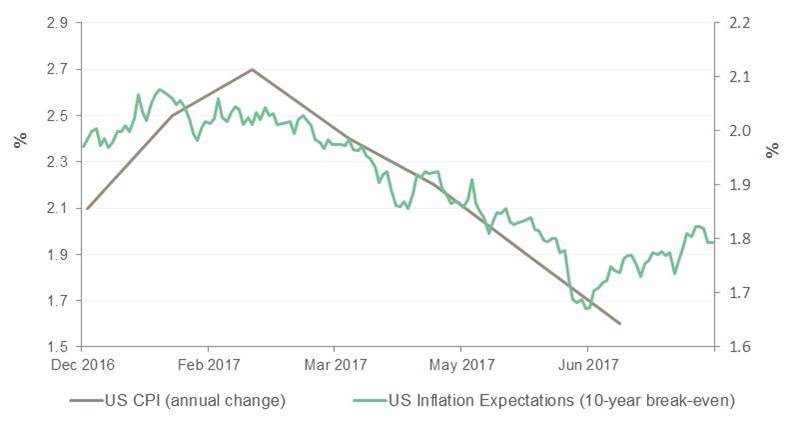
One of these dangers is the evolving broader macroeconomic backdrop. For the first time in the post-GFC era, most of the world’s developed market central banks are on the path to policy normalisation. Critically, this is in the absence of a material pick-up in inflation and inflation expectations. In fact, both measures have actually fallen this calendar year as reflected in the chart below.
Chart 1: Inflation expectations have fallen
Source: Bloomberg
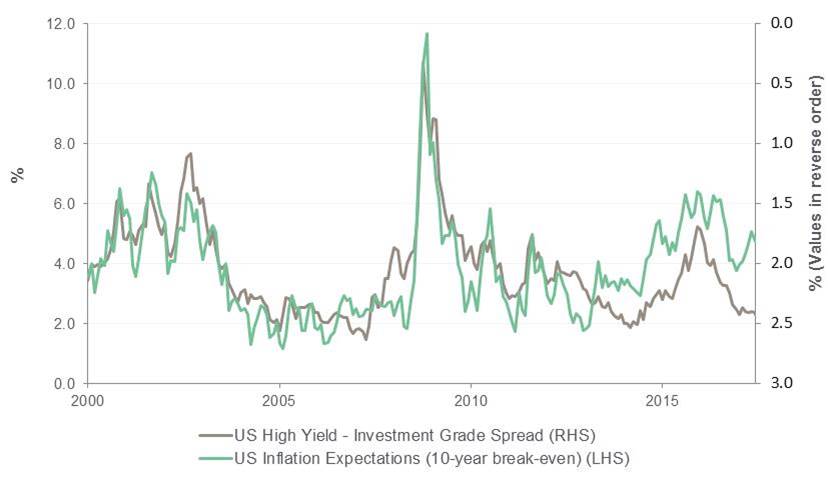
Historically, such declines in inflation expectations have been a negative for credit. This makes intuitive sense when we consider that inflation expectations also provide a gauge of sentiment towards future economic growth, which helps drive company revenues and how debt is serviced. It is important to make a distinction here between debt in the investment grade camp (BBB or above) and junk bonds (BB or below), also known as high yield. It is the latter camp that is the most sensitive to a shift in the economic landscape. The chart below illustrates that the spread between the difference in yield on junk and investment grade typically widens when inflation expectations fall i.e. junk bonds underperform.
Chart 2: Junk bonds underperform when inflation expectations fall
Source: Bloomberg
It is also important to consider that risks can vary considerably within each credit rung of the junk bond category. While many credit investors turn to this area in an attempt to boost yields, there are varying degrees of risks that do not necessarily compensate the investor with a higher return.
“The ability of CCC issuers to service their debt would be severely impeded if rates rose just 1.0%”
For example, in the CCC rating category the extra yield offered on issuers declines considerably as debt increases. On average, a company with three times leverage only offers an extra 10 basis points above a company with two times leverage. Further, the ability of CCC issuers to service their debt would be severely impeded if rates rose just 1.0%, to the extent that the interest payments would need to be funded by issuing further debt.
Structural change leads to risks at sector level
There are also varying vulnerabilities and growing risks at the sector level due to ongoing structural industry changes. These shifts cannot be weathered as easily by the high yield space when compared with their investment grade counterparts, given the former lacks the same financial flexibility. Further, if we are at the late stages of the US economic cycle, the impact of such changes are likely to be amplified by cyclical headwinds.
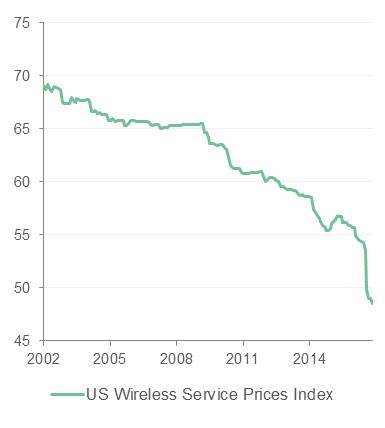
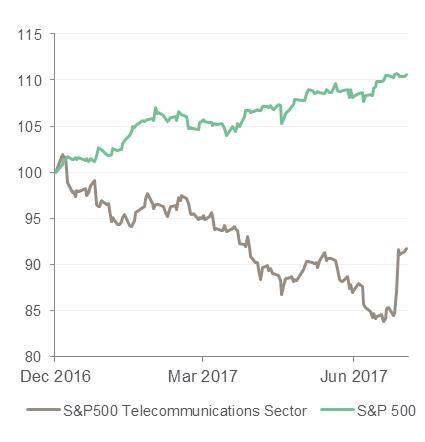
Delving deeper, while the energy sector faces its own challenges from weaker oil prices, the telecommunications and consumer spaces are looking increasingly concerning. For example, telecommunications are enduring a significant drop in the price of their services. This is evident in the Wireless Services Price Index, which has fallen by 11% in the six months to the end of June. While the reaction has been relatively muted in high yield telecommunications credit so far, the negative impact can be seen much more clearly in equities.
Charts 3 & 4: High yield telecommunications vulnerabilities increase as service prices plunge
Source: Bloomberg
The consumer-orientated areas are also a worry as supermarkets and food have more recently joined the longer term weakness in broader retail. This follows on the back of the Amazon-Wholefoods acquisition announcement, reflecting the growing threat of disruption from online retailers on more traditional distribution channels.
High yield (junk) bonds to underperform
With these factors in mind, we believe the high yield credit area is much more vulnerable than its investment grade counterpart. As such, we have positioned our alpha portfolios to benefit from the underperformance of junk bonds. This is achieved through buying protection on high yield indices and selling protection on safer investment grade credit. By selling protection on investment grade, the cost of our high yield trade is reduced. In turn, the trade performs well if we see a widening of high yield spreads versus investment grade. We see this as a reasonable probability of occurring in the near term. In turn, this is a relatively defensive approach that aims to protect portfolios, as well as offer a more active alternative that can still deliver returns when more conservative credit outperforms.
Within our yield focused funds we advocate for a more diversified approach to generating regular income by looking beyond credit markets and gain exposure to Australian shares that are generating consistent dividends. The Australian share market has established a remarkably reliable track record of delivering dividend yields of around 4% since 1982 and presents a suitable complement to a portfolio of high grade credit and corporate debt. With this approach investors can mitigate the exposure to risks that are gathering steam in parts of the credit spectrum.