
How should global equities investors approach this market? Which sectors should investors consider? Here’s a view from Pendal’s CHRIS LEES
- Healthcare and semi-conductor stocks favoured
- Watch out for growth traps and value traps
- Find out about Pendal Global Select Fund here
GLOBAL equities investors are navigating a range of factors right now including rising inflation and interest rates, the continuing Ukraine conflict, Chinese Covid lockdowns and slowing global growth.
How should global equities investors approach this volatile market? Which sectors should they consider?
Chris Lees, co-manager of Pendal Global Select Fund, points investors towards industries such as healthcare and semicondictors.
“According to our process, healthcare is the best defensive growth sector, semiconductors are the best cyclical growth industry, and the commodity-exporting countries are attractive because they have both defensive and cyclical growth characteristics,” says Lees.
“Our top-down monthly sector/regional scorecard has seen Europe, Japan and the consumer discretionary sector all deteriorate, with the more defensive healthcare sector improving.
“We have been buying some new stocks in the healthcare sector and think it could be one of the leading sectors for the next several years.”
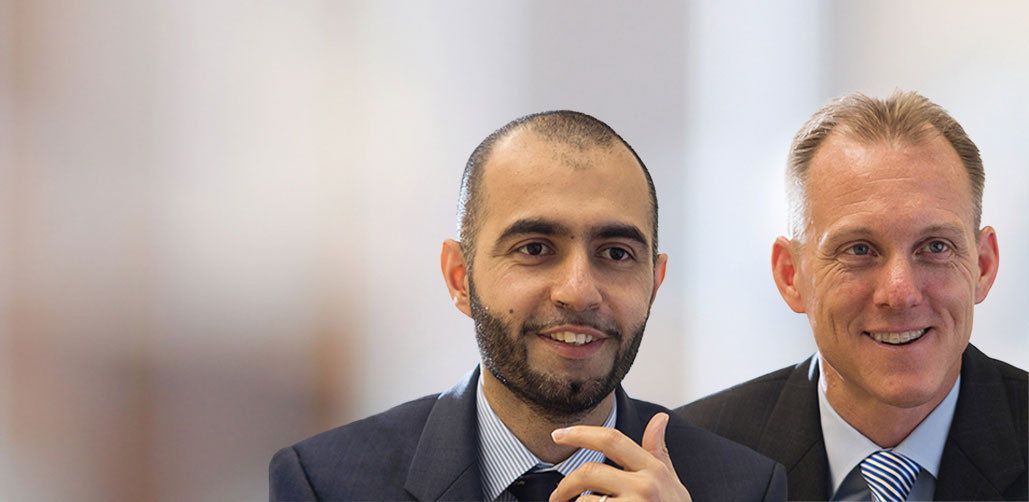
Pendal Global
Select Fund
Something very
different in
global equities
But Lees warns of “demand destruction” in commodities as central bankers around the world continue to put interest rates up to slow down demand to reduce inflationary pressures.
He says it’s a good time to sell both “growth traps” — speculative, unprofitable, concept stocks, and “value traps” — cyclicals with leveraged balance sheets.
“Look to buy the dip in steady growth ‘compounders’ once the worst of the interest rate rises are over,” Lees says.
“As Warren Buffet wrote in his 1989 letter to shareholders, ‘it is far better to buy a wonderful company at a fair price than a fair company at a wonderful price’.”
The outlook for commodities
Lees also believes this commodity cycle will be different from the last one.
The 2002-2008 commodity cycle was driven by the positive demand shock from China joining the World Trade Organisation.
The current commodity cycle is driven by the negative supply shock from Russia invading Ukraine.

Adviser Sam is invested
in making our world
A better place.
Watch as Sam meets a
mum rebuilding her life
thanks to responsible
investing
“If policy makers recognise and react to this new radically different regime and realise that putting up interest rates does not cure a supply-side problem, then this will probably turn out to be a mid-cycle correction,” he says.
“If not, and policy makers keep raising rates while yield curves flatten then invert, credit spreads widen, and we go into a global recession … many low-quality stocks with stretched balance sheets will have a very long way to fall.
“In that case we would move the portfolio up the quality curve and focus on those companies with rock-solid balance sheets that can weather the difficult combination of rising interest rates, rising input costs, and slowing economic growth. “
About Chris Lees and Nudgem Richyal
Chris Lees co-manages Pendal Global Select Fund with Nudgem Richyal. The pair have been working together in global equities investing for more than 20 years.
Chris has more than 32 years of investment industry experience. He joined Pendal Group’s UK-based asset manager J O Hambro Capital Management (JOHCM) in 2008 after spending 19 years at Baring Asset Management, ultimately as head of its global sector team.
About Pendal Global Select Fund
Pendal Global Select Fund is a global equities portfolio with a distinctive, yet proven approach. Fund managers Chris Lees and Nudgem Richyal have worked closely together for more than 20 years.
They manage a portfolio of 30-60 stocks using quantitative analysis and fundamental research based on decades of experience.
The team draws on the experience of 40-plus investment professionals at JOHCM and Regnan.
When is the right time to buy global equities and how best to value stocks during volatile times? Pendal global equities fund manager NUDGEM RICHYAL has some answers in this quick podcast
You can also listen to this podcast on Apple or Spotify or read an edited transcript below
An excerpt from this podcast:
What signpost should global equities investors be looking for right now?
Nudgem Richyal, co-manager of Pendal Global Select Fund: It goes back to the need to see a shift in Fed policy. Once we see a clear change in language, that the Fed is no longer worried about the politics and inflation, at that point, it will be safe to go back in.
The challenge is, markets are discounting mechanisms.
The market may anticipate any such shift in the Fed before it’s actually articulated. That’s always the $64 million question.
So that’s what we’re looking for. What we’re expecting is the market will discount a change in Fed policy, and so we’ve got to anticipate that.
One of the ways to do that would be to see if the inflation data itself peaks. That hasn’t happened. It was expected to happen last week, but it didn’t.
Chair Jerome Powell isn’t talking down interest rate rises at the moment.
But at some point the market will anticipate he will shift.
About Nudgem Richyal
Nudgem Richyal co-manages Pendal Global Select Fund with Chris Lees. The pair have been working together in global equities investing for more than 20 years.
Nudgem has 22 years of industry experience, joining J O Hambro Capital Management (a wholly owned subsidiary of Pendal Group) with Chris in 2008. He was previously an investment director with the Global Equity Group of Baring Asset Management, where he worked closely with Chris since 2001.
About Pendal Global Select Fund
Pendal Global Select Fund is a global equities portfolio with a distinctive, yet proven approach.
Fund managers Chris Lees and Nudgem Richyal have worked closely together for more than 20 years.
They manage a portfolio of 30-60 stocks using quantitative analysis and fundamental research based on decades of experience.
The team draws on the experience of 40-plus investment professionals at JOHCM and Regnan.
Europe is likely to accelerate renewable energy as a preferred solution over fossil fuels. Regnan’s TIM CROCKFORD explains why
- Russia’s invasion has upended Europe’s energy supply
- LNG and nuclear could take years to roll out
- Renewables, hydrogen, batteries can be operating sooner
RUSSIA’S invasion of Ukraine could accelerate the uptake of renewable energy as European regulators fast-track approvals and sweep away bottlenecks to alleviate the continent’s energy crisis, says Regnan’s Tim Crockford.
Russia’s aggression has upended energy markets and propelled oil and gas prices to multi-year highs, triggering question-marks about what Europe can do to diversify its energy supply.
Before the invasion, Europe was heavily dependent on Russia for gas, oil and coal. Russia accounted for 55% of Germany’s natural gas supplies in 2021, more than a third of its crude oil and about half its hard coal.
While the humanitarian crisis remains a priority, focus is turning to “how governments respond and what effect this will have on renewables,” says Crockford, who heads up Regnan’s Global Equity Impact Solutions Fund. (Regnan is part of Pendal Group).
“We believe in the short term, it’s going to accelerate production increases in fossil fuels as well as renewables,” says Crockford.
“But it brings a longer-term, heightened risk for investors of stranded assets in the fossil fuels space” because the additional supply coming online is contingent on current higher prices lasting into the longer term.”

Find out about
Regnan Global Equity Impact Solutions Fund
Part of the fossil fuel price reaction to the invasion can be explained by the fact that declining investment in fossil fuel capacity in recent years has not been matched by equivalent investment in renewables.
“So, while people have been talking about growth in renewables, we would actually argue that the growth has happened at a slower pace.
“Now you’re starting to see the catch up being played out.”
LNG ramp-up faces hurdles
The EU has a difficult balance to achieve — energy security within existing decarbonisation targets.
The likely outcome is a ramp-up in liquified natural gas (LNG) — which is expected to rise 70% by 2024 in continental Europe, albeit amid falling overall gas consumption.
But there is no short-term solution to lifting fossil fuel output, says Crockford.
One reason is that most of the existing production of LNG is tied to long-term contracts — predominantly going to Asia.
“So, while theoretically, LNG should be the energy source that is most responsive to the greater need, it’s not actually materialising.”
Another problem: Europe has little spare “regassification” capacity to make use of liquid LNG imports.
What it does have is designed for gas to flow from east to west. LNG receiving facilities in Spain have capacity, but there are no pipelines to send the gas back eastwards across Europe.
“This is something that will take three to five years to put in place from when the investment decisions are made,” says Crockford.
Expect Europe to accelerate renewables
Among alternative energy sources, coal is not feasible partly because it is politically unpalatable but also because it has been through a major decommissioning process in recent years, says Crockford.
Meanwhile, public perception towards nuclear “has done a 180, but it’s not as simply as flicking a switch and turning the plants back on again — the leads times are seven to 10 years”.
While renewable energy is equally no quick fix, Crockford says investors should expect many governments across Europe look to accelerate renewable investment.
“In addition to making it more likely that they will be brought into line with net zero commitments, renewables can be operational sooner than new fossil fuel and nuclear capacity.
“This is particularly true for small-scale solar and onshore wind, but even offshore wind has a theoretical lead time of 18-24 months after an investment decision has been made.”
He says the main bottlenecks for renewables are getting permits from regulators and grid connections, but EU policy makers are acting on this by directing governments to speed up the permitting process.
Other beneficiaries of the push for energy independence are likely to be energy storage — both hydrogen and batteries — and companies that help businesses and households improve their energy efficiency.
Renewables, hydrogen, batteries set to win out
“In summary, while we are likely to see a rise in short-term support for fossil fuels, it is likely to be curtailed by supply and lead-time constraints,” says Crockford.
“It is our view that this increases the medium-term risk of assets becoming stranded, as capital is likely to be sunk into assets that command a higher cost per unit of energy relative to older capacity and therefore require commodity prices to remain higher for longer to achieve their expected ROIs.
”At the margin, therefore, it would seem to us that renewables, hydrogen and battery storage and energy efficiency are poised to win out.”
About Tim Crockford
Tim Crockford leads Regnan’s Equity Impact Solutions team and is senior fund manager of Regnan Global Equity Impact Solutions Fund. Tim previously managed the Hermes Impact Opportunities Equity Fund after co-founding the Hermes impact team in 2016.
About Regnan
Regnan is a responsible investment leader with a long and proud history of providing insight and advice to investors with an interest in long-term, broad-based or values-aligned performance.
Building on that expertise, in 2019 Regnan expanded into responsible investment funds management, backed by the considerable resources of Perpetual Group.
The Regnan Global Equity Impact Solutions Fund invests in mission-driven companies we believe are well placed to solve the world’s biggest problems.
The Regnan Credit Impact Trust (available in Australia only) invests in cash, fixed and floating rate securities where the proceeds create positive environmental and social change. Both funds are distributed by Perpetual Group in Australia.
Find out about Regnan Global Equity Impact Solutions Fund
Find out about Regnan Credit Impact Trust
For more information on these and other responsible investing strategies, contact Head of Regnan and Responsible Investment Distribution Jeremy Dean at jeremy.dean@regnan.com.
ESG investors can have a lot of influence over businesses, but countries are harder. Will this change in the wake of Russia’s invasion of Ukraine? We asked Pendal ESG credit analyst Murray Ackman
An excerpt from this podcast:
ESG investing has two main objective, says Pendal ESG credit analyst Murray Ackman.
“One is about avoiding a financial loss or achieving an upside, and two is about bringing about change.
“Avoiding your financial loss or achieving an upside becomes pretty relevant when we’re looking at unsustainable areas or sectors that might be regulated out of existence.
“The quintessential stranded asset is coal plants, which will have limited use when renewables make up a much larger part of the electricity grid.
“It could also be areas where regulations, sanctions or potential changes in the future will impact the viability of various assets.
“This doesn’t necessarily mean that these types of assets are going to go to zero. It just means it could be unpopular, shrinking or there’s low liquidity in the area.
“The non-financial components can be simply that you don’t like what the industry or a particular company is doing.
“We’ve seen controversies becoming much more prominent as a reason why investors are looking to get out of a particular investment.
“You can have a lot of influence over businesses, but countries are a lot bigger and a lot harder to influence, though there have been examples such as South Africa.
“The Russian example is perhaps a little idiosyncratic because there’s widespread sanctions and the speed and scale of condemnation in the west is very unique.
“Very few businesses have applied the same standards to other countries that have invaded sovereign nations although we can see the English Premier League is starting to question this in regard to Saudi Arabia and Yemen, so maybe this will change.
“We’ve seen that things happen and there is a resetting of the status quo view, so perhaps this is a watershed moment on the way in which we invest in countries.”

Pendal Sustainable Australian Fixed Interest Fund
An Aussie bond fund that aims to outperform its benchmark while targeting environmental and social outcomes via a portion of its holdings.
About Murray Ackman and Regnan
Murray is a Senior ESG and Impact Analyst with sustainable investing leader Regnan.
He also provides fundamental credit analysis on Environmental, Social and Governance factors for Pendal’s Income and Fixed Interest team.
Murray has worked as a consultant measuring ESG for family offices and private equity firms and was a Research Fellow at the Institute for Economics and Peace where he led research on the United Nations Sustainable Development Goals.
Find out more about Regnan here
Regnan Credit Impact Trust is an investment strategy that puts capital to work for positive change.
Pendal Sustainable Australian Fixed Interest Fund is an Aussie bond fund that aims to outperform its benchmark while targeting environmental and social outcomes via a portion of its holdings.
What’s the outlook for inflation in Australia, how will the Reserve Bank react and is it time to consider going overweight bonds? Pendal’s TIM HEXT outlines his view in this fast podcast
An excerpt from this interview with Pendal’s head of government bond strategies Tim Hext:
Should investors be thinking about government bonds now, given what they’re yielding?
Market pricing – as in what you can achieve by buying securities – has three-year rates in Australia up through 3%.
If you buy a three-year bond today, you are going to get a 3% return for the next three years.
Forget where your term deposit or cash rates are today. The market is already factoring in 3% cash rates and believes we’re going to get there almost by the end of this year.
I think they’re probably going to end up closer to 2% than 3%, but the point is the market pricing.
So if you buy a bond today, you are buying the expected interest rates in the future, which are quite high.
A 10-year bond is now 3.5%.
Last time we spoke we were heading through 2.5%. I said then, if you are underweight bonds, you might want to start thinking about getting back to neutral.
I think they’re starting to get into the territory where you could even look at going overweight bonds.
I do believe inflation eventually heads back 2.5% to 3%. And I believe real interest rates – in other words the return you get above inflation – shouldn’t move a lot higher than where they are now, which is around about 1% for 10 years.
In other words, if you give the government your money today, you are in a sense locking in an inflation rate, somewhere around 2.5%, plus an extra 1% return on top, which in my mind for a risk-free asset is quite a good return.
(We’re not trying to compare it to equities because they’ve got very different characteristics.)
My advice now is people should be thinking in the medium-to-long term about bonds starting to represent good value.
Listen to the full podcast above

Find out about
Pendal’s Income and Fixed Interest funds
About Tim Hext and Pendal’s Income & Fixed Interest boutique
Tim Hext is a Pendal portfolio manager and head of government bond strategies in our Income and Fixed Interest team.
Tim has extensive experience in banking, financial markets and funding including senior positions with NSW Treasury Corporation (TCorp), Westpac Treasury, Commonwealth Bank of Australia, Deutsche Bank, Bain & Co and Swiss Bank Corporation.
Pendal’s Income and Fixed Interest boutique is one of the most experienced and well-regarded fixed income teams in Australia.
Find out more about Pendal’s fixed interest strategies here
About Pendal
Pendal is a global investment management business focused on delivering superior investment returns for our clients through active management.
In 2023, Pendal became part of Perpetual Limited (ASX:PPT), bringing together two of Australia’s most respected active asset management brands to create a global leader in multi-boutique asset management with autonomous, world-class investment capabilities and a growing leadership position in ESG.
Growth in China has been slowing amid headlines of widespread Covid lockdowns. In this fast podcast Pendal’s AMY XIE PATRICK explains what it means for Aussie investors
You can also listen to this podcast on Apple or Spotify
An excerpt from this podcast
Amy Xie Patrick, Pendal’s head of income strategies:
Some leading indicators for China’s growth are back at levels last seen at the start of the pandemic.
The recovery path is uncertain as long as Beijing sticks to its zero-Covid policy.
What does that mean for the global economy – and specifically for fixed income investing?
“This kind of growth slowdown in China will ultimately impact the rest of the world,” says Pendal’s head of income strategies, Amy Xie Patrick.
“The reason we’ve all been sheltered so far is because our comeback from Covid – thanks to a lot of fiscal stimulus around the world — has helped buffer some of these headwinds coming out of China.
“But the other side of the picture, at least in the short term, is these lockdown measures are leading once again to bottlenecks in supply chains and logistics.
“Unfortunately for the time being, global inflationary pressures will grow as long as Chinese lockdowns continue to intensify.
“Those opposing forces mean different things for fixed income.
“Slowing growth should mean that bonds have their heyday again.
“But in the near term it’s difficult to say this is the turning point in bond yields, because inflation is still a worry.
“If the growth situation in China gets materially worse – which isn’t our base case –fixed income portfolios that look a lot like equities portfolios with a lot of credit and high yield in them will fare poorly.
“But if you are concerned about the growth picture – and you are willing to once again dip your toe into more pure fixed income portfolios that rely much more heavily on that duration lever – those portfolios will be more reliable at delivering a defensive performance profile if the worst scenario eventuates out of China.”
Find out about
Pendal’s Income and Fixed Interest funds
About Amy Xie Patrick and Pendal’s Income and Fixed Interest team
Amy is Pendal’s Head of Income Strategies. She has extensive expertise and experience in emerging markets, global high yield and investment grade credit and holds an honours degree in economics from Cambridge University.
Pendal’s Income and Fixed Interest boutique is one of the most experienced and well-regarded fixed income teams in Australia. The team oversees some $20 billion invested across income, composite, pure alpha, global and Australian government strategies.
Find out more about Pendal’s fixed interest strategies here
About Pendal Group
Pendal is a global investment management business focused on delivering superior investment returns for our clients through active management.
What does the dramatic fall of the Japanese Yen mean for investors? Pendal’s NUDGEM RICHYAL, co-manager of Pendal Global Select Fund, explains in this fast podcast
You can also listen to this podcast on Apple or Spotify or read an edited transcript below
An edited transcript of this podcast
The depreciation of the Yen has been one of its fastest moves in 50 years, says Pendal’s Nudgem Richyal.
“The data on my Bloomberg terminal only goes back to 1971. At one point it was falling most every day.”
Many investors expect this to continue as money flows out of the Yen into US bonds for example.
What does that mean for global equities investors?
“At this stage we wouldn’t be keen to step in and say, well, actually this [Yen depreciation] has gone too far, we need to get involved on the other side,” says Nudgem, who co-manages Pendal Global Select Fund.
“From a portfolio perspective our views are much more medium-to-long-term and it wouldn’t make too much difference.
“We have a couple of Japanese exporters and we’re not suddenly going to sell them because we think ‘well, this yen move means that so much more can be priced in.
“Trends go on longer than most people expect. I’m not going to call a top, because it’s too dangerous to stand in front of a steam roller.”
Nudgem does advise investors to keee an eye on US 10-year bonds.
“The one macro variable that may put pause to this is if the 10-year [yield] in the US stops going up. It could be that inflation’s peaked. It could be the Fed has broken something. That may put a pause to this move.
“We take currency seriously in our beta view of the market and we think you cannot afford to be oblivious to it.
“Currency is one of the mechanisms that will help or hurt you. This is a great example right now.”
Pendal Global Select Fund
Something very different in global equities
About Nudgem Richyal
Nudgem Richyal co-manages Pendal Global Select Fund with Chris Lees. The pair have been working together in global equities investing for more than 20 years.
Nudgem has 22 years of industry experience, joining J O Hambro Capital Management (a wholly owned subsidiary of Pendal Group) with Chris in 2008. He was previously an investment director with the Global Equity Group of Baring Asset Management, where he worked closely with Chris since 2001.
About Pendal Global Select Fund
Pendal Global Select Fund is a global equities portfolio with a distinctive, yet proven approach.
Fund managers Chris Lees and Nudgem Richyal have worked closely together for more than 20 years.
They manage a portfolio of 30-60 stocks using quantitative analysis and fundamental research based on decades of experience.
The team draws on the experience of 40-plus investment professionals at JOHCM and Regnan.
Almost all millennial investors say they are interested in sustainable investing according to a recent US survey. Pendal Group’s ANDREW PARRY explains the opportunity
- Inheritance is bringing younger clients to financial advisers
- Younger generation has acute awareness of changing social norms and environmental concerns
- Opportunity for advisers to educate the market
MANY investors wrongly believe sustainable investing implies a trade-off that involves giving up returns, says Pendal’s Andrew Parry.
This misperception is an opportunity for financial advisers to educate their clients, says Parry, who heads up investments at Pendal’s Regnan and J O Hambro Capital Management businesses.
“This is one of the education matters that we’re all going to have to deal with because we have to get over this barrier that integrating ESG considerations to your investment decisions costs money,” says Parry.
“I think a better way to frame it is that if you’re not thinking about these issues, you can’t have the complete picture and therefore you’re more likely to introduce more uncertainty by not having the full information when investing.”
Integrating environmental, social and governance considerations in investing is of critical importance for advisers because younger investors are increasingly demanding their money is managed sustainably.
More advisers offer sustainable investing
More than 40 per cent of advisers in Australia now offer responsible investment options, according to surveys by Wealth Insights.
The number is expected to pass 50 per cent this year and 65 per cent in the next few years.
“That’s going to continue to grow largely because of consumer preferences,” says Parry.
It’s not just greater awareness across society, but also a demographic shift in investors from older to younger generations, who have a more acute awareness of changing social norms and environmental concerns.
Find out about
Regnan Global Equity Impact Solutions Fund
“We’re beginning to see generational shift that is going to continue for a long time,” he says.
Almost 80 per cent of US investors and 99 per cent of millennial investors say they are interested in sustainable investing according to research by Morgan Stanley in December 2021.
“People are beginning to ask their investment advisers for advice on how to make the change — 75 per cent of millennial investors are planning to change the way that they invest to reflect their sense of social justice.
“There is a vast amount of money that is going to be inherited over the next 10 to 20 years.
“This is something that is going to reshape the demand for these products for many years to come.”
Parry was speaking at a recent Pendal webinar titled How making a difference can make money.
The presentation can be viewed along with other recent Pendal webinars at pendalgroup.com/webinars (free registration required).
Fast growth for sustainable investing
The past three years have seen an explosion in interest in sustainable investing which is showing no signs of stopping.
“On certain projections it’s expected that some $50 trillion of assets will be invested with some form of ESG target or integration by 2025,” Parry says.
“It’s not about ESG as a label — it’s about ESG as an input into all our decision-making.
“Why wouldn’t you think about the environmental influence on business models and on economic activity?”
“Why wouldn’t you think about the social consequences of how COVID is recalibrating the ability of companies to attract workers/.
“By missing out these inputs, you may be missing valuable and material information.
“ESG is not about the label — it’s simply finance 101.”
About Andrew Parry
Andrew is Head of Investments for Pendal Group’s sustainable investing business Regnan as well as our UK-based asset manager J O Hambro Capital management.
He has more than 30 years of asset management experience with a focus on equities, investment strategy, business development, leadership and strategic client relationships. Over the past decade Andrew has developed a special focus and indepth knowledge of sustainable and impact investing.
About Regnan
Regnan is a responsible investment leader with a long and proud history of providing insight and advice to investors with an interest in long-term, broad-based or values-aligned performance.
Building on that expertise, in 2019 Regnan expanded into responsible investment funds management, backed by the considerable resources of Perpetual Group.
The Regnan Global Equity Impact Solutions Fund invests in mission-driven companies we believe are well placed to solve the world’s biggest problems.
The Regnan Credit Impact Trust (available in Australia only) invests in cash, fixed and floating rate securities where the proceeds create positive environmental and social change. Both funds are distributed by Perpetual Group in Australia.
Find out about Regnan Global Equity Impact Solutions Fund
Find out about Regnan Credit Impact Trust
For more information on these and other responsible investing strategies, contact Head of Regnan and Responsible Investment Distribution Jeremy Dean at jeremy.dean@regnan.com.
Bond yields have been rising and fixed interest investing is gaining advocates. But not all income funds are well positioned to take advantage. Pendal’s head of income strategies Amy Xie Patrick explains
You can also listen to this podcast on Apple or Spotify
An excerpt from this podcast
Amy Xie Patrick, Pendal’s head of income strategies:
Two-year yields in Australia have risen well over 200 basis points, even just in the last year.
One year ago, to invest in risk-free bonds in Australia, you were getting paid virtually nothing. And now you’re getting paid nearly 2.5%.
For most income funds in Australia, within the fixed interest asset class, our income targets are relatively modest, around 2% to 3%. You can get most of the way there now without even having to take credit risk, or equity risk.
But if you don’t have the flexibility within your portfolios to take advantage of this higher-yield environment, then this is a really large prize that you are being forced to forego in this environment.
The reason we highlight this today, on the podcast, is simply to say to investors that you need to look at what kind of income fund you’re getting into.
Is it a buy-and-hold, steady as she goes, let’s not do much about it, kind of income fund?
Or has your income fund actually been incredibly active to insulate you against the rising interest rate risks, the rising macro risks, that have occurred over the last 6-to-12 months?
The latter is definitely the one positioned with more flexibility, and more dry powder, to take advantage of the higher yields that we have today.
Find out about
Pendal’s Income and Fixed Interest funds
About Amy Xie Patrick and Pendal’s Income and Fixed Interest team
Amy is Pendal’s Head of Income Strategies. She has extensive expertise and experience in emerging markets, global high yield and investment grade credit and holds an honours degree in economics from Cambridge University.
Pendal’s Income and Fixed Interest boutique is one of the most experienced and well-regarded fixed income teams in Australia. The team oversees some $20 billion invested across income, composite, pure alpha, global and Australian government strategies.
Find out more about Pendal’s fixed interest strategies here
About Pendal Group
Pendal is a global investment management business focused on delivering superior investment returns for our clients through active management.
It’s now clear the humanitarian tragedy in Ukraine is a major inflection point in history. Pendal Global Select Fund co-manager CHRIS LEES explains what that means in this fast podcast
You can also listen to this podcast on Apple or Spotify
An excerpt from this podcast
“Number one, obviously [Russia’s invasion of Ukraine] it’s a tragic humanitarian disaster,” says Chris.
“Because it’s such a geopolitical inflection point, this is also a genuine financial market regime shift.
“We’re seeing things like the rotation from growth to value seems to have stopped since the Ukraine invasion.
“Now there’s a rotation from value to defensive, low beta, quality, growth stocks for example. Those are the type of medium-to-long term things that we think people should be looking for.”
Chris explains more in this 8-minute podcast
About Chris Lees and Nudgem Richyal
Chris Lees co-manages Pendal Global Select Fund with Nudgem Richyal. The pair have been working together in global equities investing for more than 20 years.
Chris has more than 32 years of investment industry experience. He joined Pendal Group’s UK-based asset manager J O Hambro Capital Management (JOHCM) in 2008 after spending 19 years at Baring Asset Management, ultimately as head of its global sector team.
About Pendal Global Select Fund
Pendal Global Select Fund is a global equities portfolio with a distinctive, yet proven approach and a 17-year track record of outperformance. Since its inception, the underlying strategy (JOHCM Global Select Fund) has delivered top-decile performance in Lipper and 2nd decile in Morningstar.*