
Markets are anticipating plenty of rate hikes. How does that affect your bond-buying decisions today? Pendal’s head of government bond strategies TIM HEXT explains in this fast podcast
An excerpt from this podcast
“There’s a view that US cash rates will peak towards the end of next year somewhere between 2.5% and 3%.
“So a lot of hikes are priced in, which means if you buy a bond today, you’re getting all those future cash rate hikes implicit in the price.
“This is an important point to make to people. Bonds don’t sell off once rate hikes begin, they sell off well in advance.
“Often by the time rate hikes are actually beginning, bonds are close to peaking,” says Pendal’s head of government bonds Tim Hext.
“There’s been a good case for being underweight bonds over the last couple of years because yields really were just far too low, given inflation. And yields even outside of inflation – which we call a real yield – were negative.
“Right now, though, we’re back to positive real yields – in Australia anyway and the US is starting to get there. And inflation expectations are quite high.
“I would suggest people who are underweight bonds should at least be looking to get back to their benchmark, or what they consider neutral in a balanced portfolio.
“I wouldn’t be going overweight bonds yet because I think this has a bit more to play out and you might see some better levels.
“But certainly bonds will at some stage perform at a strong defensive task for your balanced portfolio.
“It’s early days, but certainly I would be back to neutral in my allocation to bonds right here.”
Listen to the full podcast above

Find out about
Pendal’s Income and Fixed Interest funds
About Tim Hext and Pendal’s Income & Fixed Interest boutique
Tim Hext is a Pendal portfolio manager and head of government bond strategies in our Income and Fixed Interest team.
Tim has extensive experience in banking, financial markets and funding including senior positions with NSW Treasury Corporation (TCorp), Westpac Treasury, Commonwealth Bank of Australia, Deutsche Bank, Bain & Co and Swiss Bank Corporation.
Pendal’s Income and Fixed Interest boutique is one of the most experienced and well-regarded fixed income teams in Australia.
Find out more about Pendal’s fixed interest strategies here
About Pendal
Pendal is a global investment management business focused on delivering superior investment returns for our clients through active management.
In 2023, Pendal became part of Perpetual Limited (ASX:PPT), bringing together two of Australia’s most respected active asset management brands to create a global leader in multi-boutique asset management with autonomous, world-class investment capabilities and a growing leadership position in ESG.
Which global equities sectors look good in the current environment? Pendal Global Select Fund portfolio manager NUDGEM RICHYAL explains
- Rate rises are the only certainty
- Fed more worried about inflation than investors
- Consumer staples, healthcare relatively attractive
INFLATION, politics and war makes for a challenging environment for investors.
About the only sure thing is that interest rates will rise, though by how much remains unknown.
By lifting the official interest rate last week and laying out a timetable of rate increases for the rest of the year, the US Federal Reserve joined a host of other central bank in a tightening cycle.
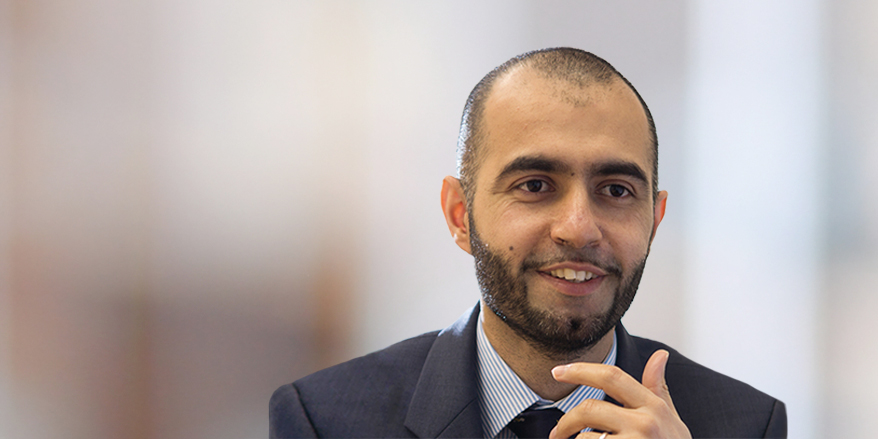
“There was already a political inflation issue in the US and the crisis in Europe has exacerbated the inflation pressure in the United States,” says Nudgem Richyal (pictured below), co-manager of Pendal Global Select Fund. “The US Federal Reserve Fed had little room.
“It shows that the stock market, which was up 29 per cent last year in the US, is not the Fed’s priority at the moment.
“Its priority is to try and tame inflation — and there’s political pressure to do so because President Joe Biden is on the record saying the inflation is something the Fed fixes.”
Add to that mid-term elections later this year where control of the House of Representatives is up for grabs, and inflation is clearly the number one public policy issue for the Fed.
“Many Americans live on low incomes and feel inflation acutely,” Richyal says. “People who are living pay check to pay check really care about gas prices and food prices and rent payments.”
Pendal Global Select Fund
Something very different in global equities
Another complication is that sharp, upward moves in crude oil often precedes a recession.
“The Fed could find itself raising rates to curtail demand to try and get inflation under control. But the energy price is itself curtailing demand.
“So, you have this non-negligible risk of the Fed raising rates into a slowdown.
“The Fed may even be raising rates into what we realise, ex-poste, is a recession. That’s when you get stagflation.”
Which sectors look best in this environment?
“If equities and bonds fall together, then that’s a market proxy for inflation, so we have to look at what tends to work in that environment.
“Historically the sectors that do best, in a relative sense, include consumer staples and healthcare,” Richyal says.
“They are sectors where businesses have pricing power and can pass on the cost of goods — where goods have limited substitute products.
“Relative earnings in those sectors will start to look better. The tend to have a more stable earnings profile. They will be crimped to some extent but will do relatively better.”
Unknowns ahead
But there are still plenty of unknowns in the quarters ahead, cautions Richyal.
“If the Fed capitulates and goes back to printing money, you’d get asset inflation and that would be great for markets.
“But it wouldn’t be good for society and the people living hand to mouth. That’s not going to happen because inflation is politically unpalatable.
“If there’s a commodity price induced recession while the Fed is raising interest rates, then that will do some of the central bank’s job for it, and they may not lift rates as much.
“If the whole issue of supply chain disruptions resolves itself, and the war is over quickly and supply chains improve, it’s possible that economies could move back into structural disinflation.
That would be great for the person in the street and might be good for market participants as well.
“But that seems a bit of a long shot right now.”
About Nudgem Richyal
Nudgem Richyal co-manages Pendal Global Select Fund with Chris Lees. The pair have been working together in global equities investing for more than 20 years.
Nudgem has 22 years of industry experience, joining J O Hambro Capital Management (a wholly owned subsidiary of Pendal Group) with Chris in 2008. He was previously an investment director with the Global Equity Group of Baring Asset Management, where he worked closely with Chris since 2001.
About Pendal Global Select Fund
Pendal Global Select Fund is a global equities portfolio with a distinctive, yet proven approach and a 17-year track record of outperformance. Since its inception, the underlying strategy (JOHCM Global Select Fund) has delivered top-decile performance in Lipper and 2nd decile in Morningstar.*
About Pendal
Pendal is an independent, global investment management business focused on delivering superior investment returns for our clients through active management. Pendal Group includes Pendal Australia, J O Hambro Capital Management, Regnan and Thompson, Siegel and Walmsley (TSW).
China looks to be stepping away from its zero-Covid policy — and that could have a major impact for investors. Pendal’s Head of Income Strategies AMY XIE PATRICK explains
- Stepping back from zero-COVID policy a powerful tool for Beijing
- Signs authorities are readying population for change
- Boost to Chinese economy will benefit companies globally
YOU won’t hear it from President Xi, but there are signs China’s Covid zero-tolerance policy is easing, even as case numbers climb.
“It looks like internally China is setting up to gradually step back from the zero-Covid policy — and that is the most powerful stimulus tool Beijing has at its disposal,” says Amy Xie Patrick, Pendal’s head of income strategies.
China has shut down whole cities in an effort to crush variants of the coronavirus. That’s having severe economic consequences, with factories closing, output falling and global supply chains faltering.
That in turn effects businesses (and their investors) from Apple iPhones to BHP’s iron ore exports.
A nuanced approach
“Beijing isn’t, and won’t, come out and drop the policy,” Xie Patrick says. “There’s not going to be any big headlines about it,” Xie Patrick says.
“It’s more nuanced.
“China has started allowing imports of the Pfizer pill and it’s covered under public medial insurance as a treatment for Covid,” she says. The Pfizer drug has been found to cut the risk of hospitalisation or death in people at risk of severe Covid-19 by up to 90 per cent.
“They are setting up the hospital system to deal with different levels of urgency of Covid cases – reserving hospital care for those most affected,” Xie Patrick says.
“One of the most important signals is that state media in China is talking more about Covid and emphasising the much milder symptoms of the Omicron variant.
“Beijing is using the state media to influence public opinion to try and change the public perception of Covid.
Find out about
Pendal’s Income and Fixed Interest funds
“The simple fact is that case numbers are intensifying despite the doubling down of lockdowns.
“Authorities have to realise they can’t keep operating like this. Every day it costs a certain amount of GDP and lockdowns are not an economically viable solution.”
It means investors can discount some of the doomsday scenarios around the Chinese economy, Xie Patrick says.
While the official growth forecast this year is 5.5 per cent, many market watchers are forecasting much less.
Xie Patrick believes achieving 5.5 per cent will be a challenge because of the downturn in the property market.
But dropping of the zero-COVID tolerance policy, covertly, is a policy tool Beijing can use.
“Retail consumption can thrive again because people will be allowed to go out again. When Chinese people change their mentality of living with COVID, then economic activity can return to normal.
“It’s the strongest policy tool China has to stimulate the economy.”
About Amy Xie Patrick and Pendal’s Income and Fixed Interest team
Amy is Pendal’s Head of Income Strategies. She has extensive expertise and experience in emerging markets, global high yield and investment grade credit and holds an honours degree in economics from Cambridge University.
Pendal’s Income and Fixed Interest boutique is one of the most experienced and well-regarded fixed income teams in Australia. The team oversees some $20 billion invested across income, composite, pure alpha, global and Australian government strategies.
Find out more about Pendal’s fixed interest strategies here
About Pendal Group
Pendal is a global investment management business focused on delivering superior investment returns for our clients through active management.
The Australian Real Estate Investment Trust sector is looking strong despite significant changes in the retail space. Pendal portfolio manager Julia Forrest explains in this fast podcast
An excerpt from this podcast
“If you look at the performance of the REITs sector during the month of February, retail was actually the strongest sector.
Even though there was a lot of disruption during the period because of Covid – and there was rental relief granted and earnings were a bit softer – the actual operating metrics themselves were improving.
So you’ve seen improving occupancy levels, leasing spreads are improving, interest in pre-leasing is improving.
Interestingly, we’re still seeing foot traffic down 20 per cent on 2019 levels, but it’s been more than compensated by the average spend which is up about 30%.
So people know what they’re going to buy when they go to shopping centres. They’re not there for particularly long. They don’t go as often as they used to, but they spend more.
About Julia Forrest and Pendal Property Securities Fund
Julia Forrest is a portfolio manager with Pendal’s Australian Equities team. Julia has managed Pendal’s property trust portfolios for more than a decade and has 25 years of experience in equities research and advisory, initial public offerings and capital raisings.
Pendal Property Securities Fund invests mainly in Australian listed property securities including listed property trusts, developers and infrastructure investments.
About Pendal Group
Pendal is an Australian investment management business focused on delivering superior investment returns for our clients through active management.
In times like these, how should investors think about their global equities portfolio? Hunker down? Buy the dips? Sell? In this fast podcast Pendal Global Select Fund co-manager CHRIS LEES explains his approach
You can also listen to this podcast on Apple or Spotify
An edited excerpt from this podcast
Every cycle is slightly different. What I think will be slightly different this time is the Fed is starting to raise interest rates as the global economy was already slowing.
In the past, the Fed was raising interest rates as the global economy was still accelerating, but because of Covid it got delayed.
So this time is slightly different. I just repeat that. This time is slightly different in that the Fed hasn’t even started raising rates – it’s talking about them. Actually, if you look at GDP growth rates, they’re beginning to slow and inflation rates are probably peaking.
So it will be very volatile. It’ll be a very volatile time for financial assets. It always is as you look in history when interest rates go up. And it’ll be slightly different from previous playbooks because the timing and the sequencing is slightly different.
The potential is for a big bear market. It’s a low probability potential at the moment, but every day the probabilities of that are drifting up.
And of course the disaster in Ukraine probably increases that risk.
The bullish potential is that actually this is a normal mid-cycle correction. [But] it’s too early to tell at the moment whether this is a normal, mid-cycle correction.
Pendal Global Select Fund
Awarded researcher Zenith’s highest rating of highly recommended*
About Chris Lees and Nudgem Richyal
Chris Lees co-manages Pendal Global Select Fund with Nudgem Richyal. The pair have been working together in global equities investing for more than 20 years.
Chris has more than 32 years of investment industry experience. He joined Pendal Group’s UK-based asset manager J O Hambro Capital Management (JOHCM) in 2008 after spending 19 years at Baring Asset Management, ultimately as head of its global sector team.
About Pendal Global Select Fund
Pendal Global Select Fund is a global equities portfolio with a distinctive, yet proven approach and a 17-year track record of outperformance. Since its inception, the underlying strategy (JOHCM Global Select Fund) has delivered top-decile performance in Lipper and 2nd decile in Morningstar.*
Regnan’s impact investment team believes ‘liquid biopsy’ technology could grow into a $US20 billion to $100 billion market. Regnan analyst Maxine Wille explains
- Blood tests could diagnose cancer and disease
- Market size estimated at $20 billion to $100 billion
- Find out about Regnan Global Equity Impact Solutions Fund
A BLOOD test that can diagnose and monitor the progression of cancer and other diseases?
It’s possible.
So-called “liquid biopsy” technology has its origins as far back as the 19th century when scientists first detected tumour cells in the bloodstream.
Recent advances in DNA sequencing technology mean the technique now has the potential to revolutionise medicine — and that’s attracted the attention of Regnan’s impact investing team.
Impact investing aims to generate both a financial return and a positive impact on society.
Liquid biopsy is just one emerging diagnostics innovation that Regnan believes can enable a transition towards a more proactive and preventative healthcare model.
“Under this vision, ailments such as cancers may one day be caught through regular broad-based screening tests, rather than invasive biopsies that target a specific pathogen,” says senior Regnan fund manager Tim Crockford in the latest Regnan Global Equity Impact Solutions report.
New advances
Liquid biopsy is “the pinnacle of promise in clinical diagnostics”, says Maxine Wille, an investment analyst in Regnan’s Equity Impact Solutions team.
“It’s a non-invasive test. If the promise holds true it will not only help guide treatment decisions for insidious diseases like cancer, it also might be used as a screening tool at a very early stage to diagnose and treat cancers before they spread.”

Find out about
Regnan Global Equity Impact Solutions Fund
Diagnostics forms 70 per cent of clinical decision-making, but it has not attracted commensurate investment in the past, says Wille.
“That’s changed as a result of the pandemic which put diagnostics — and the value it creates — into the limelight,” she says.
“The promise of liquid biopsy specifically is you can now diagnose potentially up to 50 different types of cancers from a single blood draw — that’s why it’s very exciting and why we have decided to take an in-depth look at the sector,” she says.
How it works
Liquid biopsy technology aims to replace — or at least complement — the tissue-based biopsy that dominates diagnostics.
Tissue-based biopsy involves physically removing cells for investigation — typically with a scalpel or needle. It is often an intrusive process that can be painful, takes time and comes with risk.
Tissue-based biopsy has important medical limitations too. It is not easily repeated which makes it hard to monitor the progress of a disease. And the sample of cells collected is limited to the place where the biopsy was taken, meaning the test can miss things.
By contrast, liquid biopsies are non-invasive, requiring only a blood sample. They generate a complete genetic profile of a disease, and they allow repeat testing at fast turnaround times, which is critical for determining treatment efficacy.
Billion-dollar potential
Cancer remains one of the world’s deadliest and fastest-growing diseases, says Wille.
It’s responsible for one in six deaths worldwide, 70 per cent of which occur in low-to-middle-income countries, according to the WHO.
Wille says estimates for the size of the liquid biopsy market range from $US20 billion to $US100 billion. The current in vitro diagnostics market is estimated at $US60 billion.
Still, there are challenges. Early diagnosis of cancers is only useful if there are effective treatments available.
“You have to look at the investment potential from the diagnostic side but also watch how quickly the treatment landscape is evolving.”
And it is unclear if insurers and governments are willing to fund pan-cancer screening tests across asymptomatic populations.
Opportunities
But the rapid technological advances are creating exciting opportunities for investors seeking to invest in businesses that address underserved global challenges.
“We invest in companies that contribute to the UN sustainable development goals (SDGs) and one of them is health and well-being,” says Wille.
“But health is also among the most ambiguous of the SDGs — the solutions that can be invested in to meet that goal are very, very broad which means investors need to be very selective in terms of identifying good stocks.”
About Maxine Wille
Maxine is an investment analyst with Regnan’s impact equity team, which manages the Regnan Global Equity Impact Solutions Fund. Maxine previously worked with Hermes’ Impact Opportunities Equity Fund.
About Regnan
Regnan is a responsible investment leader with a long and proud history of providing insight and advice to investors with an interest in long-term, broad-based or values-aligned performance.
Building on that expertise, in 2019 Regnan expanded into responsible investment funds management, backed by the considerable resources of Perpetual Group.
The Regnan Global Equity Impact Solutions Fund invests in mission-driven companies we believe are well placed to solve the world’s biggest problems.
The Regnan Credit Impact Trust (available in Australia only) invests in cash, fixed and floating rate securities where the proceeds create positive environmental and social change. Both funds are distributed by Perpetual Group in Australia.
Find out about Regnan Global Equity Impact Solutions Fund
Find out about Regnan Credit Impact Trust
For more information on these and other responsible investing strategies, contact Head of Regnan and Responsible Investment Distribution Jeremy Dean at jeremy.dean@regnan.com.
Investors should be looking to upweight bonds in their portfolios on a medium-to-long term outlook, argues Pendal’s TIM HEXT in this fast podcast
An excerpt from this podcast
Bonds are starting to get towards levels where you could argue in the medium-to-longer term they make a lot more sense.
It’s been very difficult for me as a bond fund manager over the last couple years to recommend that bonds were a good investment down at 1%. The risks were much more to the upside.
We’re now seeing 10-year bond yields get back towards 2.5%…
I think that’s important because most asset allocators are underweight bonds.
Bonds of course are still a defensive instrument. And if we did see a recession or a sharp downturn, they will perform that task.
The beauty of it now is that if you own those bonds up around 2.5% your downside on capital is going to be more limited.
It’s not to say that the surge we’re gonna potentially see this year in services inflation and the economy itself, won’t see rates move higher than there. It’s not a wall it hits.
All I’m trying to do is make the point on a medium-to-long term basis at 2.5% I can sit here and tell people that bonds are no longer expensive.
They may not be cheap, but at least you should be looking to upweight them in your portfolio for a medium-to-long term outlook.
Listen to the full podcast above
Find out about
Pendal’s Income and Fixed Interest funds
About Tim Hext and Pendal’s Income & Fixed Interest boutique
Tim Hext is a Pendal portfolio manager and head of government bond strategies in our Income and Fixed Interest team.
Tim has extensive experience in banking, financial markets and funding including senior positions with NSW Treasury Corporation (TCorp), Westpac Treasury, Commonwealth Bank of Australia, Deutsche Bank, Bain & Co and Swiss Bank Corporation.
Pendal’s Income and Fixed Interest boutique is one of the most experienced and well-regarded fixed income teams in Australia.
Find out more about Pendal’s fixed interest strategies here
About Pendal
Pendal is a global investment management business focused on delivering superior investment returns for our clients through active management.
In 2023, Pendal became part of Perpetual Limited (ASX:PPT), bringing together two of Australia’s most respected active asset management brands to create a global leader in multi-boutique asset management with autonomous, world-class investment capabilities and a growing leadership position in ESG.
The volatile start to 2022 is bringing opportunity in global equities. In this fast podcast, Pendal’s NUDGEM RICHYAL, co-manager of Pendal Global Select Fund, explains how he is approaching the market
You can also listen to this podcast on Apple or Spotify or read an edited transcript below
An edited transcript of this podcast
Interviewer: Where does the tech sector fit in global equities portfolios right now? Are we seeing the end of the dominance of that sector or is it a pause?
Pendal portfolio manager Nudgem Richyal: Back in 2008-09 when we started the Global Select Fund product at J O Hambro, we went out saying tech looks like it’s going to be a leading sector for the foreseeable future.
At the time one of the major asset management houses was actually closing their dedicated tech fund. It’s usually a sign that something’s about to turn.
Obviously it’s been a while since then and the question that comes to mind is have we come to the end of the tech cycle?
We think it’s still open for question.
Clearly January has not been generous to tech. That’s understandable anytime you go down the road of a potential rate hike cycle because technology – and to some extent biotech and pharma as well – are seen as long-duration stocks.
And so the Net Present Value is hostage to the discount rate. As the market starts to worry about the discount rate rising, the tech sector is highly sensitive to that.
And so right now we’re in this moment where the market has decided to worry about a rate hike cycle, and that’s not a great place for tech.
Then within that [tech sector] you have stratification – what we would call the concept stocks, the stuff with very little revenue or no revenue and it’s all about the Terminal Value (a company’s value judged beyond foreseeable forecasts).
They’re the most at risk and you’ve seen that as you’ve seen huge decreases in market cap.
Look at the electric vehicles companies – especially ones that went public via the “de-SPAC” route (a merger with a publicly traded special purpose acquisition company). They have lost a lot of market cap in the last few weeks.
The market right now sees that rates are going up – and these are long-duration stocks, and therefore we need to really take an axe to the Terminal Value.
Interviewer: So there’s plenty of money looking for opportunities and these longer duration stocks are less attractive on a valuation sense. Where would you be looking to put that money?
Nudgem Richyal: I’d answer that in two steps.
One, you want to sharpen your pencil because there might be some early birthday presents through this year, as my co-manager Chris Lees would say.
Some of these stocks actually have pretty good business models and maybe the valuation just got a little bit overextended.
This will be a healthy correction for those type of names.
Who wouldn’t have loved to have bought Amazon in 2002? Who wouldn’t have loved to have bought Netflix in 2009? You’ll get those kind of opportunities within this space.
That’s one way we are looking at it.
The other way is we think it’s too early to bet on a complete regime shift.
Why do I say that?
At the moment the commentary seems to be hawkish. There’s been this idea for a long time that the Fed put protects the equity market on the downside.
But we haven’t even had a rate hike yet.
So it it’s just too early to decide whether there will be a real wholesale regime shift.
So look at it as being able to pick up some early birthday presents through this year.
The other thing to bear in mind is value rallies tend to be short lived.
So if you look at the other side, which are the short-duration stocks and how do they fare in this type of market environment?
Generally they tend to do well, but it doesn’t last that long.
So that becomes a market timing issue.
Then the last thing is – if growth starts to slow, is there really going to be much longevity to the rate hike cycle?
Interviewer: With all that in mind, if I have got money to invest, where should I be putting it? How should I be thinking right now, given the volatility and the economic prognosis that we have in front of us? What should I be looking for?
Nudgem Richyal: We’re looking for good fundamentals at the right valuation and prices which are in an up-trend.
So when it comes to any particular stock, sector or geography, those are three things we’re really keen on.
What are the fundamentals like? What are you paying for them from a valuation perspective? And is the share price headed north?
Because we want to buy something that’s going up, which carries on going up.
So we’ll carry on focusing on those type of companies. We’ll carry on focusing on those neighborhoods and in those geographies.
Pendal Global Select Fund
Something very different in global equities
Interviewer: How many stocks do you and [Pendal Global Select Fund co-manager] Chris Lees look at in a year?
Nudgem Richyal: It really varies. This year I think we are going to be looking at more than our usual number of stocks because the dislocation is going to throw up a lot of opportunities.
Periods like this I’ll start going through all the recent IPOs of the last two years. Because some of them will become orphaned.
Back in 2009-10, we picked up [global investment firm] KKR in our fund because they had done some very interesting corporate restructuring. And actually then we picked up two of the companies they themselves IPOed – XP and Avago, which went on to do really, really well.
This year we’ll be probably looking at more than two-to-three names each per week, just because we are going through what came to market in the last couple of years and what spun off.
Often what you see in market dislocations is crown jewels sometimes spun off – for reasons of shoring up the balance sheet… Just because that’s what the bank has encouraged the corporates to do.
Then the other thing is obviously we’ve had this whole de-SPAC situation.
So I think this year we’ll be looking at a lot more companies than usual.
Usually I’d say between Chris and myself it’s just one stock each a month. It’s a very low maintenance management of the product. And we run an equally weighted portfolio as well because we’ve got good conviction in the names that are in there.
That makes it very straightforward. If you look at the product at any point in time, you can see those companies that are doing well, but equally you can see those that are not doing so well.
So if we feel there’s any ambiguity in the names that aren’t doing so well, we can always shoot first, ask questions later.
But I’m just contrasting that with what I think is going to be – or is already – the reality of this year. Given the dislocation, we’ll be doing a little bit more than our usual operating maintenance on the product and portfolio.
Interviewer: That was Nudgem Richyal, senior fund manager at Pendal and J O Hambro Capital Management.
You have been listening to The Point podcast from Pendal. I’m Sean Aylmer.
About Nudgem Richyal
Nudgem Richyal co-manages Pendal Global Select Fund with Chris Lees. The pair have been working together in global equities investing for more than 20 years.
Nudgem has 22 years of industry experience, joining J O Hambro Capital Management (a wholly owned subsidiary of Pendal Group) with Chris in 2008. He was previously an investment director with the Global Equity Group of Baring Asset Management, where he worked closely with Chris since 2001.
About Pendal Global Select Fund
Pendal Global Select Fund is a global equities portfolio with a distinctive, yet proven approach and a 17-year track record of outperformance. Since its inception, the underlying strategy (JOHCM Global Select Fund) has delivered top-decile performance in Lipper and 2nd decile in Morningstar.*
About Pendal
Pendal is an independent, global investment management business focused on delivering superior investment returns for our clients through active management. Pendal Group includes Pendal Australia, J O Hambro Capital Management, Regnan and Thompson, Siegel and Walmsley (TSW).
In this fast podcast, Pendal’s head of income AMY XIE PATRICK explains the different components of bond yields and what they are indicating for 2022
An excerpt from this podcast
“The trend [in bond yields] has definitely been changing”, says Amy Xie Patrick, Pendal Australia’s Head of Income Strategies.
“What you’ve been seeing is not only that nominal yields have been rising, but real yields have also started to rise.”
What does that mean for investors?
“The rise in real yields really reflects at an economic level, a sense that the market is expecting growth to start to return to a very healthy and positive trajectory in the future.
“So positive real yields is a sign that the economy is going to be thriving. It’s going to be doing well in the future.
“Negative real yields is a sign that the economy is going to be stagnating.
“So the fact that real yields have been trending up — and in our view will go positive at some point in 2022 and continue to trend up — is actually a good sign for the economy.”
Amy Xie Patrick explains more in this fast podcast.
Find out about
Pendal’s Income and Fixed Interest funds
About Amy Xie Patrick and Pendal’s Income and Fixed Interest team
Amy is Pendal’s Head of Income Strategies. She has extensive expertise and experience in emerging markets, global high yield and investment grade credit and holds an honours degree in economics from Cambridge University.
Pendal’s Income and Fixed Interest boutique is one of the most experienced and well-regarded fixed income teams in Australia. The team oversees some $20 billion invested across income, composite, pure alpha, global and Australian government strategies.
Find out more about Pendal’s fixed interest strategies here
About Pendal Group
Pendal is a global investment management business focused on delivering superior investment returns for our clients through active management.
Impact investing – which aims to make money while solving the world’s biggest problems – went mainstream in 2021. What role will it play in portfolios this year? TIM CROCKFORD explains
You can also listen to this podcast on Apple or Spotify
An excerpt from this podcast
“Impact investing strategies are always going to be long-duration strategies,” says portfolio manager Tim Crockford, who heads up Regnan’s equity impact investment team.
“That that has to be a consideration for anyone thinking about making a step into an impact investment vehicle.
“That means impact investors will run with portfolios that are vastly different to the global equity benchmarks that you might try and measure their performance against.
“Impact investing vehicles will tend to divert capital towards smaller and medium-sized companies as opposed to some of the world mega caps and blue chip stocks that typically dominate equity indices.
“These are strategies that will run with very high active shares, very high tracking errors (the difference in returns between a portfolio and a benchmark).
“But what we are finding more and more is that investors of all shapes and sizes like the long-term view that impact investors take.
“They like the fact they can understand the themes that will ultimately drive the creation and growth of their capital over the long-term holding periods that impact investors typically take.
More and more we see investors resonating with this longer-term view and seeing through the shorter term noise and volatility that markets typically throw up.
“It means that as an investor I’m going to have to think a little bit more laterally than previously, where I might just compare to benchmarks.
“But over the longer term, it’s likely to outperform because it is at the beginning of its life cycle.”
Listen to the podcast for more examples
Find out about
Regnan Global Equity Impact Solutions Fund
About Tim Crockford
Tim Crockford leads Regnan’s Equity Impact Solutions team and is senior fund manager of Regnan Global Equity Impact Solutions Fund. Tim previously managed the Hermes Impact Opportunities Equity Fund after co-founding the Hermes impact team in 2016.
About Regnan
Regnan is a responsible investment leader with a long and proud history of providing insight and advice to investors with an interest in long-term, broad-based or values-aligned performance.
Building on that expertise, in 2019 Regnan expanded into responsible investment funds management, backed by the considerable resources of Perpetual Group.
The Regnan Global Equity Impact Solutions Fund invests in mission-driven companies we believe are well placed to solve the world’s biggest problems.
The Regnan Credit Impact Trust (available in Australia only) invests in cash, fixed and floating rate securities where the proceeds create positive environmental and social change. Both funds are distributed by Perpetual Group in Australia.
Find out about Regnan Global Equity Impact Solutions Fund
Find out about Regnan Credit Impact Trust
For more information on these and other responsible investing strategies, contact Head of Regnan and Responsible Investment Distribution Jeremy Dean at jeremy.dean@regnan.com.