
The net-zero movement is driving a ‘circular economy’ which presents opportunities for investors to make money and make the world better, argues Regnan’s MOHSIN AHMAD
- Circular economy crucial to net zero
- Companies with a technology edge are favoured
- Reverse-vending machine maker TOMRA aims to convert trash to cash
- Find out about Regnan Global Equity Impact Solutions fund
BY NOW most people know they need to understand the impact of the “net zero” movement on their investments.
Countries including Australia are pressuring companies to help reduce emissions to zero by 2050 – in order to limit a global temperature rise to 1.5 degrees Celsius above pre-industrial levels.
Science shows that’s the level needed to avert the worst impacts of climate change.
But “impact investors” also believe many activities needed to achieve net zero are an investing opportunity.
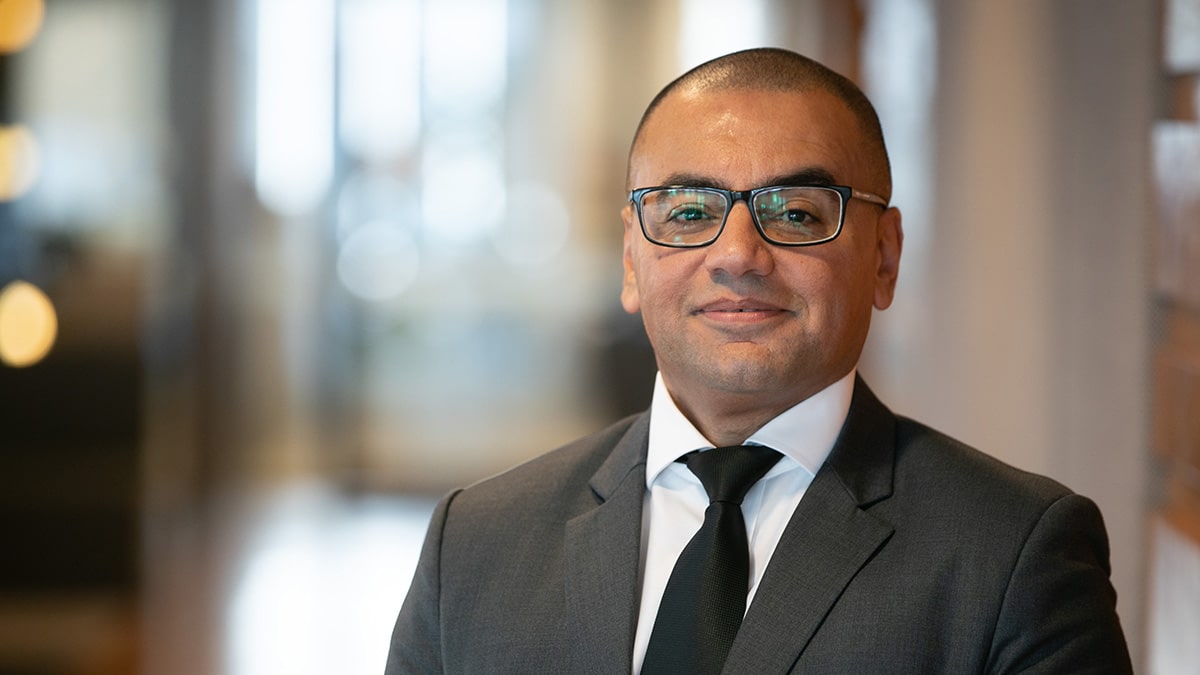
“In terms of getting to net zero, energy efficiency and switching to renewables is only going to solve half the problem,” says Mohsin Ahmad, a fund manager with sustainable investing leader Regnan.
“To get the rest of the way, we need to look closely at how we make and use products, and that’s where the circular economy comes in.”
What is the circular economy?
The circular economy is all about moving away from a linear model that we have known since the dawn of the industrial revolution, whereby we extract, we produce and we discard.
“It’s about producing more efficiently, repurposing waste, using more renewable inputs and ultimately that leads to less greenhouse gas emissions” Ahmad says.
It is also an investable trend.
From a portfolio perspective, there are three different angles, says Ahmad:
- “One is to invest in companies that facilitate a more efficient production of goods and services
- “Then there are companies that are enabling recycled inputs, renewables and biodegradable type solutions.
- “And then there are companies that leave the ecosystem in better shape.”
Ahmad says one of the lessons from recent years is that companies that can help reduce natural resource intensity will be winners in the short term.

Find out about
Regnan Global Equity Impact Solutions Fund
“These are companies that help others to minimise their input requirements and deal with some of the inflationary pressures currently prevalent.
“They will also be winners longer term because of their contribution to lowering greenhouse gas emissions.
“If we are going to speed up the transition to net zero, these companies play an important role in addressing the systemic challenge of climate change we face,” he says.
Stock story: Dürr
An example of one such company is German engineering firm Dürr, argues Ahmad.
Dürr is held in Regnan Global Equity Impact Solutions fund.
“They provide solutions to automotive and other industrial customers to improve their resource efficiency of production,” Ahmad says.
“One of the main areas they are focused on is paint application in the automotive space which is very energy and water intensive.
“About 70 per cent of the total energy consumption at an automotive assembly facility takes place in the paint shop. What Dürr has done is to significantly reduce the environmental impact of paint shops.
“They’ve been able to achieve a 67 per cent reduction in energy input in paint shops, a 71 per cent reduction in water, a 73 per cent reduction in volatile organic compounds and a 36 per cent reduction in the amount of paint being used,” he says.
Watch this video to find out more:
Where to start
Investing in circular economy companies starts with understanding the United Nations Sustainable Development Goals, and then finding a company that addresses at least one of the underlying targets in a meaningful way, says Ahmad.
“Then we look for additionality.
“Is the company doing something that’s differentiated? Have they got a technology edge? Are they doing something innovative?
“We also like companies that are in the relatively early stages of adoption of the new technology with large addressable markets.
“Companies where penetration rates are just starting to kick off and there’s a long path of growth ahead.”
Find out more about Regnan Global Equity Impact Solutions fund.
About Mohsin Ahmad
Mohsin is a fund manager with Regnan’s impact investment team. He focuses on Regnan Global Equity Impact Solutions Fund. Before joining Regnan, Mohsin was a senior analyst working on the Hermes Impact Opportunities Equity Fund. He has worked on thematic equity funds such as water, clean energy and agriculture.
About Regnan
Regnan is a responsible investment leader with a long and proud history of providing insight and advice to investors with an interest in long-term, broad-based or values-aligned performance.
Building on that expertise, in 2019 Regnan expanded into responsible investment funds management, backed by the considerable resources of Perpetual Group.
The Regnan Global Equity Impact Solutions Fund invests in mission-driven companies we believe are well placed to solve the world’s biggest problems.
The Regnan Credit Impact Trust (available in Australia only) invests in cash, fixed and floating rate securities where the proceeds create positive environmental and social change. Both funds are distributed by Perpetual Group in Australia.
Find out about Regnan Global Equity Impact Solutions Fund
Find out about Regnan Credit Impact Trust
For more information on these and other responsible investing strategies, contact Head of Regnan and Responsible Investment Distribution Jeremy Dean at jeremy.dean@regnan.com.
Half of all Australian advisers are expected to offer sustainable investing products by next year as interest in green and social bonds grows. Pendal’s Murray Ackman explains why
- 50% of advisers will offer responsible products next year; two-thirds by mid-2020s
- Green, social and sustainability bonds issues growing rapidly
- Not all bonds are alike — investors should watch ‘bang for buck’
A LITTLE over a decade ago, a group of Swedish pension funds phoned the World Bank looking for a way to lend money to projects fighting climate change. The result was the first ever Green Bond.
Today, it’s a market that is growing rapidly.
The number of green, social and sustainability bonds issued in Australia in the first half of 2021 almost equalled the total for 2020.
The variety of issuers is growing too, with more than 30 different institutions issuing bonds across a wide range of sectors.
“This is a market that is becoming more sophisticated and we’re pleased to be able to participate in this fast-growing market,” says Murray Ackman, a credit ESG analyst at Pendal Group. (ESG stands for Environmental, Social and Governance).

Pendal Sustainable Australian Fixed Interest Fund
An Aussie bond fund that aims to outperform its benchmark while targeting environmental and social outcomes via a portion of its holdings.
“We believe the future of investing will continue to be directly funding impact to benefit our environment and the less fortunate.”
So what is a green bond? And how can they play a part in a well-constructed portfolio?
Fundamentally, the term green bond refers to a bond issued to raise finance for a climate-related solution such as clean energy or energy efficiency.
Similarly, a social bond raises finance for an initiative that aims to improve social outcomes in the community like affordable housing or support for indigenous people. You can read here about a social bond that helped put a roof over the head of Sam and his family.
Green bonds can form an important part of a responsible investing portfolio. Financial advisers are rapidly turning towards responsible investing, according to industry researcher Wealth Insights.
About 40 per cent of Australian advisers now offer responsible or sustainable investing products to their clients. This is expected to rise to 50 per cent by next year — and two-thirds by the middle of the decade.
Pendal participated in a few different types of bonds this year, including a bond issued by the Asian Development Bank which funds projects that improve gender equality and women’s empowerment, known as a gender bond.
The funds raised will be used in projects including training and financing women entrepreneurs in Sri Lanka and providing vocational training to women in Laos.
Other types of green bonds include the Climate Awareness Bond from the European Investment Bank, the lending arm of the European Union.
This bond funds renewable energy and energy efficiency projects across Europe, including an offshore wind farm near Portugal, a battery factory in Poland and an energy efficient shopping centre and railway station in Finland.
Find out about
Regnan Credit Impact Trust
Closer to home, the NSW Treasury Corporation Green Bond funds green projects including low carbon transport and buildings, renewable energy and land conservation.
Elsewhere in Australia, the National Housing Finance and Investment Corporation provides cheaper and longer financing to community housing providers to increase the amount of affordable and social housing in Australia.
How can green, social and impact bonds play a part in a portfolio?
Ackman says the performance of green bonds shows they can take the place of traditional bond allocation in a portfolio – and that many investors are taking a broader look at the market.
“We’re finding more and more clients incorporating funds that invest in green, social and sustainable bonds as part of their normal bond allocation,” he says.
When choosing which bonds to invest in, Ackman cautions against simply investing in any bond that says it will bring about an impact.
“We have a rigorous process where all criteria must be met before we can invest. Our impact goals are to find investments that seek to achieve targeted environmental and social outcomes in addition to financial returns,” he says.
Sometimes, the other activities of an issuer can be a warning sign.
“We won’t even look at an impact bond if we’re not happy with the issuer. A tobacco company with a green bond to recycle packaging would not pass our screens or our sniff-test of a sustainable issuer.
“With use of proceeds bonds, we must be happy with the underlying projects.”
Ackman says he has seen a number of impact bonds that ostensibly would support people who impacted by COVID.
“However, after looking a bit closer, we determined these weren’t the types of bonds we wanted to invest in as there were really just repackaged vanilla bonds.”
The other important thing to consider is how much impact the bond will have, what Ackman calls the ‘bang-for-buck’.
“We have an impact database so we calculate and compare how much impact we are helping to achieve by each bond.”
Read the green, social and sustainability bond full report here
About Murray Ackman and Regnan
Murray is a Senior ESG and Impact Analyst with sustainable investing leader Regnan.
He also provides fundamental credit analysis on Environmental, Social and Governance factors for Pendal’s Income and Fixed Interest team.
Murray has worked as a consultant measuring ESG for family offices and private equity firms and was a Research Fellow at the Institute for Economics and Peace where he led research on the United Nations Sustainable Development Goals.
Find out more about Regnan here
Regnan Credit Impact Trust is an investment strategy that puts capital to work for positive change.
Pendal Sustainable Australian Fixed Interest Fund is an Aussie bond fund that aims to outperform its benchmark while targeting environmental and social outcomes via a portion of its holdings.
Companies are increasingly disclosing their exposure to climate risks. But those disclosures often do not give the investors the full picture. Regnan’s ALISON EWINGS explains
- Climate disclosures too narrow
- System-wide effects of climate change often ignored
- Find out about Regnan Global Equity Impact Solutions Fund
- Find out about Regnan Credit Impact Trust
IT’S been five years since the Task Force on Climate-related Financial Disclosures began trialling voluntary, consistent climate-related financial risk disclosures for use by companies.
While take-up has been good, investors still need to see a lot of improvement in ESG-related disclosures, says Alison Ewings, who engages with ASX-listed companies for sustainable leader Regnan.
About 80 per cent of big global companies now disclosed in line with at least one of the taskforce’s 11 recommendations.
But most companies are still taking too narrow a view of climate risks and failing to consider the underlying, system-wide interdependencies and economics risks of climate change that will impact their operations, says Ewings.
A Regnan assessment of disclosures shows they are often narrow in scope and place climate transition risks ahead of considering system-wide interdependencies and different potential economic scenarios.
Regnan is a leader in sustainable investing and an affiliate of Pendal.

“Look at what’s happened in Australia lately — fire, fire, flood, flood, flood — everyone who’s dependent on the Australian economy has been affected by those things,” says Ewings.
“But when you look at an individual company you see ‘well we’re fine’. But you’re not fine. You’re not an island. You’re part of the broader economy.
“We think about this as an additional risk that climate change is going to add for every business.
“Some businesses are more leveraged to economic activity than others, so they’re more exposed, but they’re all exposed to some extent.
“So instead of saying there’s no climate risk, internally we talk about it as there being a background level of risk that is not nil.
“This is something that’s not being explicitly considered by companies in their TCFD disclosures and we’re not sure that it’s really being explicitly considered by investors, insurers and banks.”
Five underlying climate risks for investors
Ewings says underlying climate risk can take five main forms.
Pendal Sustainable Australian Fixed Interest Fund
An Aussie bond fund that aims to outperform its benchmark while targeting environmental and social outcomes via a portion of its holdings.
First, general consumer behaviour will likely change as temperatures rise and extreme weather events become more common.
This could include changing preferences for food, clothing and holiday destinations, to the need to rebuild after natural disasters or even relocate for more favourable climatic conditions.
Second, businesses are all reliant in some way on the underlying infrastructure around them, from roads, telecommunications and power to access to water. Changes to the availability of infrastructure can have profound implications for a business’s operations.
Third, disruptions in supply chains due to extreme weather, shifting demand or interrupted transportation.
Fourth, businesses rely on the resilience of the communities they operate in to maintain their workforce and customer base.
Assessing the health of the community should form part of a business’s risk assessment.

Find out about
Regnan Global Equity Impact Solutions Fund
And finally, with extreme weather no longer an infrequent, temporary phenomenon, overall economic growth is likely to be lower.
Businesses should reflect this base level reduction in demand in their planning.
“The key thing is the interdependency,” says Ewings.
“Once you get outside of your organisational boundary, that’s where things start to fall apart.
“For instance, companies do a good job of site-by-site analysis of the impacts of climate change to physical locations.
“But it is very rare to see consideration of the infrastructure on which they also rely on like the transport networks that move things to and from those sites.
“It’s rare to see anything about the resilience of the communities in which their employees work — it might well be that your factory is fine, but nobody can get there or nobody’s feeling like coming to work.
“All of these factors should be considered.”

Find out about
Pendal Horizon Sustainable Australian Share Fund
About Regnan
Regnan is a responsible investment leader with a long and proud history of providing insight and advice to investors with an interest in long-term, broad-based or values-aligned performance.
Building on that expertise, in 2019 Regnan expanded into responsible investment funds management, backed by the considerable resources of Pendal Group.
The Regnan Global Equity Impact Solutions Fund invests in mission-driven companies we believe are well placed to solve the world’s biggest problems.
The Regnan Credit Impact Trust (available in Australia only) invests in cash, fixed and floating rate securities where the proceeds create positive environmental and social change. Both funds are distributed by Pendal in Australia.
Find out about Regnan Global Equity Impact Solutions Fund
Find out about Regnan Credit Impact Trust
For more information on these and other responsible investing strategies, contact Head of Regnan and Responsible Investment Distribution Jeremy Dean at jeremy.dean@regnan.com.
Sustainable investing leader Regnan is exploring new approaches to ESG engagement. Regnan’s ALISON EWINGS explains
- Systems-wide engagement is needed to drive change
- Download Regnan’s 2022 Australian engagement report, From stock to system (PDF)
- Find out about Regnan Global Equity Impact Solutions Fund
- Find out about Regnan Credit Impact Trust
THESE days it’s a basic expectation that active managers will meet regularly with investee companies and issuers to drive behaviour that benefits shareholders and the community.
“Engagement”, as it’s known in the investment industry, is usually undertaken on a one-to-one basis between an investor and an investee.
For example, sustainable leader Regnan last year engaged with 40 ASX-listed companies – some on multiple occasions – as part of its Australian program. Engagements aimed to reduce economic, social and environmental risk to client portfolios.
Regnan’s 2022 engagement report From Stock to System (PDF) shows demonstrated progress in 98 per cent of engagements.
But as interest in ESG snowballs — and the complexity of issues increases — engagement must evolve to ensure continued effectiveness, says Regnan’s head of engagement Alison Ewings.
Engagement can be more successful — particularly on portfolio-wide risks — if it shifts away from a company-by-company approach and evolves into collaborative, systems-wide activity, says Ewings.
Evolution of engagement
Regnan’s latest report sets out the changing nature of engagement amid worsening greenhouse gas emissions, rising inequality and repeated examples of poor corporate practice.
It’s becoming clear that we need to look beyond closed-door, direct engagement with directors and company leaders to truly tackle these systemic risks, says Ewings.

Sustainable and
Responsible Investments
Fund Manager of the Year

“Historically, we’ve engaged in a very bottom-up fashion, looking at the ESG risks to an individual company.
“While there is still a role for this kind of engagement, we must acknowledge that individual companies are limited in the actions they can take on some ESG issues.
“For these multifaceted, system-wide issues, one-to-one engagement will not be enough to reduce the risks to portfolios.
“Climate change is a classic example.
“You can divest your way out of the risks to a certain point. But if climate change is left unchecked, it will still create risk in portfolios and the potential for associated economic shocks.”
New models for engagement
As a result, Regnan is making changes to its activities and investigating new models for engagement.
“We are approaching engagement in two ways.
“One is to engage right along the value chain to achieve system change and reduce portfolio risks from major ESG trends.
“The other is to look at opportunities to bring companies together to address these issues.”

Adviser Natalee is invested
in making our world
A better place.
Natalee shows us how
investment in affordable
housing changed a
woman’s life
Ewings points to Regnan’s establishment of a roundtable on sustainable agriculture , which brings together senior executives and directors to identify barriers to shifting to more sustainable agricultural and food production practices.
“The full impact is still unknown but it’s proving an effective way of raising awareness and developing a deeper understanding of these issues among market participants,” she says.
Progress on diversity, equity and inclusion
Regnan also had success during the year with its work on diversity, equity and inclusion, including a research paper that explored why companies struggle to make meaningful progress on diversity.
“We looked at how organisations can achieve their diversity goals in a meaningful way — both for individuals and for organisational value creation,” says Ewings.
Regnan’s research found that diversity strategies must include a conscious focus on inclusion and equity to reap the upside of a diverse workforce.
Other engagements during the year focused on issues ranging from the financial service sector’s exposure to carbon emissions, the physical risks of climate change and how companies can reduce the risk of exposure to modern slavery.
“These are significant changes to the way that we undertake our engagement activities,” says Ewings.
“Our ability to make positive change by engaging with single actors is becoming limited as the issues become more complex.
“We have to be actively exploring new models for engagement to address these system-wide challenges.”
A more intentionally inclusive approach to problem solving also enhances the pool of ideas for how to tackle major societal challenges, she says.
About Regnan
Regnan is a responsible investment leader with a long and proud history of providing insight and advice to investors with an interest in long-term, broad-based or values-aligned performance.
Building on that expertise, in 2019 Regnan expanded into responsible investment funds management, backed by the considerable resources of Pendal Group.
The Regnan Global Equity Impact Solutions Fund invests in mission-driven companies we believe are well placed to solve the world’s biggest problems.
The Regnan Credit Impact Trust (available in Australia only) invests in cash, fixed and floating rate securities where the proceeds create positive environmental and social change. Both funds are distributed by Pendal in Australia.
Find out about Regnan Global Equity Impact Solutions Fund
Find out about Regnan Credit Impact Trust
For more information on these and other responsible investing strategies, contact Head of Regnan and Responsible Investment Distribution Jeremy Dean at jeremy.dean@regnan.com.
Investors should look for evidence of inclusion right across a business — even in product design, says Regnan’s head of engagement ALISON EWINGS
- Inclusion leads to better product design
- Look for companies with equitable employment practices, supportive culture and inclusive decision-making
- Find out more about sustainable leader Regnan
IN 2019, NASA planned one small step for women: the first all-female space walk from the International Space Station. But it did not go as planned.
The problem? There weren’t enough medium-sized space suits to go around.
“Truly inclusive decision-making goes beyond the workplace,” says Regnan’s head of engagement, Alison Ewings.
“By broadening the approach to consider customers and society at large, you’re more likely to have products and services that meet the needs of a wider range of people.”
Ewings says it is not uncommon for products and services to be designed without proper consideration of inclusion.
“We’re seeing companies talk about their experience of employing more women only to come across things like no availability of uniforms suitable to be worn when you’re pregnant.
“We’ve seen personal protective equipment the wrong size for women. We’ve seen machinery that cannot be operated by people under a certain height.
“These are product and service decisions made well before a company discusses how to implement a diversity and inclusion program.”
Sustainable and
Responsible Investments
Fund Manager of the Year
Beyond employee experience
Taking inclusion beyond the day-to-day employee experience is an important insight for investors.
“Can the impact you have be improved by thinking about how you deliver that more inclusively?” says Ewings.
“So, if you’re a health company, who are you including in your trials?
“For an education provider — if you can reach a broader audience in a developing country, the impact of what you can do about changing those people’s lives is far more significant if you approach the delivery of your product and service with an inclusion lens.
All companies can benefit from taking an inclusion approach to product and service design, says Ewings.
“It can be simple things like supermarkets offering quiet hours for people with autism or older people who find loud noises and bright lights an overwhelming experience.”
And while diversity has been the watchword for businesses seeking to bring broader talent into an organisation, research shows equity and inclusion are the critical factors in realising the performance potential of a diverse workforce.
Regnan’s award-shortlisted research report Beyond diversity: Equity and inclusion as an overlooked opportunity for investors (PDF) found that a focus on diversity without equity and inclusion can undermine the very benefits offered by diversity.
Three inclusion factors
Regnan’s research outlines three inclusion factors that investors should take account of when assessing companies:
- Equitable employment practices
- Supportive culture
- Inclusive decision-making
The benefits of focusing on equity and inclusion within the workplace is equally relevant to the experience of customers and the broader community and is therefore of interest to impact investors, says Ewings.
Adviser Natalee is invested
in making our world
A better place.
Natalee shows us how
investment in affordable
housing changed a
woman’s life
“A true focus on inclusion thinks about what it means for decisions that these organisations make and the products and services that they offer.”
Organisations that embrace equity and inclusion can apply these skills to their core operations unlocking opportunities to positively impact a wider constituency, and potentially with greater potency.
A more intentionally inclusive approach to problem solving also enhances the pool of ideas for how to tackle major societal challenges, she says.
About Regnan
Regnan is a responsible investment leader with a long and proud history of providing insight and advice to investors with an interest in long-term, broad-based or values-aligned performance.
Building on that expertise, in 2019 Regnan expanded into responsible investment funds management, backed by the considerable resources of Pendal Group.
The Regnan Global Equity Impact Solutions Fund invests in mission-driven companies we believe are well placed to solve the world’s biggest problems.
The Regnan Credit Impact Trust (available in Australia only) invests in cash, fixed and floating rate securities where the proceeds create positive environmental and social change. Both funds are distributed by Pendal in Australia.
Find out about Regnan Global Equity Impact Solutions Fund
Find out about Regnan Credit Impact Trust
For more information on these and other responsible investing strategies, contact Head of Regnan and Responsible Investment Distribution Jeremy Dean at jeremy.dean@regnan.com.
Engaging with investees is at the core of ESG. But the issues are now so complex that we need another approach. Regnan’s ALISON EWINGS explains
- Investors need to rethink how they engage with companies
- A system-wide approach is needed
- Find out about sustainable investing leader Regnan
COLLABORATION and co-ordination among all parts of society are needed if sustainability goals are to be achieved, says Alison Ewings.
Company-specific engagement remains important for driving direct outcomes. But many aspects of meaningful change can only come when businesses, not-for-profits, researchers and governments share information and co-ordinate action.
That’s the approach Regnan’s head of engagement Alison Ewings is increasingly taking.
Sustainable investing leader Regnan last month hosted its first Director Roundtable on Sustainable Agriculture, bringing together senior executives and directors to identify barriers to sustainable agricultural and food production.
“There’s still a role for company-specific engagement, but the complexity of many of the ESG issues we’re facing means there are a host of instances where this approach is limited,” says Ewings.
Sustainable and
Responsible Investments
Fund Manager of the Year
Part of the problem is that individual companies are constrained in the sustainability outcomes they can achieve acting alone, she says.
Case study: agriculture
Agriculture is a case in point, with complex sustainability issues across the value chain including climate change, soil health, pollution, water scarcity, food waste and biodiversity and eco-system loss.
Growers can be limited in what they can do because they need to meet the specifications of supermarkets and food manufacturers.
There is evidence they are struggling to invest in sustainability because lenders and investors may not ascribe a value to improvements, says Ewings.
“You can go to a lot of effort to improve your soil health, but if that doesn’t show up in the value of your asset then you might question the investment,” she says.
Sustainability is further complicated by the many small companies operating in agriculture.
By their nature, many small companies also have lower capacity to invest in sustainability and may not benefit from the same technology and advice that scale allows larger companies enjoy.
Adviser Natalee is invested
in making our world
A better place.
Natalee shows us how
investment in affordable
housing changed a
woman’s life
“And of course, not all of these entities exist in the listed space, so engagement sometimes means going beyond your investment universe, for instance engaging with private companies or industry associations representing these smaller groups,” says Ewings.
The waste industry is another example, requiring partnership across industry, regulators and academia to understand the full lifecycle impacts of the waste cycle.
Laws, regulations and practices differ from state to state and even between local councils, says Ewings.
“A system-wide approach is going to be required in order to change complex value chains, that stretch across our entire economic and social system. For instance energy, finance and manufacturing.”
What needs to change
So, what are the barriers stopping Australia taking such an approach?
For starters, different levels of government are posing a challenge.
“There can be a need to harmonise state and local legislation where it creates inefficiencies or barriers to scale for solutions. The recycling space, for instance, comes up quite a lot.”
But business also needs forums away from the competition of business-as-usual where executives and directors can reflect and collaborate with suppliers and customers.
“A good example is the steel sector and ResponsibleSteel, an association across the supply chain that acknowledges the R&D challenge for low carbon steel are significant and therefore difficult for any single company to be able to invest enough to bring the change that is needed.
“Many of these challenges are multidisciplinary and so require a multi-stakeholder response, within and across sectors, as well as from consumers, governments and the right scientific minds.
About Regnan
Regnan is a responsible investment leader with a long and proud history of providing insight and advice to investors with an interest in long-term, broad-based or values-aligned performance.
Building on that expertise, in 2019 Regnan expanded into responsible investment funds management, backed by the considerable resources of Pendal Group.
The Regnan Global Equity Impact Solutions Fund invests in mission-driven companies we believe are well placed to solve the world’s biggest problems.
The Regnan Credit Impact Trust (available in Australia only) invests in cash, fixed and floating rate securities where the proceeds create positive environmental and social change. Both funds are distributed by Pendal in Australia.
Find out about Regnan Global Equity Impact Solutions Fund
Find out about Regnan Credit Impact Trust
For more information on these and other responsible investing strategies, contact Head of Regnan and Responsible Investment Distribution Jeremy Dean at jeremy.dean@regnan.com.
A bewildering array of net zero frameworks can seem daunting for investors, but the underlying principles are straightforward, says Regnan’s Alison Ewings. Here’s what to know
- Every increasing array of net zero frameworks and guidance
- Underlying aim needs to be practical action and meaningful change
- Find out about Regnan Global Equity Impact Solutions Fund
- Find out about Regnan Credit Impact Fund
ASSESSING climate risk in a portfolio can be a daunting proposition.
There’s a bewildering array of frameworks available to help companies and investors set net zero targets, says Alison Ewings, who heads up engagement at sustainable investing leader Regnan.
Asset managers and owners can use a wide range of initiatives and protocols to help assess climate risk and establish plans to achieve net-zero.
Here’s just a few:
- Net Zero Asset Managers initiative
- Paris Aligned Investment Initiative’s Net Zero Investment Framework
- Science Based Target initiative for Financial Institutions
- UN Net Zero Asset Owner Alliance Target Setting Protocol, and
- Partnership for Carbon Accounting Financials
The list goes on — and for good reason.
Sustainable and
Responsible Investments
Fund Manager of the Year
The sheer scale of action needed to tackle climate change — and the important differences between sectors, asset classes and countries — means the finance industry must take a nuanced and targeted approach.
But how can investors get their heads around the complexity of the net zero problem?
Net zero for investors
Superficially, getting to a net-zero portfolio is simple — “you simply divest things”, says Ewings.
But that simplistic approach misses the point: not only can it come with important implications for returns, it also fails to manage the risk to a portfolio if climate change continues unabated, she says.
“It is not just about managing for net zero in portfolios. What we want to bring about is a net zero world,” says Ewings.
“Increasingly the frameworks are focused on driving meaningful change in the economy, not just in the individual portfolios of investors.”
Ewings says understanding the ever-increasing array of net zero frameworks is not as complicated as it looks. For all the apparent complexity in the frameworks, “most of them work together”.
Find out about
Regnan Global Equity Impact Solutions Fund
“What looks like nine different things is actually much simpler — there are two key frameworks you can sign up to if you’re an asset owner, and another if you’re an asset manager. And then there’s a series of methodologies and tools to use to help you implement it.”
Three areas of focus
There are fundamentally three distinct activities at the heart of all these types of protocols, says Ewings.
- “The first is around the decarbonisation of portfolios and moving away from emissions intensive activities, including where they may have stranded asset risk attached to them.
- “The second is about directly investing in climate solutions that will reduce emissions.
- “The third is stewardship, which includes engaging with companies and influencing them to become Paris-aligned, factoring climate considerations into voting and supporting public policy outcomes that address climate risk.
Stewardship also includes engaging throughout the investment value chain — engaging with data providers on the types of information that you need or with rating houses on the types of assessments that you are interested in.
These frameworks emphasise the need for asset owners and managers to work together to support net zero outcomes, Ewings says.
“It’s also around public policy discussions. There are many aspects of climate change that are not well handled by engaging with individual companies.
“This is partly because it’s not the most efficient way of doing it, but also because there has been a tendency in stewardship to focus primarily on listed equities, and that’s not the whole economy.
“In fact, what you might be doing is creating an uneven playing field. The good news is that as the frameworks evolve we’re seeing greater focus on a range of different asset classes and greater prominence of policy advocacy.”
The ultimate lesson for investors?
Regardless of the framework, the systemic nature of climate risk means that “unless the way you’re approaching net zero is aimed at bringing about meaningful change in the real economy, you’re not actually reducing your long term risk at all”.
About Regnan
Regnan is a responsible investment leader with a long and proud history of providing insight and advice to investors with an interest in long-term, broad-based or values-aligned performance.
Building on that expertise, in 2019 Regnan expanded into responsible investment funds management, backed by the considerable resources of Pendal Group.
The Regnan Global Equity Impact Solutions Fund invests in mission-driven companies we believe are well placed to solve the world’s biggest problems.
The Regnan Credit Impact Trust (available in Australia only) invests in cash, fixed and floating rate securities where the proceeds create positive environmental and social change. Both funds are distributed by Pendal in Australia.
Find out about Regnan Global Equity Impact Solutions Fund
Find out about Regnan Credit Impact Trust
For more information on these and other responsible investing strategies, contact Head of Regnan and Responsible Investment Distribution Jeremy Dean at jeremy.dean@regnan.com.
The tight labour market demonstrates how ESG-related policies such as diversity and inclusion impact “real-world” business functions. Regnan’s ALISON EWINGS explains
- Tight labour markets make it hard to hire
- Refocusing on inclusion can raise the number of applicants
- Regnan report: How companies fail at diversity and why investors should care
WHETHER it’s a Great Resignation, a reaction to pandemic lockdowns or the product of border closures and low migration, one thing is true: it is harder than ever to find staff.
If that sounds familiar, you’ve probably been considering a variety of ways to improve your success in recruitment.
You may not have considered how an Environmental, Social and Governance lens can help.
Earlier this year responsible investing leader Regnan published an investor’s guide to diversity, equity and inclusion (DEI) — an ESG-related issue that’s especially relevant right now for employers battling to attract candidates.
Consider, for example, that more than two-thirds of Australian financial planners are men — but 60 per cent of graduates coming into the industry are women.
“The future of financial advice is absolutely female-led,” says Benjamin Marshan, Head of Policy, Strategy and Innovation at the Financial Planners Association.
DEI can help recruitment
What are recruitment’s best practices post-pandemic? How can you ensure you’re not inadvertently putting off potential candidates? How can you benefit from what a truly diverse workforce can offer?
A well-considered diversity, equity and inclusion program can help, says Regnan’s Alison Ewings, a co-author of the Beyond Diversity report.
Employers can improve their hiring practices by rethinking the process end to end — from job descriptions and competencies through to the advertising process, candidate selection and interview, says Ewings, who leads Regnan’s program of ESG engagement with ASX-listed companies.
Sustainable and
Responsible Investments
Fund Manager of the Year
“Minor tweaks can change the pipeline of applicants dramatically.”
Diversity in hiring matters. It widens the pool of candidates available for a role and so can help avoid inflating labour costs by artificially narrowing the number of applicants.
And when coupled with an inclusive and equitable work environment, it also drives improved business performance by harnessing new ideas and perspectives.
But much of the traditional hiring process can get in the way of hiring for diversity.
Take care with language
“The starting point is the job description and advertisement itself. You need to think quite carefully about what competencies are really required to do the job well,” Ewings says.
“Even in our own team, we drafted a job advertisement recently where we initially included a requirement for ‘superior project management’.
“That sounds like they need a formal qualification or have done major projects — but what we were really looking for was someone who’s highly organised.”
Careful use of language can broaden the pool of applicants.
“A study of 4000 job ads found that women were put off from applying for jobs that used wording associated with masculine stereotypes such as ‘aggressive’, ‘ambitious’ or ‘persistent’,” she says.
Significantly, women did not consciously note the language or realise it was having this impact and when asked why they did not apply for a role, they cited personal reasons.
“It’s similar with imagery. Who you show in photos of your workforce can be a natural screen for people that they aren’t even aware of.”
Find out about
Regnan Global Equity Impact Solutions Fund
Rethink the interview process
Ewings also suggests rethinking the interview process itself.
“Not many job roles require someone to be good at being interviewed,” she says, saying some employers are now using a task-based approach for hiring that checks whether people can actually perform a role’s functions rather than whether they can perform well in an interview.
“It often started as a diversity, equity and inclusion initiative, for instance to recruit people on the autism spectrum who may not interview well. But in fact, they discovered it’s a better predictor of job performance in many roles across all hires,” she says.
Where interviews are the best way to screen people or as used as a final check in the process, Ewings suggests ensuring the same questions are used in the same order and that interview panels themselves are diverse.
“You’re trying to sell the job and build rapport, so you don’t want to be too dogmatic about it, but there’s a balance — you need to be able to look back and evaluate each candidate against what you’re looking for.”
She also says the interview question themselves need to be linked to the role’s competencies.
“You’ve got to benchmark the questions you ask back to the requirements of the job. It’s not just a matter of going for coffee with someone for a general chat.”
And what about de-identifying resumes to avoid bias in the recruiting process?
That can be a good idea, says Ewings, but it depends on your objective.
“If you set a target of having shortlists with a specific percentage of, say, women or people from multi-cultural backgrounds, then de-identification won’t help.”
About Regnan
Regnan is a responsible investment leader with a long and proud history of providing insight and advice to investors with an interest in long-term, broad-based or values-aligned performance.
Building on that expertise, in 2019 Regnan expanded into responsible investment funds management, backed by the considerable resources of Pendal Group.
The Regnan Global Equity Impact Solutions Fund invests in mission-driven companies we believe are well placed to solve the world’s biggest problems.
The Regnan Credit Impact Trust (available in Australia only) invests in cash, fixed and floating rate securities where the proceeds create positive environmental and social change. Both funds are distributed by Pendal in Australia.
Find out about Regnan Global Equity Impact Solutions Fund
Find out about Regnan Credit Impact Trust
For more information on these and other responsible investing strategies, contact Head of Regnan and Responsible Investment Distribution Jeremy Dean at jeremy.dean@regnan.com.
Trade restrictions on Chinese cotton due to human rights concerns demonstrate how modern slavery issues directly affect investors. Regnan’s ALISON EWINGS explains
THE price of cotton is near a decade high as surging demand and lower supplies threaten to raise the price of our t-shirts and jeans.
Making matters more complicated for fashion producers, governments are increasingly implementing restrictions on cotton imports from the Xinjiang region in China, which accounts for around a fifth of the world’s cotton supply.
For the past five years China has faced international allegations of forced labour and worse abuses against the Uygur Muslim population in Xinjiang province. Beijing denies the allegations.
These modern slavery concerns mean manufacturers and retailers — and their investors — have to rethink supply chains, manage cost pressures and consider different products.
In Australia a Modern Slavery Act has been in force since 2019, covering “situations where offenders use coercion, threats or deception to exploit victims and undermine their freedom”. It includes forced labour, human trafficking, child labour, debt bondage and forced marriage.
Impact on investors
Trade restrictions on Xinjiang cotton demonstrate real-world consequences for investors.
“We are seeing a number of apparel companies pull their supply and production out of the Xinjiang region in China in response to concerns about potential forced labour activities,” says Alison Ewings, Head of Engagement at responsible investing leader Regnan.
Pendal’s small cap team recently engaged with ASX-listed fashion retailer City Chic Collective (ASX:CCX) which has moved to ban raw materials sourced from high-risk regions such as Xinjiang.
Sustainable and
Responsible Investments
Fund Manager of the Year
“The remaining global cotton supply is in high demand.”
Over this time the price of cotton has jumped sharply. Cotton futures are trading close to $US1.20 a pound. It was last that high in 2011.
Governments and corporates have stepped up efforts to address human rights concerns in Xinjiang in recent years.
For example, imports of tomatoes and cotton from Xinjiang province has been banned in the United State since January 2021 and in Canada since July.
The Better Cotton Initiative — a global organisation of more than 2000 suppliers, manufacturers, retailers, traders and community groups — has driven change in the industry.
The flow-on from the disruption is widespread across industries using cotton and other similar fibres.
“There is an opportunity for some businesses to rethink the materials they use,” Ewings says.
“They can consider the extent in which they use recycled fibres or alternatives, such as more sustainable fabric solutions including bamboo or other tree fibres.
Find out about
Regnan Global Equity Impact Solutions Fund
Risks and opportunities
“It means solution providers with an alternate for cotton are a potential investment option. It also means there’s a potential risk to a company currently held that use cotton in its supply chain.
“If you’ve already got cotton in your supply chain, you’ve got higher risks, you’ve got greater regulation around modern slavery and greater expectations that you will be vigilant around it.
“You really want to be looking for companies that are managing that risk well and you want to look for companies that are looking for alternate opportunities,” she says.
Australia and the rest of the globe is only at the beginning of the journey on modern slavery, says Ewings.
“There’s much greater awareness as a result of modern slavery regulation around the world, including the Modern Slavery Act in Australia.
“Most companies have now done at least a cursory look through their supply chains. Better practice companies have gone deeper looking at their suppliers.
“But it’s still an area where many companies haven’t made a lot of meaningful progress.
“It’s a story where we expect to get more bad news before it gets better. And that, in fact, is a sign of progress. After all, companies can only act on issues once they have identified them.”
About Regnan
Regnan is a responsible investment leader with a long and proud history of providing insight and advice to investors with an interest in long-term, broad-based or values-aligned performance.
Building on that expertise, in 2019 Regnan expanded into responsible investment funds management, backed by the considerable resources of Pendal Group.
The Regnan Global Equity Impact Solutions Fund invests in mission-driven companies we believe are well placed to solve the world’s biggest problems.
The Regnan Credit Impact Trust (available in Australia only) invests in cash, fixed and floating rate securities where the proceeds create positive environmental and social change. Both funds are distributed by Pendal in Australia.
Find out about Regnan Global Equity Impact Solutions Fund
Find out about Regnan Credit Impact Trust
For more information on these and other responsible investing strategies, contact Head of Regnan and Responsible Investment Distribution Jeremy Dean at jeremy.dean@regnan.com.
Investors need to work together to drive positive change since many pressing problems can’t be solved at a portfolio or company level, finds Regnan its annual Engagement Impact Report
- Climate change, modern slavery and Indigenous relations top issues
- 92% of Regnan’s active engagements demonstrate progress
- Download Regnan’s Engagement Impact Report 2021
RESPONSIBLE investing leader Regnan undertook 87 engagements with 44 ASX-listed companies over the past year, aiming to help improve business performance by addressing issues such as climate change, modern slavery and Indigenous relations.
Regnan supports some of the world’s most influential investors, investor networks and responsible investment initiatives in a number of ways, including via a company engagement program.
Regnan’s just-released Engagement Impact Report 2021 [PDF] shows that the 44 companies represented more than half the market capitalisation of the S&P/ASX 200.
“A quarter of the companies engaged were new to the current program — we continue to refresh and expand our influence, focusing on companies with material issues rather than relying on existing relationships,” says Regnan’s head of engagement, Alison Ewings.

Regnan says the COVID-19 pandemic has revealed the interconnectedness of the world and highlights the vulnerabilities faced by a globalised world.
The insight for investors is the need to consider not only risks to their own portfolios, but also work to understand and have an impact at a systemic level.
For example, feeding a growing global population in a sustainable way, tackling climate change and modern slavery are all examples of issues that cannot be solved by a single company or at a portfolio level.
“Our engagement efforts are focused on key participants within the value chain,” says Ewings.
“The need to collaborate to enhance impact has always been a part our collective engagement model. But this year has seen us change the way we work with clients, increasingly working more closely together on issues of importance.”
Top issues ASX investors should look out for
What are some of the material ESG issues that Regnan finds most prevalent in its engagement work with ASX-listed companies?
This year saw a continued rise in social issues become part of engagements including political lobbying, cultural heritage and stakeholder relations.
Among key focus areas, Regnan highlighted cultural heritage and indigenous relations as important issues this year after Rio Tinto’s destruction of cultural heritage at Juukan Gorge exposed questions about the relationships between companies and Indigenous communities.
Regnan has been working with HESTA, the $60 billion health and community services superannuation fund, to engage mining companies facing similar issues. Companies engaged included Rio Tinto, BHP Group, Fortescue Metals Group, Alumina, Newcrest Mining and Evolution Mining.
The focus has been on the effectiveness of internal reviews and the need to include traditional owner groups in reviews of company performance. The approach recognises that communities are also impacted by unlisted and global stocks and therefore the role of both companies and investors in the public policy process is also an important one.
Other engagements over the past year included sustainable agriculture, climate change, modern slavery and the role of board overseeing the conduct of executives and culture more broadly.
Regnan is now widening its engagement focus to cover the perspectives of debt holders as well as equity investors.
“This has included seeking enhanced ESG performance from issuers, as well as the quality of disclosure and performance within sustainability bonds issued by ASX200 companies,” said the report.
Regnan is also expanding engagement to selected ASX300 companies where there are risks for investors and a strong case for change as many of them grow.
Here’s are some of the most common topics covered in Regnan’s company engagements:
- Climate Change
- Social (eg political lobbying, cultural heritage and stakeholder relations)
- Disclosures
- Human capital
- Remuneration
- Workplace safety
- Diversity
- Board issues
- Modern slavery
- Conduct
Read the Engagement Impact Report 2021 here.
About Regnan
Regnan is a responsible investment leader with a long and proud history of providing insight and advice to investors with an interest in long-term, broad-based or values-aligned performance.
Building on that expertise, in 2019 Regnan expanded into responsible investment funds management, backed by the considerable resources of Perpetual Group.
The Regnan Global Equity Impact Solutions Fund invests in mission-driven companies we believe are well placed to solve the world’s biggest problems.
The Regnan Credit Impact Trust (available in Australia only) invests in cash, fixed and floating rate securities where the proceeds create positive environmental and social change. Both funds are distributed by Perpetual Group in Australia.
Find out about Regnan Global Equity Impact Solutions Fund
Find out about Regnan Credit Impact Trust
For more information on these and other responsible investing strategies, contact Head of Regnan and Responsible Investment Distribution Jeremy Dean at jeremy.dean@regnan.com.