Mainstream Online Web Portal
LoginInvestors can view their accounts online via a secure web portal. After registering, you can access your account balances, periodical statements, tax statements, transaction histories and distribution statements / details.
Advisers will also have access to view their clients’ accounts online via the secure web portal.

Amy Xie Patrick: How AI risks affect fixed income
Transcript
Sean Aylmer (00:01)
Welcome to another Pendal podcast. AI is often discussed using an equity investors lens, but the narratives on AI risks have been shifting more into the debt space lately. Is it simply because of the sheer volumes of bonds being issued by the hyperscalers? Or is there more to it? Amy Xie Patrick is head of income strategies at Pendal. Amy, welcome.
Amy Xie Patrick (00:23)
Hi Sean.
Sean Aylmer (00:24)
So we’re seeing this incredible technology wave with AI. What are the key risks?
Amy Xie Patrick (00:31)
I mean, the biggest risk that the equity market’s always been concerned about is, you know, will there be enough of a return for all of the money that’s being invested into the AI story? And this is not just talking about necessarily the hyperscalers like the Googles and the Amazons of the world, but it’s everything, everything in the ecosystem to do with tech, to do with AI as well.
But I think more recently, these narratives have migrated. And it’s interesting, you know, that they’ve migrated at a time when bond issuance, especially in the investment grade space related to the AI story, has hit almost $245 billion. And this is just year to date. You know, we’re recording this podcast in early November, so not even all of the issuance has been done yet, and also it’s the first year that most of the hyperscalers, I think it’s only Microsoft that’s left now, but most of the hyperscalers themselves are falling into negative free cash flow.
So, you know, all this while the hyperscalers have been spending more and more on investing into their core business, but also the growth part of the business, which is AI related. And the market’s kind of been sitting in there going, yeah, that’s fine, because you generate so much cash. You know, some of you generate enough cash like a small country would. And so we don’t need to worry so much.
But most of them are now, because they’re spending so much on AI capex, starting to need to ask for money from the capital markets such as the equity markets and especially the bond markets. And now, you know, the bond guys like us start to care. When free cash flow falls negative, we start to worry about pretty much the same things that the equity market worries about, right? And so here, you know, I would probably sum it up in a neat little three D’s. So I would sum it into you know demand, delivery, and dollars.
So on the demand story to sort of appropriate a field of dreams quote, if we build it, will they come? And you know, the equity market’s been worried about that for a while. It affects the multiples, the valuations at which these stocks trade. Now the bond market’s worried about it because, you know, we know that these companies are rational beings. You know, no CEO of these mega corporations decides to go headlong into this magnitude of investment without knowing that there is demand at the other end of it.
But now we’re just questioning, well, what is exactly the magnitude of that demand? And from a debt investor’s perspective, we just want to see them return to a neutral to positive free cash flow position within a reasonable frame of time. And by reasonable, we kind of mean two or three years to see that you’re actually executing on the plans that you’ve said. On the delivery side, we often forget, you know, the physical reality attached with a lot of this AI capex investment is to do with building actual structures.
Now we know from the construction sector, from the REITS sector, when there’s any construction involved, there’s construction risks. And I think quite often when AI has existed for so long in this sort of more nebulous space, less so in the physical space, but more in the nebulous space, and then all of a sudden it’s come with this massive demand for more and more data centres across the world. All of a sudden these delivery risks become very real.
And so, you know, this affects both equity and bond investors because it delays the potential returns and the potential cash flows that might come from the revenue that you’re building for. And then the last point is dollars. Who’s gonna bankroll all of this?
Sean (04:04)
Who is going to bankroll it? That that’s a that’s a question, Amy. Who is going to bankroll?
Amy Xie Patrick (04:08)
So that yeah, well, right now, you know, like I said, for the previous few years has been the hyperscalers themselves. They’ve been able to generate enough free cash flow from the rest of their business, the core part of their business, like the Amazons of the world, Google, and the latest results, you know, from third quarter earnings season in the US tell us that, you know, by and large, those core businesses are still throwing off throwing off plenty of cash.
But you know, equity markets have been asked to step up, especially in the neocloud space. Private markets have been asked to step up as well. And most importantly, you know, when we compare investment grade bond issuance in the US market, in 2023, I think hyperscalers were responsible for about $22 billion of issuance. And like I said, you know, this year we’re up to nearly 245. And that’s up from 145 last year. This kind of growth is just phenomenal. So more and more is the debt investors that are being asked to bankroll this.
Sean Aylmer (05:05)
Okay. So can we you mentioned neoclouds there and I wanna kind of pull apart a little bit, you know, the hyperscale is the Amazons and the Googles of the world are very different risk prospects to the neoclouds. I’m right in saying that I’m just interested in spreads there. I wanna talk about Firmus Technologies. Get into that discussion.
Amy Xie Patrick (05:25)
Yeah, so there’s so much to untangle there, isn’t there? I think, you know, a lot of us in markets, we’ve got away with being able to say the phrase AI for a long time without needing to define any part of AI. But I think you’re right, Sean, it’s right to touch on what exactly are we talking about here. The AI ecosystem involves so much more than just, you know, the open AIs of the world, the Anthropics of the world.
And I think most of us relate to that because I’m sure we’ve all experimented with copilot or maybe already integrate a lot of these AI large language models into our daily workflow. But it’s so much more. So the neoclouds exist as a business case because the hyperscalers themselves, they’re building out capacity for compute. And a part of their business model is also, you know, in Google’s case, you know, if you think about Google as a business, there’s its core search business, which has revenues attached to it.
And then it there’s its huge cloud business, which continues to grow really well. And then what it’s investing in is its Frontier Labs business. But ultimately, what the Frontier Lab is trying to sell is Gemini, right? One of the AI models that we all know. And it wants enterprises and retail customers like us to embed what that model has to offer in everything that they do. It wants to penetrate.
And because there is so much demand for compute from you know the Frontier Labs like OpenAI, like Google, Anthropic, etc. There is just so much need for capacity for compute, which is where data centres come in. And the hyperscalers, whilst they’re building, are not building quickly enough. And so the whole point of neoclouds here is I’m going to buy lots of GPUs, lots of these high-end computer chips, and I am going to rent data centre capacity from people who specialises in building these constructions called data centres, I’m going to put my GPUs in these data centres and I’m going to rent out this compute capacity to the people who need it the most.
And they’re capitalising on the fact that we’re at this point in the technology cycle where the demand is so strong and the supply is so limited. But I question whether this is the weakest part of the ecosystem, because the whole point of the business model is supply is constrained and demand is really high. We’re going to capitalise on this dynamic by creating more supply. Well, if they’re successful, the business model itself will be self-defeating, right? Because once supply and demand come more into balance, and it’s not just them creating the supply here, everybody is creating more supply. When it becomes more into balance, then the rent that they can charge on this extra compute starts to decrease.
Amy Xie Patrick (08:12)
And they’re having to buy GPUs in competition with everyone else who wants chips. Everyone wants chips. And so they’re paying maximum dollars for the hardware that they need, which you know effectively goes obsolete the next time NVIDIA says, we’ve got a new GPU out. And at the same time, they’re relying on this supply-demand dynamic staying around for long enough so that they can capitalise on the margins, you know, the rental prices that they can get in the interim.
It’s a bit like, I heard an analogy lately, and I think it’s a really apt one, like a car rental business, right? You have to buy in these fleets of cars, and every time there’s you know a new model or some new innovation with car technology, your existing fleet becomes a lot less valuable, and you have to rent them out and you know, you don’t control the demand, you don’t control the price of the cars, you don’t control the cycle of the economy, and you certainly don’t control necessarily the residual value of the physical inventory that you hold.
And so it all becomes a little bit of a you know the weakest part of the business model. And it happens to be at this point of the AI ecosystem that is attached the most leverage as well to the most debt has gone in to fund this. So I think you know it’s important to call this out because you mentioned Firmus Technologies as well. It’s another neocloud. And I’m not saying all neoclouds are failed enterprises and that no neoclouds need to be around, but I just think the business case is probably the weakest in the entire ecosystem and the leverage is the highest and the market punishes this combination.
Sean Aylmer (09:46)
Okay so the other big one’s CoreWeave, and we’ve seen its share price halve in October. Now I saw something you wrote and you were talking about CoreWeave CDS trading as wide as 1170 basis points. Now first I want to check, is that right? 1170 how can it be that wide?
Amy Xie Patrick (10:01)
I think it got to a peak of close to yeah, I think the actual peak was maybe 1167 basis points. But yeah, well over 1000 basis points. Now that’s not just high yield territory, that’s the bond market, the junk bond market going, there’s a pretty good chance that these ones are gonna default, and again there’s a lot of circularity here because CoreWeave is another neocloud, but at the same time, you know, it’s when it first issued debt into the high yield space, it was never investment grade raised.
It always issued debt into the sub investment grade space. It issued them in senior unsecured form, which is fine. A lot of debt gets issued that way. But then it decided that it needed more funding and it raised capital in the convertible bond markets, which in the capital stack actually falls underneath senior unsecured, but they put the maturity of those bonds ahead of the maturity of the senior secured bonds. So if you are one of those senior secured bondholders, Sean.
Sean Aylmer (10.56)
Yeah. Not happy.
Amy Xie Patrick (10.57)
I don’t think you’d be very happy about that, right? And then afterwards they realise, we’ve spoken to some rating agencies and they tell us that if we want to issue more investment grade debt, we can. We just have to have it in secured form. So secured on these GPUs I tell you about that, you know, may or may not be obsolete in a little while. But yes, if we secure our debt, then we’ll be able to issue more and it’ll be investment grade, so won’t have to pay as much for it.
And so they decided to go ahead and do more of that. And they also announced that they can do a lot more of this funding, funded by insurance companies who like investment grade debt. Now, again, as a senior unsecured bondholder, you’re very unhappy by this point. And I think it’s that treatment of debt holders that’s kind of contributed to where it is. But there comes a point when you’re in these kinds of businesses where in order to grow your earnings potential, you have to invest. In order to invest, you have to borrow.
And if the market already is putting your borrowing costs at a level that it does not believe your business by itself can service, then you’re in this loop that you can’t get out of, right? And so no wonder the CDS market thinks that within the next five years there’s something like a 40% chance of default or more from the company.
Sean Aylmer (12:05)
So let’s bring it back to demand. Everything we’ve spoken about, be it neocloud or the hyperscalers, like in the end it actually does work if there is demand. And if you believe the AI story, maybe there will be enough demand to justify what’s going on. What’s your take on that?
Amy Xie Patrick (12:21)
Yeah. I’d love to be a bull. I’m looking for reasons to be bullish just because I know that, you know, there is so much more potential to come from the development of this technology and the pure pace of progress we’ve seen, you know, since ChatGPT first launched in November of 2022 to where we are today, it’s huge. You know, agentic AI is being deployed by so many businesses for so many different business cases. It’s even being used for cases in cybersecurity.
So I know that there is so much more potential. It’s just that with every technology wave, it’s so hard to discern at this point who are going to be the winners. Is it a winner take all kind of situation here? You know, which horse are we supposed to be backing? But you’re absolutely right, Sean.And Anthropic filing their S1 to get ready for their IPO in October of this year actually did make the whole market, both equities and bonds, breathe a sigh of relief.
Look, Anthropic has half a trillion worth of contracted compute demand that they’ve just shown us in their S1 filing. And their revenues grew by, you know, fourfold in the half year of 2026 that S1 included versus the whole year of 2025.
So not only is the market at once assured that there is demand, but they’re also assured about the pace of this demand. Now, how far it can carry on, I’m not sure. But you’re right, Sean. As long as we can see in front of us that there is sufficient demand that this capex is being built for, as debt investors, all we really need to be preoccupied with is can they service their debt very credibly and comfortably? Because as long as they can, then we can be sure that we’re going to be paid back.
They don’t have to cough up all of the capital. They just have to be able to convince the market that they can keep refinancing. That’s all we need as bondholders. And so far, at least for the really high quality investment grade hyperscalers, and by these I mean the Googles, the Amazons, the Microsofts of the world. Really it’s just those three, you know, they’re still in a pretty good position.
Sean Aylmer (14:23)
Bringing this around the full loop, I’m being devil’s advocate and everything you hear, Amy, the negative free cash flow which you mentioned earlier on though, that has to be a bit of a worry, even if demand is there.
Amy Xie Patrick (14:34)
Yeah, yeah. Even if demand is there, it has to be a bit of a worry. And to me, you know, this explains, at least in part, the reason why some of these hyperscaler bonds that are double A-rated are trading so wide than other investment grade double A-rated names. The dispersion in credit spreads is phenomenal. Now the dispersion within the hyperscalers themselves, the tech names themselves, is also huge.
For example, Oracle CDS trades at no longer investment grade types of credit spreads. You know, it trades around 350 basis points in spread, which is, you know, more than double B’s in the US would trade at in terms of spread. It’s still investment grade rated by all three agencies. And it’s the market, you know, pricing in this uncertainty. We know that there is demand right now, but how long is it going to sustain and how large is it going to grow?
You know, at what pace is it going to grow at? And all of this uncertainty needs a premium for it. And this premium currently is very large between where the hyperscalers trade and where everything else trades. And so, yeah, I think in, you know, the credit markets, to my mind, are doing a good job. They’re doing the job that they should be doing. They’re discerning between the haves and the have nots.
And even within the haves, you know, you’d count Meta as a hyperscaler, they have negative free cash flow and they have a slightly questionable monetisation model. And so, you know, the market being discerning like this is really good for us active managers in credit and fixed income because it allows us to, you know, sort the wheat from the chaff. And this is how alpha from credit selection is made in portfolios.
Sean Aylmer (16:11)
Okay, so how are you putting all this together for your income fund then? This is what you’re talking about. Have what’s been going on in AI markets affected your positioning, affected your long-term view, your strategy? How are you thinking about it, Amy?
Amy Xie Patrick (16:25)
I’ll bring it very simply back to the framework of thinking in those three D’s. So the demand side is definitely there. And the demand, unfortunately for Australia, contributes to a positive demand shock. And the RBA is at pains to remind us that the economy is operating against its capacity limits, you know, beyond its capacity limits. And so the demand shock isn’t particularly helpful to the rate side of fixed income, which I worry about as much as the credit side of fixed income in my income funds.
So for the last several months, I would say, there’s not been a lot to do with duration in my income funds. It’s just not a good time structurally for bonds right now. Now that doesn’t mean there isn’t tactical gains to be made in duration. And more recently, I’ve been stepping a toe or two back into duration. And it has nothing to do with AI, but it has everything to do with the fact that I just think for now, enough of the bad story about bonds, so this positive demand shock, inflation being too sticky, inflation being too high, enough has been priced in. And that was evident when on the 3rd of November, the RBA raised interest rates by 25 basis points.
It was largely priced into the market. Market consensus was about 85% that they would hike rates at that meeting. And shortly after they hiked rates, and even during Michelle Bullock’s press conference, bond markets in Australia rallied slightly. That tells you that, you know, for now, the near-term risks to inflation, to bonds, are kind of in the price. That’s really what that positioning is for for duration. It’s got nothing to do with AI. I do think that if AI demand continues to be strong and data centre demand and capex and build out continues to be as hectic as it has been in 2026, it will continue to be a positive demand driver for the Australian economy.
Sean Aylmer (18:11)
It’s kind of exciting time to be an investor in a sense because this is such a paradigm shift. But you need to know what you’re doing, Amy.
Amy Xie Patrick (18:22)
Yeah. And that comes down to the second D, which is delivery, right? Delivery really matters. In Australia, our index composition both in fixed income and inequities is definitely not AI heavy. It’s not technology heavy. But within the fixed income space this year, you’ve seen two local data centre operators come to the debt market, both with hybrids and then one of them with senior unsecured debt as well. And you know, these operators are very different.
And the NextDC example is the most recent one I can point to, where, you know, with hiccups at the M3 site in Melbourne, let’s just say hiccups, you know, clearly the market was not expecting this. But this is what I mean about, you know, data centres are construction stories in the first phase, right? And construction generally comes with risks and hiccups along the way. And I think the market is learning how to price these in at the outset rather than price them in along the way as well.
But you know, doing your work from the very outset, understanding that even though NextDC hybrids were unrated and the company insisted that they were probably on the cusp of investment grade and high yield in terms of their ratings, by doing our own work, we could tell that the rating was far lower than that, or the shadow rating would have been far lower. And then doing our bottom up work on CDC and we even, you know, did a site visit to one of their data centres, you know, you just understand the nature of the beast that you’re dealing with.
Just because both are data centre operators doesn’t mean that they’re even close to being the same kind of thing. So doing your own work is so important when you know that delivery is one of the key risks of the 3Ds. And then the last D is just dollars, right? What I think is most exciting about the Australian credit market is when we heard that Google was going to issue in our markets earlier this year, I think I heard a 50-50 reaction talking to market participants. Some were like, oh my god, Google is coming.
I’ve always wanted to own this bond in Aussie dollars. But the other half of the market were like, Google cannot come to this market because every time they issue bonds in America, they issue in the billions, and our market is just not structured like that. And the fact that they pulled off a $5 billion Aussie dollar bond deal in one go, pricing a curve all the way from three years to 20 years in one go showed you how capable our credit market is.
That is exciting. I think that’s really exciting. Now, the question mark I have is what did that price out of the market? Or what did that crowd out of the market? And you know, now that I think about it, probably not a great deal, maybe a little bit of other single double A’s in portfolios got let go just because the yield pickup, the spread pickup was so large. But if this kind of issuance continues to come, we’ve got to think about, you know, does the Australian market have enough appetite to take down these kinds of jumbo deals?
Is it maybe not a size appetite that we have, but a quality appetite that we have? So yes, yes to Google, yes to Microsoft, yes to Amazon, and no to Meta. I think the market will become a little bit more discerning that way as well. So it’s through the it’s through these three Ds that I’m positioning the portfolios at the minute. And like you say, Sean, being discerning and knowing exactly what you’re buying and choosing what to buy, rather than being told by a benchmark what to buy, is probably the most important thing that we’re abiding by right now.
Sean Aylmer (21:46)
Amy, we are totally out of time, but I have to ask you, I hope you’re using AI in your investment process.
Amy Xie Patrick (21:52)
Do you know who came up with the three D’s?
Sean Aylmer (21:55)
No, it wasn’t Claude or someone.
Amy Xie Patrick (21:57)
So I actually was chatting to my AI friend and I gave it my framework in terms of how I’m, you know, considering. And the three D’s is a clever little wrap up that AI gave me as an idea. But more seriously, as an investment tool, we’ve actually been using it since pretty much close to when ChatGPT launched in November of 2022. So early 2023, the market kept talking about how hawkish can central banks be, you know, inflation is still a problem, but surely they’ve already hiked a lot, so they won’t be hiking much more. And we decided let’s take this objective out of it and let’s try and use these machine tools to help us get an objective read on the biases of these central banks. And that is a great supplementary help to our investment process around duration.
Sean Aylmer (22:44)
Amy, thanks for talking.
Amy Xie Patrick (22:46)
Thanks, Sean.
Sean Aylmer (22:47)
That was Amy Xie Patrick, head of income strategies at Pendal. I’m Sean Aylmer.
The AI investment boom is no longer just an equity story. As hyperscalers ramp up spending and increasingly turn to bond markets for funding, AMY XIE PATRICK explains why credit investors are paying closer attention to the risks behind the build-out
USING a simple framework of demand, delivery and dollars, Xie Patrick explores where the pressure points are emerging across hyperscalers, data centres and neoclouds, and why not every part of the AI ecosystem carries the same risk.
She also explains why active credit selection and understanding exactly what you own are becoming increasingly important as AI-related debt issuance grows.
Here is an excerpt from the video podcast:
“When free cash flow falls negative, we start to worry about pretty much the same things that the equity market worries about, right? And so here, I would probably sum it up in a neat little three D’s: demand, delivery, and dollars.
“As long as we can see in front of us that there is sufficient demand that this capex is being built for, as debt investors, all we really need to be preoccupied with is: can they service their debt very credibly and comfortably?
“Being discerning and knowing exactly what you’re buying and choosing what to buy rather than being told by a benchmark what to buy, is probably the most important thing.”
Watch the full video interview
Find out about
Pendal Monthly Income Plus Fund
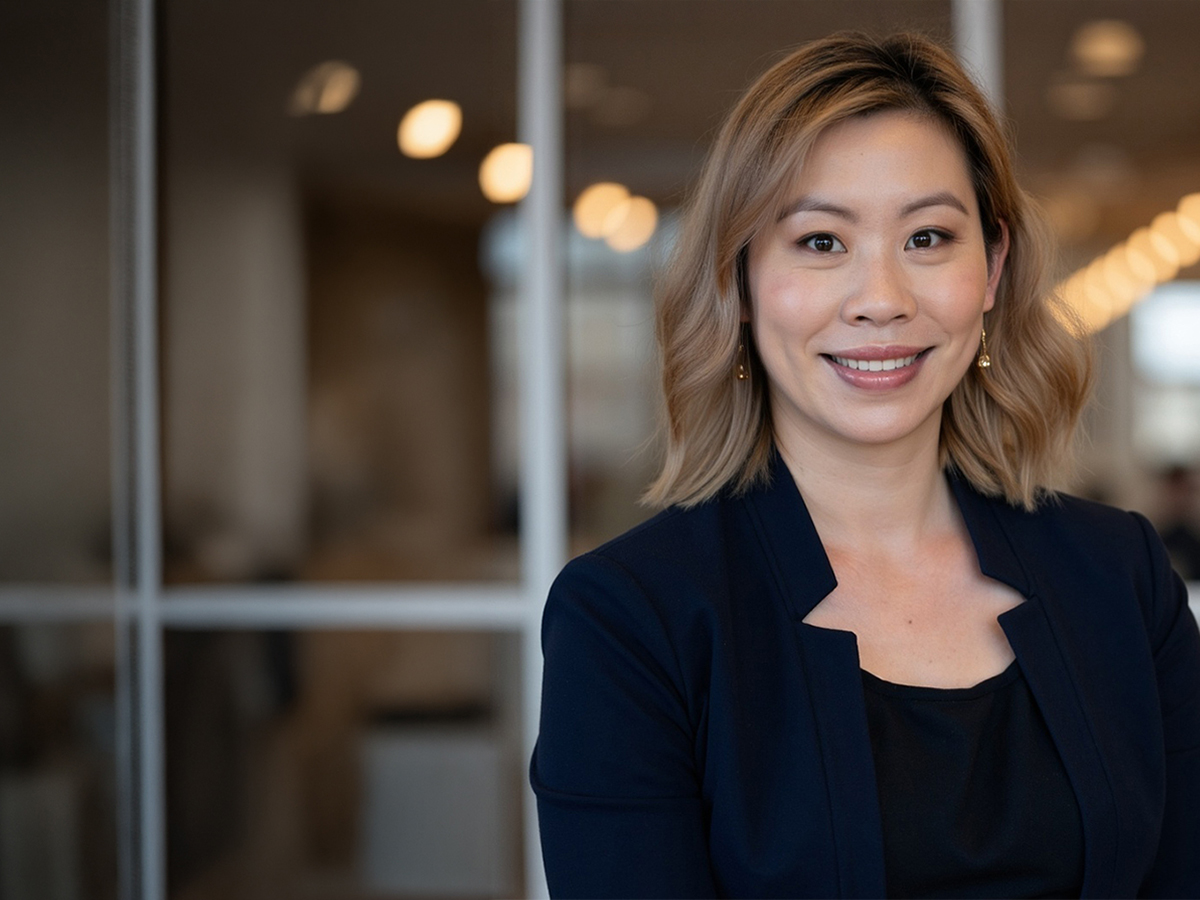
Amy Xie Patrick, Head of Income Strategies
About Amy Xie Patrick and Pendal’s Income and Fixed Interest team
Amy is Pendal’s Head of Income Strategies. She has extensive expertise and experience in emerging markets, global high yield and investment grade credit and holds an honours degree in economics from Cambridge University.
Pendal’s Income and Fixed Interest boutique is one of the most experienced and well-regarded fixed income teams in Australia. The team oversees some $20 billion invested across income, composite, pure alpha, global and Australian government strategies.
Find out more about Pendal’s fixed interest strategies here
About Pendal Group
Pendal is a global investment management business focused on delivering superior investment returns for our clients through active management.
This video has been prepared by Pendal Fund Services Limited (PFSL) ABN 13 161 249 332 AFSL 431426 and is current as at 4 November 2026.
Any views and opinions expressed are those of the investment team as at the date of recording and are subject to change without notice. Any forecasts, estimates or forward-looking statements are based on information and assumptions considered reasonable at the time. Actual outcomes may differ materially.
It is general information only and is not intended to provide you with financial advice or take into account your objectives, financial situation or needs. You should consider whether the information is suitable for your circumstances and we recommend that you seek professional advice.
The product disclosure statement (PDS) for the Pendal Monthly Income Plus Fund (Fund), issued by PFSL, should be considered before deciding whether to acquire, dispose, or hold units in the Fund. The PDS and Target Market Determination can be obtained by calling 1300 346 821 or visiting our website www.pendalgroup.com.
This video may contain information contributed or prepared by third parties. Any information contributed or prepared by third parties is believed to be accurate as at the time of compilation and is being provided in good faith without independent verification. PFSL does not warrant the accuracy or completeness of any information provided by a third party.
To the extent permitted by law, no liability is accepted for any loss or damage as a result of any reliance on this information. No company in the Perpetual Group (Perpetual Limited ABN 86 000 431 827 and its subsidiaries) guarantees the performance of any fund or the return of an investor’s capital. All investing involves risk including the possible loss of principal.