
Pendal Global Select Fund Class R (APIR: PDL6767AU ARSN: 651 789 678)
Pendal Global Select Fund Class W (APIR: PDL4472AU ARSN: 651 789 678)
The Pendal Global Select Fund (Fund) will terminate on Tuesday, 16 June 2026.
Why is the Fund terminating?
We regularly review our product offerings and investment capabilities to ensure that our business continues to maintain a product suite that remains viable and relevant to our investor demands.
After careful consideration, we have determined that terminating the Fund is in the best interests of investors.
Due to the Fund’s relatively small size, ongoing running costs represent a higher proportion of the Fund’s total assets, and the Fund cannot be managed in a cost efficient way. We also consider that the Fund has limited prospects of significant growth in funds under management in the foreseeable future.
If the Fund were to continue, the Fund’s size would result in higher management costs for investors, which would reduce their investment returns.
How this affects you?
As the decision to terminate the Fund has been made, applications, transfers and withdrawals will not be accepted after 2:00pm (Sydney time) on Tuesday, 16 June 2026.
What happens next?
Following the Fund’s termination on Tuesday, 16 June 2026, we will begin to wind up the Fund. The assets of the Fund will be sold and the net proceeds of winding up will be paid to all investors in proportion to their unit holding.
What does this mean for you?
Your pro-rata share of the net cash proceeds from this termination will be paid directly to your nominated bank account on file on or around the week commencing Monday, 22 June 2026 or shortly thereafter.
Details of the distribution paid to you prior to the termination of the Fund will be included in your 2026 AMIT Member Annual (AMMA) statement. This statement will set out all the taxable components from distributions that you received / were attributed to you during the financial year ended 30 June 2026. It will be issued to you following the end of the financial year.
Questions?
If you have any questions, please contact our Investor Relations Team during business hours on 1300 346 821.
Looking beyond the headlines, selective small-cap exposure can still uncover quality businesses. DAMIEN DIAMANT explains where the Pendal small caps team is finding opportunities
- Resilient small caps can outperform market noise
- Selective stock picking uncovers quality opportunities
- Find out about the Pendal Smaller Companies Fund
SMALL CAPS provide a chance for ASX investors to diversify portfolios away from the large caps that dominate the top end of town.
They are often driven by very different themes to the macro factors that typically affect the ASX100.
Examples include successful technology businesses, category leading retailers and companies producing materials used in batteries such as lithium, cobalt and nickel.
One sector that’s attracting the attention of Pendal’s small cap team at the moment is consumer discretionary – though it requires a well-resourced, active manager to identify potential winners in a segment that has lagged others.
The sector spans specialty retail, housing-related retail, travel, tourism, e-commerce, auto retail, gambling and fast food.
But tax changes, higher interest rates, rising fuel costs, and cost-of-living pressures are weighing on consumers’ disposable income.
While this creates downside risk for earnings, Pendal investment analyst Damien Diamant says it is not all bad news.
One tailwind is the currency benefit some companies may gain from a stronger Australian dollar against the US dollar.
“That will be a significant boost for retailers with strong control over their supply chains,” says Diamant.
“Another often overlooked point is that the balance sheets of Australian consumer stocks are very healthy, particularly compared with some US-listed peers.
“Most retailers are in net cash positions, so they can weather softer periods.”
What to look for
Diamant says identifying companies that are “ripe for stock picking” requires extensive research to find those with stronger business models.
“There are many different business models in this space, so we need to do the hard work to understand them, which we’ve done over many years,” says Diamant.
“We’ve spent significant time with management teams to understand their businesses, competitive dynamics, and the strengths and weaknesses of each model.”
Diamant says that the profile of the small ordinaries index has changed materially over the years, the consumer discretionary sector made up about 20 per cent of the ASX Small Ordinaries Index a few years ago. Today, it accounts for about 10 per cent.
“That shows how much the sector has struggled, especially relative to stronger-performing areas such as resources, particularly gold, as well as emerging sectors like defence and some contractors,” he says.
With the Australian economy still heavily consumer-driven, as in the US, the sector remains an important part of the market.
The Pendal small caps team focuses on businesses that are more resilient, have stronger management teams, and can deliver earnings growth and returns on capital over time.
Some examples of consumer discretionary stocks that feature in the small caps portfolio include furniture retailer Nick Scali, Premier Investments – owner of sleepwear retailer Peter Alexander and fun stationery retail chain Smiggle, fashion company Universal Store and home appliance specialist Breville Group.
The small cap opportunity
While small caps underperformed large caps by more than 20 per cent in the four years to June 2025, that gap has reversed over the past year in favour of small caps.
The ASX Small Ordinaries Index has risen 13.2 per cent, while the ASX100 is up 9.9 per cent.
Industrials also offer attractive entry points, with the sector nearing its cheapest level relative to the ASX100 in the past decade.
Another theme creating opportunities is data centre growth driven by the rapid adoption of artificial intelligence.
Capital expenditure on data centre buildouts in Australia has risen sharply, alongside spending on the energy transition and defence.
Expected data centre capex to FY28 has surged to an estimated $75 billion[1], up from $8.7 billion[2] between FY21 and FY24. Over the same period, estimated aggregate revenue for DC-adjacent small caps has quadrupled to $3.4 billion[3].
Meanwhile, spending on the energy transition and defence is expected to grow by 10.9 per cent and 13.2 per cent respectively over the five years to FY30[4].
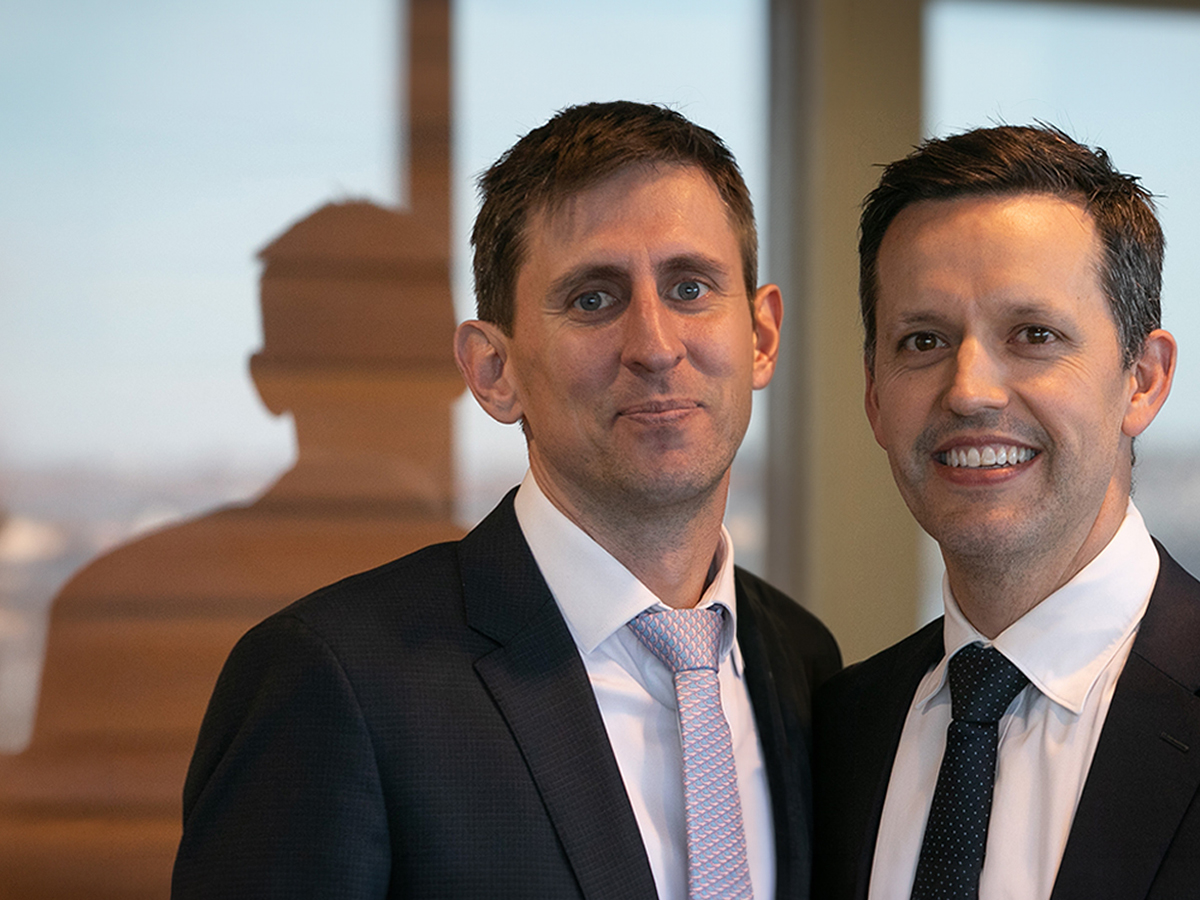
Find out about
Pendal Smaller Companies Fund
Patrick Teodorowski & Lewis Edgley,
Portfolio Managers
The limited beneficiaries of CGT changes
Proposed changes to capital gains tax and negative gearing in the recent federal budget are set to affect certain investments, particularly property. However, Diamant says one area likely to become more attractive is investment bonds.
An investment bond is an investment linked life insurance structure that can hold assets across various classes, including Australian equities. If held for more than 10 years, no capital gains tax is payable.
“Investment bonds have been untouched by the budget, and from a relative perspective they have become a much more attractive tax structure,” says Diamant.
Generation Development Group subsidiary Generation Life is particularly active in this area, and Diamant believes the company will gain traction through its investment bond business, which contributes approximately 40 per cent of group profits.
“GenLife is the market leader in this space. It currently accounts for 60 per cent of industry flows,” says Diamant.
“There are three key players in this market, and GenLife is investing the most in improving and broadening its product range, including access to more investible assets. It is also committing more resources to growing its sales team and promoting the offering.”
Building portfolios for multiple scenarios
During periods of volatility and equity rotation, it is important to build a portfolio that can add value across multiple scenarios, according to Diamant.
The small caps team looks for investments across four key areas: strong free cash generation, franchise winners, disruption, and structural tailwinds.
Channel Infrastructure NZ, for example, falls into the strong free cash generation category, while electrical contractor Southern Cross Electrical Engineering and diversified construction contractor NRW Holdings are exposed to the DC buildout tailwinds.
The Pendal Smaller Companies Fund has a position in these three companies.
[1] Pendal estimates
[2] Morgan Stanley as at 25 March 2026
[3] FactSet and Pendal estimates for NWH-ASX, SXE-ASX, IPG-ASX, MYG-ASX, SKS-ASX
[4] Morgan Stanley as at 25 March 2026. Pendal estimates.
About Lewis Edgley and Patrick Teodorowski
Lewis and Patrick are co-managers of Pendal Smaller Companies Fund.
Portfolio manager Lewis Edgley co-manages Pendal’s Australian smaller companies and micro-cap funds and conducts analysis on a range of smaller companies. He joined the Pendal Smaller Companies team in 2013 as an analyst, before being promoted to the role of portfolio manager in 2018. Lewis brings 20 years of industry experience with previous roles spanning equities research, as well as commercial and investment banking roles at Westpac and Commonwealth Bank.
Portfolio manager Patrick Teodorowski co-manages Pendal’s smaller companies and micro-cap funds and conducts analysis on a range of smaller companies. He joined Pendal in 2005 and developed his career as a highly regarded small cap analyst. Patrick holds a Bachelor of Commerce (1st class Honours) from the University of Queensland and is a CFA Charterholder.
About Pendal Smaller Companies Fund
Pendal Smaller Companies Fund is an actively managed portfolio investing in ASX and NZX-listed companies outside the top 100. Co-managers Lewis Edgley and Patrick Teodorowski look for companies they believe are trading below their assessed valuation and are expected to grow profit quickly. Lewis and Patrick together have more than 40 years of investment experience.
Find out about Pendal Smaller Companies Fund
Find out about Pendal MicroCap Opportunities Fund
Find out about Pendal MidCap Fund
About Pendal Group
Pendal is a global investment management business focused on delivering superior investment returns through active management.
In 2023, Pendal became part of Perpetual Limited (ASX:PPT), bringing together two of Australia’s most respected active asset management brands.
Here are the main factors driving the ASX this week, according to Pendal’s head of equities CRISPIN MURRAY. Reported by portfolio specialist Chris Adams
EQUITY markets remain supported by falling oil prices and associated reduction in bond yields, in anticipation of the peace deal announced this morning.
Last week saw the largest IPO in history as SpaceX listed on the NASDAQ at US$75.1 billion (the prior largest being Aramco at US$29.4 billion). It rose 19% on its first day of trading, putting it on 91x CY26 revenue.
This is an important sentiment indicator and, alongside the recent Alphabet capital raising, provides funding for the roll-out of AI compute infrastructure and Starlink.
An overhang of equity supply is leading to a consolidation in the US, with the S&P 500 up 0.7%.
We are also seeing rotation into some of the lagging sectors – notably REITs and Healthcare – which flowed through to Australia.
The S&P/ASX 300 gained 2.0% last week, led by rate sensitives (REITs +4.9%, consumer discretionary +7.9%) as the federal budget is increasingly seen as a handbrake on economic growth, reducing the need for further rate hikes.
We remain wary of domestic consumer plays as we expect the economy to slow, crimping earnings growth for that sector.
Market outlook
The market has been underpinned since the late-March low by:
- A resilient global economy despite the Iran war.
- Oil prices holding lower than feared.
- The acceleration of revenue growth at Anthropic, signalling that AI business models work.
- Upgraded investment in AI from hyperscalers.
- The SpaceX IPO, which highlighted the acceleration of its revenues.
- The combination of all these reflected in stronger-than-expected earnings growth in the US.
The combination of the continued strength in the market, the largest IPO in history at a punchy valuation, and the growing concentration of the US stock market has rekindled the debate as to whether we are near a market top.
Bears point to the historic precedent of equivalent levels of concentration at previous market peaks.
The 10 largest AI-related companies now comprise 41% of the S&P 500, whereas:
- The Nifty 50 peaked at 40% of the S&P 500 in the 1970s;
- Japan peaked at 44% of the MSCI AC World Index in the late 1980s; and the
- Tech and Telecom sectors reached 41% of the S&P 500 in the early 2000s.
Each ended in significant bear markets.
They also point to warning signs in longer-term valuation metrics. The Schiller P/E (the price over the average real earnings over 10 years) is near its previous high of the tech-wreck – as is the price/book ratio of the MSCI USA index.
The counter to this is that these measures do not capture the shift in earnings and returns on equity, particularly from tech sector.
For example:
- The S&P 500 is up ~9% in US dollar terms this calendar year, but 12-month forward EPS have been revised up 17%, which means the market’s P/E ratio has fallen despite the rise in the index.
- Returns-on-equity (ROE) for the S&P 500 have stepped-up in the last three years to a range of 20-22% (and are currently at the high end), compared to a range of 12 to 20% over the previous 30 years.
That step-up is linked to the mega-cap stocks, which are tapping into global customer bases and have strong market positions.
The factors driving higher ROEs include margin expansion (which reflects franchise quality and industry structure), lower corporate tax rates, increased leverage, and lower interest rates.
There has been some offset from lower asset turnover, however this arguably leads to an understatement of the increase because this is partly driven by the requirement to carry goodwill on balance sheets and higher cash holdings by the megacap stocks.
The key point is returns are higher and when this is mapped over the Schiller P/E it provides greater justification for current valuations than was the case in 1999.
AI return on investment
The key call then becomes the sustainability of these returns, which goes to the current debate about returns on hyperscaler capex. Capex is leading to deteriorating cashflows at the hyperscalers, which in turn drags on returns.
We note current estimates are for AI investment to be US$5.3 trillion from the four largest hyperscalers (Alphabet, Meta, Microsoft, Amazon) between 2025 to 2030 – a number that is trending higher.
The market currently believes the returns on that investment will flow through and cash flows will inflect higher from 2028, dwarfing those previously.
This call is the key to the market. If this plays out it underpins earnings and valuation rating; if not, then capex budgets will have to be cut with knock-on effects to earnings and rating.
The risks are:
- Use cases for AI not being sufficient to drive revenue expectations.
- Funding constraints limiting compute availability.
- Infrastructure constraints limiting compute (power, memory, planning approvals).
- Regulatory intervention slowing the development of models.
Regulatory intervention had been a lower-order issue but was elevated over the weekend as the US government ordered suspension of the Anthropic Fable 5 model’s availability to all foreign nationals. It is rumoured that Amazon discovered there was a way through the model’s guardrails which enabled its use in cyberattacks. Anthropic dispute that this was as serious as suggested.
SpaceX IPO
The SpaceX IPO is an important part of this debate as it provides further evidence of the acceleration of AI-related revenue growth.
The stock is the all-time largest IPO, both in terms of stock issued and market cap at listing (US$1.8 trillion).
It closed up 19% on its first day of trading, taking it to a US$2.1 trillion market cap and an EV/revenue of 91x.
Revenue is expected to grow 80%+ into 2027 and potentially to increase by 20-25x by 2030; from the current CY26 level of US$28 billion to US$450-500 billion.
The IPO valuation is not reliant on Starlink – although some estimate this will grow 7x between 2026 and 2030.
Instead, the bull case rests predominantly on growth in the terrestrial computing power of the company’s AI division, xAI.
Here, the company is forecasting 2 gigawatts (GW) by the end of 2026, 9-10GW by end-2029 and 13GW by end-2030.
How this gets monetised is an open debate, but the view is that if you build the compute the revenue will come.
In this vein, the implied return of US$50bn/GW of Anthropic’s recent leasing deal with SpaceX is unlikely to be replicated, but even a more sober US$20-30bn/GW across 8GW+, sold by 2028 at 35-40% margins, equates to ~US$100 billion of AI-sector EBIT.
Paths to monetisation include:
- Software (reinvesting in building out the Cursor coding product, plus healthcare and robotics tools enabled by Grok),
- Further neocloud-type deals, or
- A better consumer business.
In terms of a broadband product, the key is delivery of the first Starship orbital flight (previous flights have been suborbital). This can in turn facilitate bigger satellites, meaning materially faster speeds and a path from ~17 million to 30-40 million subscribers.
A direct-to-device service is the harder leg. It needs one of the top three telcos to fold (which seems unlikely) or purchase of a large swathe of spectrum. The latter is more likely as there is plenty of spectrum coming online via the One Big Beautiful Bill and SpaceX have said they’ll pay whatever it takes.
Testing of the Starship V3 rocket (the rapidly reusable spaceship) later in the year is likely to be a defining event. This is at the core of the move to build out Starlink and orbital compute.
Elon Musk has floated the idea of hourly launches – in the order of 8-9,000 per year. The market is assuming this is more likely to be 100-200 per annum by 2030.
We note the smaller Falcon 9 rocket is estimated to have 140 launches this year, while the new starship is said to have a payload of 10x the current Falcon.
The upshot is that the buy-side is getting to a US$2.5-3.0 trillion valuation, versus the current day one value of US$2.1 trillion.
This belief in the revenue trajectory highlights the market’s growth optimism, which underpins the broader market given 1) the overall weight of earnings relating to AI, and 2) the flow-on effects through investment spend on industrial companies and resources.
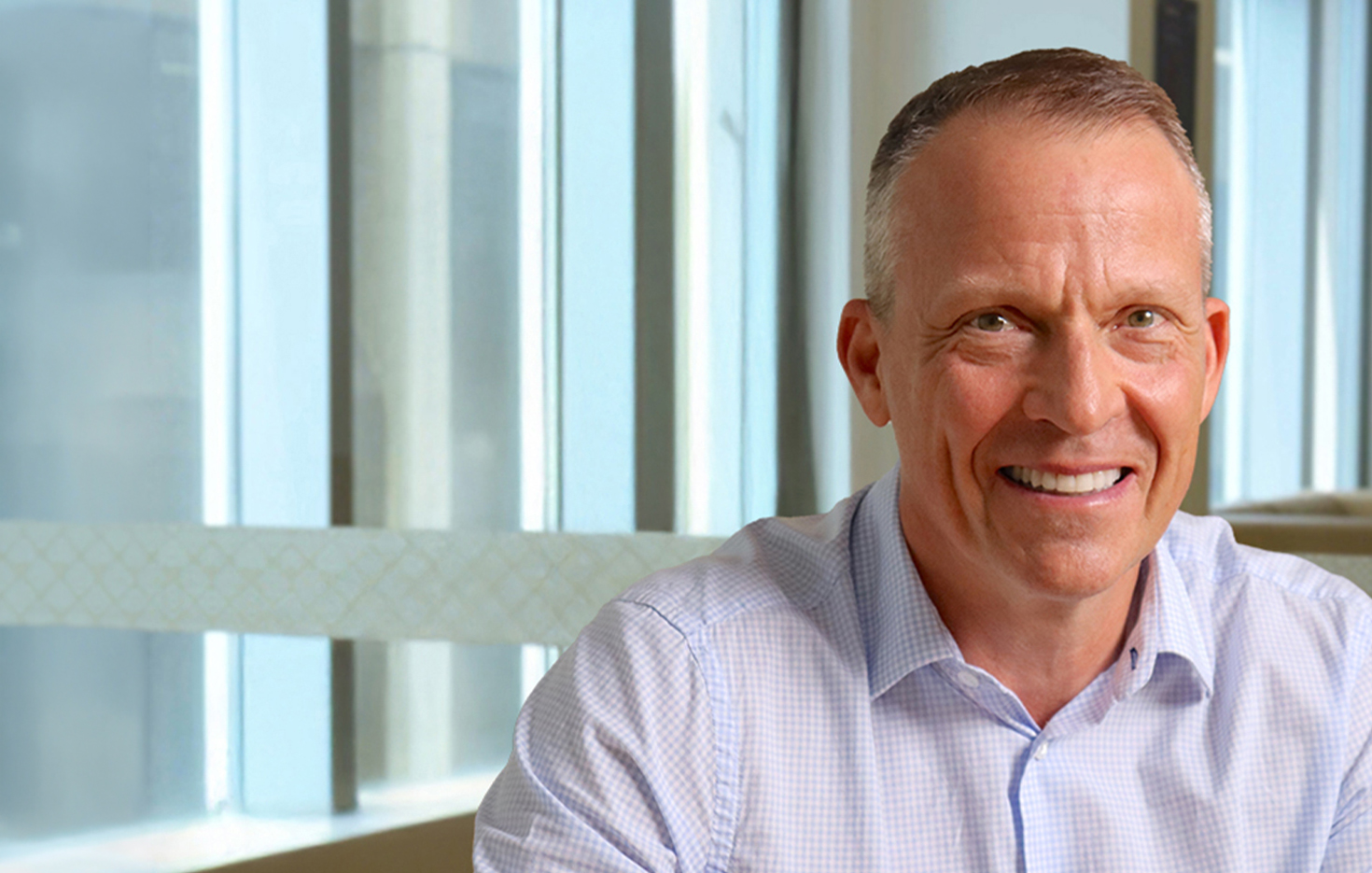
Find out about
Pendal Focus Australian Share Fund
Crispin Murray, Head of Equities
Iran conflict
Reporting this morning suggests a deal has been agreed on US President Donald Trump’s 80th birthday and 107 days after the conflict began.
The market appears confident that it can happen, noting statements from other Gulf countries and reports of Qatari officials going to Tehran to finalise details.
There have also been reports of loading in Iraqi ports for the first time in weeks, suggesting some production is slowly ramping up.
That said, we have been here before and there were a series of attacks through last week.
Oil continues to fall on the expectation of a resolution plus reports that the US has been covertly getting vessels through the Strait, at the rate of around 2-3 million barrels-per-day (bpd) for the last couple of weeks.
Reiterating previous notes, the market has been able to offset the loss of 20 million bpd via a combination of lower Chinese imports, inventory releases, some alternative routing, some flow through the Strait, and some demand destruction.
The latter has been disproportionately met through petrochemicals and some gasoil/ diesel reduction. Regionally, it has been in Asia and the Middle East.
Overall, the tail risk around this issue continues to fall.
There will likely be a long process to begin to restock the supply chain. It will take one to two months to ramp up production and we will see an extended period of strategic stock rebuilding.
All this is likely to hold oil prices around current levels for some time – but the ability to plan for this will improve confidence and likely be supportive for growth.
US macro and policy
May inflation data was largely in-line with expectations, with headline consumer price index (CPI) at 4.2% year/year and core CPI +2.9%.
Producer price index (PPI) was a bit higher than expected and will underpin higher personal consumption expenditures (PCE), likely around 3.5%.
There are three drivers for higher inflation:
- Tariffs – though this wave is rolling over.
- Energy prices – this is playing out as expected but will take time to wash through as companies catch up on passing on costs.
- AI investment-related inflation – relating to the sheer size of spend, the ongoing effect of this is uncertain.
The Fed has its first meeting under Chairman Kevin Warsh. With labour markets in decent shape and inflation not deteriorating – and with potential relief on energy prices – the Fed has time to wait to see how trends play out.
The key judgment on a six-month view is whether the economy can maintain good growth at current interest rates, which would suggest we are nearer to neutral than previously believed.
Markets
It is interesting to note the Mag-7 has been underperforming year-to-date. It is down ~2% versus the S&P 500 up ~9%, the equal weight S&P 500 up ~10%, and the small cap Russell 2000 index ~+18%.
This may reflect both the capital intensity increase as they spend more on capex and also the need to fund the SpaceX IPO and secondary issuance.
Total CYTD issuance in equities has accelerated, leading to a draw on the market.
If we factor in debt issuance, which is also up due to AI funding needs, 2026 has already surpassed 2025 levels.
Sentiment on software – which had been improving – has reversed significantly in the last two weeks driven by the combination of a return to semis (with software used as a funding source) and the launch of Anthropic’s Fable 5 model which renewed concerns around sustainability of traditional franchises.
We have seen early signs of a recovery in lagging sectors of the S&P 500 (REITs and Healthcare), perhaps reflecting a combination of a stabilisation in the outlook for rates, positioning (underheld) and valuation proving supportive.
This is important for our market, and we saw early signs of life in these sectors last week in Australia.
Australia had a good week led by REITs, staples and discretionary. This would indicate the market is getting more comfortable that, with the apparent softness in the economy, the RBA may not need to raise again, which would help rate sensitive sectors.
We think this may be premature optimism, as the RBA needs the consumer to slow meaningfully, to offset strong investment spending and population growth and bring inflation down.
So whether this needs more rate increases or not, the outcome would be for domestic earnings to be under some pressure.
Tech (-4.5%) was the underperformer, mirroring the drop in US software.
About Crispin Murray and the Pendal Focus Australian Share Fund
Crispin Murray is Pendal’s Head of Equities. He has more than 27 years of investment experience and leads one of the largest equities teams in Australia. Crispin’s flagship Pendal Focus Australian Share Fund is a high-conviction equity fund with a two-decade track record across a range of market conditions.
Pendal is a global investment management business focused on delivering superior investment returns for our clients through active management.
Signs of a weakening Australian economy are giving markets growing confidence that the RBA’s next move may not be another hike. Pendal head of government bond strategies TIM HEXT explains
- Business conditions weak, capacity increasing
- Rate hike risks fade
- Find out about Pendal Government Bond Fund
- Browse Pendal’s fixed interest funds
WE HAVE talked numerous times about the richest source of timely information for the Australian economy – the NAB business survey.
It is the most forward-looking release in a sea of lagging indicators.
In fact, we incorporate a number of signals into our macroeconomic quantitative signals on the Australian economy.
Business Conditions Weak – Capacity Increasing
While very weak confidence has been evident for some months now in both the NAB business survey and Westpac consumer confidence, the two more powerful forward indicators are business conditions – what businesses are facing – and capacity utilisation.
After all inflation is essentially a capacity versus demand problem.
Numbers released on Tuesday show +3 for confidence and capacity utilisation at 81.9.
These are not doomsday numbers but as the graph below shows over the last 10 years the current numbers are weak or at least weakening.
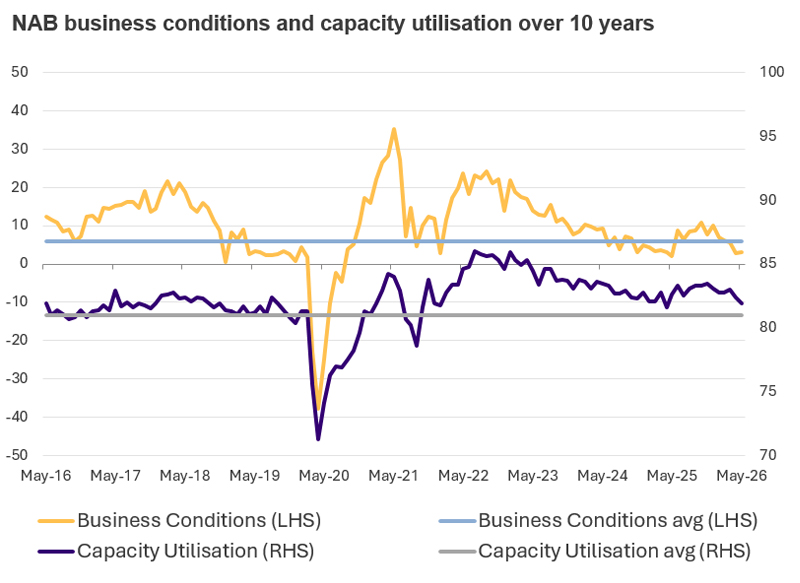
The +3 for conditions is a diffusion index. That is, the difference between optimistic and pessimistic firms. While still just positive, +6 is considered trend as businesses are generally optimistic.
The 81.9 for capacity utilisation is still just above trend of 81 but down from recent years.
The RBA would welcome this development, but anything below 80 would set off some warning signals, as seen from the chart above
Implications for rates
Now markets don’t focus nearly enough on the NAB business survey, remaining more obsessed with the volatile and short-term unreliable employment numbers.
However, they did not go unnoticed by NAB themselves who have removed rate hikes from their forecasts and now are calling for cuts in H1 2027. This is consistent with our view.
In the days since, despite volatile oil markets, the short end in Australia have caught a bid and at the time of writing three-year bonds are again pushing down towards the cash rates.
Peak cash is now less than one more hike and an August hike is down to only a one-third chance.
It may be too early to call for now, but comfort with Australian rates is improving despite expected hikes offshore. Australia for once has been ahead of, not behind, the global game.
Find out about
Pendal Government Bond Fund
Tim Hext, Head of Government Bond Strategies
If you’d like to hear more about how Pendal’s Income & Fixed Interest team is positioning for this environment, please contact us through our accounts team
About Tim Hext and Pendal’s Income & Fixed Interest boutique
Tim Hext is a Pendal portfolio manager and head of government bond strategies in our Income and Fixed Interest team.
Tim has extensive experience in banking, financial markets and funding including senior positions with NSW Treasury Corporation (TCorp), Westpac Treasury, Commonwealth Bank of Australia, Deutsche Bank, Bain & Co and Swiss Bank Corporation.
Pendal’s Income and Fixed Interest boutique is one of the most experienced and well-regarded fixed income teams in Australia.
Find out more about Pendal’s fixed interest strategies here
About Pendal
Pendal is a global investment management business focused on delivering superior investment returns for our clients through active management.
In 2023, Pendal became part of Perpetual Limited (ASX:PPT), bringing together two of Australia’s most respected active asset management brands to create a global leader in multi-boutique asset management with autonomous, world-class investment capabilities and a growing leadership position in ESG.
AI is creating a new wave of investment opportunities on the ASX beyond the obvious winners. Pendal MidCap Fund portfolio manager BRENTON SAUNDERS highlights the niche midcap companies benefitting from the next phase of AI growth
- AI is opening new midcap opportunities
- Neoclouds offer scalable, lower-risk AI exposure
- Find out more about the Pendal MidCap fund
THE first wave of AI investing has centred on obvious beneficiaries such as data centre operators, semiconductor manufacturers and the contractors building the infrastructure behind them.
But a new group of specialised providers is beginning to emerge, offering investors another way to gain exposure to the theme on the ASX.
Among them are neoclouds, niche companies offering cloud computing services tailored to AI workloads.
Rather than building and owning data centres, these businesses lease capacity in existing facilities and install their own graphics processing units (GPUs) and central processing units (CPUs) to support AI computing.
They then sell that computing power to customers ranging from individual users to software developers and large enterprises.
The model is gaining credibility. US technology giant Nvidia has begun partnering with some of these smaller providers as it backs the next generation of hyperscale AI cloud solutions.
One example is Sharon AI, an Australian-founded company listed on the NASDAQ and backed by US capital. It is also considering a dual listing in Australia and has partnered with Nvidia.
Queensland-based network-as-a-service provider Megaport (ASX: MP1), meanwhile, moved into the space through its acquisition of Latitude.sh in November 2025.
Megaport said the deal combined its connectivity platform with Latitude.sh’s high-performance compute capabilities to support AI workloads globally.
Pendal MidCap Fund holds a position in Megaport.
Brenton Saunders, portfolio manager of Pendal MidCap Fund, says the neocloud model offers a less capital-intensive way to access the AI thematic than building data centres from scratch.
“You don’t carry all the construction risk or the risk of capital costs blowing out while you’re building these assets, because it takes years to build them,” he says.
“You have a much more defined return profile. These businesses can pay themselves back within two or three years.
“For me, it’s a preferable way to play the AI thematic domestically.”
AI token advantage
Another fast-growing part of the AI thematic is token usage.
Tokens are the small units of data AI systems process during training and inference, making them a useful gauge of demand for computing power.
Google, for example, says it is now processing more than 3.2 quadrillion tokens a month, up from 9.7 trillion two years ago, underscoring the pace at which AI usage is accelerating. Google CEO Sundar Pichai shared the figures at Google I/O 2026.
“Estimates for token usage continue to rise exponentially,” Saunders says.
“The number of tokens we thought we would need six months ago versus what we may require in a year or two has already increased 10 to 15 times in just six months, as corporates and consumers adopt AI more quickly.
“That leaves a very powerful backdrop for the theme.”
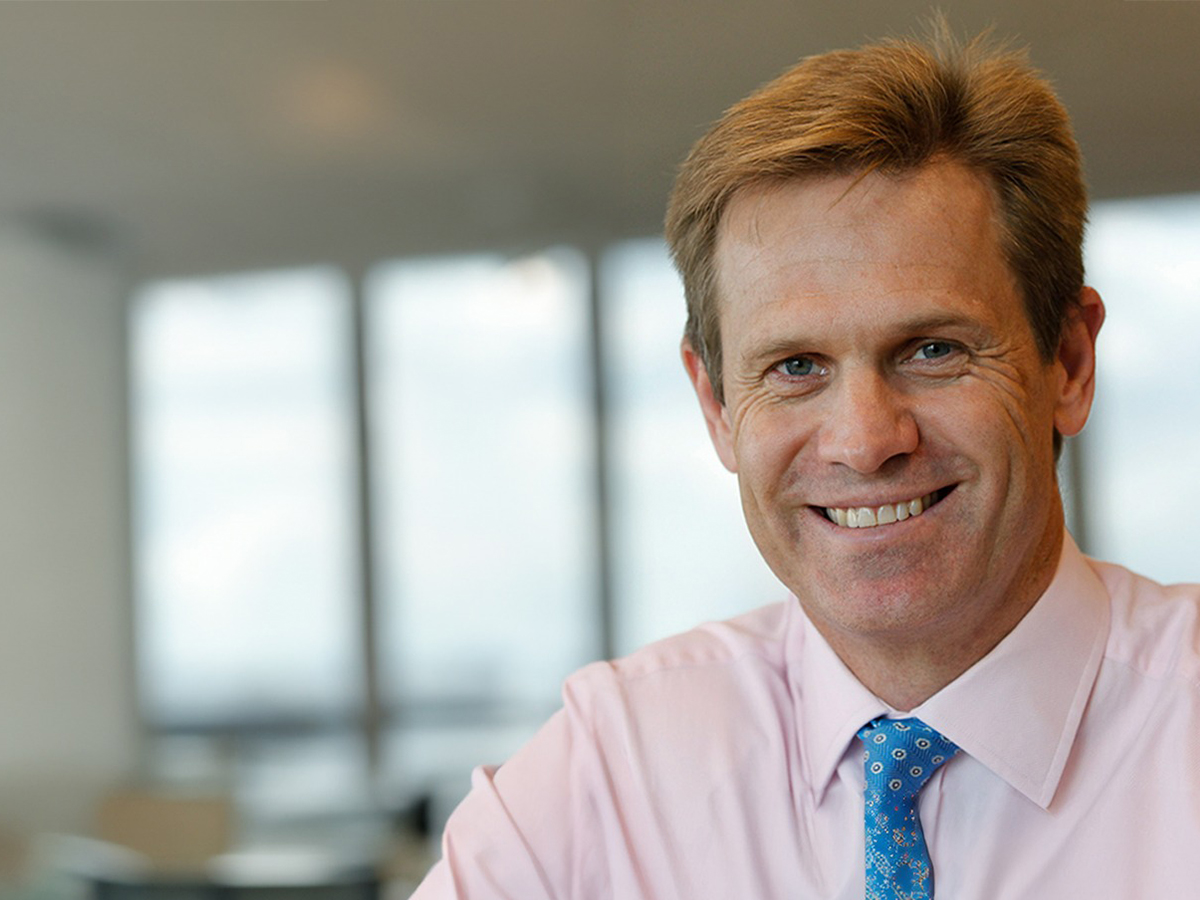
Find out about
Pendal MidCap Fund
Brenton Saunders, Portfolio Manager
Why volatility requires balance
With markets still being shaped by macroeconomic and geopolitical crosscurrents, Saunders says balance is critical in periods of volatility and sector rotation.
“You don’t want to expose yourself to big directional bets tied to geopolitical events, the oil price or inflation,” he says.
“We spend a lot of time intentionally designing portfolios that won’t simply be dragged one way or another by those macro events. That becomes especially important during major market selloffs.”
For Saunders, the task is to identify the stronger companies within that backdrop through detailed, bottom-up research.
He says he is looking for businesses with sound capital structures, manageable debt levels and strong management teams focused on delivering stronger shareholder returns.
“It’s like a moth to the flame at the moment,” Saunders says, noting that investor enthusiasm has quickly shifted from areas such as gold to AI.
“AI has been rallying in the US for some time, but that momentum is now building more meaningfully in Australia.”
About Brenton Saunders and Pendal MidCap Fund
Brenton is a portfolio manager with Pendal’s Australian equities team. He manages Pendal MidCap Fund, drawing on more than 25 years of expertise. He is a member of the CFA Institute.
Pendal MidCap Fund features 40-60 Australian midcap shares. The fund leverages insights and experience gained from Pendal’s access to senior executives and directors at ASX-listed companies. Pendal operates one of Australia’s biggest Aussie equities teams under the experienced leadership of Crispin Murray.
Pendal is a global investment management business focused on delivering superior investment returns for our clients through active management.
Here are the main factors driving Australian equities this week, according to investment analyst JACK GABB. Reported by head investment specialist Chris Adams
THE S&P 500 came close to notching a 10th consecutive weekly gain, and its best run since 1985, before a tech-led sell-off triggered sharp falls in risk assets on Friday.
The catalyst was surging US jobs data, sending 30-year Treasury yields back to 5% and implied rates up over 0.1%.
However, the set up to Friday’s price action was undoubtedly influenced by crowded positioning and the run-up in prices.
The Friday sell-off saw the S&P 500 close down 2.6% for the week, while the Nasdaq finished down 4.7%. Tech and Consumer Discretionary stocks led the US market lower, with Energy and Healthcare better.
The S&P/ASX 300 also ended last week lower, down 1.2%, but led by Real Estate, Materials and Financials. Tech was stronger for the week.
Yields moved higher across the board, with rate expectations rising.
Commodities were hit hard with iron ore losing 6.3% and lithium down 5.5%. Gold fell 4.9%.
Oil bucked the trend as a more permanent solution to the Iran conflict remains elusive. Brent crude rose 1.1% for the week (ex. oil on little/no Iran progress).
Crypto currencies were savaged, with Bitcoin down 16.8% and back below the level it was at when Trump was re-elected.
The US Dollar ended the week stronger despite another warning on the debt ceiling.
This week will see releases on Australian consumer and business confidence as well as data on consumer inflation expectations.
US CPI data will also be closely watched given global inflation expectations.
Warning signs or just crowded positioning?
The global economy is growing strongly at ~3% p.a. (~3.5% pre the Iran conflict).
Large fiscal impulses in the US (running a ~6% budget deficit) and China (~10% deficit) are supportive, and capex is broadening geographically and by sector, as seen in improving PMI data.
This is all constructive for markets.
However, there are also those becoming cautious on the AI trade.
As one commentator put it last week: “When they write the history of the AI bubble 2022-2027, the issuance by Google of $85 billion of stock in early June 2026 will be one red line that was crossed.”
Jensen Huang’s call that Marvell Technology “will be the next trillion-dollar company” saw it add US$51 billion to its market cap in the week, despite giving up US$46 billion of gains on Friday. We are in an era where such calls are seemingly routine.
AI euphoria abounds and positioning is crowded. Commodity trading advisers (CTAs) – systematic strategies that track price momentum and provide a good indicator of market positioning – have been very long equities.
But last week there were a number of warning signs flagged by those looking to call the top of the AI trade:
- Growing AI costs. Uber and Walmart were the latest companies to limit internal AI usage given rising costs.es the market is expecting a significant decline in growth expectations.
- IPOs galore. SpaceX will soon complete its US$75 billion raise at a US$1.8 trillion valuation (its Australia retail offering closes Wednesday). Anthropic (having recently raised US$65 billion at a US$965 billion valuation) filed to IPO last week and OpenAI is likely to follow soon (it raised US$122 billion earlier this year at a US$852 billion valuation).
- Ever-increasing capex; equity raises. While a huge part of Alphabet’s raise will go to meeting tax obligations associated with vesting of employee equity awards (US$30 billion), it will also increase spending to scale AI infrastructure and global compute. The Financial Times also reported Meta is considering following suit and raising tens of billions.
- Overly high expectations. Broadcom announced AI semiconductor revenue will be US$16 billion in its fiscal Q3, well below consensus expectations of US$17.2 billion.
US macro and policy
Nonfarm payrolls triggered much of Friday’s price action, with the May data coming in at +172,000, versus +88,000 expected, mostly driven by unexpected hiring in Local Government, Leisure & Hospitality and Healthcare.
March and April were also revised higher, with the data raising the risk that a tightening labour market could drive up wages and add to upward pressure on rates.
While the JOLTS data also surprised higher earlier in the week (7.6 million job openings versus 6.9 million expected and 6.9 million prior), other data was less clear cut.
For example, the unemployment rate for May was in-line with consensus at 4.3% and average hourly earnings were as expected at 3.4%.
The former is key for the US Federal Reserve, with a rate above 4.2% unlikely to cause much concern despite stronger payrolls.
The risk is that payrolls remain strong, driving down unemployment and seeing a tighter jobs market stoke inflation.
While this is not consensus, the market nevertheless moved up rate hike expectations, which are now pricing in 1.1 hikes by December, versus only 0.57 last week.
We note that payroll data is volatile, subject to revision and the number of jobs is not reflected in the hiring rate implied by the JOLTS data.
In addition, consumer surveys show less confidence in finding a job and the most recent National Federation of Independent Business (NFIB) small business survey recorded a multi-year low for firm hiring plans.
There is a risk that the unemployment rate falls below CPI (which consensus expects to be 4.2%), which would be only the seventh time since 1960.
Years when inflation runs close to or above unemployment have historically seen Fed hikes and poor equity returns.
US debt
The US Treasury Department may need to use extraordinary measures as early as next year to avoid a national debt default.
According to a report by the Bipartisan Policy Centre, absent congressional action, the US will mostly likely reach the debt limit once again sometime between late winter and mid-summer 2027.
That is despite raising the ceiling US$5 trillion last year (to US$41.1 trillion). More than half of that has already been used up.
This likely comes into even sharper focus depending on the outcome of November’s midterms. We note gold rallied US$2,000/oz in the six months after last year’s ceiling raise.
Australia macro and policy
GDP
GDP grew 0.3% quarter/quarter in Q1 2026 – below consensus expectations of 0.4% and much slower than the previous quarter’s +0.9% (revised from +0.8%) – with more subdued consumer spending offset by booming data centre spend.
Growth since Q1 last year is still 2.5%, but 2026 will be materially lower (<2% versus global GDP of 3.0%, or 3.5% pre-Iran) as the impact from the Iran conflict, proposed tax changes and higher rates are felt.
According to the ABS, more modest growth quarter/quarter reflected subdued household and government consumption as well as adverse weather affecting mining exports.
Private sector investment in data centre machinery and equipment was the largest contributor to growth, however at least half of this is imported, hence there was a large corresponding detraction in net trade.
The key trend here is that capex is continuing to outperform consumption, with domestic final demand adding 1% to GDP growth, led by private investment at 0.7% and household spending at 0.3%.
Private investment grew 3.6%, with machinery and equipment up 16.3%. This mostly reflects increased investment in data centres.
While on its own the step-up in capex is inflationary, proportions matter here; capex excluding housing is ~20% of the economy while consumption plus housing is ~60%.
At the margin this increases how much the RBA needs the consumer to slow to be confident that aggregate demand is weakening, particularly given persistent high public sector spending.
Overall consumption rose 0.5%, contributing 0.3% to GDP.
Most of the increase was down to rising spending on essentials (+0.8%) with electricity, gas and other fuels up 11.7% as the energy rebates ended.
Discretionary spending rose 0.1%, with higher interest rates and fuel costs driving more cautious behaviour across most categories. Given recent tax changes, falling house prices and potentially one more rate hike this year, a further deceleration in domestic demand appears likely.
Find out about
Pendal Focus Australian Share Fund
Crispin Murray, Head of Equities
Wages
The Fair Work Commission announced a 4.75% increase to modern award wage rates – at the top end of expectations, but in-line with the RBA’s forecast for headline inflation of 4.8% in FY26.
However, combined with other structural changes, the total lift in award wages is seen at ~5.2%.
This affects almost 2.8 million workers, or 21% of the labour force, but only 11.2% of the national wage bill.
As such, while inflationary and likely to add to pressure on the RBA, which had seen wages rising 3.2% through FY27, it is not hugely significant.
However, early forecasts for next year’s increase are for an additional 3.8%, well ahead of the RBA’s forecast for CPI at 2.4%.
House prices
Proposed tax changes are expected to reshape the housing market, compounding the impact of recent rate hikes.
Estimates for price declines this year range from low single digit to 10% (versus the Treasury at 2%), with turnover seen down as much as 20%.
This represents a headwind for the major banks given the likely slowdown in credit growth.
If investor credit growth slows to 0% (similar to 2019-21), overall housing credit growth would slow from ~7% to 4%, not far from the all-time low of 3% in 2019 – a period when banks underperformed the market by up to 20%.
Consensus currently estimates housing credit growth slowing from 7% to around 4-5%, but any additional rate hikes or material house price falls would likely trigger further revisions.
Feedback from Westpac during the week was that mortgage demand is rolling over faster than many expected, with applications down ~25% quarter/quarter in Q1 and softer again post-period, while investor flow share has fallen from ~40% to ~30%.
Around one-third of investor loans are linked to negative gearing benefits.
Interest rates
The market shifted from pricing an additional 0.71 hikes this year to 0.92 over the course of last week. Despite slowing growth, inflation is still seen as too high.
No change is expected at the meeting later this month, albeit the tone is expected to be hawkish.
This may see expectations for a hike in August increase, with some economists already predicting an increase. They argue that while housing related data is the key near-term variable, the data will not have sufficiently weakened in time to hold off a further raise.
However, hiking into a slowing economy and slowing housing market is clearly higher risk, thus the RBA will likely need further evidence of inflation before then.
Board member Professor Ian Harper warned market measures of inflation expectations have taken an uptick and that strong action is needed to keep inflation expectations anchored.
Governor Michele Bullock noted the Iran conflict is creating a highly uncertain environment that could easily contribute to even higher global and domestic inflation than anticipated.
The conflict is expected to weigh modestly on growth in Australia this year, she said, noting that “this would worsen the trade-off between inflation and economic activity”.
But she does not see stagflation as a concern for Australia at this point.
She also sees the risk of inflationary expectations being embedded in the economy as low.
“Longer term inflation expectations are remaining anchored around the target (2.5%),” she said, “so I’d say the risk is low at this point. But short-term expectations have definitely risen, and that’s to be expected.”
Commodities
Last week was a volatile one for commodities as Iran headlines continued to dominate.
Oil finished up 1.1% for the week, driving down gold, which has been highly (inversely) correlated to movements in the price.
Bitcoin plunged on liquidations and a selldown by the dominant corporate buyer.
Elsewhere there was also a reasonable move down in iron ore, despite no fall in freight rates, while lithium gave up some of its recent gains on rebounding supply expectations.
On the currency side, the yen is worth a mention given it has risen above 160 (USD:JPY), which has been seen as a key level beyond which the Bank of Japan may intervene to prevent further weakening.
In the past, this has seen the country sell US Treasuries to fund the spending, pushing up yields.
Markets
The ASX has benefitted in 2026 from significant earnings upgrades across Mining and Energy stocks. This has seen Material’s ASX200 weighting climb 4.1% year to date (to 27.2%), with Energy +0.9% (to 4.5%).
At the other end of the spectrum, Heath Care is down 2.1%, Financials and Consumer Discretionary down 0.9% and Real Estate down 0.8%.
However, with Energy and Materials earnings momentum rolling off and the domestic economy slowing, overall earnings headwinds are building.
While we do not have a negative view of commodities, in many instances share prices have run ahead of underlying earnings momentum. For example, BHP has been the single largest contributor to ASX gains year to date, however, the recent fall in iron ore is driving lower mark-to-market earnings.
This may challenge recent gains, even as some commentators seek to portray BHP as an AI/data centre play.
About Jack Gabb and Pendal Focus Australian Share Fund
Jack is an investment analyst with Pendal’s Australian equities team. He has more than 14 years of industry experience across European, Canadian and Australian markets.
Prior to joining Pendal, Jack worked at Bank of America Merrill Lynch where he co-led the firm’s research coverage of Australian mining companies.
Pendal’s Focus Australian Share Fund has an 18-year track record across varying market conditions. It features our highest conviction ideas and drives alpha from stock insight over style or thematic exposures.
The fund is led by Pendal’s head of equities, Crispin Murray. Crispin has more than 27 years of investment experience and leads one of the largest equities teams in Australia.
Pendal is a global investment management business focused on delivering superior investment returns for our clients through active management.
The transition to renewable electricity continues to be one of the most pressing global challenges.
- Electricity generation is a large source of global emissions
- Green bonds support net zero through cleaner electricity
- Find out more about Pendal’s Responsible Investing capabilities
Around two thirds of global emissions come from electricity generation.
Renewables and low carbon energy is a fundamental requirement in the transition to a net zero world.
Regnan Credit Impact Trust and Pendal Sustainable Australian Fixed Interest Fund invested in an AUD green bond by the Canada Pension Plan Investment Board (CPP Investments).
CPP Investments is controlled by the Canadian government and is one of the largest pension funds in the world.
It issued its first green bond in 2018[1] and continues to raise funds for investments in renewable energy and energy efficiency, low carbon and clean transportation and green buildings.
In the past, these types of bonds have invested in renewable energy projects across the world.
This includes two wind parks in northeastern Brazil run by Votorantim Energia, six wind and solar power projects in Canada operated by Cordelio Power, and three offshore wind farms in France that are under construction by Maple Power.
We anticipate this green bond to invest in similar types of projects.
A component of investing in this green bond includes reporting of environmental impact indicators associated with underlying projects.
This includes renewable energy generated per year, emissions avoided, waste reused or recycled, and reduction in air pollutants due to implementing low carbon and clean transportation.
[1] CPPIP 2023 Green Bond Impact Report 2023

Find out about
Regnan Credit Impact Trust
George Bishay, Head of Credit and Sustainable Strategies
About George Bishay and Pendal
George Bishay is Pendal’s head of credit and sustainable strategies. George’s investment management career spans over 30 years with Pendal and its predecessor firms.
He has also worked across numerous fixed income, credit and money market portfolios in portfolio management, credit analysis and dealing roles for 27 years.
In 2019 George was awarded the Alpha Manager status by Money Management publisher FE fundinfo.
Find out more about Pendal’s fixed interest strategies here
Pendal is an Australia-based investment management business focused on delivering superior returns for our clients through active management.
Investment in Housing Australia bonds is helping unlock cheaper financing for much-needed housing projects.
- Backing social housing where it’s needed most
- Turning bond investments into real outcomes
- Find out more about Pendal’s Responsible Investing capabilities
Regnan Credit Impact Trust and Pendal Sustainable Australian Fixed Interest Fund continue to invest in social and sustainability bonds from Housing Australia.
These support the construction and growth of social and affordable housing across Australia by providing community housing providers access to cheaper financing.
Examples of the types of projects supported through these bonds include the delivery of 365 social and affordable housing units by Bridge Housing in NSW[1].
This includes properties in Glebe which target First Nations people on low to moderate incomes, Petersham and Leichardt for tenants who have previously been homeless, and South Granville and Westmead where there is a mix between social and affordable housing.
Another example is in Victoria through community housing provider Haven Home Safe, which is focused on the delivery of social housing through townhouses and apartments in Melbourne, Ballarat and Bendigo.
The target cohort for these 113 properties are over 55s[2], those requiring specialist disability accommodation, youth and women, and those at risk of homelessness.
Regnan Credit Impact Trust and Pendal Sustainable Australian Fixed Interest Fund continue to support the delivery of projects like this through investments in Housing Australia.
These projects have life changing consequences for people like Andy, who was sleeping in a friend’s car after becoming homeless.
After being placed in temporary accommodation for three months to develop a rental history, Andy was then connected with a case worker from a community housing provider of services to those who have been sleeping rough.
He was able to rent in one of the buildings that were part funded by Housing Australia bonds.
With the support of the community housing provider, Andy says “I have a lounge, I have nice clothes… my children are back in my life. I am happy to be here, and I wouldn’t have it any other way.”[3]
[1] https://bridgehousing.org.au/developments/
[2] https://havenhomesafe.org.au/about/what-we-do/
[3] Housing Australia Case Study, October 2024

Find out about
Pendal Sustainable
Australian Fixed Interest Fund
George Bishay, Head of Credit and Sustainable Strategies
About George Bishay and Pendal
George Bishay is Pendal’s head of credit and sustainable strategies. George’s investment management career spans over 30 years with Pendal and its predecessor firms.
He has also worked across numerous fixed income, credit and money market portfolios in portfolio management, credit analysis and dealing roles for 27 years.
In 2019 George was awarded the Alpha Manager status by Money Management publisher FE fundinfo.
Find out more about Pendal’s fixed interest strategies here
Pendal is an Australia-based investment management business focused on delivering superior returns for our clients through active management.
What wage rises and stifled growth mean for markets | Why equities can play an important role in a defensive income | VIDEO: Meet co-portfolio manager of Pendal Global Select Fund
Wages are up, growth is down and Australia is struggling. Developments this week only change the current economic narrative at the margin. Pendal head of government bond strategies TIM HEXT explains
- Find out about Pendal Government Bond Fund
- Browse Pendal’s fixed interest funds
Wages up
ON TUESDAY the Fair Work Commission (FWC) Annual Wage Review awarded an increase of 4.75% in award wages to 21.1% of the workforce, around 2.8 million workers.
As many of this cohort are casual or part time this impacts only 11.2% of the overall wage pool. Markets had expected something nearer 4% to 4.5%.
The RBA will be disappointed by this outcome, although they will not directly comment on it.
We estimate that this should add 0.2% to the closely followed Wage Price Index (WPI), although probably 0.1% was captured in the RBA’s recent WPI forecast of 3.2%.
Interestingly the FWC decision quoted the RBA headline inflation forecast of 4.8% for the end of June as its justification for the rise.
This forecast will likely prove too high given recent fuel price falls, so perhaps an inadvertent own goal from the RBA.
Growth down
On Wednesday the National Accounts for the March quarter were released. As always, the two-month delay makes it less useful as a pointy end indicator, but the breadth of information is very powerful.
Overall, the economy grew at only 0.3% in Q1, down from a revised 0.9% in Q4 2025. On a per capita basis we are again going backwards (-0.1%).
The public sector has stepped back from the major engine of growth to being flat in the quarter. Household consumption grew by 0.5%, near average. The only bright spot is the data centre impacted business investment that grew by 5.7% in a quarter, alone adding 0.7% to GDP.
Keep in mind the first two months of the quarter hadn’t been impacted by the Middle East developments that hit confidence. The economy was already struggling, hit by rate hikes and higher inflation.
Australia struggling
The biggest take from today’s data and other recent data is the rapidly changing external account position of Australia. This dragged 0.8% from growth. This is volume not revenue based.
Part of this was weather impacting our commodity exports. However, a growing part is the changing trade position, which is very interesting.
Australia has had a trade surplus since 2017, leaving the ‘banana republic’ days behind us.
The current account also includes our net interest payments, which detracts from the current account position as we are a net debtor to the tune of around $1.2 trillion.
However, by late 2018 even our current account was in surplus. Australia for probably the first time in history was an exporter of capital to the world.

Now in 2026 commodity export volumes have flatlined and a boom in imports, led by technology for data centres, has now seen even the trade position slip back into deficit.
This is likely to continue for some time, despite BHP’s (ASX:BHP) share price suggesting blue skies ahead.
If commodity prices significantly fall, the cracks could become a crisis of sorts for Australia, as we collectively increasingly spend our wealth on imports – think not just technology but new cars, overseas holidays and fuel.
By volume, exports are up 10% over the last decade but imports are up 35%. Only a favourable term of trade shift has helped somewhat prop up our position.
What does this mean for markets?
We will save a more in depth look at what artificial intelligence and data centres mean for the economy and rates for another time.
None of this week’s data on its own will tip the RBA into action or no action in August.
However, the data does play into a difficult period ahead for the Australian economy, as workers try to keep pace with inflation but the economy is yet to see the dividends of all the technology related infrastructure spend.
Find out about
Pendal Government Bond Fund
Tim Hext, Head of Government Bond Strategies
If you’d like to hear more about how Pendal’s Income & Fixed Interest team is positioning for this environment, please contact us through our accounts team
About Tim Hext and Pendal’s Income & Fixed Interest boutique
Tim Hext is a Pendal portfolio manager and head of government bond strategies in our Income and Fixed Interest team.
Tim has extensive experience in banking, financial markets and funding including senior positions with NSW Treasury Corporation (TCorp), Westpac Treasury, Commonwealth Bank of Australia, Deutsche Bank, Bain & Co and Swiss Bank Corporation.
Pendal’s Income and Fixed Interest boutique is one of the most experienced and well-regarded fixed income teams in Australia.
Find out more about Pendal’s fixed interest strategies here
About Pendal
Pendal is a global investment management business focused on delivering superior investment returns for our clients through active management.
In 2023, Pendal became part of Perpetual Limited (ASX:PPT), bringing together two of Australia’s most respected active asset management brands to create a global leader in multi-boutique asset management with autonomous, world-class investment capabilities and a growing leadership position in ESG.