
AI is creating a new wave of investment opportunities on the ASX beyond the obvious winners. Pendal MidCap Fund portfolio manager BRENTON SAUNDERS highlights the niche midcap companies benefitting from the next phase of AI growth
- AI is opening new midcap opportunities
- Neoclouds offer scalable, lower-risk AI exposure
- Find out more about the Pendal MidCap fund
THE first wave of AI investing has centred on obvious beneficiaries such as data centre operators, semiconductor manufacturers and the contractors building the infrastructure behind them.
But a new group of specialised providers is beginning to emerge, offering investors another way to gain exposure to the theme on the ASX.
Among them are neoclouds, niche companies offering cloud computing services tailored to AI workloads.
Rather than building and owning data centres, these businesses lease capacity in existing facilities and install their own graphics processing units (GPUs) and central processing units (CPUs) to support AI computing.
They then sell that computing power to customers ranging from individual users to software developers and large enterprises.
The model is gaining credibility. US technology giant Nvidia has begun partnering with some of these smaller providers as it backs the next generation of hyperscale AI cloud solutions.
One example is Sharon AI, an Australian-founded company listed on the NASDAQ and backed by US capital. It is also considering a dual listing in Australia and has partnered with Nvidia.
Queensland-based network-as-a-service provider Megaport (ASX: MP1), meanwhile, moved into the space through its acquisition of Latitude.sh in November 2025.
Megaport said the deal combined its connectivity platform with Latitude.sh’s high-performance compute capabilities to support AI workloads globally.
Pendal MidCap Fund holds a position in Megaport.
Brenton Saunders, portfolio manager of Pendal MidCap Fund, says the neocloud model offers a less capital-intensive way to access the AI thematic than building data centres from scratch.
“You don’t carry all the construction risk or the risk of capital costs blowing out while you’re building these assets, because it takes years to build them,” he says.
“You have a much more defined return profile. These businesses can pay themselves back within two or three years.
“For me, it’s a preferable way to play the AI thematic domestically.”
AI token advantage
Another fast-growing part of the AI thematic is token usage.
Tokens are the small units of data AI systems process during training and inference, making them a useful gauge of demand for computing power.
Google, for example, says it is now processing more than 3.2 quadrillion tokens a month, up from 9.7 trillion two years ago, underscoring the pace at which AI usage is accelerating. Google CEO Sundar Pichai shared the figures at Google I/O 2026.
“Estimates for token usage continue to rise exponentially,” Saunders says.
“The number of tokens we thought we would need six months ago versus what we may require in a year or two has already increased 10 to 15 times in just six months, as corporates and consumers adopt AI more quickly.
“That leaves a very powerful backdrop for the theme.”
Find out about
Pendal MidCap Fund
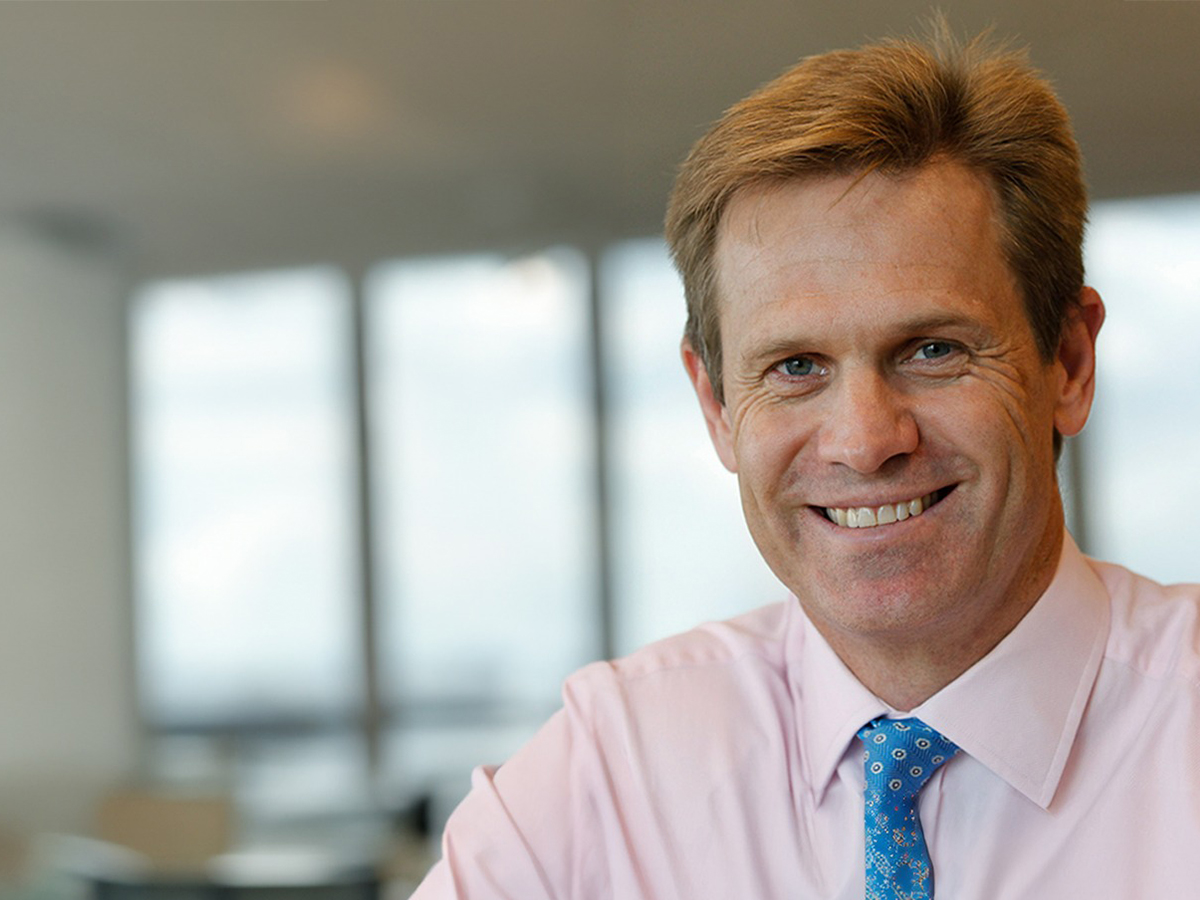
Brenton Saunders, Portfolio Manager
Why volatility requires balance
With markets still being shaped by macroeconomic and geopolitical crosscurrents, Saunders says balance is critical in periods of volatility and sector rotation.
“You don’t want to expose yourself to big directional bets tied to geopolitical events, the oil price or inflation,” he says.
“We spend a lot of time intentionally designing portfolios that won’t simply be dragged one way or another by those macro events. That becomes especially important during major market selloffs.”
For Saunders, the task is to identify the stronger companies within that backdrop through detailed, bottom-up research.
He says he is looking for businesses with sound capital structures, manageable debt levels and strong management teams focused on delivering stronger shareholder returns.
“It’s like a moth to the flame at the moment,” Saunders says, noting that investor enthusiasm has quickly shifted from areas such as gold to AI.
“AI has been rallying in the US for some time, but that momentum is now building more meaningfully in Australia.”
About Brenton Saunders and Pendal MidCap Fund
Brenton is a portfolio manager with Pendal’s Australian equities team. He manages Pendal MidCap Fund, drawing on more than 25 years of expertise. He is a member of the CFA Institute.
Pendal MidCap Fund features 40-60 Australian midcap shares. The fund leverages insights and experience gained from Pendal’s access to senior executives and directors at ASX-listed companies. Pendal operates one of Australia’s biggest Aussie equities teams under the experienced leadership of Crispin Murray.
Pendal is a global investment management business focused on delivering superior investment returns for our clients through active management.
Get to know CHRIS LEES, a London-based senior portfolio manager with our affiliate asset manager J O Hambro
ALONG with Nudgem Richyal, Chris is a co-portfolio manager of Pendal Global Select Fund.
J O Hambro is an equities specialist asset manager with international capabilities across Global and International, UK, Europe, Asia and emerging markets.
The Pendal Global Select Fund offers access to a professionally managed portfolio of global shares and the potential for long-term capital growth.
Pendal and J O Hambro are part of Perpetual Group.
In this video, Chris discusses the team’s approach to portfolio management and how they screen new investments.
Learn more about Pendal Global Select Fund: https://pendalgroup.com/global-equities/pendal-global-select-fund
Highlights:
0.37 What type of investor has the fund been designed for?
1.17 How do you approach portfolio management?
1.57 How do you screen new investments?
Find out about
Pendal Global
Select Fund
Chris Lees & Nudgem Richyal,
Senior Fund Managers
About Chris Lees and Nudgem Richyal
Chris Lees and Nudgem Richyal are senior fund managers of Pendal Global Select Fund. The pair have been working together as investment managers for more than 20 years.
Chris has more than 32 years of investment industry experience. He joined Pendal Group’s UK-based asset manager J O Hambro Capital Management (JOHCM) in 2008 after spending 19 years at Baring Asset Management, ultimately as head of its global sector team.
Nudgem has 22 years of industry experience, joining JOHCM with Chris in 2008. He was previously an investment director with the Global Equity Group of Baring Asset Management, where he worked closely with Chris since 2001.
Industry super funds are under increasing pressure from the government to provide more products enabling them to service members beyond retirement. Pendal’s BRENTON SAUNDERS discusses the changes and the midcaps set to benefit
- Super funds pushed to improve retirement drawdowns
- Global companies circling Australia’s annuity market
- Find out more about the Pendal MidCap fund
RETIREES could see a wave of new retirement products hit the market from mid-year, as APRA resets capital requirements for decumulation products, like annuities — a change expected to lower barriers for providers and encourage large overseas insurers to compete in Australia.
The shift comes as the government increases pressure on super funds to help members spend down balances in retirement, rather than die with “fully stacked” accounts.
“The problem the government has is that a lot of people, when they pass, their super funds balances are still high, and they haven’t really used that money over time and effectively decumulated,” explains Brenton Saunders, portfolio manager for Pendal MidCap Fund.
“A big part of the reason is that there are very few easy to understand and effective decumulation products out there.”
An annuity is one of these types of products. It is a financial contract with an insurance company that provides a guaranteed income stream, either immediately or in the future, often used for retirement planning.
However, Saunders says up until now annuities haven’t been particularly popular in Australia due to a complicated administrative process and limited availability.
Challenger (ASX:CGF) is one of the only Australian investment management companies that currently offers annuities.
“The Australian framework historically has required a much more capital-intensive approach to annuities because capital adequacy requirements were higher,” says Saunders.
“So it’s never really attracted a lot of the big global annuity players into the market to facilitate mass development of products.”
What’s changing
APRA finalised its review at the end of March with the amendments set to come into effect from 1 July 2026.
The amendments are designed to make annuities less capital-intensive to write, potentially widening the limited provider pool and attracting new entrants to the market
At the same time, Challenger is investing in technology to make annuities easier to quote, implement and service through advisers and super funds.
“Challenger will also partner with industry super funds to provide them with products that they can then pass on to their members,” adds Saunders.
“It’s a big opportunity for Challenger specifically, but what will happen is – and what we’re seeing happen now – is other participants from Japan and the US are entering the annuity market.
“So, it’ll become quite a vibrant landscape.
“I suspect in time companies like Challenger, given that they’re much smaller than the big global annuity providers, could be acquired by these bigger companies.”
Why it matters for retirees
If more insurers enter and super funds expand retirement offerings, retirees may have more ways to convert part of their balance into a predictable “pay cheque”.
“Companies like financial services business Generation Development Group (ASX:GDG) and AMP (ASX:AMP) have launched products that are more market-linked than annuity based, but are very tax efficient and getting a lot of traction with the retirement market,” says Saunders.
Evolution of SMSFs
Over the past decade, there has also been an evolution of self-managed super funds.
“The superannuation industry is growing incredibly fast. We’ve had super contributions as individuals increase a couple of times over the last five years, and with strong markets we’ve also had super balances grow materially over the last five or six years,” says Saunders.
Saunders says two offerings have been gaining share with “tech ready,” attractively priced and well serviced platforms; Netwealth Group (ASX:NWL) and Hub24 (ASX:HUB).
“That all manifests in these platforms, and notably Hub and Netwealth have been big beneficiaries of that.
“We back them to continue taking market share in the platform market from industry superannuation funds on the one hand, and from the incumbent platforms on the other.”
Pendal MidCap Fund owns a position in CGF, GDG, AMP, NWL and HUB.
Find out about
Pendal MidCap Fund
Brenton Saunders, Portfolio Manager
About Brenton Saunders and Pendal MidCap Fund
Brenton is a portfolio manager with Pendal’s Australian equities team. He manages Pendal MidCap Fund, drawing on more than 25 years of expertise. He is a member of the CFA Institute.
Pendal MidCap Fund features 40-60 Australian midcap shares. The fund leverages insights and experience gained from Pendal’s access to senior executives and directors at ASX-listed companies. Pendal operates one of Australia’s biggest Aussie equities teams under the experienced leadership of Crispin Murray.
Pendal is a global investment management business focused on delivering superior investment returns for our clients through active management.
While others reposition amid today’s market ructions, Pendal’s BRENTON SAUNDERS has seen volatility before – and is focused on the midcap opportunities now emerging
- Volatility revives active opportunities in sold-off midcaps
- Energy, infrastructure benefit; SaaS de-rated
- Find out more about the Pendal MidCap fund
Across three decades, Brenton Saunders – portfolio manager of the Pendal MidCap Fund – has navigated everything from the 1997 Asian financial crisis and the dot-com bubble to the global financial crisis and Covid.
He says the current situation in the Middle East is different in its particulars, but the ripple effects may feel familiar.
“This is a very geographically focused issue that is slowly permeating into different parts of the economy globally, beyond the obvious beneficiaries and companies suffering as a direct result of it,” Saunders notes.
Even so, he isn’t making material changes to the fund’s midcap positioning, preferring to build portfolios designed to weather a range of market scenarios.
“We see ourselves as portfolio planners, not market predictors. We try to build portfolios that are resilient across environments by diversifying properly and avoiding unintended macro exposures,” Saunders explains.
That balance matters during rotations and volatility. Recent swings have been driven by the conflict in the Middle East as well as investor concerns about AI-enabled competition for SaaS providers.
Volatility can create active opportunities
Saunders says periods like these can favour active management.
“When we have big geopolitical events, the market extrapolates what that means for the economy – assuming it will persist,” he says.
“That has created opportunities in companies that have been sold off.”
Historically, Saunders and the Pendal MidCap team have been able to use episodes of market volatility to identify and add value via opportunities in individual companies.
Against that backdrop, Saunders says parts of the energy complex are among the more obvious potential beneficiaries.
“You’ll likely see individuals and governments looking to shore up supply lines—becoming more self-reliant in procurement and refining of oil, for example, and more broadly in the procurement and generation of power,” Saunders says.
“Companies that produce energy are obvious beneficiaries.
“Alternative sources of energy such as lithium – given its role in batteries – could also get an added impetus from heightened energy-security concerns.
“Nuclear energy, too, is getting more attention globally than it has in some time as an alternative.”
Find out about
Pendal MidCap Fund
Brenton Saunders, Portfolio Manager
Saunders also expects governments to duplicate and reinforce parts of their fuel-supply infrastructure, creating a tailwind for engineering and construction companies.
“Some contractors we can invest in – companies like Worley – are well placed to help design and manage the construction of facilities such as LNG plants, as well as oil and gas infrastructure that may need repair in the Middle East.”
Pendal MidCap Fund owns a position in Worley.
AI not necessarily an ‘existential threat’
SaaS providers, meanwhile, have faced significant de-rating following a wave of new generative-AI product releases.
But Saunders believes the fallout has been a bit overdone.
“These software companies will no doubt have to adapt to an AI-heavy environment, but most are solid businesses,” he says.
“We haven’t seen a clear impact from AI in their earnings so far. And we think many are likely beneficiaries if they incorporate AI into their products in a meaningful way.
“The notion of AI potentially disintermediating software companies shouldn’t be dismissed – but we think the market narrative has swung too far.”
The sell-off has pushed valuations to levels Saunders describes as attractive – both relative to history and in absolute terms.
“Our assessment so far is that many of these high-quality software and SaaS businesses are exceptional. They benefit from incumbency… and they’re among the most tech-savvy companies we deal with.”
Saunders notes that many software companies also have access to proprietary data that generic AI applications may not be able to access via the public internet.
“So there are more strings to their bows than I think people are giving them credit for.
“Over time, there may be instances where products are replicated or competition increases, which could show up in pricing. But I don’t think it’s necessarily an existential threat for most of them – at least not yet,” Saunders says.
About Brenton Saunders and Pendal MidCap Fund
Brenton is a portfolio manager with Pendal’s Australian equities team. He manages Pendal MidCap Fund, drawing on more than 25 years of expertise. He is a member of the CFA Institute.
Pendal MidCap Fund features 40-60 Australian midcap shares. The fund leverages insights and experience gained from Pendal’s access to senior executives and directors at ASX-listed companies. Pendal operates one of Australia’s biggest Aussie equities teams under the experienced leadership of Crispin Murray.
Pendal is a global investment management business focused on delivering superior investment returns for our clients through active management.
Gold and silver have done very well over the last 12 months – even with the recent pullback, but Pendal portfolio manager BRENTON SAUNDERS says investors still haven’t missed their chance
- The ‘scepticism gap’ weighing on gold miners’ valuations
- ‘Bonanza’ prices support earnings upgrades and sector strength
- Find out more about the Pendal MidCap fund
GOLD and silver prices have been riding a rollercoaster since the start of the year, but Pendal portfolio manager Brenton Saunders — who has worked as a geologist — argues there are still plenty of opportunities in midcap equities exposed to these metals.
Total gold demand in 2025, including over-the-counter sales, exceeded 5,000 tonnes for the first time, according to the World Gold Council (WGC).
Last year, the safe-haven metal set 53 new all-time price highs which yielded an “unprecedented value” of US$555 billion – a 45 per cent year over year increase, WGC data shows.
The reason: heightened investment activity driven by safe-haven and diversification moves that culminated in the second strongest year on record for exchange traded fund-inflows and elevated central bank buying.
Although central bank purchases slowed from their recent pace, they hit the upper end of the WGC’s forecast, totalling 863 tonnes for the year. Bar and coin buying also reached a 12-year high.
This led to the gold price marking its highest annual average at US$3,431 an ounce – a 44% spike year over year.
“Central banks have been buying it hand over fist; retail investors have been buying it hand over fist, the dollar has been weakening, and geopolitics have been pretty elevated,” explains Saunders, who manages Pendal’s MidCap Fund.
“If you go back to the late 90s/early 2000s central banks were all selling gold. It was an old asset. Nobody needed it anymore. It was defunct,” explains Saunders.
“Most of the OECD countries sold most of their gold reserves. The US was probably the only one that didn’t.
“But now you’ve seen a very broad-based and especially emerging market purchase of gold. So it’s re-legitimised gold in a major way in terms of its role as a reserve asset the world over.”
Silver, meanwhile, is also a beneficiary of the market ructions, hitting its highest point on record in late January when it rose above US$120 an ounce.
An additional key driver of the recent price surge in gold’s poorer cousin is the high demand for silver as an industrial metal input for solar panels.
“We now use a lot of it, especially in solar panels,” says Saunders. “That’s probably the biggest industrial use for silver now, but it’s always been a second-tier reserve currency investment product that has done the rounds.
“So it’s move more recently is obviously being helped by the fact that solar manufacturing is still elevated and now we’ve seen some investment demand come to the fore.”
But while gold and silver prices have run hard, this hasn’t necessarily been reflected in the share prices of gold and silver stocks.
‘Scepticism gap’
Saunders points to the ‘scepticism gap’ between the price of the physical metals versus the equities exposed to them.
“Because the move in the gold price has been so rapid the market has been highly sceptical of pricing in that scenario because they’re constantly questioning what will happen if the gold price comes back.
“So the equities, not just gold equities but especially in gold, have been quite reticent to reflect in their share prices the full move in the gold price.”
However, Saunders argues that the price could drop by US$1,000 and still be at a “bonanza level”, meaning gold-exposed companies “could weather quite a big correction in the gold price without much impact to the value of the company’s operational considerations”.
A “bonanza-level” gold price affords operations more flexibility, allowing them to mine areas that historically were not economic to consider. This increases reserves and profitability.
“That is the one thing that gives me a bit of comfort, and I think investors ultimately a bit of comfort,” says Saunders.
“If I look at consensus earnings for gold companies, they’re still reflecting a significantly lower gold price than prevails today.
“So that should mean if the gold price stays at the current level, we’ll continue to see earnings upgrades and that normally underpins share prices.
“Those are the things that make me hopeful that it should still be a fairly constructive sector from an investment perspective.”
Find out about
Pendal MidCap Fund
Brenton Saunders,
Portfolio Manager
About Brenton Saunders and Pendal MidCap Fund
Brenton is a portfolio manager with Pendal’s Australian equities team. He manages Pendal MidCap Fund, drawing on more than 25 years of expertise. He is a member of the CFA Institute.
Pendal MidCap Fund features 40-60 Australian midcap shares. The fund leverages insights and experience gained from Pendal’s access to senior executives and directors at ASX-listed companies. Pendal operates one of Australia’s biggest Aussie equities teams under the experienced leadership of Crispin Murray.
Pendal is a global investment management business focused on delivering superior investment returns for our clients through active management.
Lithium is finally starting to emerge from a prolonged downturn. Pendal’s MidCap Fund portfolio manager BRENTON SAUNDERS details the catalysts driving this recovery.
- Rapid rise of energy storage systems (ESS) is driving lithium demand
- Market could move into supply deficit in 2026
- Find out more about the Pendal MidCap fund
The lithium sector has struggled over the past three years as a flood of supply entered the market and drove prices down, but Saunders says following this extended downturn it looks like 2026 could see supply level out and potentially even move into a deficit.
One factor that is contributing to this recovery is the ramp-up in the roll out of energy storage systems (ESS), which historically have only been a small part of lithium demand.
“It was always expected that ESS would be a big part of the market, but it really took a long time to gather a head of steam, whereas electric vehicles got underway really quickly and then were growing pretty consistently from fairly early on,” says Saunders.
“The ESS space has been quite nascent for a long time and now is growing fast off a reasonably big base,” says Brenton.
In a short period of time, ESS rollouts have accelerated and are up 70-80 per cent in the past year.

“Whilst the range of forecasts for next year is very wide, it looks like it’ll be up quite substantially in excess of what the electric vehicle growth rate has been,” explains Saunders.
“The growth rate for demand of lithium in electric vehicles has been in the mid-20 per cent range. Estimates for ESS demand growth are between 30 per cent and 90 per cent year on year.”
Another contributing factor includes the curtailment of some lithium production capacity, which although not the biggest driver of the recovery, the amount shelved has not been immaterial, according to Saunders.
There has also been a dearth of new projects funded, built and commissioned in the past two to three years, and China has initiated a review of lithium mining permits which has resulted in the cancellation of permits that have not complied with proper permitting processes, further impacting mine supply.
“That has definitely created quite a big gap in supply over the last three to five months which has helped the lithium price stabilise,” says Saunders.
This has prompted brokers and consultants to shift from predictions of intractably large surpluses through to 2030 to a balanced market and maybe even a small deficit by 2026.
Lithium stocks on the move
Saunders says these factors flow into investor perceptions about the prospects for lithium stocks with the rising price.
Two lithium-exposed stocks in the Pendal MidCap Fund are Pilbara Minerals (PLS) and Mineral Resources (MIN), but Saunders also sees potential in IGO (IGO) and Liontown Resources (LTR) – two stocks not currently in the fund.
Diversified producer IGO has a 49% stake in a lithium joint venture with China’s Tianqi Lithium Corporation, which has a majority stake in the Greenbushes lithium operation in Western Australia.
Liontown, meanwhile, is producing lithium spodumene from its Kathleen Valley operation in Western Australia and investigating the potential to upgrade the spodumene to higher value lithium products.
The rising lithium price means the midcap producers will become more profitable and those with debt on the balance sheet will be able to pay it down more quickly, according to Saunders.
About Brenton Saunders and Pendal MidCap Fund
Brenton is a portfolio manager with Pendal’s Australian equities team. He manages Pendal MidCap Fund, drawing on more than 25 years of expertise. He is a member of the CFA Institute.
Pendal MidCap Fund features 40-60 Australian midcap shares. The fund leverages insights and experience gained from Pendal’s access to senior executives and directors at ASX-listed companies. Pendal operates one of Australia’s biggest Aussie equities teams under the experienced leadership of Crispin Murray.
Pendal is a global investment management business focused on delivering superior investment returns for our clients through active management.
Midcaps are not just a diversification opportunity – right now, they are also outperforming their larger cap counterparts. BRENTON SAUNDERS explains why – and where to look.
- Higher earnings growth driving performance
- Diversification benefits
- Find out more about the Pendal MidCap fund
MIDCAP stocks are a sweet spot in the Australian share market, delivering higher earnings growth and outperforming their large cap peers over time, says Pendal’s Brenton Saunders.
Narrow market leadership in recent years has left many index investors increasingly concentrated in mature, slower-growing sectors like the big banks.
Saunders says midcaps can offer a more balanced alternative with better exposure to faster-growing businesses and a higher level of corporate activity that can help to underpin valuations.
“If somebody asked you at a barbecue, why do midcaps outperform the large cap indices, quite simply it’s because they have higher earnings growth,” says Saunders, portfolio manager of the Pendal MidCap Fund.
“They’re typically companies in the sweet spot of their corporate development and their evolution as businesses.
“They’re big enough to attract real investment attention – both from investors and bigger corporates – but unlike many smaller cap companies they’re pretty settled in terms of their balance sheets and funding.
Saunders was speaking at the Pendal webinar Why ASX midcaps are out-performing – and which sectors are best-positioned.
What makes an attractive midcap?
Different investors can have different views on what makes a midcap company.
For Pendal, the segment includes stocks ranked 51 to 150 on the ASX – a wider definition than the ASX MidCap index.
Saunders says those 100 companies have a lower concentration in slower-growth sectors compared to the broader market, with no single industry dominating performance.
“The spread in midcaps across the economy and sectors on the ASX is just much better,” says Saunders.
“The sector historically has empirically done better than most of the other larger and small cap aggregates on the ASX.
“And despite that, it acts as a very powerful portfolio diversifier.”
Top 10 midcaps include companies like Lynas Rare Earths, Life360, JB Hi-Fi, ALQ, and REA Group, offering exposure to diverse growth themes rather than concentration in banks and large-cap resource stocks.
Why midcaps look appealing now
Saunders says recent conditions have shifted the balance in favour of midcaps after a multi-year period of trading in a range as investors chased large-cap bank stocks instead.
Corporate activity has picked up, with several companies under offer or recently acquired.
“In my portfolio, I’m usually dealing with two or three of them that are under offer,” says Saunders.
“That just serves to underpin ratings and the price discovery.”
A lower interest rate environment is also aiding rate-sensitive parts of the investment universe such as real estate, while easing real rates are typically supportive for the gold price.
“There are good opportunities in mid-caps now – there are a number of companies and sectors on the ASX with strong outlooks.
“It’s well positioned to carry on outperforming, which it has done for the past year and a half.”
Diversification benefits
Saunders says the midcap sector’s breadth is a core part of its appeal.
Businesses in industries as diverse as software, data centres, gold, energy, consumer goods and medical technology are all offering attractive opportunities.
The diversity makes the segment much less concentrated than the broader market.
The biggest 10 companies in the 51-150 represent just over a fifth of the index, with no single sector dominating.
That compares to a 45.6 per cent weighting for the top 10 in the S&P/ASX 300, where banks alone represent nearly a quarter of the S&P/ASX 300.
Saunders names diversified financials as a particularly interesting opportunity, with platform businesses like Netwealth and Hub24 benefiting from growing demand for more sophisticated wealth-management functionality.
He says retirement is another area he is watching closely, driven by government efforts to improve retirement income products. This is creating opportunities for companies like Challenger and AMP as the population ages.
About Brenton Saunders and Pendal MidCap Fund
Brenton is a portfolio manager with Pendal’s Australian equities team. He manages Pendal MidCap Fund, drawing on more than 25 years of expertise. He is a member of the CFA Institute.
Pendal MidCap Fund features 40-60 Australian midcap shares. The fund leverages insights and experience gained from Pendal’s access to senior executives and directors at ASX-listed companies. Pendal operates one of Australia’s biggest Aussie equities teams under the experienced leadership of Crispin Murray.
Pendal is a global investment management business focused on delivering superior investment returns for our clients through active management.
In this video, Australian equities portfolio manager BRENTON SAUNDERS explains the strategic role of ASX mid-cap stocks in a diversified portfolio
An excerpt from Brenton’s interview
ASX-listed mid caps represent the “ideal sweet spot” of the market, offering compelling opportunities for investors seeking growth, income and diversification in their portfolios.
That’s according to Brenton Saunders, portfolio manager of Pendal Midcap Fund, who explains the opportunity set in the video above.
The ASX mid-cap universe — which Pendal defines as companies ranked 51st to 150th by market capitalisation — is rich with innovation and diversity. It includes high-growth names in fintech, healthcare and technology, as well as early-stage resource companies ramping up production.
“Most of the best growth stocks sit in the mid-cap universe,” argues Brenton.
These often founder-led opportunities are not only a more evenly weighted representation of the economy, but can also be the subject of corporate activity, making it an exciting part of the Australian market.
“These companies augment growth and capital appreciation at a reasonable level of yield,” Brenton says. “In aggregate, they tend to outperform large caps while offering more stability than small caps.”
However, performance is often tied to domestic economic conditions — which means it’s critical to invest with an experienced team with the resources to carry out deep macro-economic insight.
“Most mid-caps have high domestic exposure, so understanding the shape and health of the Australian economy is key,” says Brenton.
Pendal Midcap Fund is well placed to benefit from the scale, infrastructure and experience of Pendal’s Australian equities team, which is one of the biggest and best-resourced in the country.
“We have deep sector coverage and high continuity, which can translate into better research, stronger conviction and more robust portfolios,” Brenton says. “That allows us to find and cover opportunities in different parts of the economy at different times of the economic cycle.”
Supported by a disciplined, research-driven process, the fund offers a powerful tool for enhancing exposure to an exciting part of the market.
Watch the video above to hear more from Brenton and Pendal’s mid-cap strategy.
Get to know our portfolio managers better in these other profile videos:
About Pendal
Pendal is a global investment management business focused on delivering superior investment returns for our clients through active management.
Pendal’s Australian equities team is one of the most experienced and well-resourced equities teams in Australia.
Contact a Pendal key account manager
Find out more about Pendal’s Australian equities capabilities
In this video, ELISE McKAY explains the Pendal process for identifying income, growth and diversification opportunities in Australian shares
An excerpt from this interview
AUSTRALIAN equities have the potential to offer investors a compelling trio of benefits, argues analyst and portfolio manager Elise McKay.
In this video, Elise explains how the Pendal investment process helps her team identify and take advantage of opportunities in Australian shares.
“Firstly you get income, secondly you get growth, and then thirdly you get the diversification benefit,” she says.
High dividend pay-out ratios and a strong franking credits regime make Australian stocks attractive for income-seeking investors, she says.
On the growth front, Australia has been a fertile ground for scalable business models.
“If you can succeed and grow from nothing in Australia, you’re really well placed to scale that model offshore,” she says, noting examples such as CSL, Xero and Wisetech, which are held in various Pendal portfolios.
Diversification is another key advantage. Unlike tech-heavy US markets, Australia’s ASX is weighted towards financials, resources and healthcare companies which can offer additional sector and geographical balance — particularly for businesses with exposure to Asia.
Pendal clients benefit from the experience and tenure of the Australian equities team, which is one of the biggest and best-resourced in the country.
Pendal thrives on respectful debate and diverse perspectives, where “everyone feels free to challenge each other, which translates to better outcomes,” Elise says.
“We’re core managers, so style consistency is critical. We actively monitor performance and risk to avoid surprises.”
Elise manages Pendal Horizon Sustainable Australian Share Fund, which aims to align performance with purpose by supporting companies driving the transition to a more sustainable future.
“We exclude harmful sectors, we support sustainable practices, and we engage with companies to improve,” she says. “It’s about de-risking and building better businesses.”
Watch the video above to learn more about Elise and Pendal’s Australian equities strategies.
Get to know our portfolio managers better in these individual profile videos:
About Pendal
Pendal is a global investment management business focused on delivering superior investment returns for our clients through active management.
Pendal’s Australian equities team is one of the most experienced and well-resourced equities teams in Australia.
Contact a Pendal key account manager
Find out more about Pendal’s Australian equities capabilities
In this video, explore the opportunity set in Australian equities through the eyes of one of the country’s biggest and best-resourced equities teams
An excerpt from the team’s interview
AT the heart of investing in Australian equities is a belief in Australia itself.
In this video, hear more about the opportunity set in Australia through the eyes of the Pendal Australian equities team – one of the biggest and best-resourced teams in the country.
According to Crispin Murray, head of equities at Pendal, Australia is not only one of the fastest-growing economies in the developed world – it’s also home to strong institutions, well-run companies and a government with a strong balance sheet.
“Put all that together and you have a market full of opportunities and the potential for strong returns,” Crispin says. “That means it’s a really good part of any diversified portfolio.”
Investing in the Australian market can offer a trifecta of benefits, adds analyst and portfolio manager Elise McKay.
“In Australia, you get income, growth, and diversification,” she explains. “Plus, we have some world-class growth companies – if you can succeed in Australia, you’re well-placed to scale globally.”
However, staying abreast of the opportunity set, navigating market cycles and selecting the best stock ideas calls for the knowledge, skills and research power of a well-resourced team.
Pendal’s 19-strong equities team hail from all walks of life – supporting a diversity of thought that underscores their understanding of industry, sector and business performance through various market cycles.
“We have one of the biggest active Australian equities teams in the market, and we do that very consciously,” explains portfolio manager Brenton Saunders. “We want to understand all the opportunities and have very dedicated coverage across each sector of the market.”
By “acting like business owners”, the team can also harness their knowledge of business fundamentals to get the inside track on the challenges companies face in each environment and the solutions they can offer shareholders.
“We task ourselves with making money in any and every environment,” says co-portfolio manager Lewis Edgley. “The way we do that is having a very good fundamental understanding of the businesses that we’re investing in. And when we get that right, we can identify mispriced opportunities and exploit them.”
Get to know our portfolio managers better in these individual profile videos:
Crispin Murray, head of equities
Elise McKay, analyst and portfolio manager
Brenton Saunders, portfolio manager
Lewis Edgley and Patrick Teodorowski, co-portfolio managers
About Pendal
Pendal is a global investment management business focused on delivering superior investment returns for our clients through active management.
Pendal’s Australian equities team is one of the most experienced and well-resourced equities teams in Australia.
Contact a Pendal key account manager
Find out more about Pendal’s Australian equities capabilities