
Significant Features: The Pendal Property Securities Fund is an actively managed portfolio of primarily Australian listed property securities.
Fund Objective: The Fund aims to provide a return (before fees, costs and taxes) that exceeds the S&P/ASX 300 A-REIT (Sector) (TR) Index over the medium to long term.
This week the RBA’s Dr Philip Lowe indicated the big jump in house prices wasn’t really his area of concern. Pendal’s Tim Hext explains what that means
THE RESERVE Bank of Australia has for a long time now had an uncomfortable relationship with house prices.
They quite frankly don’t know whether to cheer them on or lament them.
When the RBA cuts rates, house prices take off, which is seen as a good thing since it should increase construction activity.
The RBA also subscribes to the wealth effect, hoping people will feel more confident in spending.
But skyrocketing house prices also mean a lot more debt for new home buyers. And young people are increasingly priced out, unless parents step in and help.
Forget equal opportunity.
This week the RBA’s Dr Lowe took the opportunity in a speech to say the massive recent leap in house prices — while helped by rate cuts — really weren’t the RBA’s area.
He pointed to other government policies such as tax, planning, transport and zoning as the structural factors that were responsible.

Find out about
Pendal’s Income and Fixed Interest funds
This of course leads to a wider discussion around whether high house prices — and asset markets in general — are good for society.
After all, the RBA’s third goal is the “welfare of the Australian people”.
This does not appear in most central banks mandates and gives the RBA scope beyond low inflation and full employment.
By setting the price of money the RBA has a huge impact on asset prices.
Of course strong asset prices are good news for asset owners — generally people in the older half of the population with homes and big super balances.
Whether this “trickles down” to significantly more spending is debatable.
It’s clear that Dr Lowe expects to see through to the end of his term in September 2023 with cash rates at zero.
He even expressed surprise why anyone would think otherwise.
Whether fiscal policy will address the widening wealth gaps is outside his control but he has no plans to use monetary policy, or at this stage even regulatory measures.
For asset owners he has our backs.
About Tim Hext and Pendal’s Income & Fixed Interest boutique
Tim Hext is a Pendal portfolio manager and head of government bond strategies in our Income and Fixed Interest team.
Tim has extensive experience in banking, financial markets and funding including senior positions with NSW Treasury Corporation (TCorp), Westpac Treasury, Commonwealth Bank of Australia, Deutsche Bank, Bain & Co and Swiss Bank Corporation.
Pendal’s Income and Fixed Interest boutique is one of the most experienced and well-regarded fixed income teams in Australia.
Find out more about Pendal’s fixed interest strategies here
About Pendal
Pendal is a global investment management business focused on delivering superior investment returns for our clients through active management.
In 2023, Pendal became part of Perpetual Limited (ASX:PPT), bringing together two of Australia’s most respected active asset management brands to create a global leader in multi-boutique asset management with autonomous, world-class investment capabilities and a growing leadership position in ESG.
Significant Features: The Pendal Australian Share Fund is an actively managed portfolio of Australian shares.
Fund Objective: The Fund aims to provide a return (before fees, costs and taxes) that exceeds the S&P/ASX 300 (TR) Index over the medium to long term.
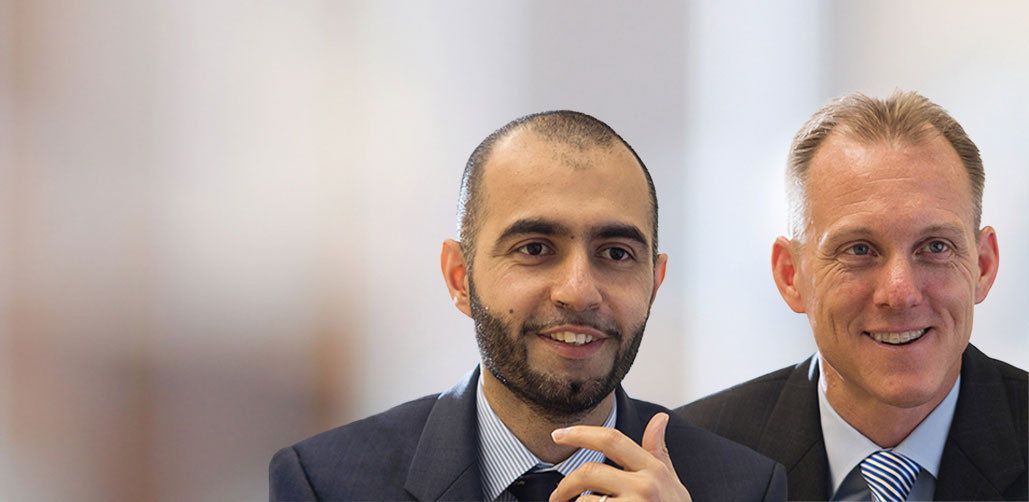
Chris Lees and long-time investing partner Nudgem Richyal have spent 17 years building a highly differentiated — yet highly successful — global equities investment strategy. Here they explain their process
- Many global equity strategies look the same
- Differentiation comes from focusing on “neighbourhoods”
- Find out about Pendal Global Select Fund
- ‘Highly recommended’ by Zenith (Sep 27, 2021)*
THESE days a lot of global equities strategies have started to look very similar — particularly after the outperformance of big tech stocks in recent years.
But as investors eye high stock prices and volatility among the popular picks, the question becomes — how do you find differentiation? How do you assess sectors and geographies to find attractive opportunities?
Chris Lees and long-time investing partner Nudgem Richyal have been thinking about this for many years.
Over the past 17 years they have built their JOHCM Global Select Fund into a highly differentiated — yet highly successful global equities strategy.
The pair recently brought their strategy to Australian investors, launching Pendal Global Select Fund. Research house Zenith awarded the fund its highest “Highly Recommended” rating on September 27, 2021.**
Lees and Richyal use a distinct four-dimensional investment process (stocks, sectors, countries, time/change), which focuses on the behaviour of a company’s share price to determine whether the most important driver of each prospective investment is stock-specific or based on sector, country or another factor.
Pendal Global
Select Fund
Something very
different in
global equities
“When you look at the way the world is — not the way consultants say it should be — the average western large cap stock has surprisingly low alpha and surprisingly high correlation to the sector it’s in,” says Lees.
“Take the Aussie mining companies. There isn’t that much money to be made deciding between Rio Tinto or BHP. It’s about deciding when commodities are going up or commodities are going down.
“What we’ve mathematically discovered is that most people’s ladders are up against the wrong wall,” he says.
“When you look at large caps in the west, it’s the sector effect that drives most stocks, and the move to passive investing and ETFs (exchange traded funds) has just made that greater.
“In the east, in places like Japan and emerging markets in Asia, it’s the country effect. For example, Toyota doesn’t behave like a global automobile company. Chinese banks don’t behave like financials.” Those share prices are highly correlated to the country.
“An average stock in a great sector or country usually makes you more money than a great stock in a terrible sector or neighbourhood,” says Lees.
Understanding global trends
To outperform, investors need to identify and understand global trends.
In the 1980s winning portfolios needed to include Japan, Lees says. In the 1990s its was technology, media and telecommunications companies.
In the 2000s investors needed emerging markets and commodities to consistently outperform. Over the past decade it’s been the big tech FAANG stocks (Facebook, Amazon, Apple, Netflix, Google) — which is why most global portfolios include them today.
Today, high stock prices among the FAANGs and recent volatility have some investors looking for “a different path to the summit”, says Lees. (It’s a familiar analogy since he lives in a small town in the Swiss Alps.)
“There will be a regime change and we have a proven process that locks in on new regime shifts,” he says.
(The pair say digitisation, decarbonisation and deglobalisation are the new themes or “neighbourhoods” to consider.)
Zigging when others zag
Lees and Richyal have outperformed most global equity funds without owning all the FAANG stocks. They refer to it as not being a one-trick pony.
Lees and Richyal created their strategy in 2004 at Barings Asset Management. It was later launched at Pendal Group’s UK-based asset manager JOHCM in 2008 and since then has delivered 3.13%* annualised alpha (before fees) compared to the MSCI All Country World NR Index benchmark.
Since its inception, the underlying JOHCM Global Select Fund strategy has delivered top-decile performance in Lipper and 2nd decile in Morningstar.*
Hear more from Pendal Global Select Fund portfolio managers Chris Lees and Nudgem Richyal:
- Fast podcast: What makes this cycle different – and which data investors should be watching
- Fast podcast: How to find opportunity in global equities right now
- Webinar: Listen to an in-depth webinar with Chris and Nudgem (registration required)
- Article: A different path to the summit: Chris Lees and Nudgem Richyal launch Pendal Global Select Fund in Australia
- Article: Everyone’s looking for something different in global equities. Here’s how to find it
- Article: Two of us: Pendal global equities fund managers Chris Lees and Nudgem are ‘Yin and Yang’
“The fact that we’ve proven we can outperform over a long period and many cycles with different portfolio tilts and geographies — and a different set of stocks — gives our clients confidence that we aren’t a one-trick pony.”
The obvious question is what’s the next decade about?
“It’s going to be healthcare,” Lees says. “That’s where we are getting positive signals.
“Great and improving fundamentals, improving valuations and the beginning of a new price trend. And not many of the winning global equities portfolio have much healthcare in them.”
Find out more about Pendal Global Select Fund
* Source: JO Hambro, Morningstar universe – Global Large-Cap Growth Equity funds, Lipper survey – Sector quartile ranking: IA Global, and Lipper Global Equity Global domiciled in the UK, offshore Ireland, or offshore Luxembourg. Lipper ranking is from A GBP Class. Please note that these performance figures have not been calculated in accordance with the Financial Services Council (FSC) standards.
** The Zenith Investment Partners (ABN 27 103 132 672, AFS Licence 226872) (“Zenith”) rating (assigned ) referred to in this document is limited to “General Advice” (s766B Corporations Act 2001) for Wholesale clients only. This advice has been prepared without taking into account the objectives, financial situation or needs of any individual and is subject to change at any time without prior notice. It is not a specific recommendation to purchase, sell or hold the relevant product(s). Investors should seek independent financial advice before making an investment decision and should consider the appropriateness of this advice in light of their own objectives, financial situation and needs. Investors should obtain a copy of and consider the PDS or offer document before making any decision and refer to the full Zenith Product Assessment available on the Zenith website. Past performance is not an indication of future performance. Zenith usually charges the product issuer, fund manager or related party to conduct Product Assessments. Full details regarding Zenith’s methodology, ratings definitions and regulatory compliance are available on our Product Assessments and at http://www.zenithpartners. com.au/RegulatoryGuidelines
About Chris Lees and Nudgem Richyal
Chris Lees and Nudgem Richyal are senior fund managers of Pendal Global Select Fund. The pair have been working together as investment managers for more than 20 years.
Chris has more than 32 years of investment industry experience. He joined Pendal Group’s UK-based asset manager J O Hambro Capital Management (JOHCM) in 2008 after spending 19 years at Baring Asset Management, ultimately as head of its global sector team.
Nudgem has 22 years of industry experience, joining JOHCM with Chris in 2008. He was previously an investment director with the Global Equity Group of Baring Asset Management, where he worked closely with Chris since 2001.
About Pendal Global Select Fund
Pendal Global Select Fund is a global equities portfolio with a distinctive, yet proven approach and a 17-year track record of outperformance. Since its inception, the underlying strategy (JOHCM Global Select Fund) has delivered top-decile performance in Lipper and 2nd decile in Morningstar.*
* Source: JO Hambro, Morningstar universe – Global Large-Cap Growth Equity funds, Lipper survey – Sector quartile ranking: IA Global, and Lipper Global Equity Global domiciled in the UK, offshore Ireland, or offshore Luxembourg. Lipper ranking is from A GBP Class. Please note that these performance figures have not been calculated in accordance with the Financial Services Council (FSC) standards.
About Pendal
Pendal is an independent, global investment management business focused on delivering superior investment returns for our clients through active management. Pendal Group includes Pendal Australia, J O Hambro Capital Management, Regnan and Thompson, Siegel and Walmsley (TSW).
Chris joined Pendal as an equity investment specialist in 2014, with industry experience going back to 2000 across Sydney, London and Hong Kong. He works closely with Pendal’s Australian Equities team and provides the link to their views and insights on the outlook for Australian equity markets and portfolio positions. He also works with emerging market, Asian and global equity teams, drawing on thirteen years in working in offshore markets. Prior to joining Pendal he spent eight years as an equity portfolio specialist with BlackRock and then HSBC Global Asset Management. He is a CFA Charterholder.
Significant Features: The Pendal Global Property Securities Fund is an actively managed portfolio of international listed property securities. The portfolio is managed by AEW Capital Management.
Fund Objective: The Fund aims to provide a return (before fees, costs and taxes) that exceeds the return from the FTSE EPRA/NAREIT Developed ex Australia hedged in AUD Net TRI over the medium to long term.
What can investors learn from major developed nations as they emerge from lockdowns? Here fund manager Clive Beagles gives his perspective from the UK
BRITISH stocks are likely to outperform in the next few years — especially in the small and mid-cap sector — even though the UK is likely to be one of the first major economies to start tightening fiscal and monetary policy.
As major developed nations emerge from Covid restrictions — and spending and inflation picks up — domestic focused companies on the UK bourse are likely to outperform, says Clive Beagles, senior fund manager at Pendal Group’s UK based asset manager J O Hambro.
“You get more of the domestic stocks in the mid and small cap part of the market,” he explains.
“Valuations in that part of the market are undemanding and it feels like there’s an awful lot of internally generated momentum.
“On top of that, the UK market is undervalued more generally, and we expect the currency to firm particularly if Britain is going to be early in the tapering cycle.
“And there’s still quite a healthy pipeline of mergers and acquisitions.
All of these things mean the UK should outperform. It has been doing so already … but more by stealth. And I expect it to keep doing so.”
The view from here
Watching what happens on London’s FTSE is more than trying to pick winners. It’s also a guide for other markets.
The United Kingdom led global markets — including Australia — into the COVID pandemic with high infection rates.
It’s also coming out first, with the economy broadly re-opened. As Australian states push to hit vaccination targets, thereby allowing reopening of economies, the UK is several months ahead, with two-thirds of the British population now fully vaccinated.

2021 Money Management of the Year Awards
Pendal Australian Shares Portfolio
Winner – SMA Australian Equities
Pendal Property Investment Fund
Winner – Australian Property Securities
While the Australian economy came to a suddering halt this quarter, the UK is expanding quickly — so quickly that the government has introduced tax hikes.
“By announcing an increase in the national insurance contribution, the UK became the first Western government to start shifting towards balancing the books,” Beagles says.
And the Bank of England is sounding more hawkish.
In its most recent monetary policy summary last month, the central bank said while inflationary forces were most likely transitory, the economy “is projected to experience a more pronounced period of above-inflation in the near term”.
It’s not surprising that the government and central bank want to make fiscal and monetary policy “less loose” given real economic growth is expected to be around 7 per cent over the next couple of years, Beagle says.
“That has to impact how policy makers are thinking. We’ve had input inflation and now we’ve got a really tight labour market that that will feed into wage inflation. That will be stickier and harder to reduce.”
But Beagles is not concerned that any tightening of policy will dramatically hit the British equity market in the next couple of years.
“Consumer spending makes up quite a large proportion of the UK economy … because it is a mature economy and a services economy. In that regard, the level of employment and the taxes that generates will be more important than whether the marginal tax rate has gone up a per cent tor two.”
Also, the government has put in place incentives for businesses over the next two years.
“We definitely expect to see business investment picking up,” Beagle says. “Those two things together mean you’re looking at strong real GDP growth. And that should support the market for the next couple of years.”
About Pendal Group
Pendal is an independent, global investment management business focused on delivering superior investment returns for our clients through active management.
Significant Features: The Pendal Wholesale Plus Active High Growth Fund is an actively managed diversified portfolio that invests in Australian and international shares, Australian and international property securities, Australian and international fixed interest, cash and alternative investments. The Fund has a significant weighting towards growth assets.
Fund Objective: The Fund aims to provide a return (before fees, costs and taxes) that exceeds the Fund’s benchmark over the medium to long term.
Recent billion-dollar sporting team deals demonstrate why it’s important to be selective when choosing global equities. Pendal’s ASHLEY PITTARD explains
- Choose the top one or two stocks in a sector
- Find out about Ashley Pittard’s Pendal Concentrated Global Share Fund
In 2023, following a strategic review of Pendal’s global equity investment capabilities, we appointed Barrow, Hanley, Mewhinney & Strauss (Barrow Hanley) as the delegated investment manager for Pendal Concentrated Global Share Fund. The fund has been renamed Barrow Hanley Concentrated Global Share Fund.
This article is more than 12 months old. Find our latest insights here
THE record-breaking $US6 billion sale of the Washington Commanders NFL team last month is the latest in a rush of billion-dollar transactions involving trophy sporting teams.
If you can choose the right sporting “franchise” to buy, the returns are eye-watering.
The last time there was a rush of sporting team sales was around 20 years ago – and their value has soared around ten times since then.
What’s that got to do with stocks? A lot, says our head of global equities, Ashley Pittard
Ashley and his investing team haven’t bought any sporting teams lately.
But like the most successful sporting team transactions, Ashley focuses on what he calls “franchise assets”.
It’s all about being selective, he says.
Look for franchise assets
“Franchise assets – companies that are number one or two in their space or are monopoly or duopoly business – are also highly valued among investors at the moment,” Ashley says, pointing to the tech leaders dominating Wall Street.
Pittard’s Pendal Concentrated Global Share Fund focuses on franchise assets such as airports, Boeing and Airbus, stock exchanges, brewers, major banks and select technology companies.

Find out about
Pendal Concentrated Global Share Fund
Being selective — choosing the top one or two players in a market — is key, just as it is when buying a sporting team.
“Last month, the Washington Commanders NFL team in the US was sold for just over $US6 billion,” Pittard notes. “In February this year, the Phoenix Suns basketball team was sold for $US4 billion.
“Michael Jordan recently sold the Charlotte Hornets for $US3 billion. And English Premier League giant Manchester United is, reportedly, close to being sold for £6 billion.”
Compare those values to sports sales 20 years ago — around the time of the last tech boom.
“The Washington football team was sold in 1999 for $US600 million. In 2004 the Phoenix Suns was sold for $US400 million.
“The Charlotte Hornets went for $US300 million in 2003 and Manchester United was sold for £300 million,” he says.
“These assets are trading for around ten times what they sold for back then.”
The tech franchises
In the world of investing, it’s also interesting to observe when trophy assets change hands, says Pittard.
Last time the there was a rush of sales of sporting teams, the technology sector in the US was dominated by the ‘Four Horseman’ – Microsoft, Intel, Cisco and Dell.
They comprised about 17 per cent of the weighting of the S&P500.
“If you look today, the magnificent seven, which are Apple, Microsoft, Alphabet, Amazon, Meta, Tesla and Nvidia, comprise about 20 per cent of the market,” Pittard says.
“The Four Horsemen had unquestioned market dominance and the magnificent seven today have unquestioned market dominance in their fields.”
The similarities between the last tech boom and trophy asset sales back then, and what’s happening today are worth considering, Pittard says.
“The sales of sports franchises don’t come up that often. They are high in demand. Usually sales happens when there is a crisis or valuations get extreme. It’s interesting to watch what’s happening with these franchise assets.”
“The lesson for investors is that you want to be selective, and you want to be concentrated when investing.
“You also want to be defensive because there are uncertainties in the world around the macro-outlook and credit.”
About Ashley Pittard and Pendal Concentrated Global Share Fund
Ashley Pittard leads Pendal’s Global Equities investment boutique. He is responsible for setting the strategy, processes and risk management for the boutique and its funds including Pendal Concentrated Global Share (COGS) Fund.
Ashley has more than 24 years of finance experience, including roles in petroleum economics, global energy investment analysis and 20 years as a global equities fund manager.
Pendal COGS Fund is an actively managed, concentrated portfolio of global shares diversified across a broad range of global sharemarkets.
Find out more about Pendal Concentrated Global Share Fund
Pendal is an independent, global investment management business focused on delivering superior investment returns for our clients through active management.
One way to get exposure to the post-Covid tourism growth story is via plane manufacturers. Pendal global equities PM ASHLEY PITTARD explains
- Paris Air Show demonstrates strong demand
- Major manufacturers act as duopoly
- Find out about Ashley Pittard’s Pendal Concentrated Global Share Fund
AUSTRALIANS who experienced shoulder-to-shoulder tourist crowds during overseas holidays this year might be wondering how to get exposure to the fast-recovering travel industry.
Even before the northern Summer travel season, international tourism was returning strongly towards pre-pandemic levels, notes the UN’s World Tourism Organisation.
Commercial flight bookings have also recovered, catching up with leisure bookings late last year, notes Mastercard in its latest travel industry trends report.
One way to get exposure to this story is via plane manufacturers says Pendal global equities PM Ashley Pittard.
Pittard recently attended the 2023 Paris Air Show during two months of travel, meeting company executives across Europe.
The Paris Air Show is the world’s premier aerospace trade show. This year, post-Covid, more than 1000 new plane orders were announced, demonstrating the rude health of the two big manufacturers, says Pittard.
“Demand for planes is very, very strong,” says Ashley Pittard, who manages Pendal Concentrated Global Share Fund.
“The backlog for the industry is about 8000 units which is about the next ten years of production.”
There are four key reasons, Pittard says.
- “There are new markets like India which are opening up dramatically as demonstrated by the orders at the Paris Air Show.
- “China is slowly opening up again, albeit slower than Europe.
- “There is a sustainability trend – airlines are getting rid of older planes and buying new, more efficient options.
- “And there is also higher airline yields – more people are flying.”
The two major airline manufacturers comprise about 7 per cent of Pittard’s concentrated share fund, while airport monopolies account for another 4.5 per cent.
When valuing aircraft manufacturers, investors need to look five years out because of the long-life cycle in manufacturing an aircraft, Pittard says.
That cycle, alongside capital expenditure and other factors, means Airbus and Boeing act as a duopoly with little chance of a competitor in the medium term.
Post-Covid tourism growth
While demand has jumped, there’s still some way to go with Asian tourists yet to return to pre-Covid levels, and international travel still below 2019 numbers.
That augurs well for the manufacturers.
Find out about
Pendal Concentrated Global Share Fund
Also, both large manufacturers have been able to maintain pricing power.
Airbus, which has about a 60 per cent share of the narrow-bodied planes, benefitted from the grounding of Boeing 737 MAX aircraft in 2019.
“There is plenty of demand for Airbus, it has a beautiful back-book and it has pricing power,” Pittard says.
Boeing has less pricing power, but it is trading on a low multiple. Boeing continued to build planes during 2019, notwithstanding its challenges around its Boeing 737 aircraft.
As a result it has planes ready to deliver, and be paid for, resulting in very strong cash flow.
“Boeing is really cheap. It has $78 billion dollars of inventory on its balance sheet. The majority is finished, or near-finished planes.
“Its total market capitalisation is only $US150 billion. So half its market cap are planes that are sitting there, and they just have to deliver them.”
Keep an eye on supply chain
The potential downside for the aircraft manufacturers is supply chain issues.
“It’s skilled labour – building a plane needs high skills and many left the industry during Covid.
“And there’s a shortage of engine parts. Suppliers are able to produce engines, but because demand for planes is so strong, some of them have been diverting resources into manufacturing spare parts for existing planes. They are getting a higher return on servicing parts.”
Main image: A Boeing 777X flies over the Paris Air Show (June, 2023). Photo credit: Anthony Guerra
About Ashley Pittard and Pendal Concentrated Global Share Fund
Ashley Pittard leads Pendal’s Global Equities investment boutique. He is responsible for setting the strategy, processes and risk management for the boutique and its funds including Pendal Concentrated Global Share (COGS) Fund.
Ashley has more than 24 years of finance experience, including roles in petroleum economics, global energy investment analysis and 20 years as a global equities fund manager.
Pendal COGS Fund is an actively managed, concentrated portfolio of global shares diversified across a broad range of global sharemarkets.
Find out more about Pendal Concentrated Global Share Fund
Pendal is an independent, global investment management business focused on delivering superior investment returns for our clients through active management.