
Inflation is higher than the RBA would like, but does it mean a rate hike is a certainty? Pendal’s head of government bond strategies TIM HEXT explains what it means for investors
- Find out about Pendal Government Bond Fund
- Browse Pendal’s fixed interest funds
IF THE Reserve Bank was hoping for inflation data that gave a clear reason to hike or to stay put, they did not get it this week.
The final result for the December quarter trimmed mean (underlying) CPI was 0.9% for the quarter and 3.4% for the year.
Headline was 0.6% for the quarter and 3.5% for the year.
On its own, this should be reason for an RBA hike. These numbers are clearly above the 2-3% target range and 0.2% above the year-end forecasts back in early November.
Combined with a recent pick up in employment and consumer spending it suggests an economy at or near capacity.
The market agrees and now has a 70% chance of a February hike and economists’ predictions are divided in a similar way. (Bonds, however, had a small rally as the urgency for successive hikes was not there. )
But , if the RBA was disposed to more caution, the argument goes that inflation has moderated from the third quarter to the fourth quarter and is likely to continue to do so.
Our early call is for Q1 trimmed mean to be nearer 0.8%. Hiking rates now would risk a welcome recovery in consumer spending and growth.
This will make for robust discussion at next week’s RBA board meeting, perhaps revealing the balance of “hawks and doves”.
(While we will see the board’s voting numbers — and potentially another split vote — we do not get to see individual votes.)

Find out about
Pendal’s Income and Fixed Interest funds
What did the inflation numbers show?
The Good
In December the pressure areas of housing — rents and dwellings — only went up by 0.2%.
These have averaged nearer 0.4% for the second half of 2025. Overall they remain above 4% for the annual growth but this result was encouraging.
A number of consumer items showed some deflation. Clothing and footwear, plus furniture and equipment fell, bucking the unusually higher numbers of the last six months.
The OK
Electricity prices are now flat. All the subsidy noise of the last 12 months are now out of the system.
Fuel prices were slightly up but overall prices are largely flatlining.
Health prices actually fell but this was another government policy led item as the government attempted to increase bulk billing. Health will remain a key problem area and grow above 4% in the year ahead.
The Ugly
Travel prices are booming.
They grew 16% in December, but that is partly seasonality. Over the quarter they were up 4.6%. Domestic travel was up 9.6% from a year ago, although maybe the Ashes boosted that somewhat.
Key problem areas for inflation
The three key pressure points for inflation remain housing, health and education.
Between them they are around 35% of the CPI basket and they are all running above 4%.
Health and education are largely wages driven, though some private schools seem determined to increase by more than wages.
Housing is a well-known structural story that may gain some medium-term relief from slower population growth.
We will be keeping a close eye on upcoming wage agreements, including the Minimum Wage decision (due in June) to see if the recent spike in inflation feeds back into wages.
This is key — not for whether the RBA goes in February, but whether cash rates are closer to 3% or 5% in the medium term.
Is there any good news ?
The good news is that while inflation will be sticky above 3% for most of this year, it’s far more likely medium term to push back down below 3% than above 4%.
We are not on the brink of another high inflation episode (absent a black swan supply shock or major oil price spike).
The following graph shows that both goods and services have been tracking up nearer 4%.
Even though services will remain sticky, goods prices should track back to closer to their longer-term average of 1%.
With goods one-third of the CPI basket this means service inflation can remain at 4% and overall inflation still be sub 3%.
CPI Goods and Services components, annual movement (%)

If you’d like to hear more about how Pendal’s Income & Fixed Interest team is positioning for this environment, please contact us through our accounts team
About Tim Hext and Pendal’s Income & Fixed Interest boutique
Tim Hext is a Pendal portfolio manager and head of government bond strategies in our Income and Fixed Interest team.
Tim has extensive experience in banking, financial markets and funding including senior positions with NSW Treasury Corporation (TCorp), Westpac Treasury, Commonwealth Bank of Australia, Deutsche Bank, Bain & Co and Swiss Bank Corporation.
Pendal’s Income and Fixed Interest boutique is one of the most experienced and well-regarded fixed income teams in Australia.
Find out more about Pendal’s fixed interest strategies here
About Pendal
Pendal is a global investment management business focused on delivering superior investment returns for our clients through active management.
In 2023, Pendal became part of Perpetual Limited (ASX:PPT), bringing together two of Australia’s most respected active asset management brands to create a global leader in multi-boutique asset management with autonomous, world-class investment capabilities and a growing leadership position in ESG.
Here are the main factors driving the ASX this week, according to analyst and portfolio manager ELISE McKAY. Reported by portfolio specialist Chris Adams
- Find out about Pendal Focus Australian Share fund
- Find out about Pendal Horizon Sustainable Australian Share Fund
THE rotation that emerged in 2H25 has persisted into early 2026, with markets rewarding selective exposure rather than broad beta.
Index-level resilience continues to be supported by active hedging and disciplined positioning, not a material improvement in macro confidence.
Earnings momentum remains concentrated in resources and gold-exposed names, whilst Technology (specifically software) sentiment has remained under pressure. We are watching for early signs of software stabilisation following some tentative green shoots last week.
Geopolitics remains at the forefront of markets, with President Trump’s overtures towards Greenland contributing to a sharp rally in gold (+8.5%) and renewed weakness in the US dollar (-1.8%). The S&P 500 returned -0.3% last week.
Domestically, the S&P/ASX 300 fell 0.5%, weighed down by a hotter-than-expected labour print that brought forward RBA tightening expectations.
Resources were a bright spot with high commodity prices contributing to strong quarterly results.
US policy and macro
Inflation
November US personal consumption expenditures (PCE), a measure of inflation, was in line with expectations.
Core PCE, the Fed’s preferred measure of inflation, rose 0.16% in November, tracking at 2.79% year on year (YoY).
The trajectory is consistent with a decline back towards the FOMC’s 2% target and the market is pricing in two interest rate cuts in 2026.
Adjusting for inflation, real consumption expenditures increased by 0.3% in both October and November, again in-line with consensus.
Consumer spending was surprisingly resilient in 4Q25 with spending on goods holding up despite tariff-related cost impacts. This continues a trend of hardy consumption despite slowing incomes and a loosening labour market, which points to a declining savings rate.
At some point, very low savings and further slowing income could become a headwind for consistently strong consumption, but we are not there yet. In addition, larger-than-usual tax refunds in early 2026 should be supportive.
Real GDP growth
The US Bureau of Economic Analysis revised up 3Q GDP by 0.1% to 4.4%. Downward revisions to real spending were roughly offset by upward revisions to business fixed investment.
Growth drivers were narrow, driven by the upper-income consumer and AI investment.
Jobs
Initial jobless claims increased 200,000 for the week ended 17th January, up from 199,000 but below consensus (209,000).
Whilst low, this is more a symptom of relatively lower seasonal hiring in 4Q26 (particularly in retail) rather than a sign of a strengthening labour market.

Davos
There was little new news on the US policy front out of Davos.
The market was looking for more movement on Trump’s expected policy announcements on housing – for example instructions to Fannie Mae and Freddie Mac to purchase $200 billion in mortgage bonds to lower mortgage rates, but there was none forthcoming.
Trump also appeared to walk back proposed 10% tariff increases on several European nations (set to be enforced 1st of February) and announced “a framework of a future deal with respect to Greenland” after talks with Mark Rutte, the Secretary of NATO. This is seen as positive for markets.
Housing
Pending home sales fell 9.3% in December (versus consensus -0.3%), wiping out four months of recovery and surprising the market.
Poor weather explains some part of this, but a lack of obvious trigger suggests this decline is likely just noise rather than a new sustained trend.
In contrast, mortgage applications for the week ended 16th of January grew 5.15% to the highest level since December 2023. The 30-year fixed rate mortgage fell 2 basis points (bps) to 6.16% and is down 16bps calendar year to date.
Other data
– Cold weather in the US from weaker-than-normal Arctic circulation patterns is contributing to a rise in natural gas prices. This may help Macquarie Group’s (MQG) commodities trading business. Cold weather can also crack pipes, possibly providing a tailwind for Reliance Worldwide’s (RWC) plumbing goods.
– S&P Manufacturing & Services PMIs were little changed at 51.9 and 52.5 respectively, close to expectations and providing limited incremental insight.

Australia policy and macro
Australia is one of very few economies expected to see rates rise in 2026, along with Japan and Colombia.
And economic data last week was consistent with tighter monetary policy as employment increased 65,000 month on month in December – versus consensus at +27,000 – while the unemployment rate fell to 4.1%.
The market is now pricing two rate hikes by November, and the Aussie dollar has increased to US$0.68.
Japan
Japanese government bond (JGB) yields dropped 40bps in 48 hours following political manoeuvring and the announcement that the consumption tax on food prices would be abolished to help address inflation concerns.
The market, fearful that the government would finance this fiscal stimulus via new debt issuance, moved immediately to short JGBs.
Globally, bonds moved in sympathy as an idiosyncratic Japanese event manifested into broader repricing of global duration risk.
This suggests that fiscal concerns and potential shifts in central bank reactions are risks endemic to economies globally.
We do note Japan is in a more challenged position with sticky inflation and interest rates well below where they should be for inflation at current levels.
But that said, a continued normalisation of Japan yields may destabilise global markets, with the pace at which it occurs the issue. So we keep a watching brief on Japan for now.
Gold
Ongoing geopolitical uncertainty and a softer US dollar have reinforced demand for real assets, with gold extending its rally and Australian gold equities now representing a larger share of the ASX 300 than at any point since the year 2000.
Gold was +8.5% for the week as it rallied towards $5,000/oz, driven by reignited geopolitical tensions as the market digested the implications of Trump’s desire for Greenland.
The total value of gold held by central banks outside of the US is close to exceeding that of their US Treasury holdings.
Goldman Sachs raised its December 2026 gold price forecast to $5,400/oz as private sector diversification into gold continues.
Unlike other commodities where “high prices cure high prices,” gold supply is largely price inelastic with output limited, stable and worth about 1% of global gold stock outstanding.
Hence, gold rallies tend to reverse when (a) geopolitical risks ease, (b) macro policy risks ease, or (c) the Fed switches from cutting rates (driving ETF inflows) to hiking rates. In this vein, the current environment looks supportive for the rally to continue.
Markets
Market activity remains elevated, but investors continue to manage risk carefully rather than take big directional bets.
US equities were modestly sold last week, mainly through shorting individual stocks, while broader index and ETF positions were reduced without a clear risk-off move.
Even so, overall trading exposure remains elevated, suggesting investors are staying active while keeping net risk contained.
This reflects a clear shift from the post-pandemic market of 2021, when investors ran high net exposure and used shorts mainly as protection.
The inflation shock and rate tightening in 2022 forced a reset, and since then markets have been driven by stock selection and rotation rather than broad beta.
While directional exposure has edged up recently, it remains well below prior peaks, indicating confidence is rebuilding only cautiously and alongside ongoing risk controls.
Market breadth has improved in the US, creating more opportunities beyond the largest stocks.
Small shifts out of the S&P 500 are having an outsized impact elsewhere, with flows into smaller companies supporting Russell 2000 performance year to date.
A similar pattern is evident in Australia, where small caps, led by Resources, have materially outperformed the large-cap end of the market.
Sector rotation continues to do the heavy lifting.
Technology remains the most sold area in US markets, particularly Software, while Semiconductors have attracted buying.
Energy has seen a sharp turnaround, driven by short covering as prices strengthened, and flows into Consumer and Health Care stocks point to growing emphasis on company-specific earnings outcomes rather than macro themes.
Derivatives markets tell a similar story. Periodic volatility spikes continue to fade quickly, making it cheap to hedge the market overall, even as individual stocks remain volatile.
Investors are therefore protecting portfolios at the index level while taking risk in selected stocks and sectors.
Small caps have joined the rotation, but interest remains tactical rather than high conviction, with many investors preferring to trade volatility rather than commit capital outright.
Overall, the positioning and rotation dynamics that emerged in late 2025 remain firmly in place.
Markets continue to look stable at the index level, but risk and opportunity are increasingly concentrated beneath the surface, favouring selective exposure and active risk management over broad, directional positioning.

Find out about
Pendal Focus
Australian Share Fund
Crispin Murray,
Head of Equities
Australian equities
In Australia, factor performance continues to point to a market driven more by selective exposure than broad macro conviction.
Growth and momentum outperformed again last week, supported by strong contributions from the Materials sector, while value-oriented styles lagged, led by weakness in dividend yield and net buyback yield factors.
Low volatility also underperformed for a second consecutive week, suggesting investors remain willing to tolerate volatility in pursuit of upside rather than rotating defensively.
The backdrop continues to favour Materials relative to Financials, reflecting investor preference for globally linked earnings and inflation protection over domestic income-sensitive exposures.
Overall, the pattern suggests that the rotation which emerged in the second half of 2025 remains intact and has carried through into the early part of 2026, rather than showing signs of exhaustion.
Commodity prices continue to drive upgrades for Materials across the ASX. At spot prices, most resources companies would see further upgrades to earnings.
In contrast to Materials, Information Technology has seen the largest negative earnings revisions over the past 12 months.
Software sentiment meaningfully deteriorated over the past year as the market questions AI’s impact on software business models (e.g. seat-based pricing, barriers to entry on product development, terminal growth rate concerns).
In Australia, this has been exacerbated by dilutive M&A (Xero) and corporate governance failures (WTC).
Software is now the most over-sold level it has ever been based on a 14-day relative strength index (RSI) indicator.
We have been looking for a sign of stabilisation or sentiment bottoming, are we finally there?
Last week did see some interest returning to the sector with specialist software PE fund, Thoma Bravo, highlighting value on offer in the Financial Times, while there was some institutional buying in US software on Thursday and Friday and on the ASX on Friday.
A positive trading update from Life 360 (360) in Australia helped locally.
Evercore has highlighted the potential for a bounce, noting the iShares Expanded Tech-Software Sector ETF has bounced off its current technical level five times in 15 years, with one exception (the 2022 bear market).
About Elise McKay and Pendal Australian share funds
Elise is an investment analyst and portfolio manager with Pendal’s Australian equities team. Elise previously worked as an investment analyst for US fund manager Cartica where she covered a variety of emerging market companies.
She has also worked in investment banking and corporate finance at JP Morgan and Ernst & Young.
Pendal Horizon Sustainable Australian Share Fund is a concentrated portfolio aligned with the transition to a more sustainable, future economy.
Pendal Focus Australian Share Fund is a high-conviction equity fund with a 16-year track record of strong performance in a range of market conditions. The Fund is rated at the highest level by Lonsec, Morningstar and Zenith.
Pendal is an independent, global investment management business focused on delivering superior investment returns for our clients through active management.
Residential and commercial real estate in Australia continues to be undersupplied, which makes this a sector to watch in 2026, according to JULIA FORREST, co-portfolio manager of Pendal’s Property Securities Fund.
- Construction costs hamper new property builds
- Retail and affordable residential favoured in 2026
- Find out more about the Pendal Property Securities Fund
The cost of construction spiked 40 per cent between 2019 and 2024 and that is a trend that continued throughout 2025.
“It’s uneconomic to build new assets. It’s very difficult to make a new development stack up,” says Forrest.
“So that puts the sector in a good light in terms of rental growth going forward, because you don’t have a big supply pipeline.”
With the anticipated shift from interest rate cuts to hikes this year coupled with the tight property supply pipeline, rental growth looks intact.
“Construction costs historically have never ever gone down. Labour costs are locked in at between 4 and 5 per cent growth, and materials, which are half of the cost, are probably going to go up with CPI,” explains Forrest.
“So construction costs won’t go backwards. If anything, they’re going to continue to rise.”

Find out about
Pendal Property
Securities Fund
Population growth and job security are also anticipated to be solid this year.
This is a positive for predicted earnings growth in 2026, which Forrest views as “pretty strong”.
“Prospectively, earnings growth is somewhere between 4 and 6 per cent in the next year, which is around the same as the All Industrials,” she says.
“Given that real estate is locked in through long-term leases, you don’t have the same risk in terms of that earnings growth profile.”
“So we are expecting a good return for 2026 – values have dropped, rental growth looks intact, and the supply pipeline continues to be very muted.”
Pendal’s REIT portfolio comprises established assets as well as development assets, including shopping centres, office, industrial, residential development, petrol stations, pubs and storage.
“In terms of our positioning, we like retail real estate. This includes convenience-based retail, such as discretionary malls, but we also like affordable residential or retirement properties,” says Forrest.
“Most listed Real Estate Investment Trusts have very high-quality assets, so if equity investors continue to ignore the sector, then you’ll have other investors that will buy it.”
About Julia Forrest and Pendal Property Securities Fund
Julia Forrest is a portfolio manager with Pendal’s Australian Equities team. Julia has managed Pendal’s property trust portfolios for more than a decade and has 25 years of experience in equities research and advisory, initial public offerings and capital raisings.
Pendal Property Securities Fund invests mainly in Australian listed property securities including listed property trusts, developers and infrastructure investments.
About Pendal Group
Pendal is an Australian investment management business focused on delivering superior investment returns for our clients through active management.
Here are the main factors driving the ASX this week according to Pendal portfolio manager JIM TAYLOR. Reported by portfolio specialist Chris Adams
Geopolitics continues to dominate, with the focus shifting from Venezuela to Iran and Greenland.
Threats of US intervention saw a sharp oil price rally early last week, which tempered as the Trump administration indicated military action was not the primary strategy, for now.
Instead, President Trump flagged 25% tariffs on countries doing business with Iran – though the market impact was muted, reflecting a high degree of tariff fatigue.
Trade sanctions also form part of increased pressure around US efforts to purchase Greenland, with Trump threatening a 10% tariff on European countries opposed to the acquisition.
The US Supreme Court had been expected to rule on the legality of tariffs deployed under the International Emergency Economic Powers Act the week before last, but is yet to do so. There is no indication of the reason behind the delay.
Elsewhere, the Trump administration’s suggestion that credit card interest rates be capped at 10% was poorly received in the US banking and payments space.
The market continues to price in 48bp of interest rate cuts for the US in 2026, with the next cut in June – which would be the first meeting for the new Federal Reserve chair.
Outside of oil (Brent crude +1.2%) and gold (+2.2%), commodity prices were a touch softer for the week. However they remain elevated after recent strength and miners continue to be very well bid across the spectrum.
This drove a 3.5% gain in the domestic resources sector last week, which helped the S&P/ASX 300 to a 2.1% return versus a 0.4% decline in the S&P 500.
Breadth in the latter continues to improve, with the small-cap Russell 2000 index beating the S&P500 for the 11th straight session last week – the longest such stretch since 1990.
It is early days for Q4 reporting season in the US.
Several of the banks – a bellwether for the economy – reported without hoisting any red flags. They talked to cost growth, but bad debts remaining benign, which gave the market some comfort.
Expectations for US Q425 earnings remain at a touch over 8% and haven’t really moved much over the quarter.
The bottom line? The US economy remains in pretty good shape, notwithstanding a weakening labour market, with the prospect of some front-loaded impetus for growth in 2026.
Macro and policy US
Inflation
There was nothing much to see in the December consumer price index (CPI) release.

Headline CPI rose 0.31% month-on-month and +2.68% year-on-year, which was largely in line with expectations.
The core measure rose 0.24% and 2.64% year-on-year, likewise as per the median forecast.
Some of the stronger components such as airfares, hotels and clothing were related to a rebound following previous distortions due to data collection during the government shutdown.
This also saw a rebound in rent and owner’s equivalent rent.
The key observation is that inflation started in 2025 at 3% and ended largely unchanged in the last two months at 2.7%, notwithstanding all the fears around how tariffs would manifest in prices throughout the course of 2025.
Housing
There were sales of 4.35m existing homes in December, up from 4.14m in November and ahead of the 4.22m expected by consensus.
A drop in mortgage interest rates earlier in the year continued to support sales – and December’s result was the largest in almost three years.
That said, a recent stabilisation in mortgage rates may mean the recovery in home sales may ease in the near term.
The US administration is acutely focused on the housing sector.
A key issue is that the 30-year conventional mortgage rate remains stuck at 6%, while the average rate on outstanding mortgages is around 4%.
This gap has remained wide since 2022. That’s in contrast to the prior ten years, when the average outstanding rate was usually lower than the 30-year mortgage rate.
The administration is taking a broad-brushed approach to address affordability issues and thaw the housing market, given that mortgage rates have been much stickier than expected.
Examples of the ideas being floated include:
- Restricting private equity purchases of homes
- Creating a 50-year mortgage
- Mortgage portability from home to home
- Slow walking federal funds unless local areas change restrictive codes
- Allow building on federal land
- Rent control
- Tax incentives to bring down mortgage rates, perhaps temporarily
- Banning share buybacks for homebuilders
- Increase national timber production
- Fannie Mae and Freddie Mac purchasing $200 billion of mortgage-backed securities
- A tax credit for homeownership
A lot of the rhetoric is pie-in-the-sky and hard to see happening.
However the key observation is that the Trump administration is focused on addressing this issue and it remains one to watch.
Retail sales
Retail sales rose 0.6% in November, which was a touch above the 0.5% expected by consensus. Net revisions were -0.2% to October.
Sales were up 0.5% (excluding autos), which was also slightly above the consensus expectation of 0.4%. Net revisions were likewise -0.2%.
The producer price index (PPI) for core goods has seen a strong rise in October and November and was running at 3.3% annually for the latter.
This is the highest rate since April 2023 and comes on the back of the tariff impact.

Pendal Focus Australian Share Fund
Now rated at the highest level by Lonsec, Morningstar and Zenith
However goods prices in the CPI have only risen 0.1% between September and December 2025, suggesting retailers have been absorbing this increase in the cost of goods.
The degree to which this is being felt in margins, or offset by savings elsewhere in the business, will be a key issue to watch this reporting season.
Employment
Initial jobless claims fell from 207K to 198K in the week ending January 10. This was below consensus expectations of 215K.
Continuing claims fell from 1,903K to 1,884K in the week ending January 3, which was also below consensus at 1,897K.
Interestingly the unemployment rate has climbed at the same time that initial and continuing claims have fallen.
This suggests new entrants to the labour market – who do not qualify for benefits – are finding it difficult to get a job in an environment of very low hiring activity.
Monetary policy
Fed Governor Stephen Miran, appointed to the board in September, noted that inflation was “very much headed in the right direction”. Elements such as housing costs would push inflation lower and political discussions around Fed independence were “just noise”.
Others demurred and pushed back against the argument for imminent rate cuts, noting risks of a freefall in the labour market had subsided.
- Chicago Fed President Austan Goolsbee noted that his concerns about an employment crash had been allayed in recent months and he was “comfortable that this is a stabilisation of the job market at a full-employment-like level”. He also noted inflation would come “roaring back if you try to take away the independence of the central bank”.
- Philadelphia Fed President Anna Paulson stated her wish for “monetary policy restrictiveness” to help get inflation back to 2%. She saw the prospect of rate cuts later in the year, but only after validation that price pressures were easing or if the job market started to deteriorate unexpectedly.
- Kansas Fed President Jeffrey Schmid saw little point in cutting rates with the economy “showing momentum and inflation that is too hot”. He noted the labour market had cooled, but this was necessary to keep the outlook for inflation in check.
The majority opinion seems to be that current rates are about where they need to be.
The Fed remains focused on the labour market, but data is suggesting that previous weakness is not leading into a severe downturn.
Macro and policy Australia
The Australian Bureau of Statistics Household Spending Indicator beat expectations by a handy margin for the second consecutive month.
It rose 1% in November, versus consensus at 0.6%. This comes after a 1.4% gain in November, ahead of 0.6% expected.
This takes annual spending growth to 6.3%, up from 5.7% in October and the fastest pace since June 2023.
Spending has accelerated to 11.3% over three months and 7.4% over six months in annualised terms.
Compositionally, monthly spending increased in both goods (0.9%) and services (1.2%).
Discretionary spending was up 1.2%, after a 1.7% gain in October. Annual growth in discretionary spending has lifted to 6.1 per cent, the highest rate of growth since mid-2023.
Gains were also broad-based across states. Tasmania (+2.1%) and Western Australia (+1.7%) led, but there were also sizeable gains in the larger states of NSW (+0.8%) and VIC (+1%).
That said, there are clouds on the horizon.
Australian consumer sentiment declined 1.7% to 92.9 in January, remaining in pessimistic territory.
The report noted the “main catalyst continues to be a sharp turn in interest rate expectations”, with nearly two-thirds of consumers now expecting mortgage rates to move higher over the next 12 months.
Australian consumer inflation expectations have risen since November and remain elevated in January.
Central bankers care a lot about consumer inflation expectations as it can bleed into wage growth expectations.
Markets
US reporting season
US Q4 reporting season has started well, though it is very early days with only 7% of the S&P 500 reporting so far.
Of these, 79% have beaten EPS expectations, which is in-line with the yearly average and a touch above the five-year average of 78%.
Two-thirds have surpassed consensus sales expectations, below the 71% one-year average and the five-year average of 70%.
In aggregate, companies are reporting earnings that are 5.8% above expectations, versus a 7.4% one-year average positive surprise rate and the 7.7% five-year average.
The blended expected earnings growth rate for Q4 S&P 500 EPS currently stands at 8.2%, versus 8.3% at the end of Q3.
The blended expected revenue growth rate is 7.8%.
Thus far, companies are reporting sales that are 0.3% above expectations, below the 1.3% one-year positive surprise rate and the five-year average of 2.0%.
Australia
Eighteen ASX 200 companies hit 12-month highs on Thursday, of which 17 were mining or mining services providers.
Higher-than-expected commodity prices are driving the outperformance of resource stocks, with a quarter of the Materials sector’s 40% gain over the past six months occurring in just the past two weeks.
About Jim Taylor and Pendal Focus Australian Share Fund
Drawing on more than 25 years of experience investing in top-performing Australian companies and a background in accounting, Jim manages our Long/Short Fund and co-manages our Imputation Fund. He is a Chartered Accountant with membership of the Australian Institute of Chartered Accountants.
Pendal Focus Australian Share Fund is managed by Crispin Murray. The fund has beaten its benchmark in 14 years of its 18-year history (after fees), across a range of market conditions. Find out more about Pendal Focus Australian Share Fund here.
Pendal is an independent, global investment management business focused on delivering superior investment returns for our clients through active management.
Contact a Pendal key account manager here
Here are the main factors driving the ASX this week, according to Pendal’s head of equities CRISPIN MURRAY. Reported by portfolio specialist Jonathan Choong
THE first full week of 2026 was eventful. Geopolitical events in Venezuela and Iran created volatility in commodities, US macro data finally came through post-shutdown, and the RBA eased concerns of a near-term rate hike along with some large M&A developments.
Equity markets were strong outside of Australia, with most predictions for another good year with strong liquidity driving sentiment.
Commodities were up, with concerns over potential oil supply disruption leading to a bounce in crude. Gold was also up on geopolitical uncertainty and base metals and lithium lifted on improved global-growth expectations.
The US market is up calendar year to date (CYTD) with the S&P 500 returning 1.8%, led by more cyclical sectors metals, homebuilders and semiconductors. Software, REITs and the Mag 7 lagged.
The Australian market started the year flat, with the S&P/ASX 300 up only 0.1% CYTD. Resources outperformed yet were held back by banks and tech. Corporate activity also materialised with SGH bidding alongside Steel Dynamics for BlueScope Steel, which was rejected, and Rio Tinto entertaining a merger with Glencore.
Geopolitics
In trying to understand the implications of geopolitical developments, often there is too much emphasis put on the market consequences of these events.
For equities, unless there is a clear impact on global growth or corporate earnings, the default response is to wait and assess how conditions develop.
Most of the recent reaction to events in Venezuela and Iran were seen in commodities, with gold benefitting from a further rise in risk premiums.
Oil is also a focus with both the Venezuelan and Iranian situations potentially having material consequences, these are ambiguous and could go either way.
Venezuela, Iran and the oil market
Venezuela currently produces around 800,000 barrels per day and could add a further 400,000 in the coming months, which would return output to September levels. Most of the recent decline reflects the tanker blockade.
There is ongoing debate around Venezuela’s potential incremental supply. The consensus view is that capacity is limited over a three-year window due to underinvestment and operational constraints, implying an additional 300-400,000 barrels at most.
However, there is an alternative perspective from some in the US oil industry that production could rise to 2-3 million barrels per day over that period – an incremental 800,000-1.8 million barrels. An additional 1 million barrels are estimated to reduce the oil price by roughly US$8, which could be a medium-term headwind, yet this hasn’t showed up in the forward curve yet.
A more cautious factor for pricing is the increasing influence of the US. When combining US reserves with those of Venezuela and Guyana, the bloc now holds sway over more than 30% of global reserves, compared with Saudi Arabia’s 14%. This could allow the US to exert greater long-term control over oil prices.
The view is that they would guide pricing into the mid to high US$50s, as this ensures US shale remains profitable (breakeven in the high US$40s) but low enough to allay concerns on cost of living in the US. This may put them at odds with OPEC.
When it comes to achieving this production growth, US companies will have to lead with material capital expenditures ($50-100 billion) and there are three criteria for investment:
- Security: Around 500,000 militia linked to Russia, Iran and Cuba operate within Venezuela. The view is these groups must exit the country before capital is deployed and the blockade is lifted.
- Elections + stable government: The interim President is liked by the oil industry, but free elections may take longer than expected. This is partly because of the foreign militia and the Colectivos, which are armed Maduro loyalists who ride around on motorcycles with guns repressing dissent, making credible elections unlikely while they remain active. The formal Venezuelan opposition also appears to lack US backing.
- Contracts terms: For companies that have been burnt before in Venezuela, they will need watertight contract terms before coming to the table.
If these conditions are met, the consensus view is that capital availability is not seen as a major constraint. The US government has indicated it may support investment to facilitate development.
There are concerns that the near-term effects may lead to some disruption to oil supply, specifically with the focus on stopping tankers which are flouting the blockade. This also runs the risk of escalating tensions particularly where Russian entities are involved.
Protests and unrest in Iran introduce another source of uncertainty for the oil market. While the direction of impact remains unclear, outcomes cut both ways – production could be interrupted, or the government could increase exports to bolster the economy.
US macro and policy
Labour data
Overall, the consensus view is that the recession risk in the US economy is receding and that the market is expecting an acceleration of growth.
This week there was a variety of labour market data which overall was mixed but did little to shift rate expectations.
December payrolls came in lower than expected at 50,000 versus 70,000 forecast, with private payrolls at 37,000 versus 75,000. November was revised down by 8,000 to 56,000 and October by 68,000 to 179,000.
The three-month average is now -22,000 from -3,000 in November and +22,000 previously. Adjusted for shutdown distortions, underlying payroll growth is estimated at 11,000, which is below the breakeven level to stabilise the unemployment rate.
The softer data explains Powell’s recent comments that payrolls may be overstated by about 60,000 per month. The inference here is that the data is not worse than the Fed expected.
The unemployment rate declined to 4.38% from 4.54% and below the 4.5% forecast, supported by a 232,000 increase in the labour force.
Average hourly earnings rose 0.33% month on month versus 0.3% expected and are up 3.76% year on year (y/y). Average weekly hours fell 0.1 year on year, placing underlying wage growth at 3.5% y/y.
Despite the worse payroll data, the fall in the unemployment rate was the signal the market put most weight on, with it reducing the likelihood of a Fed cut.
JOLTS job openings for November were weaker than forecast at 7.15 million versus 7.65 million and contradict other jobs data signals from sources such as from Indeed. The true direction of the labour market remains uncertain. The jobs worker gap has now fallen below 0, indicating limited wage pressure risk from the Fed’s perspective.
The hiring rate fell 0.2 percentage points (ppt) to 3.2%, layoffs declined 0.1ppt to 1.1%, and the quits rate rose slightly to 2.0%. Jobless and continuing claims remain broadly sideways, signalling no meaningful deterioration.
The overall conclusion is US companies are managing their cost structures through restricting hiring and limiting wage growth rather than shedding labour.
One consequence is that unemployment in young people is slowly rising due to a lack of job opportunities and this is not fully captured in the data.
Housing
Housing policy again featured in recent posts from President Trump, emphasising affordability.
The first proposal was a ban on institutional purchases of residential property, although institutions are estimated to own only 2-3% of rental housing stock.
The second was a proposal for Fannie and Freddie Mac to use their $200 billion cash to buy back mortgage bonds to drive down spreads and therefore reduce mortgage rates. This is a process that has already been happening and is unclear if it would have a material impact.
The broader affordability challenge still remains structural, and there is little the administration can do to meaningfully address supply constraints at this stage.
Productivity
The other impact of companies restricting hiring and limiting wage growth is higher productivity. Q3 productivity rose 4.9% annualised, lifting the 12-month rate from 1.3% to 1.9%.
In our view the reacceleration in productivity does not relate to AI directly. It is rather companies squeezing more out of their business as higher uncertainty makes them reluctant to commit to longer term investments, including labour hiring.
Historically, productivity slowed after the GFC to about 1.4%, following the strong 1995-2005 period. The recent improvement suggests the economy can sustain higher growth at lower interest rates – a constructive backdrop for earnings and valuations.
Market bulls argue AI could underpin an extended period of productivity gains, keeping trend growth in the low 2% range.
The other implication of higher productivity and constrained wage growth is that US corporates continue to increase the profit share in the overall economy, the corollary of this is a decline in labour’s share, which does have political consequences but remains supportive for margins.
Elsewhere, the Atlanta Fed GDPNow tracker surged to an estimated 5.1% Q4 GDP growth, well above the 0.9% consensus. The move was driven by trade data showing a sharp drop in the current account deficit, although this looks anomalous and may be tied to stockpiling ahead of tariffs being unwound.
The US ISM services index for December also rose 1.8 points to 54.4 versus 52.2 expected, the highest level since October 2024. Strength came from business activity, new orders and employment.
Overall, market consensus expects US GDP growth to be 2.1% in 2026. Given current economic momentum – supported by lower rates, ongoing fiscal support, continued AI related investment, improved trade dynamics and a pickup in private sector capex – we see upside risk to forecasts, with growth potentially exceeding 2.5%.
Equity markets are moving in this direction, which explains the strong start to the year and the rotation to cyclicals.
Pendal Focus Australian Share Fund
Now rated at the highest level by Lonsec, Morningstar and Zenith
Australia macro and policy
Australia’s November monthly CPI came in softer than expected, with headline inflation at 3.4% versus the 3.6% forecast. The number was helped by seasonal discounting in clothing and travel.
The monthly trimmed mean number was also in line at 3.2% year on year. Given this is still early days for the data set, the RBA is putting more emphasis on the upcoming Q4 quarterly print, releasing on 28th January. Both the market and RBA expecting 0.8% quarter on quarter.
There are different perspectives on the underlying trends. Hawks argue that stripping out volatile components shows inflation pressures remain elevated.
Housing related categories remain firm, with rents running at a 4.8% annualised pace and construction costs at 6.2% on a three-month annualised basis.
Market services, including restaurants, insurance and car maintenance, also remain sticky. This could see the Q4 trimmed mean land between 0.9% and 1.0%, potentially keeping a February hike on the table.
Late in the week, Deputy Governor Hauser signalled the RBA may be seeking flexibility to avoid a move on 3 February, noting that the quarterly CPI print is not the only factor they will look at. The rate curve responded by shifting down 9-10 basis points (bp).
The probability of a February hike now sits at 25%, while implied odds for a move by the 5th of May meeting are around 75%.
One of the challenges for the Australian economy is lower productivity growth which leads to higher unit labour costs – a driver of services inflation which is key to core inflation.
Comparisons with the US highlight Australia’s weaker productivity trend, which acts as a cap on potential growth and is forcing the RBA to slow growth down even from historically lower levels.
Consensus currently has Australian growth for CY26 at 2.1%. This is probably reasonable, as the risk to the upside is limited by the focus of the RBA to stop growth fuelling inflation.
Markets
Market sentiment remains broadly positive, supported by the outlook for growth, rates and earnings.
The key risk is elevated valuations and strong positioning, which leaves the market vulnerable should fundamentals shift – similar to the pattern seen early last year.
However, unlike last year, the risk appears lower in CY26 given the Trump administration’s focus on the mid-terms, making it unlikely they introduce policies that would materially impair earnings as tariff actions did previously.
The other issue to watch is where the leadership in the market is. We have seen in the US a rotation back to value and this is consistent with the improving economy and is also tied to the uncertainty around whether AI investment is sustainable.
Australia has seen an even more stark rotation away from growth and tech names to resources given the strength in commodity prices.
US earnings season kicks off next week. Consensus has 7% EPS growth year on year in Q4 25, compared to >10% across the first three quarters.
CY25 performance was underpinned by actual earnings materially exceeding expectations. For CY26, the market is looking for 12% EPS growth to US$305, implying a forward P/E of 22.8x.
Breaking down the US between the Mag 7 and the remaining 493 companies of the S&P 500, the market expects EPS growth to widen in Q4 but then narrow through CY26.
Revisions continue to favour the Mag 7, though this is not currently translating into continued outperformance.
Australia has had a more muted start to CY26, following on from reasonable performance in CY25 with the S&P/ASX 300 up 10.7%, although performance lagged most major global markets. The December quarter fell 0.9%.
Sector dispersion in CY25 was significant. Materials led with a 37.5% gain, driven primarily by gold. Industrials rose 17.2% on broad based strength, while banks gained 16.7%. Technology (-19.1%) and healthcare (-23.9%) were the major laggards, with CSL the key detractor, though the rest of the sector also underperformed.
So far in CY26, the escalation in geopolitical risk from Venezuela supported a rally in associated proxies, particularly defence and rare earth names. Lithium and copper stocks also outperformed, supported by firmer underlying commodity prices.
About Crispin Murray and the Pendal Focus Australian Share Fund
Crispin Murray is Pendal’s Head of Equities. He has more than 27 years of investment experience and leads one of the largest equities teams in Australia. Crispin’s Pendal Focus Australian Share Fund has beaten the benchmark in 12 years of its 16-year history (after fees), across a range of market conditions.
Pendal is a global investment management business focused on delivering superior investment returns for our clients through active management.
Collective action is essential for addressing global challenges like climate change, food security, and pandemic risks. MURRAY ACKMAN and PAULA VALDES explain
- Collective action addresses global challenges
- Challenges and regulatory landscape
- Find out about Regnan Credit Impact Trust
WHAT does it take to tackle climate change, food security, or pandemic risk? At the recent PRI Stewardship and Collaboration Forum, the answer was clear: collective action.
The United Nations Principles for Responsible Investment (UNPRI) brought together global leaders in sustainable finance.
This Sydney forum, hosted by Regnan, convened 45 asset owners, managers, and responsible investment professionals to share insights on collaborative stewardship. Regnan’s Grace Zhang presented at a similar event in Melbourne.
The power of collective action
Investors face challenges that are global and demand collective action. Issues such as climate change are beyond the control of one individual company or investor.
Investors who view their activities within the context of interconnected, dynamic systems recognise their role in building resilience across the financial ecosystem.
This systems-thinking approach has long been central to Regnan’s research, engagement, and advocacy.
It is why Regnan is actively involved in industry associations and initiatives within the responsible investment industry.

Why impact investing?
Aligning investments with personal values to have a positive impact on the world while also generating a financial return.
Why collaboration matters
Collaboration gives investors access to diverse perspectives, shared intelligence and optimises resources. It also offers greater scale.
Regnan has long recognised the importance of bringing voices together to address big challenges. Since Regnan became part of the Perpetual Group, stewardship opportunities have been amplified.
This represents greater funds under management (FUM), which has increased influence. Collaboration also enables different engagements across geographies, asset classes and fund types.
We have found within the Perpetual Group that collaboration allows for diversity of thought through challenging assumptions and improving decision quality.
Regnan research highlights that to achieve true diversity is not just by having varied backgrounds, but by also cultivating a culture where differences can be valued and expressed.
Regnan also seeks to bring voices together across our industry. This has included hosting like with the PRI event earlier this month, as well as facilitating and bringing communities together.
A few years ago, Regnan brought together different links along the food production supply chain to discuss sustainable agriculture.
Last month, we walked around the Regnan eucalyptus trees we get our name from with key leaders in the biodiversity space for an exploration of the work Regnan is doing in advocating the Great Forest National Park.
Regnan is also a supporter of the other initiatives by the UNPRI, working with the SPRING initiative which relates to nature, co-leads the Collaborative Sovereign Engagement on Climate, and has a longstanding membership with the Climate Action 100+ initiative.
Challenges and realities
Positive intentions alone do not guarantee smooth collaboration. As anyone who participated in group projects at university knows, not all contributions are equal.
Internal alignment with specific funds, mandates, and client expectations are essential.
Collaboration must connect with other stewardship and engagement efforts to avoid “collaborative fatigue” – multiple meetings with nebulous outcomes that fail to advance the purpose of the funds.
Why now?
Continued ramp up in focus on climate change and ways to achieve global net zero goals through the transition to clean energy is generating greater opportunities and diversification in impact investing.
Navigating regulation
Regulatory challenges are increasingly shaping the landscape of responsible investment. In the US, political resistance has led to changes in shareholder rights, antitrust claims, and investigations into proxy advisors.
Closer to home, the ACCC has opened consultations to introduce a class exemption for certain types of beneficial collaboration.
It is vital that joint stewardship activities, such as engagement on climate, human rights, and governance, remain permissible under competition law.
Restricting such collaboration could undermine efforts to address systemic ESG risks that require collective action.
Looking forward
Collaboration does not negate competitive tension. Our clients expect us to undertake stewardship activities that provide meaningful investment insights and strengthen portfolio holdings.
Nevertheless, collaborative stewardship is essential for managing systemic risk.
Regnan has been a pioneer in using a systems-thinking approach to sustainable investing, and involvement in these collective initiatives is vital to support the health and resilience of the entire system (which, incidentally, includes our investable universe).
The stewardship work Regnan does for Regnan funds, and the support provided across the Perpetual boutiques, treats stewardship as a beneficial component to active management.
Leadership in collaboration activities allows us to leverage our research and experience, ultimately making us better stewards of the portfolios we influence.
Why Regnan Credit Impact Trust?
Provides easy access to an institutional-grade impact investment fund that is highly liquid, diversified and scalable.
About Murray Ackman and Pendal’s Income and Fixed Interest boutique
Sustainable finance and impact investing director Murray Ackman joined Pendal in 2020 to provide fundamental credit analysis and integrate Environmental, Social and Governance factors across credit funds.
Murray has worked as a consultant measuring ESG for family offices and private equity firms and was a Research Fellow at the Institute for Economics and Peace where he led research on the United Nations Sustainable Development Goals.
Research and engagement analyst Paula Angel Valdes joined Pendal in November 2025. Prior to joining the company, Paula served as a senior analyst at Morningstar Sustainalytics in Amsterdam, where she specialised in ESG risk and impact assessments, controversy analysis, and contributed to the enhancement and implementation of methodological refinements for the firm’s Controversies product.
Pendal’s Income and Fixed Interest boutique is one of the most experienced and well-regarded fixed income teams in Australia. In 2020 the team won the Australian Fixed Interest category in the Zenith awards.
Regnan Credit Impact Trust is a defensive investment strategy that puts capital to work for positive change
Pendal Sustainable Australian Fixed Interest Fund is an Aussie bond fund that aims to outperform its benchmark while targeting environmental and social outcomes via a portion of its holdings.
Here are the main factors driving the ASX this week, according to portfolio manager OLIVER RENTON. Reported by portfolio specialist Jonathan Choong
AS THE year draws to a close, market activity slows while strategists and brokers release a flurry of forecasts – it being no surprise that the majority of Wall Street expect US stocks to continue to rally in 2026.
Major equity indices were sluggish this week with the S&P/ASX 300 down 0.8% while the S&P500 ended flat at 0.1%.
Last Friday was “quad witching” day referring to the simultaneous expiry of stock index futures, stock index options, single-stock options, and single-stock futures.
This drove significant turnover with around US$6 trillion to US$6.5 trillion in contracts expiring on the day.
Summarising 2025, we have seen a material rotation in markets with the S&P 500 IT and Utilities sectors posting substantial gains through the start of the year to 31 October, only for leadership to reverse in these final months of 2025.
The ASX200 has also experienced a similar swing this year yet has lagged most of its global peers more broadly, particularly tech which has trailed significantly behind the US.
US macro and policy
US employment data has remained mixed in the aftermath of the government shutdown.
Nonfarm payrolls rose by 64,000, slightly exceeding expectations, yet the unemployment rate climbed to 4.6% — its highest since September 2021 and above consensus forecasts.
These developments did little to alter market expectations, with investors still anticipating two further Fed rate cuts next year. Reflecting this sentiment, the S&P 500 saw a small decline, Treasuries strengthened, and the US dollar eased.
Inflation data showed improvement, with core CPI falling to 2.6% in November from 3.0% in September. Much of this change stemmed from measurement issues linked to the shutdown.
Data collection resumed in mid-November, capturing a greater proportion of discounted prices, particularly those associated with Black Friday promotions.
Looking at the consumer, headline retail sales were flat in October, slightly below consensus and net revisions were –0.1%.
Sales excluding autos rose 0.4%, above consensus, and control retail sales increased 0.8%, well above consensus.
The Bureau of Labor Statistics assumed rents remained unchanged in October, without any catch-up adjustment in November, and auto insurance data was not collected — potentially raising the risk of a spike in December’s figures.
Nonetheless, the inflation outlook remains constructive.
Manufacturing surveys point to slowing core goods prices in early 2026, while a sharp drop in the quits rate indicates slower wage growth and reduced services inflation.
Recent increases in Zillow’s measure of new rents suggest the trend in primary rents and owners’ equivalent rent will continue to moderate through next year.
With these factors at play, core CPI and core PCE inflation are projected to decline rapidly in 2026, with core PCE expected to approach the FOMC’s 2% target by year-end.
Despite the moderation in inflation, sentiment indicators reveal we are seeing the widest divergence in US consumer confidence seen in seven years, underscoring ongoing market dislocation and “K-shaped” economy thematic.
Fedspeak
US Federal Reserve Governor Christopher Waller reiterated support for further policy easing in 2026, citing near-zero jobs growth and advocating for a moderate pace of rate reductions to support employment.
US Treasury Secretary Scott Bessent also indicated that one or two interviews remain for the next Fed Chair, with an announcement from US President Donald Trump expected in early January.
Bessent described Director of the National Economic Council Kevin Hassett and former Fed Governor Kevin Warsh as “very, very qualified”.
Other global macro
As expected, the Bank of Japan raised interest rates by 25 basis points, prompting a rally in Japanese bond yields.
In the UK, the jobless rate for 16- to 24-year-olds climbed to 16% in the three months to October, the highest since early 2015.
UK inflation also rose 3.2% in November, below expectations and marking an eight-month low, reinforcing expectations for a BOE rate cut this week.
Energy markets also experienced notable moves as oil prices declined, with Brent down 2.7% to $58, the lowest level since the first quarter of 2021, following progress in Russia–Ukraine peace talks and oversupply concerns.
China macro and policy
China’s November data showed a further slowdown. Industrial production rose 4.8% year-on-year, missing forecasts, as demand weakened alongside fewer working days versus pcp.
Major declines appeared in autos, railways, agri-food, metals, machinery, and power. Services output grew 4.2%, down from October, as consumption growth softened.
Retail sales growth plunged to 1.3% year-on-year, far below expectations of 2.9%, with weakness across most categories.
Sharp declines were recorded in tobacco, liquor, appliances, furniture, petrol, autos, and building materials — signs stimulus effects are fading and some spending shifted forward to October.
Fixed asset investment fell further, down 2.6% year-to-date, with broad softness and a deeper slump in real estate.
However, November saw a modest rise in infrastructure and manufacturing investment, possibly reflecting early fiscal support beginning to flow through.
Special bond issuance jumped to RMB492.2 billion, up strongly from a year ago.
Incremental fiscal policy is expected to have a limited near-term impact, with stronger effects likely in Q1 2026. Consumer sentiment likely remains subdued.
The Central Economic Work Conference called for more proactive fiscal and moderate monetary policy, but the 2026 deficit target will likely stay at 4% of GDP, signalling no extra fiscal boost.
GDP growth is forecast to slow to 4.5% in 2026.
Australia macro and policy
The FY26 MYEFO delivered an improved fiscal outlook for this year and across the forward estimates, reflecting a strong economy and higher-than-projected revenue.
The improvement was driven largely by personal income tax receipts, underpinned by a robust labour market, rather than commodity prices exceeding Treasury’s conservative assumptions. No new policy measures were announced.
In mild contrast, the Westpac consumer sentiment survey fell back into pessimistic territory in December, down 9% month-on-month and reversing November’s bounce.
Despite softer confidence, unemployment expectations edged lower and now sit just below the long-run average.
Interest rates were a key driver, with rate expectations up 22% — the sharpest monthly increase in the survey’s history.
Subindexes also weakened, with deteriorating views on the outlook and household finances, and a sharp decline in intended spending.
The response of the economy to a less supportive policy outlook remains in focus, with the RBA’s rate path set to be a key factor for momentum in 2026.
Find out about
Pendal Focus
Australian Share Fund
Crispin Murray,
Head of Equities
Markets
Major equity indices posted a soft week, with the S&P/ASX 300 down 0.8% as resources lagged, while banks held steady. Contractor names along with select tech names were the winners.
Small caps outperformed, with the S&P/ASX Small Ords rising 0.8% largely driven by small resources.
US equities were soft through the week but rebounded on Friday to finish largely flat with the S&P 500 at 0.1%.
In the bond markets, rates were little changed over the week. Australian 2- and 10-year yields rose 53 basis points over the quarter, while US 2-year yields moved lower.
Looking back on the year so far, the ASX 300 has delivered a solid gain of 9.3%. The S&P/ASX 50 Midcap rose 16.9%, and the S&P/ASX Small Ords advanced 23.2%.
The ASX, however, lagged global peers in annual returns, with most major markets up around 20%.
Interestingly this year there has been a 64% difference in performance between AI enablers vs AI disrupted stocks across the US and EU, which explains part of this divergence.
Digging into the ASX sectors:
- Resources — both large and small — were the standout performers up over 30%.
- Materials also led, up 34.0% for the year, reflecting trends in China.
- IT declined 1.1% for the week but fell 23.3% for Q4, accounting for most of the annual loss of 18.6%.
- Financials posted an 11.0% rise for the year.
- Healthcare fell -23.0% for the year, with CSL weighing on the sector.
- Energy was flat for the year but dropped more than 5% for the week.
- Industrials were subdued, up just 3.4%.
In commodities, oil prices fell for the week and ended the year down ~20%.
Iron ore was stable across all periods while copper, aluminium, and lithium posted strong annual gains.
Gold rose 65%, dominating the headlines for the year. Elsewhere Bitcoin declined 9.9% for the year marking a significant dislocation from the gold price.
Interesting observations
The following are a handful of market observations of note:
- As mentioned in the beginning, recent sector moves have been pronounced, and rotation remains challenging for those positioned on the wrong side.
- The market has shown signs of significant factor rotation, with growth and quality in the S&P/ASX 100 underperforming this December — a notable shift after a prolonged period of outperformance.
- More broadly, US quality stocks have also seen their worst year since 2009.
- Historically, the S&P 500 following a major drawdown and strong rebound in the same year tends to deliver robust returns for the next year.
- Large intra-year drawdowns are also not unusual, and the recent run of eight consecutive up months typically signals ongoing strength.
- Similarly, the current elevated put/call ratio has historically preceded a market rally.
- Despite concerns, all-time highs should not be feared; markets have historically sustained extended runs of record levels, for example the S&P 500 between 2013 and 2022.
- Since 1945, the S&P 500 has delivered an average annual total return of 13%, with 79% of years posting positive returns.
- The composition of the index has undergone significant changes. Compared to 1999, only 193 constituents of the S&P 500 remain in the index, while just 19 are still included in the Nasdaq 100.
- In 2015, only two of the top 10 S&P constituents were classified as technology companies. By 2025, that number has risen to eight.
- Federal Reserve activity has slowed over time with the number of Fed moves by decade decreasing.
- Since 1992, Chinese GDP has expanded 51x, while US GDP has grown 5x. Over the same period, Chinese A-shares have returned 8x, compared to a 29x gain for the S&P. Despite China’s outsized GDP growth, its equity returns have lagged.
- Part of the explanation is that business formation in the US remains robust, with an average of 170k “high propensity” applications to start new businesses in the US each month.
About Crispin Murray and the Pendal Focus Australian Share Fund
Crispin Murray is Pendal’s Head of Equities. He has more than 27 years of investment experience and leads one of the largest equities teams in Australia. Crispin’s Pendal Focus Australian Share Fund has beaten the benchmark in 14 years of its 18-year history (after fees), across a range of market conditions.
Pendal is a global investment management business focused on delivering superior investment returns for our clients through active management.
It’s been a whirlwind year for Pendal’s small caps team, crisscrossing four states and four countries to uncover the next big opportunities in Australian-listed small-cap equities. Portfolio manager LEWIS EDGLEY reflects on 2025.
- Small caps team’s travels to uncover investment opportunities
- On-the-ground research improves company-level insight
- Find out about the Pendal Smaller Companies Fund
From gold mines in Western Australia to olive groves in California, the team’s boots-on-the-ground approach underpins its approach to fundamental research.
This year the small caps team’s domestic travels took them through Western Australia, Queensland, Victoria and South Australia, while their international journey spanned the UK, Italy, New Zealand and the US.
During a seven-day trip to the US in November, the team visited five cities and participated in over 30 meetings.
“We’re a team of five – I believe this makes us among the largest dedicated small cap teams in the Aussie equities market. There’s almost not a week that goes by that someone in the team isn’t on the road,” explains Edgley, who co-manages Pendal’s Smaller Companies Fund and Microcap Opportunities Fund.
In Western Australia, fellow Portfolio Manager, Patrick Teodorowski, recently visited Meeka Metals’ (MEK) Murchison gold project. The visit allowed the team to gain greater confidence in Meeka’s transition from mine developer to gold producer.

The team paid a visit to Codan, an electronics solutions business that develops technologies including metal detection and communications, in Adelaide.
They gained more insights into the intellectual property (IP), range and functionality of Codan’s products.
“There’s a huge amount of IP in Codan’s gold detectors ensuring they not only lead the market in terms of functionality but also preventing others counterfeiting them and reproducing them more cheaply,” notes Edgley.
“We’re also right on the cusp of a new product refresh cycle. The latest range of gold detectors go deeper than the last generation of detectors – this allows prospectors to revisit ground that has previously been explored.
“The new machines bring more efficiency; they have enhanced features that provide operators with greater detail about targets ahead of digging, as well as GPS integration detailing exactly where they have explored and located any finds.
“This is an innovation led company – they’re always looking to add capabilities and have been very successful in keeping ahead of the competition.”
In the UK, a visit to furniture retailer Nick Scali was on the agenda following its offshore expansion earlier in the year.
With the small cap IPO pipeline expanding, GemLife in Queensland – a founder led business which specialises in luxury lifestyle communities for the over 50s – was on the team’s radar.
Electrification has also been a strong theme in 2025, prompting numerous visits to data centres as well as adjacent component manufacturers in Adelaide and Perth.
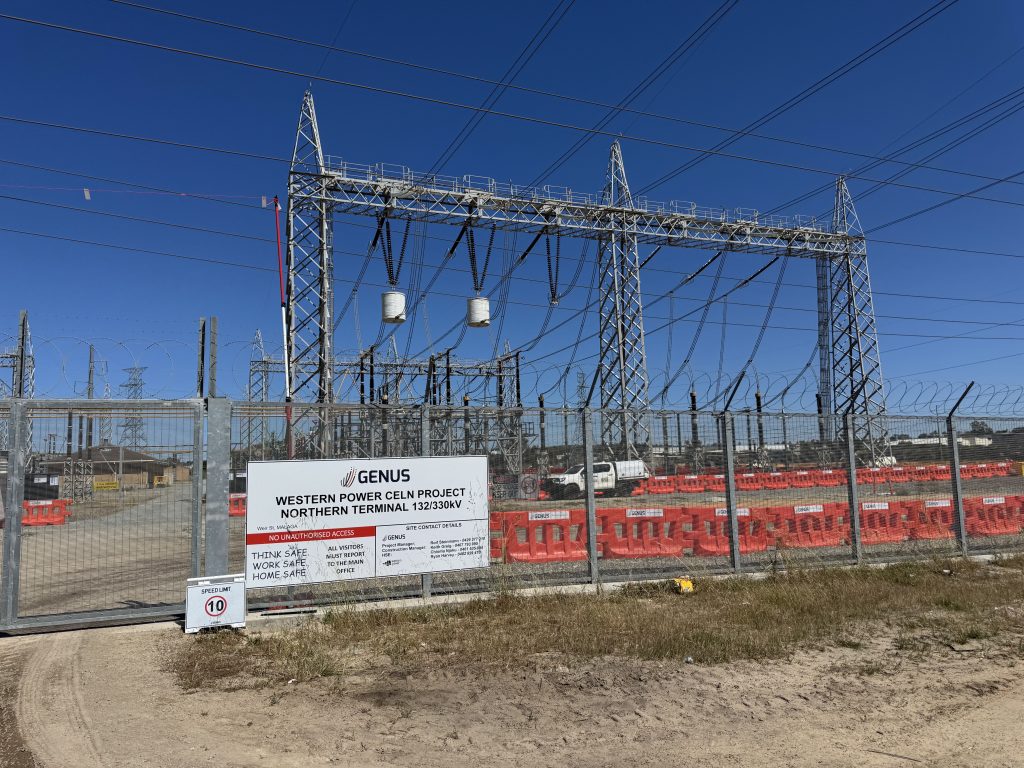
“There is a large and rapidly growing number of data centres getting fitted out around the country that require a considerable amount of energy to power them. This is coupled with a transformation of the national energy grid as the country attempts to move away from a centralised power generation architecture to being a much more diversified grid,” says Edgley.
“We like to look at the second derivative of this to find the ‘picks and shovels’ opportunities that relate to the data centre and electrification booms that are playing out. This is the great thing about investing in small caps – there are often multiple ways that we can make money from a particular theme.
“There are a number of small cap services businesses that work into these areas that we’ve been able to put capital into and today have done quite well.”
Edgley pointed to Southern Cross Electrical (SXE), GenusPlus Group (GNP) and Duratec (DUR) as examples of this.
In the US, the team checked out everything from olive oil at Cobram Estate’s (CBO) in California and Breville’s (BRG) coffee machines at Williams-Sonoma in New York to 4X4 offroad parts specialist 4WP (part owned by ARB) in Texas.
“Cobram Estate has 50 per cent market share of olive oil in Australia,” says Edgley.
“This is a new position for us that we’re continuing to build our knowledge base on. One of the days I spent in the US was visiting Cobram’s production facility and olive plantings at Woodlands, California. This is a crucial step in our investment process and allowed us to better understand and validate what Cobram is doing in the US.
“At the moment investors largely view Cobram as an Aussie agricultural company, but we think that there’s a scenario in two- or three-years’ time where it’s considered to be a global consumer brands business that has a very long growth runway. This is all dependent on how successful they are in the US.
“We think that journey is already underway.”

Currently, Cobram is producing about half a million litres of olive oil in the US, but the US consumes about 420 million litres per annum – 95 per cent of which is imported. The preference for authentic, locally sourced olive oil among American consumers has driven the surge in demand Cobram has experienced over the past few years.
“And over the next five years, the maturity of Cobram’s plantations will see them go from supplying about half a million litres into this market, to almost 10 million litres.
“This is a massive uplift in in production, and potential value, that they’re able to create. If their experience to date is anything to go by there will be a huge amount of demand in the US for product of this quality.”
Edgley says there are always ways to make money in small caps regardless of the macroeconomic factors and what the benchmark indices are doing.
“In any given year there’ll be some up 20+ per cent stocks and there’ll be others down 20+ per cent. So our opportunity is to just sift through that,” explains Edgley.
“We are absolutely aligned with our investors, everyone in our team has got money in the fund.
“Our pursuit of finding ideas, gaining unique insights and then exploiting these moneymaking opportunities is just relentless.”
About Lewis Edgley and Patrick Teodorowski
Lewis and Patrick are co-managers of Pendal Smaller Companies Fund.
Portfolio manager Lewis Edgley co-manages Pendal’s Australian smaller companies and micro-cap funds and conducts analysis on a range of smaller companies. He joined the Pendal Smaller Companies team in 2013 as an analyst, before being promoted to the role of portfolio manager in 2018. Lewis brings 20 years of industry experience with previous roles spanning equities research, as well as commercial and investment banking roles at Westpac and Commonwealth Bank.
Portfolio manager Patrick Teodorowski co-manages Pendal’s smaller companies and micro-cap funds and conducts analysis on a range of smaller companies. He joined Pendal in 2005 and developed his career as a highly regarded small cap analyst. Patrick holds a Bachelor of Commerce (1st class Honours) from the University of Queensland and is a CFA Charterholder.
About Pendal Smaller Companies Fund
Pendal Smaller Companies Fund is an actively managed portfolio investing in ASX and NZX-listed companies outside the top 100. Co-managers Lewis Edgley and Patrick Teodorowski look for companies they believe are trading below their assessed valuation and are expected to grow profit quickly. Lewis and Patrick together have more than 40 years of investment experience.
Find out about Pendal Smaller Companies Fund
Find out about Pendal MicroCap Opportunities Fund
Find out about Pendal MidCap Fund
About Pendal Group
Pendal is a global investment management business focused on delivering superior investment returns through active management.
In 2023, Pendal became part of Perpetual Limited (ASX:PPT), bringing together two of Australia’s most respected active asset management brands.
Here are the main factors driving the ASX this week, according to Pendal’s head of equities CRISPIN MURRAY. Reported by portfolio specialist Chris Adams
THE market anticipated the US Federal Reserve’s 25-basis-point (bp) interest rate cut last week.
However, the announcement’s tone was mildly dovish compared to expectations, with Chair Jerome Powell signalling employment was weaker and he was comfortable with inflation trends.
The Fed’s “dot plot” outlook for rates suggested only one more cut, but the market is pricing in two more.
The shift in balance sheet management was perhaps more important, with the announcement of a more aggressive purchase program of US shorter-term instruments, which helped underpin the US 2-year bond.
The US 10-year yield did rise marginally. This reflects the market’s concern about the Fed over-easing and is a feature of this easing cycle given the political pressure on the Fed.
This has the potential to mute the effects of rate cuts, as they do not translate to lower mortgage rates – and therefore support for the housing market.
The S&P 500 gained 0.5% and the S&P/ASX 300 moved up 0.7%.
US equities saw continued significant rotation away from tech – particularly some of the AI-sensitive names – towards small caps and industrials on the prospect of an improving domestic economy.
The tech sell-off is also occurring in Australia, but we are not seeing the same move to domestic cyclicals and small caps given the prospect of potential rate rises.
Resources remain the lead sector domestically, with gold still the strongest component.
US macro & policy
Fed rate cuts
The Fed cut rates 25bp to 3.50-3.75%, as expected.
It was hawkish in the sense that Chair Powell flagged a pause and the need to see data weaker than expected for further cuts.
However, ultimately the meeting was seen as more dovish than expected due to the following observations.
- Powell talked of policy being well-positioned. While he talked of a pause – given rates are plausibly around neutral and noting this was a unique period in his tenure given risks to both sides of their mandate – he also noted the Fed’s view that payroll growth is overstated by 60,000 per month. This means the average reported rise of 40,000 from May to September equates to a decline of 20,000. In addition, he commented that adjusting for tariffs, the underlying inflation rates is in the low 2% range and that services inflation was coming down. The inference is the Fed sees the labour market as being soft and inflation not as imminent a threat to the upside, so there is less constraint to further easing.
- There were only 2 hawkish dissenters (and one dovish dissent). There were fewer members calling for a pause in rate cuts than the market expected, given the tone of recent comments. The “dot plots” indicated a median of only one more cut, although there were more dots projecting two cuts next year than there are indicating none.
- An aggressive shift from QT to natural growth purchases. The Fed will purchase US$40 billion a month of T-Bills, which reflects the underlying US$20-25 billion to cover maturities plus a catch-up component. These purchases started on 12th December. This will allow the US Treasury to continue to stack debt issuance at the short end of the yield curve, which comprises about 84% of issuance in 2025 to date. This helps protect the 10-yr bond yield, although that rate has continued to rise gradually in recent months to 4.19%.
- The Fed has embraced a more positive view on growth and productivity. Powell noted that productivity improvements had shifted the Fed’s long-term projection for US GDP growth from about 1.8% per annum (pa) to about 2.0% pa – and that is before factoring in any major gains from AI. The Fed’s forward median economic projections have seen an increase in growth with only a marginal effect on the unemployment rate and inflation expectations slightly lower.
The conclusion is that this was a market friendly outcome, with risk skewed to the downside on rates, and the degree of dissent was less than expected.
The Fed have now cut 75bp in 2025, following on from the 100bp in 2024.
The Fed Funds rate is now broadly in line with the 2-year T-bill rate, which suggests the market sees rates as being close to where they should be.
Market expectations have a 57% chance of a cut in March and 80% by April and is pricing a 90% chance of a second cut by September. flat in 2026.
Fed Chair
We note Powell’s last meeting as Chair is in April – and the battle for the next Chair has livened up.
The odds on US President Donald Trump nominating Kevin Hassett – currently Director of the National Economic Council – have shortened from north of 75% in late November to around 50% now, according to predictive market platform Kalshi.
This was coincident to Trump’s reference to former Fed member Kevin Warsh being a “great” candidate as well. Warsh’s odd surged from the mid-teens to about 40%.
The potential issue for Hassett is his perceived lack of support from the market, which may lead to bond yields rising further if appointed.
The fundamental issue is the same for whomever is appointed; bridging the gap between the President’s expectations to drive rates far lower (Trump cited below 1% to the Wall Street Journal), while maintaining credibility with the bond market.
The Fed Board also unanimously re-appointed all regional Fed Presidents, save in Atlanta, where Raphael Bostic had already announced his retirement.
These are five-year terms and dispels the speculation that the President would intervene and try to stack the board with new, more dovish, members.
The unanimous decision indicates that Trump appointee Stephen Miran was on board.
Economic data
The data on jobs was mixed, but there were no additional signs of weakness.
US job openings were better than expected for October, increasing 7.67 million versus 7.12 million forecast. This is however inconsistent with other jobs data.
The 1.8% quits rate was the lowest outside Covid since 2014, which would signal limited wage pressures in the US economy.
The overall outlook for the US economy looks constructive. It appears that tariff-related headwinds are already beginning to be offset by fiscal stimulus in terms of contributions to GDP. This steps up in Q1 and Q2 2026 as the tax refunds kick in from the budget bill.
Looser overall financial conditions are also likely to help offset the impact of tariffs, which are expected to remain a drag on growth through to Q3 2026.
Consensus expects 2% GDP growth in 2026, but the likelihood of policy support suggests that the risks lie to the upside. Goldman Sachs, for example, is forecasting 2.5%.
Australia macro & policy
The RBA left rates flat at 3.6% as expected, however the tone of the press conference was clearly hawkish.
Governor Michele Bullock effectively called time on the easing cycle, saying the RBA did not consider a cut ‘at all’ and she “didn’t think there are… cuts in the horizon for the foreseeable future”.
She emphasised the upside risk to inflation and didn’t dispute the market pricing of around 40bp of tightening in CY26.
November employment data was weaker than expected at -21,000 (versus the market at +20,000), driven by a 57,000 fall in full time employment.
This took the 3-month employment average to 10,000 per month, compared to 21,000 for the prior 12-months.
The year-on-year growth rate is 1.3% – the slowest since 2021.
Hours worked were flat with the year-on-year rate at 1.2%, down from 2.1% in October.
The weaker job growth signal was offset by a lower unemployment rate, which fell to 4.3%, versus 4.4% expected.
The employment-to-population ratio is 64.0% which is in line with the median level since 2022, so arguably the labour market remains tight. The number of people experiencing job loss is near to record lows.
Given this – and with inflation at 3.8% and GDP growth above trend – the market continues to raise the odds of a rate hike.
February is around a 25% chance, and a full hike is priced in by June. The cash rate is now around 50bp below the 2-year bond yield.
Pendal Focus Australian Share Fund
Now rated at the highest level by Lonsec, Morningstar and Zenith
Markets
US and Australian markets continue to see rotation away from tech/AI. In the US this is towards more industrial and financial names, while in Australia it is to resources and, to some extent, financials.
Oracle’s result compounded the negative sentiment shift. It fell 14% post result and is now 42% below the peak it reached following last quarter’s result, when it announced the surge in its order book.
- Despite future bookings rising 15% to US$523 billion, revenue came in at the bottom of the company’s guidance (cloud revenue +33%) and margins were well below expectations.
- Cash flow was weak at -US$10 billion, with capex of US$12 billion in the quarter (versus US$8.4 billion expected) and up 200% year-on-year.
- Capex is forecast to rise in FY26 to $50 billion, versus $15 billion under its prior plan.
Oracle indicated it is working on alternate financing mechanisms, including vendor financing, chip leasing and customers bringing their own chips. None of this inspires much market confidence.
The overall US market remains in good technical shape, hitting a new high last Thursday before selling off Friday.
Sentiment is bullish which makes the market vulnerable to negative news. For example, this time last year we were at similar levels and when the tariff issue emerged it led to a sharp drawdown.
However, for the time being the combination of falling rates, the Fed not being too hawkish, coming fiscal stimulus, a re-accelerating US economy, subdued oil prices and the US dollar holding at lower levels all supports the market, despite the strong sentiment.
Valuations in the US remain high by historical standards, however earnings growth is accelerating and can support current levels.
We note an expected surge in earnings at the small cap end of the US market, which is the catalyst for the move in small cap names there.
We are seeing more breadth in the US market, with small caps and industrials breaking out to new highs.
In Australia, the rotation to resources continues. The Metals & Mining subsector has outperformed the S&P/ASX 300 by 32% calendar year-to-date and by 14% this quarter.
Much of this has been driven by gold stocks, which continued to lead the market last week as the commodity moved back to its October highs.
Rare earths were the exception to the resource rally, falling as further funding of new supply was announced.
Beyond that Financials (+1.7%) were better, helped by the global lead and by the perception of them being beneficiaries of gradually rising rates.
Tech (-4.4%) continued to sell-off, with the move exacerbated by speculation of redemptions from some growth-orientated funds, with the risk it leads to further forced selling.
About Crispin Murray and the Pendal Focus Australian Share Fund
Crispin Murray is Pendal’s Head of Equities. He has more than 27 years of investment experience and leads one of the largest equities teams in Australia. Crispin’s Pendal Focus Australian Share Fund has beaten the benchmark in 12 years of its 16-year history (after fees), across a range of market conditions.
Pendal is a global investment management business focused on delivering superior investment returns for our clients through active management.
As 2025 wraps up, Pendal portfolio managers outline the trends set to shape 2026 – including AI, resources and a wave of corporate deals. Here’s what to watch as the new year dawns
- AI and resources dominate 2026 outlook
- Tight property pipeline prompts increased M&A
- Find out more about Pendal’s investment strategies
AI
AI CAPEX is an incredibly strong theme right now, according to Paul Wimborne, senior fund manager for Pendal’s Global Emerging Markets Opportunities Fund.
“The biggest thing we’ve seen in emerging markets this year – which will also be very important next year – is similar to what we’ve seen in other developed markets: the current strength of the AI capex trade,” says Wimborne.
“There’s a lot of money that has been spent on building out globally hyperscale data centres, and it’s taking up a lot of capacity from these chip manufacturers. They’re doing incredibly well.
“They run monopolistic or oligopolistic positions, and they’re generating huge amounts of free cash flow and returns.”
Pendal’s London-based EM team is invested in Taiwan Semiconductor, Korea’s SK Hynix and Samsung Electronics.
Some of the best-performing stocks in emerging markets have been the memory chip manufacturers, says Wimborne.
ASX small caps and midcaps
When it comes to small caps, the resources sector has done the heavy lifting, says Lewis Edgley, portfolio manager of Pendal’s Smaller Companies Fund.

Find out about
Pendal Smaller Companies Fund
“The strength has really been in resources and very much driven by gold – that’s has been a very strong theme in the last 12 months,” says Edgley.
Despite a prolonged run in the gold price, he still sees opportunities in the space.
“At around nine times price-to-earnings (PE) you could argue they are continuing to look attractive.
“The small ordinaries average PE is north of 20 times, so they’re less than half the valuation of the average small ordinary stock,” says Edgley.
“But they should be cheap. These are highly cyclical businesses with key drivers that are not in the control of the management teams that run these businesses.
“So our opportunity is to make sure we understand the drivers, we understand what’s in control of the management teams, we understand the thematics that are creating value here, but we don’t get too far over our skis in how we’re positioned for that.”
While it’s good to have adequate exposure to a popular thematic like gold, Brenton Saunders, portfolio manager of Pendal’s MidCap Fund, cautions that avoiding the bad stocks is just as important as picking the right stocks.
“Almost half of the active attribution for the Pendal MidCap Fund in the past year has been not being in stocks that haven’t done well – so avoiding bad stocks as well as choosing really good stocks,” explains Saunders.
“That comes back to research and identifying the stocks that we shouldn’t be in as opposed to just identifying stocks that we should be in.
“I think as active fund managers we have a very strong responsibility for both of those areas when representing these portfolios for clients.”
Gold, lithium and rare earths stay topical
While gold is expected to continue in favour in 2026, lithium is coming out of a three-year downtrend and rare earths will also likely remain topical, according to Saunders.
“I think gold still has relevance from here in the right stocks. The gold price is high and that’s enabling good companies to continue to add value,” notes Saunders.
“Rare earths has had quite a big tailwind for some time and stocks in that space have done really well, but that’s another thematic that I think will continue to be very topical over the course of the next 12 months.
“Lithium hopefully should, if not rocket exponentially like it has done a couple of times historically, be a more constructive backdrop for lithium companies.
“Most of them are still on their knees and slowly getting off their knees in terms of profitability and cash flows.”
A rise in corporate action is driving interest in asset-rich companies, as has been seen with the recent bids for National Storage (NSR) and Qube Holdings (QUB).
Macquarie tabled an $11.6 billion bid for logistics operator Qube, while a consortium comprising Brookfield and Singapore’s sovereign wealth fund, GIC, offered $4 billion to acquire National Storage.
“These are all private transactions or private buyers coming into the market to buy these companies. So that’s something we’re paying more attention to than we have for a while now,” says Saunders.
Listed property and REITs
Julia Forrest, co-portfolio manager of Pendal Property Securities Fund, says rising construction costs in Australia have contributed to a tighter pipeline of new property assets and is a key contributor of increased M&A activity.
“Construction costs from 2019 to 2024 are up 40 per cent, so it’s uneconomic to build new assets,” she explains.
“We all know how undersupplied the housing market is in Australia, but it’s the same with commercial real estate.
“It’s very difficult to make a new development stack up. So that puts the sector in a good light in terms of rental growth going forward, because you don’t have a big supply pipeline.”
Property prices shot up dramatically post-Covid as inflation came down and the RBA started cutting rates.
But this year has seen a stabilisation in property values, with a big uptick in inflation and a normalisation of rates, according to Forrest.
“The outlook for earnings growth is actually pretty strong. Prospectively, earnings growth is somewhere between 4 and 6 per cent in the next year, which is around the same as the All Industrials,” says Forrest.
“Given that real estate is locked in through long-term leases, you don’t have the same risk in terms of that earnings growth profile.
“So we are expecting a good return for 2026 – values have dropped, rental growth looks intact, and the supply pipeline continues to be very muted.”
Pendal’s REIT portfolio comprises established assets as well as development assets, including shopping centres, office, industrial, residential development, petrol stations, pubs and storage.
Year-to-date the sector has gained 6-7 per cent following a strong mid-year performance, according to Forrest.
“We’ve had quite a number of deals this year.
“If the market doesn’t recognise the value and it continues to trade below replacement cost or below net tangible assets, you will see groups coming in and buying these portfolios of assets because they’re impossible to replicate,” she says.
“Most listed REITs have very good quality assets, so if equity investors continue to ignore the sector, then you’ll have other investors that will buy it.”