Close
Leave Feedback
Welcome to the new btim.com.auTake a two minute tour to see what we've changed
Hi there! Welcome to the new look Pendal website... Take a two minute tour to see what we’ve changed.
Mainstream Online Web Portal
LoginInvestors can view their accounts online via a secure web portal. After registering, you can access your account balances, periodical statements, tax statements, transaction histories and distribution statements / details.
Advisers will also have access to view their clients’ accounts online via the secure web portal.

The Point
Quick, actionable insights for investors


Mar 12
How AI concerns are impacting India | What GDP is saying about inflation and rates | How bonds can drive gender equality
Loading posts...







Latest updates from our fund managers

Australian Equities
Crispin Murray: Mispricing is opening up opportunities on the ASX
March 18, 2026
See all
Income and Fixed Interest
Murray Ackman: Understanding carbon measures in fixed income
March 19, 2026
See all
Emerging Markets
Emerging markets: Look past commodity exports to countries with strong domestic demand
July 26, 2023
See allSubscribe to The Point
Get regular insights on investing, market analysis and portfolio management from the experts at Perpetual Group.
Follow
The Point


These podcasts are for general information purposes only, should not be considered as a comprehensive statement on any matter and should not be relied upon as such. They have been prepared without taking into account any recipient’s personal objectives, financial situation or needs. Because of this, recipients should, before acting on the information, consider its appropriateness having regard to their or their clients’ individual objectives, financial situation and needs. The information is not to be regarded as a securities recommendation.
The information in these podcasts may contain material provided by third parties, is given in good faith and has been derived from sources believed to be accurate as at its issue date. While such material is published with necessary permission, and while all reasonable care has been taken to ensure that the information in this presentation is complete and correct, to the maximum extent permitted by law neither Pendal nor any company in the Pendal group accepts any responsibility or liability for the accuracy or completeness of this information.
Any projections contained in these podcasts are predictive and should not be relied upon when making an investment decision or recommendation. Whilst we have used every effort to ensure that the assumptions on which the projections are based are reasonable, the projections may be based on incorrect assumptions or may not take into account known or unknown risks and uncertainties. The actual results may differ materially from these projections.
Performance figures are calculated in accordance with the Financial Services Council (FSC) standards. Performance data (post-fee) assumes reinvestment of distributions and is calculated using exit prices, net of management costs. Performance data (pre-fee) is calculated by adding back management costs to the post-fee performance. Past performance is not a reliable indicator of future performance.
For more information, please call Customer Relations on 1300 346 821 8.00am to 6:00pm (Sydney time) or visit our website www.pendalgroup.com


Emerging markets aren’t so different to us – but you’ve got to pick the right ones
There’s a common misconception that emerging markets countries are dysfunctional, war-torn or burdened with significant health or security issues.
“But they’re not that different from us,” says James Syme, who co-manages Pendal Emerging Markets Opportunities fund.
“The main emerging market benchmark has 24 countries in Latin America, eastern and southern Europe, Africa and Asia.
“Generally they are well-run democracies or stable non-democracies with happy, successful economies and large and growing middle classes.”
That misperception presents an opportunity, says James – as long as investors can choose the right countries.
James and his team are now investing in eight EM countries including Brazil, Mexico and Indonesia.
EMs can help diversify risk in global equities portfolios, says James.

Tim Hext: Inflation remains stubbornly high — but not as high as you may think
Quick view
Tim Hext: Inflation remains stubbornly high — but not as high as you may think
The April monthly inflation data from the ABS showed an annual rise of 6.8%, versus an expected 6.4%.
On the surface that should worry the RBA and markets – and increase the chance of another rate hike in June.
But under the hood, the May number looks closer to 5.5%, which means the RBA should be able to hang on till August and reassess then.
How can we tell? The monthly numbers are published as year-on-year outcomes, and you need to back-solve to gain a sense of the monthly pace, says Pendal’s head of bond strategies Tim Hext.
There’s no underlying inflation data yet, and only half the items in the basket are updated every month at the moment.
Pandemic and energy shock subsidies also need to be taken into account, he says.
“The outlook for inflation here and in the US should be mildly friendly over the next few months,” believes Tim.

What’s driving ASX stocks this week
Quick view
What’s driving ASX stocks this week
Do spikes among US chipmakers such as NVIDIA and Marvell mark the start of a multi-year, AI-driven bull cycle?
What might it mean for ASX stocks?
NVIDIA and its rivals are churning out Graphics Processing Units which are in-demand for AI services such as OpenAI’s ChatGPT.
Pendal equities analyst Elise McKay notes that just seven US tech mega caps (Apple, Microsoft, Alphabet, Amazon, NVIDIA, Meta and Tesla) have driven most of the 25% NASDAQ rally this year.
“But valuation metrics for this group do not seem stretched,” she says. “They are growing, making efficiency gains, have strong balance sheets, are buying back stock and may be moving into a more favourable macro and interest rate backdrop.
“While timing and take-up of accelerated computer infrastructure is uncertain, we expect this to be a net positive for ASX-listed data centre player NEXTDC.
“There could also be a positive impact for Macquarie Technology’s data centre business and Megaport on the network-as-a-service side.”
May 25
Latest on recession risk | Regnan biodiversity guide | A tool for analysing rates | EM impact of Turkish and Thai elections

ESG: Regnan launches investor guide to managing biodiversity risks
Quick view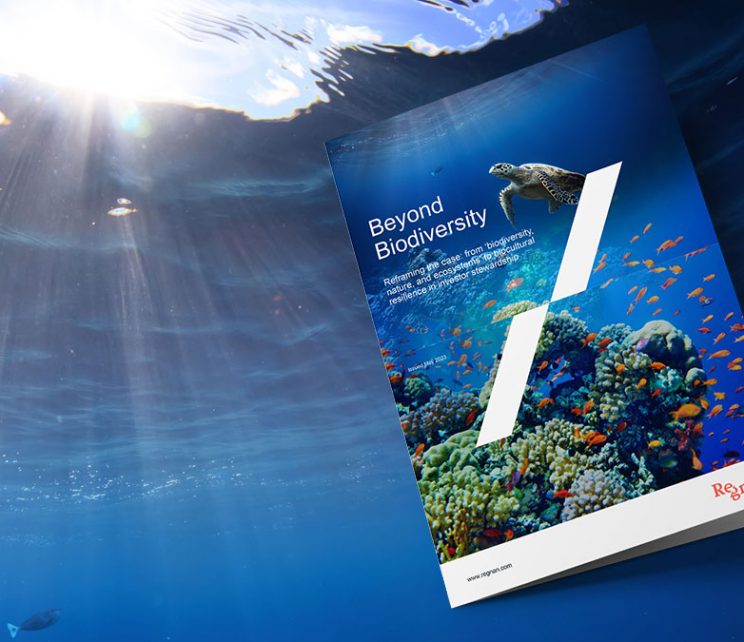
ESG: Regnan launches investor guide to managing biodiversity risks
Most investors are now aware of climate change risks.
But biodiversity loss is fast emerging as the next big concern for investors, as financial institutions grapple with how to measure and manage the ecological systems underpinning economic stability.
“Land degradation has reduced the productivity of nearly one-quarter of the global land surface, impacted the wellbeing of about 3.2 billion people and cost about 10% of annual global GDP in lost ecosystem services,” the UN reported in 2019.
Sustainable leader Regnan has just released an investor guide, Beyond Biodiversity, which outlines a set of guiding principles for effective stewardship of biodiversity, nature and ecosystems.
“We want a stable natural system, a stable social system and a stable economic system,” says report author Oshadee Siyaguna.
“The fewer disruptions there are to business operations and socioeconomic conditions, the better and more predictable the investment outcomes.
ASX midcaps: Why medical imager Pro Medicus has captured our attention
Quick view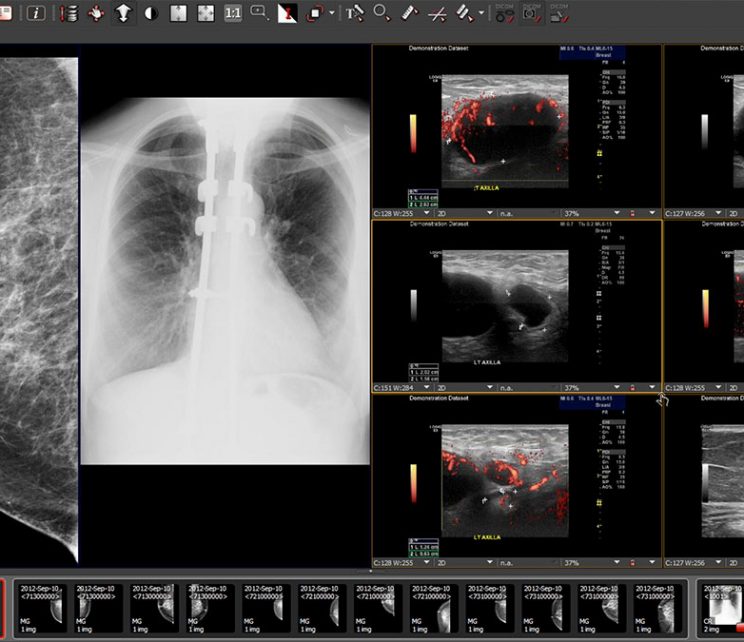
ASX midcaps: Why medical imager Pro Medicus has captured our attention
Sam Hupert started as a GP in 1980 and within a couple of years realised the then-nascent world of computing would have a big impact on medicine.
Within three years he’d started Pro Medicus, an imaging software provider working with hospitals, imaging centres and health care groups.
Today the ASX-listed group – held in Pendal Midcaps Fund – is worth more than $6 billion.
The global diagnostic imaging market is worth some $US28 billion globally – and growing at 4.9%, according to Grand View Research.
Growth drivers include an increasing prevalence of lifestyle-related diseases, rising demand for early detection tools, speedier diagnosis, government investment and expansion into developing nations, Grand View reports.
Pro Medicus is mainly in radiology now, but its technology could be used in cardiology, ophthalmology and pathology and all areas of reflected light, says Pendal equities analyst Oliver Renton.
May 18
Good conditions for bonds | What’s next for US banks | What we learned from the RBA this week | Albo’s new green bond

Tim Hext: Where the RBA’s head is at right now
Quick view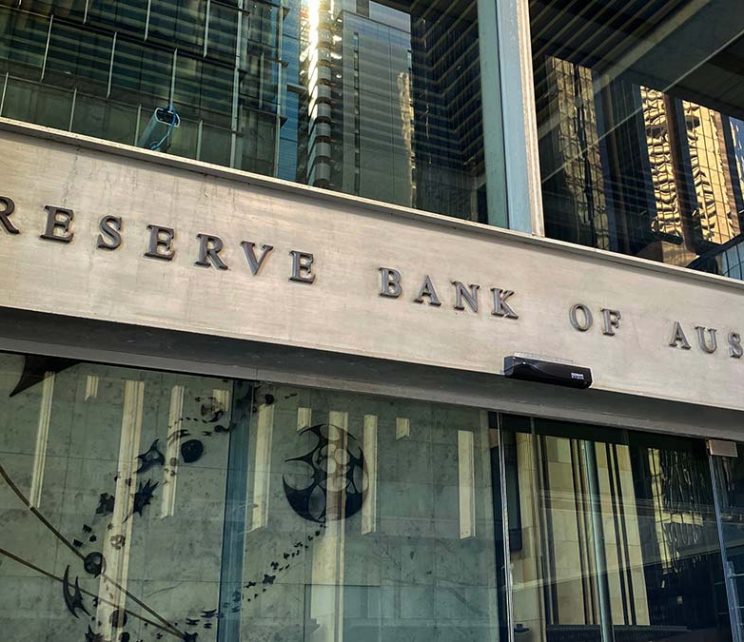
Tim Hext: Where the RBA’s head is at right now
The RBA seems happy with 3.85% for a few more months – and will likely wait for stronger data before considering another hike.
But lagging data like employment – and very laggy data like wages and inflation – is driving decision-making at the moment, cautions our head of government bond strategies Tim Hext.
“This risks a policy mistake of overtightening. As the RBA itself expects, wages won’t peak until later this year.
“I am reminded of the last time this happened in February and March 2008. Credit wobbles had been building all through 2007. Bear Stearns was teetering.
“Yet the high CPI print of January 2008 – on the tail of a mining boom – saw the RBA hike twice to 7.25%. Wage growth didn’t peak til 2009.
“I’m not suggesting another GFC looms. The financial system has been massively redesigned since then.
“But it shows that relying on inflation and wage numbers to set monthly policy can be dangerous, leaving you well behind the current pulse.”
Loading posts...

Subscribe to The Point
Get regular insights on investing, market analysis and portfolio management from the experts at Perpetual Group.