Close
Leave Feedback
Welcome to the new btim.com.auTake a two minute tour to see what we've changed
Hi there! Welcome to the new look Pendal website... Take a two minute tour to see what we’ve changed.
Mainstream Online Web Portal
LoginInvestors can view their accounts online via a secure web portal. After registering, you can access your account balances, periodical statements, tax statements, transaction histories and distribution statements / details.
Advisers will also have access to view their clients’ accounts online via the secure web portal.

The Point
Quick, actionable insights for investors


Mar 12
How AI concerns are impacting India | What GDP is saying about inflation and rates | How bonds can drive gender equality
Loading posts...






Latest updates from our fund managers


Income and Fixed Interest
Murray Ackman: Understanding carbon measures in fixed income
March 19, 2026
See all
Emerging Markets
Emerging markets: Look past commodity exports to countries with strong domestic demand
July 26, 2023
See allSubscribe to The Point
Get regular insights on investing, market analysis and portfolio management from the experts at Perpetual Group.
Follow
The Point


These podcasts are for general information purposes only, should not be considered as a comprehensive statement on any matter and should not be relied upon as such. They have been prepared without taking into account any recipient’s personal objectives, financial situation or needs. Because of this, recipients should, before acting on the information, consider its appropriateness having regard to their or their clients’ individual objectives, financial situation and needs. The information is not to be regarded as a securities recommendation.
The information in these podcasts may contain material provided by third parties, is given in good faith and has been derived from sources believed to be accurate as at its issue date. While such material is published with necessary permission, and while all reasonable care has been taken to ensure that the information in this presentation is complete and correct, to the maximum extent permitted by law neither Pendal nor any company in the Pendal group accepts any responsibility or liability for the accuracy or completeness of this information.
Any projections contained in these podcasts are predictive and should not be relied upon when making an investment decision or recommendation. Whilst we have used every effort to ensure that the assumptions on which the projections are based are reasonable, the projections may be based on incorrect assumptions or may not take into account known or unknown risks and uncertainties. The actual results may differ materially from these projections.
Performance figures are calculated in accordance with the Financial Services Council (FSC) standards. Performance data (post-fee) assumes reinvestment of distributions and is calculated using exit prices, net of management costs. Performance data (pre-fee) is calculated by adding back management costs to the post-fee performance. Past performance is not a reliable indicator of future performance.
For more information, please call Customer Relations on 1300 346 821 8.00am to 6:00pm (Sydney time) or visit our website www.pendalgroup.com
Federal Budget will embolden the RBA on rates — but not as much as you think
Not surprisingly in an election year, the federal government is already spending its recent windfall in this week’s Budget.
How will this affect rates?
In recent months the Budget improved by about $115 billion (over four years) as Australia’s terms of trade boomed and massive fiscal spending delivered a stronger economy, says Pendal’s Tim Hext.
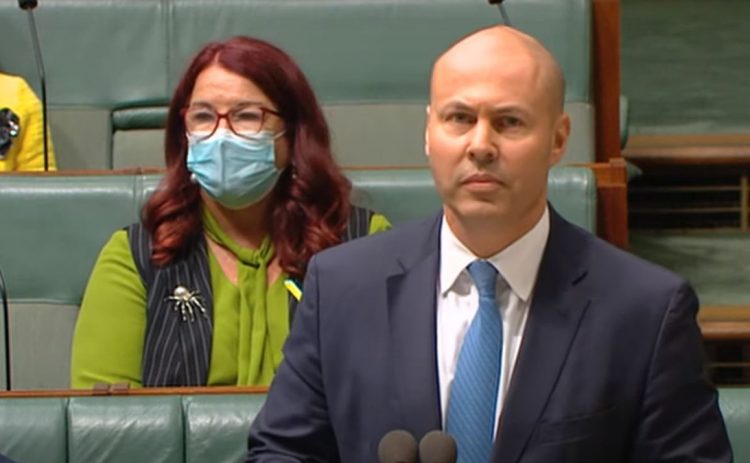
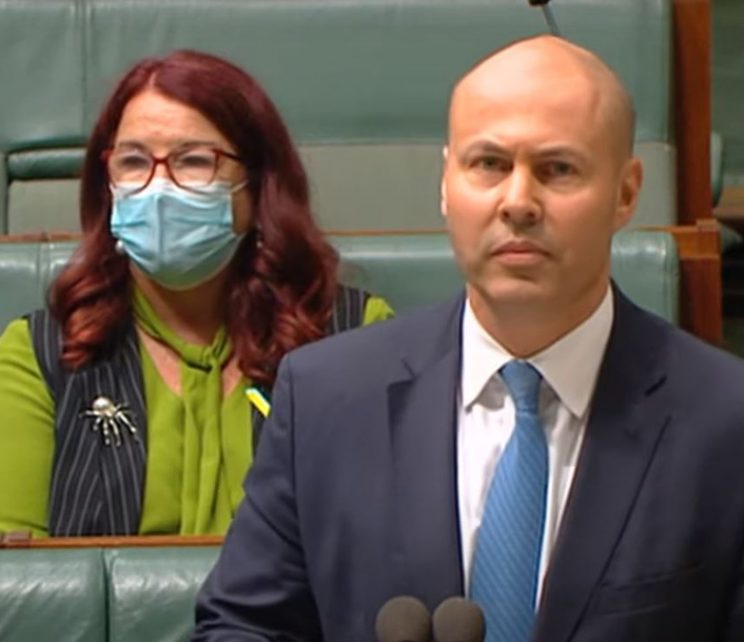
Josh Frydenberg has already spent $30 billion of that on top of $16 billion in earlier pre-election handouts.
“This adds further fuel to an already strong economy,” says Tim.
The Budget will further encourage the RBA to admit they need higher rates. “But with markets forecasting 2% rates here early next year — and 3% by the end of next year — there is simply too much priced in.
“We think the US will get to those levels, but investors assuming Australia must follow are missing a couple of factors.
“Firstly, our inflation is significantly lower. Secondly, our floating rate mortgage market means any rate hikes have more impact sooner.
“It may seem strange but when the RBA actually starts to moderately tighten rates, bond markets will likely rally.”
Crispin Murray’s weekly ASX outlook
Quick view
Crispin Murray’s weekly ASX outlook
Equity markets continue to bounce despite increasing two-year US bond yields, a surging oil price and higher US dollar.
While our head of equities Crispin Murray remains wary in the near-term, he continues to reiterate that Australia is better placed than many other countries.
“There is less need to raise rates,” says Crispin. “The economy is benefiting from pent-up demand as restrictions roll back.
“Australia is largely self-sufficient in key commodities and is a beneficiary of rising prices here.
“This underpins our relatively positive view of the domestic equity market. This is reinforced by the degree to which the Australian market has underperformed the S&P 500 since the GFC.
“While recent outperformance has been material, it is a blip on a longer-term view. This gives us confidence in the potential for further outperformance.”
Mar 24
Get ready as China edges away from Covid-zero, what rate expectations mean for bond buying, the likely path for ASX stocks and which global equities sectors look good
Crispin Murray’s weekly ASX outlook
Quick view
Crispin Murray’s weekly ASX outlook
“The environment we are in today is different to the post-GFC era — what worked in the last six years won’t work going forward,” says Pendal’s head of equities Crispin Murray.
“We see corporate cash flow and consistency as critical. We do not expect high growth, speculative and profitless tech to resume market leadership.
“We see Australia as a relative safe haven given the economy is in good shape and skews to commodity and financial stocks.
“The near-term market is likely to remain weak, but we don’t expect stagflation and the start of a bear market.
“Current drawdowns tend to be indiscriminate, thereby creating significant stock opportunities.”
Mar 10
Why Australia’s a good place to invest right now, how the stagflation story could play out, what happens if Russia defaults

The future of bonds (no they’re not disappearing)
Quick view
The future of bonds (no they’re not disappearing)
Technology is changing our lives all the time. In financial markets it’s no different.
“The next decade will see an increased use of blockchain technology across all asset classes and finance,” says Pendal’s head of government bond strategies Tim Hext.
“This will increase efficiency. But it won’t make the underlying assets redundant.
“Crypto will have a role but it will not replace the Australian dollar. Bonds may become more digital but they will not disappear.
“The need to borrow and lend money is as old as time itself — and the need for efficiency in buying and selling loans packaged as bonds will also remain.
“Diversification remains an important investment concept. Add liquidity and credit quality and it means government bonds are not going anywhere.”
Crispin Murray’s weekly ASX outlook
Quick view
Crispin Murray’s weekly ASX outlook
“The environment we are in today is different to the post-GFC era — what worked in the last six years won’t work going forward,” says Pendal’s head of equities Crispin Murray.
“We see corporate cash flow and consistency as critical. We do not expect high growth, speculative and profitless tech to resume market leadership.
“We see Australia as a relative safe haven given the economy is in good shape and skews to commodity and financial stocks.
“The near-term market is likely to remain weak, but we don’t expect stagflation and the start of a bear market.
“Current drawdowns tend to be indiscriminate, thereby creating significant stock opportunities.”

Crispin Murray: Australia is a good place for investors right now
Quick view
Crispin Murray: Australia is a good place for investors right now
Australia is as good a place as investors can be in this tough environment, says Pendal’s head of equities Crispin Murray.
Four major challenges are hitting markets simultaneously, says Crispin: the crisis triggered by Russia’s invasion of Ukraine, the re-emergence of inflationary pressures, impending interest rate rises and the pandemic.
“It’s not a great short-term message — we think markets are going to continue to struggle,” Crispin said this week in his bi-annual Beyond the Numbers webinar.
“There are however, two silver linings. The first is that Australia is perhaps the most defensive market in the environment we’re in.
“The second is that when you see this sort of drawdown in financial markets, there tends to be an indiscriminate nature to those sell-offs.
“They often lay the foundations for some of the best investment opportunities that we will be able to take advantage of over the next few years.”
Loading posts...

Subscribe to The Point
Get regular insights on investing, market analysis and portfolio management from the experts at Perpetual Group.