Close
Leave Feedback
Welcome to the new btim.com.auTake a two minute tour to see what we've changed
Hi there! Welcome to the new look Pendal website... Take a two minute tour to see what we’ve changed.
Mainstream Online Web Portal
LoginInvestors can view their accounts online via a secure web portal. After registering, you can access your account balances, periodical statements, tax statements, transaction histories and distribution statements / details.
Advisers will also have access to view their clients’ accounts online via the secure web portal.

The Point
Quick, actionable insights for investors


Mar 12
How AI concerns are impacting India | What GDP is saying about inflation and rates | How bonds can drive gender equality
Loading posts...






Latest updates from our fund managers


Income and Fixed Interest
Murray Ackman: Understanding carbon measures in fixed income
March 19, 2026
See all
Emerging Markets
Emerging markets: Look past commodity exports to countries with strong domestic demand
July 26, 2023
See allSubscribe to The Point
Get regular insights on investing, market analysis and portfolio management from the experts at Perpetual Group.
Follow
The Point


These podcasts are for general information purposes only, should not be considered as a comprehensive statement on any matter and should not be relied upon as such. They have been prepared without taking into account any recipient’s personal objectives, financial situation or needs. Because of this, recipients should, before acting on the information, consider its appropriateness having regard to their or their clients’ individual objectives, financial situation and needs. The information is not to be regarded as a securities recommendation.
The information in these podcasts may contain material provided by third parties, is given in good faith and has been derived from sources believed to be accurate as at its issue date. While such material is published with necessary permission, and while all reasonable care has been taken to ensure that the information in this presentation is complete and correct, to the maximum extent permitted by law neither Pendal nor any company in the Pendal group accepts any responsibility or liability for the accuracy or completeness of this information.
Any projections contained in these podcasts are predictive and should not be relied upon when making an investment decision or recommendation. Whilst we have used every effort to ensure that the assumptions on which the projections are based are reasonable, the projections may be based on incorrect assumptions or may not take into account known or unknown risks and uncertainties. The actual results may differ materially from these projections.
Performance figures are calculated in accordance with the Financial Services Council (FSC) standards. Performance data (post-fee) assumes reinvestment of distributions and is calculated using exit prices, net of management costs. Performance data (pre-fee) is calculated by adding back management costs to the post-fee performance. Past performance is not a reliable indicator of future performance.
For more information, please call Customer Relations on 1300 346 821 8.00am to 6:00pm (Sydney time) or visit our website www.pendalgroup.com


Michael Blayney: Why it’s better to stay the course on sustainable strategies, even when energy prices are high
The nerves of ESG investors were tested last year when oil and gas prices soared, causing underperformance in some sustainable funds.
But research by our multi-asset team shows long-term ESG investors should stay the course through bumpy times.
Analyst Rita Bodrina recently examined MSCI ESG data going back to 2000.
She found companies in the top 20 per cent of ESG-rated stocks were more efficient that those in the middle segment, and sharply better than the bottom 20 per cent.
Rita also found that ESG companies were better valued by the market over time. And based on cumulative returns over 22 years, low-rated ESG companies generally underperformed.
“Paying attention to ESG factors alongside traditional financial factors leads to better returns and better management of risk,” says our multi-asset chief Michael Blayney.
“Investors certainly don’t have to give up returns if they choose a sustainable strategy.”

What’s behind the RBA’s surprise rate hike
Quick view
What’s behind the RBA’s surprise rate hike
The RBA surprised most people with this week’s quarter-point rate hike, just ahead of a similar move by the US Fed.
Justifying the decision, the RBA noted that services inflation remained very high and the offshore experience indicated upside risks.
Productivity growth was also anaemic, exerting upward pressure on labour costs, adding to the RBA’s concerns.
“Previously I expected any policy change would occur more likely in a quarterly sequence following the release of quarterly inflation data,” says our head of cash strategies, Steve Campbell.
“That has gone out the window. This week’s decision means the next RBA meeting in June is also a live meeting.”

Multi-asset: Why it’s time to shift to liquid alternative investments
Quick view
Multi-asset: Why it’s time to shift to liquid alternative investments
It’s time to start shifting from illiquid alternative investments to liquid alternatives, argues Alan Polley, a portfolio manager with our multi-asset team.
Illiquid alternative assets are dominated by property and infrastructure and are usually private, or unlisted.
“Illiquid assets have had a fantastic secular tailwind for the last two decades because interest rates have been falling and they’ve been chased by a wall of effectively free money bidding up prices,” Alan says.
But the good times for illiquid assets are over, thanks to an accelerated rate-tightening cycle, he says.
Shifting to liquid alternative investments will be a theme for this year, Alan believes.
“Look for those that offer true diversification benefits and other forms of returns besides traditional equities and bonds.
“Look for assets that have a secular tailwind, such as sustainable investment companies, and investments with inflation linkage.”
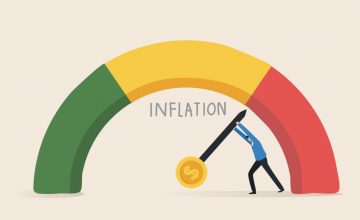
Michael Blayney: Inflation is still driving investment markets, which means a cautious approach for now
Quick view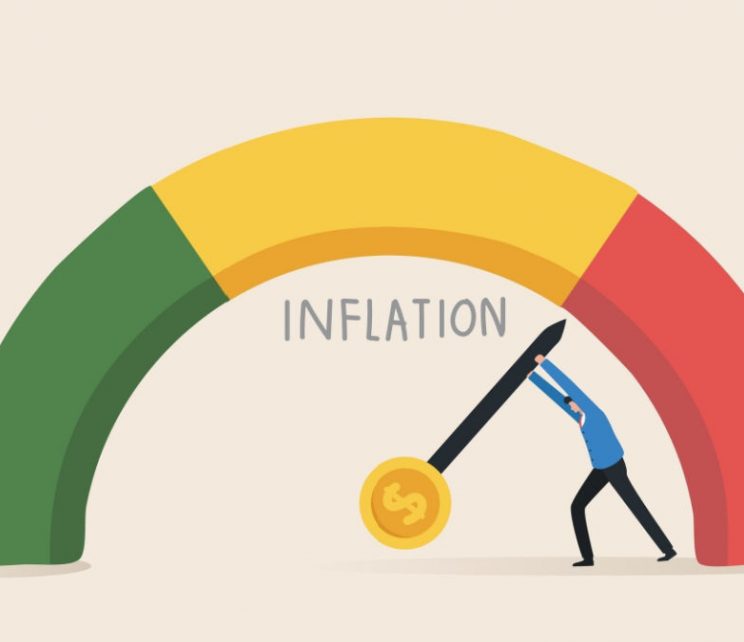
Michael Blayney: Inflation is still driving investment markets, which means a cautious approach for now
Despite yesterday’s news of a continued easing in Australia’s monthly CPI from 7.4% to 6.8%, inflation will remain a key driver of investment markets, just as it was throughout the first quarter, says our head of multi-asset Michael Blayney.
“While inflation looks to have peaked, it could become sticky in some economies,” Michael says.
“In the US, for example, it could remain around the four to five per cent range with further falls dependent on softening wages and increased labour capacity.”
Investors are pricing in a normalisation of inflation.
“But markets react relative to what’s priced in, so if inflation proves to be more sticky than what’s priced in, that creates risks for both bonds and equities.”

Michael Blayney: How to manage portfolios as regulators play whack-a-mole
Quick view
Michael Blayney: How to manage portfolios as regulators play whack-a-mole
The past few weeks have demonstrated the need for perspective as investors manage portfolios through increased volatility, says Pendal’s head of multi-asset Michael Blayney.
The CBOE Volatility Index spiked to its highest levels for the year after the Credit Suisse and Silicon Valley Bank crises.
“We are not at extreme panic right now,” says Blayney. “But we are starting to see problems emerging.
“Central banks have raised interest rates at a rapid pace over the last year. By doing so it was always a possibility, or even a probability, that they’d break something.
“That’s what we are now seeing, and regulators are coming out and playing a game of whack-a-mole.”
Investors now need to decide if the recent sell-off is a buying opportunity, or whether markets are mid-crisis, and there’s further to fall.

Michael Blayney: We’re not in the clear yet on a recession. Here’s why
Quick view
Michael Blayney: We’re not in the clear yet on a recession. Here’s why
For all the talk, the US hasn’t fallen into recession.
Corporate earnings haven’t been crushed, despite inflation and a string of interest rate hikes.
It’s looking like the US, Australia and other major economies might escape a recession, right?
Not so fast, says Pendal’s head of multi-asset Michael Blayney.
“A recession is still likely, but it’s going to be pushed further out,” Michael says.
Higher inflation and interest rates take time to hit the real economy, he says.
Turning points in economic cycles normally involve plenty of “noise” – information that can be contradictory and not always conducive to good investment decisions or policy making.
“If you look at the lead story on the television every day and invest on the back of that, you probably won’t get a good result,” Michael says.
“But if you have a disciplined process and follow it consistently through time, you should make money in the long term.”

Steve Campbell: RBA likely to wait for April data before a move in May
Quick view
Steve Campbell: RBA likely to wait for April data before a move in May
The RBA is getting close to pausing, but another rate rise is probable in May, says Pendal’s head of cash strategies STEVE CAMPBELL
The Reserve Bank lifted the cash rate for a tenth consecutive meeting earlier this week – up 0.25 percentage points to 3.6%.
“When and how much further interest rates need to increase” would depend on “developments in the global economy, trends in household spending and the outlook for inflation and the labour market”, the RBA said.
The next Australian labour market data is due on March 16.

Caution warranted after strong market rally
Quick view
Caution warranted after strong market rally
The market’s turnaround from last year’s pessimism is a short-term reaction to a “perfect storm” of positive events – and investors should be cautious, says Pendal’s Alan Polley.
Much of the 15%+ gains in equities this year can be explained by near-term events such as investors closing out last year’s short positions, says Alan, a Pendal’s multi-asset PM.
There is less clarity about the medium-term prospects for shares. Investors should be watching corporate earnings, which is where the effect of higher rates on household spending and business activity will start to show.
So far results are mixed in the current ASX half-year reporting season.
“There’s downside risk on earnings. If earnings are further adjusted down, then equities have more downside risk than upside so there’s not much rationale for material gains at this point, especially after we’ve had markets rally 15%.
“We don’t see reason to have a lot of risk. Our signals are suggesting being reasonably neutral.”
Loading posts...

Subscribe to The Point
Get regular insights on investing, market analysis and portfolio management from the experts at Perpetual Group.