Close
Leave Feedback
Welcome to the new btim.com.auTake a two minute tour to see what we've changed
Hi there! Welcome to the new look Pendal website... Take a two minute tour to see what we’ve changed.
Mainstream Online Web Portal
LoginInvestors can view their accounts online via a secure web portal. After registering, you can access your account balances, periodical statements, tax statements, transaction histories and distribution statements / details.
Advisers will also have access to view their clients’ accounts online via the secure web portal.

The Point
Quick, actionable insights for investors


Mar 12
How AI concerns are impacting India | What GDP is saying about inflation and rates | How bonds can drive gender equality
Loading posts...








Latest updates from our fund managers


Income and Fixed Interest
Murray Ackman: Understanding carbon measures in fixed income
March 19, 2026
See all
Emerging Markets
Emerging markets: Look past commodity exports to countries with strong domestic demand
July 26, 2023
See allSubscribe to The Point
Get regular insights on investing, market analysis and portfolio management from the experts at Perpetual Group.
Follow
The Point


These podcasts are for general information purposes only, should not be considered as a comprehensive statement on any matter and should not be relied upon as such. They have been prepared without taking into account any recipient’s personal objectives, financial situation or needs. Because of this, recipients should, before acting on the information, consider its appropriateness having regard to their or their clients’ individual objectives, financial situation and needs. The information is not to be regarded as a securities recommendation.
The information in these podcasts may contain material provided by third parties, is given in good faith and has been derived from sources believed to be accurate as at its issue date. While such material is published with necessary permission, and while all reasonable care has been taken to ensure that the information in this presentation is complete and correct, to the maximum extent permitted by law neither Pendal nor any company in the Pendal group accepts any responsibility or liability for the accuracy or completeness of this information.
Any projections contained in these podcasts are predictive and should not be relied upon when making an investment decision or recommendation. Whilst we have used every effort to ensure that the assumptions on which the projections are based are reasonable, the projections may be based on incorrect assumptions or may not take into account known or unknown risks and uncertainties. The actual results may differ materially from these projections.
Performance figures are calculated in accordance with the Financial Services Council (FSC) standards. Performance data (post-fee) assumes reinvestment of distributions and is calculated using exit prices, net of management costs. Performance data (pre-fee) is calculated by adding back management costs to the post-fee performance. Past performance is not a reliable indicator of future performance.
For more information, please call Customer Relations on 1300 346 821 8.00am to 6:00pm (Sydney time) or visit our website www.pendalgroup.com


Alan Polley: Transitory or not, inflation is undergoing long-term structural change
Investors should prepare for a long-term structural rise in the rate of inflation, regardless of how the current economic cycle plays out, says Pendal’s Alan Polley.
Market gyrations and debate about the nature of the current inflation cycle are just a distraction for genuine long-term investors, he says.
“Over the last decade inflation has materially undershot central bank targets, independent of this transitory-or-not debate,” says Alan, a portfolio manager in Pendal’s multi-asset team.
But over the next decade, many of the big drivers of lower prices from the past — including the globalisation of manufacturing, government fiscal austerity measures and cheap fossil fuels — will start to unwind.
This means investors need to prepare portfolios to weather the return of rising prices.

Michael Blayney: How to explain volatile markets to investors
Quick view
Michael Blayney: How to explain volatile markets to investors
“If I’m an adviser, and clients are walking in asking about the headlines saying the market is down, and I’ve got to show them losses in their equity and bond allocations, there’s a few things I need to explain,” says Pendal’s multi-asset chief Michael Blayney.
“The first is the context of the recent fall in equity markets. Second, I need to talk about relative valuations. And finally, clients need to know there’s very different behaviour going on compared to the start of the pandemic in March 2020.
“Investors must keep in mind the broader context.”
It’s time to look at reducing exposure to assets that have become overly expensive and using the opportunity presented by the current pull-back to buy things that are a bit cheaper, Michael says.
“For example, we like Japanese and UK equities at the moment, and value style stocks. They are reasonable value.”

The case for investing in Asia right now
Quick view
The case for investing in Asia right now
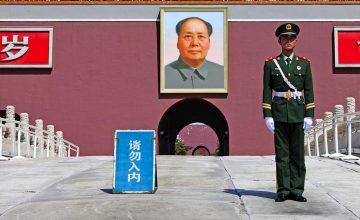
It looks like we’re approaching peak pessimism on China — which could mean it’s time to lift portfolio exposure to Asian shares, says Pendal’s Samir Mehta.
Most of Asia’s sharemarkets have fallen heavily over the past year on rising interest rates, higher inflation and escalating geopolitical concerns.
“Pessimism is now embedded in stock prices, and that’s why I’m turning a little bit more positive on Asia,” says Samir who manages Pendal’s Asian Share Fund.
China’s economic outlook has been a key cause of regional declines. But Samir says three signs indicate China’s economic prospects may be on the mend:
- Improving fortunes for bellwether companies in the recent profit season
- Hints President Xi Jinping might loosen up Covid restrictions after he is confirmed for another term in October
- A shift in government policy to stimulate the economy and ward off social problems
Samir also thinks investor concern over Taiwan might be overstated, at least in the short term.
Global equities: How to invest in a slowing China
Quick view
Global equities: How to invest in a slowing China
Want to understand the outlook for China?
Look to Japan’s 1990s stagnation experience, says Samir Mehta, who manages Pendal Asian Share Fund.
As the rest of the world wrestles with supply constraints, runaway inflation and rising rates, China instead faces lacklustre growth, rising unemployment and the prospect of deflation.
“What we are seeing at the moment in China is reminiscent of what happened in the Japanese economy when their bubble burst in the 1990s,” says Samir.
“For the next three decades Japan’s economy was mostly hobbled. The companies that stood out had high pricing power, an industry structure with few irrational competitors and very strong cash flows.
“In my portfolio in China, I am gravitating towards these kinds of businesses – export-oriented champions or domestic champions with pricing power and cash flow.”

Global equities: who will thrive as rates rise
Quick view
Global equities: who will thrive as rates rise
The investment metrics that worked in a low interest rate world are no longer right for profitable investing today, argues Pendal’s Samir Mehta.
Total Addressable Market size; valuing stocks as a multiple of sales; earnings measures that hide stock-based compensation expenses — these are yesterday’s metrics, says Samir.
“In trying to address a very large market, what became secondary, almost inconsequential, was the question of whether it was a profitable venture.
“These companies were selling a $1 for 50c”, Samir says of popular but unprofitable big tech companies.
Now investors should turn to time-honoured measures such as margins (the ratio of earnings-to-sales), asset turn (sales-to-assets) and net profits (after all expenses).
“Let me put in an Australian context,” says Singapore-based Samir.
“It’s no longer Tim TAM for total addressable market. Now it’s Tim MAN for Margins, Asset turn and Net profit.”

Global Equities: the case for China stocks
Quick view
Global Equities: the case for China stocks
“If you don’t own China today, you are going to miss out,” says Pendal Asian Share Fund manager Samir Mehta.
China’s slowing growth is making global equities investors nervous. But Beijing has a track record of deploying rapid policy changes that could bolster the faltering economy, he says.
A policy-led resurgence in Chinese growth could spark a rally in Chinese stocks battered by regulatory crackdowns, a slumping property market and Covid lockdowns.
“When Xi Jinping came to power in 2013, he quickly changed the incentives in the system away from pure GDP growth to what he ultimately termed ‘common prosperity’ — reducing inequality, balancing growth and promoting fairness,” says Samir.
“If that meant you had to take down the education sector, the internet sector and the property market, you do it.
“The incentives changed and society began to re-orient itself.
“Policies can change on a dime in China — and my sense is we are on the cusp of them doing something to ramp up economic growth.”

Global Equities: How to judge a company’s competitive advantage
Quick view
Global Equities: How to judge a company’s competitive advantage
Investors need new ways of judging a company’s competitive advantage in light of geopolitics, sanctions, supply chain disruptions and deglobalisation, says Pendal’s Samir Mehta.
The “economic moat” popularised by Warren Buffet is not what it was, says Samir, who manages Pendal Asian Share Fund.
“New questions need to be asked. We might need to reassess what we pay for businesses once thought secure due to their moats.”
For example technologies that investors take for granted may have geopolitical connections that leave companies vulnerable. (Did you know the US government owns the GPS network?)
Re-engagement of government in economies is also a point to watch — not only in China, but also western governments deepening their involvement post-pandemic.
“In the past we looked for markers such as higher returns on capital from competitive advantages, but now I have to re-orient myself – are there companies that derive their moats from protectionism?
“Which companies will benefit because a government wants them to benefit?”

Managing volatile times: three tips for investors
Quick view
Managing volatile times: three tips for investors
Inflation, energy prices, interest rates and now Russia’s invasion of Ukraine: at times it feels like there is nowhere for investors to hide.
Yet coping with volatility and uncertainty is “situation normal” for experienced investors, says Pendal’s Samir Mehta.
Investors can turn to three timeworn strategies when seeking to cope with market uncertainty says Samir.
First, check your portfolio is appropriately diversified. Even in times of market dislocation, different assts perform differently.
Second, bunker down and wait out the volatility.
Finally, look for opportunities to change the portfolio as the price of companies becomes divorced from their fundamentals.
“I try to identify companies that will come through this in a much better state than they are today.”
Loading posts...

Subscribe to The Point
Get regular insights on investing, market analysis and portfolio management from the experts at Perpetual Group.