Close
Leave Feedback
Welcome to the new btim.com.auTake a two minute tour to see what we've changed
Hi there! Welcome to the new look Pendal website... Take a two minute tour to see what we’ve changed.
Mainstream Online Web Portal
LoginInvestors can view their accounts online via a secure web portal. After registering, you can access your account balances, periodical statements, tax statements, transaction histories and distribution statements / details.
Advisers will also have access to view their clients’ accounts online via the secure web portal.

The Point
Quick, actionable insights for investors


Mar 12
How AI concerns are impacting India | What GDP is saying about inflation and rates | How bonds can drive gender equality
Loading posts...




Latest updates from our fund managers


Income and Fixed Interest
Murray Ackman: Understanding carbon measures in fixed income
March 19, 2026
See all
Emerging Markets
Emerging markets: Look past commodity exports to countries with strong domestic demand
July 26, 2023
See allSubscribe to The Point
Get regular insights on investing, market analysis and portfolio management from the experts at Perpetual Group.
Follow
The Point


These podcasts are for general information purposes only, should not be considered as a comprehensive statement on any matter and should not be relied upon as such. They have been prepared without taking into account any recipient’s personal objectives, financial situation or needs. Because of this, recipients should, before acting on the information, consider its appropriateness having regard to their or their clients’ individual objectives, financial situation and needs. The information is not to be regarded as a securities recommendation.
The information in these podcasts may contain material provided by third parties, is given in good faith and has been derived from sources believed to be accurate as at its issue date. While such material is published with necessary permission, and while all reasonable care has been taken to ensure that the information in this presentation is complete and correct, to the maximum extent permitted by law neither Pendal nor any company in the Pendal group accepts any responsibility or liability for the accuracy or completeness of this information.
Any projections contained in these podcasts are predictive and should not be relied upon when making an investment decision or recommendation. Whilst we have used every effort to ensure that the assumptions on which the projections are based are reasonable, the projections may be based on incorrect assumptions or may not take into account known or unknown risks and uncertainties. The actual results may differ materially from these projections.
Performance figures are calculated in accordance with the Financial Services Council (FSC) standards. Performance data (post-fee) assumes reinvestment of distributions and is calculated using exit prices, net of management costs. Performance data (pre-fee) is calculated by adding back management costs to the post-fee performance. Past performance is not a reliable indicator of future performance.
For more information, please call Customer Relations on 1300 346 821 8.00am to 6:00pm (Sydney time) or visit our website www.pendalgroup.com
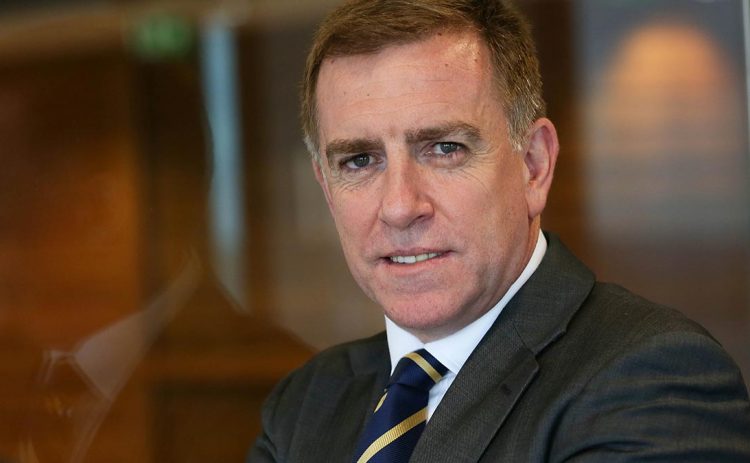
Tim Hext: Hold course in the face of Trump’s whipsaw tariffs
Investors could not be blamed for feeling a bit queasy at Donald Trump’s whipsaw approach to tariffs.
“The tariff threat does add to this argument that inflation isn’t about to come down anytime soon,” says Pendal’s head of bonds strategies Tim Hext in our latest Fast Podcast.
“The market is right to be a little bit concerned. Obviously free trade – or some version of free trade generally benefits both parties.
“The law of comparative advantage says you end up focusing on what you are a cheap producer of. If you start to throw sand into the gears of free trade that’s not a good thing.
“Ultimately, I think it is bad for growth and will mean slightly higher inflation, but not enough to suddenly cause rate hikes in the near future.”
“It creates a lot of short-term noise, but fortunately investors with a medium-to-long-term time-frame can leave it to people like me to worry about that.”
Tim says investors should hold course for now.

Rates, China, Trump: Pendal’s Amy Xie Patrick on the trends that will shape 2025
Play podcastRates, China, Trump: Pendal’s Amy Xie Patrick on the trends that will shape 2025
One of the surprises of 2024 was the absence of rate cuts in Australia. What happened and how long will the Reserve Bank sit on its hands? Pendal’s head of income strategies AMY XI PATRICK explains in this review of 2024.
Amy Xie Patrick: How to replace hybrids as they disappear from income portfolios
Play podcastAmy Xie Patrick: How to replace hybrids as they disappear from income portfolios
Pendal’s head of income strategies Amy Xie Patrick recently wrote about the phase-out of hybrids and which kinds of assets might make a good replacement in income portfolios.
And in her latest podcast, Amy runs through some of the options for different kinds of investors.
Retail investors are likely to look for substitutes in term deposits and equities – though neither are a like-for-like solution, she argues.
TDs reduce liquidity and may not be a long-term solution as rates come down, she points out.
Equities with a dividend and franking credits can replace income, but they come with increased portfolio volatility compared to hybrids.
Amy also argues that an actively managed fixed-income portfolio can be a better solution.
As an investor, Amy blends high-quality investment-grade bonds for income, equities to help capital grow, and government bonds to manage the portfolio through the rates cycle.
“We try to bridge that gap between what the investor wants and what is currently available.”
Listen to the podcast here

ESG: How the world’s most innovative companies are using AI to drive sustainable outcomes
Quick view

Regnan: Make sure your sustainable investments manager is a good ‘engager’
Quick view
Regnan: Make sure your sustainable investments manager is a good ‘engager’
It’s no surprise that corporate engagement and shareholder action have become one of the most common responsible investment approaches in Australia.
Engagement generally refers to the process of active asset managers “engaging” directly with investee companies and bond issuers to influence corporate behaviour and achieve better outcomes for investors and the community.
More than half of investment managers in our region now have stewardship codes (which generally include an engagement component), according to the Responsible Investment Association of Australasia.
Engagement is a critical component of the investment process for sustainable investor Regnan – and senior analyst Laura Sheehan sees it as an essential tool.
“We need to be able to identify companies that are willing to engage with us,” she says.
Engagement is a two-way relationship, and the key is to have a deep understanding of the business and the industry in which the company operates.
“If you’re asking for things that aren’t realistic, or show you don’t understand the business, that’s going to impact your influence and the willingness of management to engage more broadly.”
Laura explains more here

Debunking a myth about fossil fuels and sustainable fixed interest
Play podcastDebunking a myth about fossil fuels and sustainable fixed interest
High fossil fuel prices can understandably discourage investors from allocating to sustainable strategies.
Sustainable portfolios generally exclude exposure to fossil fuels, which may mean underperformance when oil prices rise, for example.
But that’s not necessarily the case across all asset classes, says Pendal’s head of credit and sustainable strategies, George Bishay.
“There’s a perception that all asset classes face these potential performance risks when prioritising sustainability.
“But Australian sustainable fixed-income exhibits minimal sensitivity to oil markets or any other screened activities,” writes George in a new Pendal paper.
Fossil fuel companies typically make up a large part of equities indices (about 15 per cent of the ASX300 in July 2024).
But issuers involved in fossil fuel extraction, exploration or refining are a small component of the Australian fixed-income benchmark.
“This differentiation allows investors to integrate sustainable fixed income into their overall core fixed-interest allocation with minimal additional benchmark risk,” says George.
“By incorporating Australian sustainable fixed income alongside other traditional assets, investors can achieve a robust portfolio while also supporting climate stability or the underserved in society.”
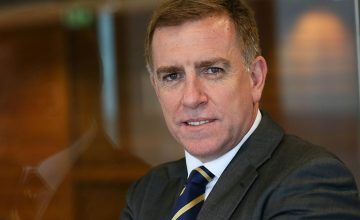
Tim Hext: Why Aussie fixed-income investors can largely ignore a potential August rate hike
Play podcastTim Hext: Why Aussie fixed-income investors can largely ignore a potential August rate hike
Australia appears to be at different stage of the rate cycle compared to international peers – a “lagging cycle compared to the rest of the world”, as Pendal’s Tim Hext puts it.
“Globally, people are looking at very high interest rates and going, ‘We just don’t need them anymore.’
“In Australia, though, inflation’s proven to be quite sticky around 4 per cent in the last couple of quarters. The RBA’s patience is being tested.”
August is a live meeting in terms of potential rate changes and next week’s CPI figures will be key to the decision, says Tim – Pendal’s head of government bond strategies – in a new fast podcast.
A higher-than-expected number could prompt a hike. A lower-than-expected number would mean rates stay where they are.
However, if an August rate hike eventuates, investors should largely ignore it, he argues.
Loading posts...

Subscribe to The Point
Get regular insights on investing, market analysis and portfolio management from the experts at Perpetual Group.