Close
Leave Feedback
Welcome to the new btim.com.auTake a two minute tour to see what we've changed
Hi there! Welcome to the new look Pendal website... Take a two minute tour to see what we’ve changed.
Mainstream Online Web Portal
LoginInvestors can view their accounts online via a secure web portal. After registering, you can access your account balances, periodical statements, tax statements, transaction histories and distribution statements / details.
Advisers will also have access to view their clients’ accounts online via the secure web portal.

The Point
Quick, actionable insights for investors


Mar 12
How AI concerns are impacting India | What GDP is saying about inflation and rates | How bonds can drive gender equality
Loading posts...






Latest updates from our fund managers


Income and Fixed Interest
Tim Hext: What February inflation data means in the context of Iran conflict
March 25, 2026
See all
Emerging Markets
Emerging markets: Look past commodity exports to countries with strong domestic demand
July 26, 2023
See allSubscribe to The Point
Get regular insights on investing, market analysis and portfolio management from the experts at Perpetual Group.
Follow
The Point


These podcasts are for general information purposes only, should not be considered as a comprehensive statement on any matter and should not be relied upon as such. They have been prepared without taking into account any recipient’s personal objectives, financial situation or needs. Because of this, recipients should, before acting on the information, consider its appropriateness having regard to their or their clients’ individual objectives, financial situation and needs. The information is not to be regarded as a securities recommendation.
The information in these podcasts may contain material provided by third parties, is given in good faith and has been derived from sources believed to be accurate as at its issue date. While such material is published with necessary permission, and while all reasonable care has been taken to ensure that the information in this presentation is complete and correct, to the maximum extent permitted by law neither Pendal nor any company in the Pendal group accepts any responsibility or liability for the accuracy or completeness of this information.
Any projections contained in these podcasts are predictive and should not be relied upon when making an investment decision or recommendation. Whilst we have used every effort to ensure that the assumptions on which the projections are based are reasonable, the projections may be based on incorrect assumptions or may not take into account known or unknown risks and uncertainties. The actual results may differ materially from these projections.
Performance figures are calculated in accordance with the Financial Services Council (FSC) standards. Performance data (post-fee) assumes reinvestment of distributions and is calculated using exit prices, net of management costs. Performance data (pre-fee) is calculated by adding back management costs to the post-fee performance. Past performance is not a reliable indicator of future performance.
For more information, please call Customer Relations on 1300 346 821 8.00am to 6:00pm (Sydney time) or visit our website www.pendalgroup.com


What if zero-Covid fails in China?
Markets haven’t priced in the possibility of a large, uncontrolled Covid outbreak in mainland China, warns Pendal senior credit analyst Terry Yuan.
China is one of the few places pursuing a Covid-zero policy for reasons including vulnerability and political stability argues Terry.
If it suffers a big outbreak, China’s reaction would likely be swift and heavy handed, causing widespread impact on investors including:
– Limited immigration and associated capital flows into Australia and the rest of the world, putting upward pressure on wages, inflation and interest rates
– Delayed bounce-back among Australian travel and immigration companies
– Lockdowns, quarantines and hospitalisations creating bottlenecks in Chinese shipping and production
– Stimulus via fiscal and monetary easing putting pressure on Chinese interest rates
“We’re carefully selecting exposures to companies that have less exposure to China’s zero-Covid policy, but have strong earnings stability, balance sheet strength and sustainability credentials,” says Terry.
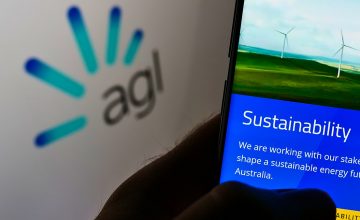
What the AGL bid says about the future of energy in Australia
Quick view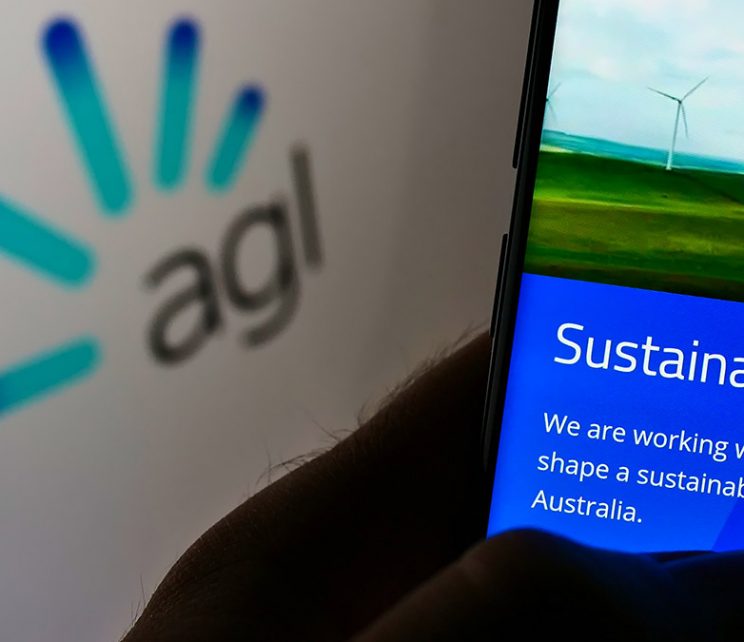
What the AGL bid says about the future of energy in Australia
The AGL takeover bid shows businesses exposed to coal face real credit risks as well as decreased demand due to ESG concerns, says Pendal ESG credit analyst Murray Ackman.
AGL, as the country’s biggest carbon emitter, already had a plan to split its coal and renewable assets into separate businesses. But billionaire Mike Cannon-Brookes and his consortium want AGL to more aggressively phase out coal.
In this environment investors need to consider a range of flow-on effects to understand credit risks for investments and asset allocation, says Murray.
“There’s a lot of focus on stranded assets such as coal-fired power plants which won’t be economically viable for their planned lifespan.
“But we’ve also been divesting from coal-adjacent businesses such as coal transportation railways due to fears they won’t be able to generate revenue when coal ends.”
Climate-related transactions and their flow-on effects are now a vital part of credit analysis, says Murray.

Why self storage could be a good place to stash some cash
Quick view
Why self storage could be a good place to stash some cash
“The world of self-storage is not something you often hear about, but it’s an asset class we like,” says Pendal PM Julia Forrest, who co-manages property investing in Pendal’s Aussie equities team.
Record high immigration and a downsizing trend towards apartment-living should fuel ongoing strength in the self-storage industry, says Julia.
“Self-storage space in Australia represents 2.1 square feet per capita. In the US, it’s closer to 6.1 square feet per capita.
“So, in terms of available space, Australia is relatively under-serviced. There is a bit of a runway to catch up.”
Julia points to the example of ASX-listed National Storage REIT – her biggest active position in Pendal’s property strategy.
National Storage (ASX: NSR) is Australia’s biggest self-storage owner-operator with 230 centres across Australia and New Zealand.

Julia Forrest: Retail and industrial lead the way in A-REIT sector
Quick view
Julia Forrest: Retail and industrial lead the way in A-REIT sector
A surprising rebound for shopping malls was the standout feature of this year’s real estate investment trust reporting season, says Pendal’s Julia Forrest.
Rising interest rates and the expiration of interest hedges meant earnings declined for many Australian REITs, surprising investors in a sector where performance is typically well-flagged.
“But the positive surprise was in shopping malls where operating metrics improved,” says Julia who co-manages Pendal’s property trust portfolios.
“Occupancy is pushing towards completely occupied – that’s a long way from where we were two or three years ago.
“There’s genuine demand by tenants for more – and better – space and there’s been no supply for four or five years so you’re seeing competitive tension between tenants.”
A rising population and wages growth has sent retail sales 15 per cent above 2019 levels.

Office property opportunities can still be found as work-from-home tensions play out
Quick view
Office property opportunities can still be found as work-from-home tensions play out
Office space is on the mind of many businesses as WFH tension between workers and bosses plays out.
The market is continuing to evolve, providing plenty of challenges – along with some opportunities, says Julia Forrest, co-manager of Pendal’s property portfolios.
“It’s been very hard to get people back into the office,” Julia says. “And it seems to be more difficult in Melbourne than anywhere else.”
“Physical occupancy in Melbourne is running at about 47 per cent, but recently there’s been some big employers mandating staff to be back in the office 50 per cent of the time,” she says. “That will help.
“Physical occupancy is still low in government because staff have only been mandated to come back to the office one in every five days.”
There are still opportunities in commercial property, though.
Julia points to newly developed 555 Collins Street in Melbourne. It has a good range of tenants including Amazon, will open close to fully tenanted and the construction contract was well negotiated.

Julia Forrest: Where to look for opportunities in listed property
Quick view
Julia Forrest: Where to look for opportunities in listed property
Investing in listed property when bond yields are higher – and recession fears abound – may sound challenging.
But there are opportunities for REITs investors who know where to look, says Julia Forrest, who has co-managed Pendal’s property trust portfolios for more than a decade.
“You want a portfolio with inflation protection, and you want to own assets that have pricing power.
“We are over-weight supermarket-based shopping centre REITS, because the big supermarkets have reasonable pricing power and demand is fairly resilient.
“We are also overweight logistics and industrial REITS.
“The landlords have pricing power because the vacancy rate is so incredibly low. Their ability to charge market rents means you have reasonable earnings growth and protection against inflation.”
JULIA FORREST: What to look for in ASX-listed property
Quick view
JULIA FORREST: What to look for in ASX-listed property
It was a strong reporting season for ASX-listed property largely due to a post-pandemic bounce-back, says Pendal portfolio manager Julia Forrest.
Owners of shopping centres and property fund managers were the stand-out sectors, though office trusts still struggled.
Higher interest rates will have negative effects on the property sector, but locally many Australian Real Estate Investment Trusts have hedged against higher debt costs, and offer reasonable value, Julia says.
“The sector looks reasonable value. It’s trading at around 15 times which is a discount to the all-industrials.
Work-from-home is still impacting office space “though there’s a sense it has started to improve in the past couple of weeks”.

Impact investing: Look around for opportunities in the circular economy
Quick view
Impact investing: Look around for opportunities in the circular economy
By now most people know they need to understand the impact of the Net Zero movement on their investments.
Countries including Australia are pressuring companies to help reduce emissions to zero by 2050 – in order to limit a global temperature rise to 1.5°C above pre-industrial levels.
Science shows that’s the level needed to avert the worst impacts of climate change.
But “impact investors” believe many of the activities needed to achieve net zero are also an investing opportunity.
Regnan fund manager Mohsin Ahmad points to companies taking part in the so-called “circular economy”, which aims to transition away from the linear “take, make and dispose” model.
“In terms of getting to Net Zero, energy efficiency and switching to renewables is only going to solve half the problem,” says Mohsin.
“To get the rest of the way, we need to look closely at how we make and use products, and that’s where the circular economy comes in.”
Loading posts...

Subscribe to The Point
Get regular insights on investing, market analysis and portfolio management from the experts at Perpetual Group.