Close
Leave Feedback
Welcome to the new btim.com.auTake a two minute tour to see what we've changed
Hi there! Welcome to the new look Pendal website... Take a two minute tour to see what we’ve changed.
Mainstream Online Web Portal
LoginInvestors can view their accounts online via a secure web portal. After registering, you can access your account balances, periodical statements, tax statements, transaction histories and distribution statements / details.
Advisers will also have access to view their clients’ accounts online via the secure web portal.

The Point
Quick, actionable insights for investors


Mar 12
How AI concerns are impacting India | What GDP is saying about inflation and rates | How bonds can drive gender equality
Loading posts...








Latest updates from our fund managers

Australian Equities
Crispin Murray: Mispricing is opening up opportunities on the ASX
March 18, 2026
See all
Income and Fixed Interest
Murray Ackman: Understanding carbon measures in fixed income
March 19, 2026
See all
Emerging Markets
Emerging markets: Look past commodity exports to countries with strong domestic demand
July 26, 2023
See allSubscribe to The Point
Get regular insights on investing, market analysis and portfolio management from the experts at Perpetual Group.
Follow
The Point


These podcasts are for general information purposes only, should not be considered as a comprehensive statement on any matter and should not be relied upon as such. They have been prepared without taking into account any recipient’s personal objectives, financial situation or needs. Because of this, recipients should, before acting on the information, consider its appropriateness having regard to their or their clients’ individual objectives, financial situation and needs. The information is not to be regarded as a securities recommendation.
The information in these podcasts may contain material provided by third parties, is given in good faith and has been derived from sources believed to be accurate as at its issue date. While such material is published with necessary permission, and while all reasonable care has been taken to ensure that the information in this presentation is complete and correct, to the maximum extent permitted by law neither Pendal nor any company in the Pendal group accepts any responsibility or liability for the accuracy or completeness of this information.
Any projections contained in these podcasts are predictive and should not be relied upon when making an investment decision or recommendation. Whilst we have used every effort to ensure that the assumptions on which the projections are based are reasonable, the projections may be based on incorrect assumptions or may not take into account known or unknown risks and uncertainties. The actual results may differ materially from these projections.
Performance figures are calculated in accordance with the Financial Services Council (FSC) standards. Performance data (post-fee) assumes reinvestment of distributions and is calculated using exit prices, net of management costs. Performance data (pre-fee) is calculated by adding back management costs to the post-fee performance. Past performance is not a reliable indicator of future performance.
For more information, please call Customer Relations on 1300 346 821 8.00am to 6:00pm (Sydney time) or visit our website www.pendalgroup.com


How a weaker US dollar could benefit Emerging Markets investors in 2023
The direction of the US dollar — and the capital flows that result from that — are a key (possibly the key) driver for the emerging markest equities asset class.
The US dollar has been significantly weaker in recent months, suggesting a peak was reached in October 2022.
To be clear, there have been previous short-term peaks and troughs in the dollar during broad upswings and downswings. (For example in March 2020 during the initial onset of COVID-19, after which the dollar weakened but remained in its uptrend).
But if the dollar has topped out (at a level similar to the top in 2002) — and 2023 and beyond are to be weak-dollar years — investors should bear in mind the highly positive implications for EM equity and for the more capital-sensitive markets within that asset class.
This article explains the relationship between the US dollar and the EM asset class — and what it means for investors in the year ahead.

Why advanced economies such as South Korea are classed as emerging markets
Quick view
Why advanced economies such as South Korea are classed as emerging markets
SOUTH Korea is one of the few countries in the world to develop its own supersonic jet fighter.
It’s a stable and mature democracy — and home to some world-leading technology companies.
So some investors might be surprised to find it’s classed as an emerging market, along with Taiwan and wealthy Gulf countries such as Saudi Arabia and the United Arab Emirates.
What is an emerging market? Who decides the definition of emerging equity markets?
It’s an enduring controversy. Some countries at the more advanced end of the emerging markets (EM) spectrum could arguably be classified as developed markets.
It’s useful for investors to understand how countries are classified as emerging markets as opposed to frontier (or pre-emerging markets) and developed markets.

Crispin Murray: What’s driving Aussie equities this week
Quick view
Crispin Murray: What’s driving Aussie equities this week
A LOW point in the VIX volatility index last week proved to be the signal for a correction in the recent rally.
There was no specific macro news to prompt this. The weight of buying faded and the market shifted to a cautious position ahead of this week’s Fed meeting.
US ten-year government bond yields rose 9bps and the S&P 500 fell 3.4%. Brent crude oil fell 11.1% and is now down for the year to date, as the market worries about a downturn in demand.
China’s re-opening appears to be happening faster than expected.
The iron ore price rose 9.6% as a result, and is helping underpin the Australian equity market.
The RBA hiked rates 25bps, as expected, and struck a more cautious tone on inflation.
We also saw the federal government launch a new energy policy which at first glance looks under-prepared. The policy introduces price controls that would likely make the power problem worse in the future.
There are six big macro issues going into next year:
1. The persistence of inflation — and how tight financial conditions will need to be in response
2. The scale of economic slowdown in the US and developed markets. (Real-time signals are benign, but the yield curve is a very negative signal)
3. The earnings leverage to that downturn — and whether nominal growth buffers earnings
4. Whether markets have already priced in economic downturn. The bear view is that markets bottom during recession, not before. Bulls point to a falling oil price, a weaker US dollar and lower bond yields as evidence of lessening headwinds for equities
5. What China’s economy does as it exits zero covid
6. Whether the RBA can engineer a soft landing in Australia

Emerging Markets: Why some investors may benefit more than others as the tide turns
Quick view
Emerging Markets: Why some investors may benefit more than others as the tide turns
HIGHER US rates and a US dollar have recently curbed Emerging Markets returns, since they tend to depreciate other currencies, weaken US demand and draw capital out of EM economies.
As inflation comes under control, it’s expected that rate rises will decelerate and the US dollar will eventually weaken.
That’s good news for EM investors.
But there is another change that may benefit some emerging markets investors more than others: country-level factors are again becoming a powerful indicator of potential returns.
Investment managers that focus on top-down, country-level analysis should be able to take greater advantage of the changing conditions.
Nov 24
Three steps to a portfolio health check | Long-term issues affecting investors | Signs of change for Emerging Markets
Signs of improvement for two big factors that drive Emerging Markets
Quick view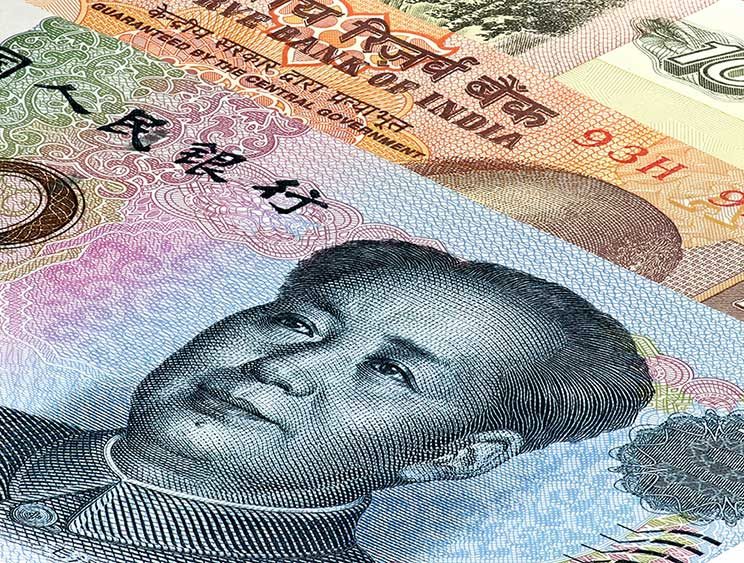
Signs of improvement for two big factors that drive Emerging Markets
A turning point for emerging markets equities is approaching as the drivers of recent weakness rapidly dissipate, believes Pendal’s James Syme.
The end of the US rate cycle is starting to come into view and a newly engaged China is beginning the process of restoring growth, says James, who co-manages Pendal Global Emerging markets Opportunities fund.
That leaves it increasingly likely that stronger returns from EM stocks are imminent, he says.
“The two big drivers of the difficult environment in emerging markets in the last 21 months all seem to be improving,” says James.
“Right now, you don’t want to be too underweight EM and you don’t want to be too underweight China.”
Loading posts...

Subscribe to The Point
Get regular insights on investing, market analysis and portfolio management from the experts at Perpetual Group.