Close
Leave Feedback
Welcome to the new btim.com.auTake a two minute tour to see what we've changed
Hi there! Welcome to the new look Pendal website... Take a two minute tour to see what we’ve changed.
Mainstream Online Web Portal
LoginInvestors can view their accounts online via a secure web portal. After registering, you can access your account balances, periodical statements, tax statements, transaction histories and distribution statements / details.
Advisers will also have access to view their clients’ accounts online via the secure web portal.

The Point
Quick, actionable insights for investors


Mar 12
How AI concerns are impacting India | What GDP is saying about inflation and rates | How bonds can drive gender equality
Loading posts...





Latest updates from our fund managers


Income and Fixed Interest
Tim Hext: What February inflation data means in the context of Iran conflict
March 25, 2026
See all
Emerging Markets
Emerging markets: Look past commodity exports to countries with strong domestic demand
July 26, 2023
See allSubscribe to The Point
Get regular insights on investing, market analysis and portfolio management from the experts at Perpetual Group.
Follow
The Point


These podcasts are for general information purposes only, should not be considered as a comprehensive statement on any matter and should not be relied upon as such. They have been prepared without taking into account any recipient’s personal objectives, financial situation or needs. Because of this, recipients should, before acting on the information, consider its appropriateness having regard to their or their clients’ individual objectives, financial situation and needs. The information is not to be regarded as a securities recommendation.
The information in these podcasts may contain material provided by third parties, is given in good faith and has been derived from sources believed to be accurate as at its issue date. While such material is published with necessary permission, and while all reasonable care has been taken to ensure that the information in this presentation is complete and correct, to the maximum extent permitted by law neither Pendal nor any company in the Pendal group accepts any responsibility or liability for the accuracy or completeness of this information.
Any projections contained in these podcasts are predictive and should not be relied upon when making an investment decision or recommendation. Whilst we have used every effort to ensure that the assumptions on which the projections are based are reasonable, the projections may be based on incorrect assumptions or may not take into account known or unknown risks and uncertainties. The actual results may differ materially from these projections.
Performance figures are calculated in accordance with the Financial Services Council (FSC) standards. Performance data (post-fee) assumes reinvestment of distributions and is calculated using exit prices, net of management costs. Performance data (pre-fee) is calculated by adding back management costs to the post-fee performance. Past performance is not a reliable indicator of future performance.
For more information, please call Customer Relations on 1300 346 821 8.00am to 6:00pm (Sydney time) or visit our website www.pendalgroup.com
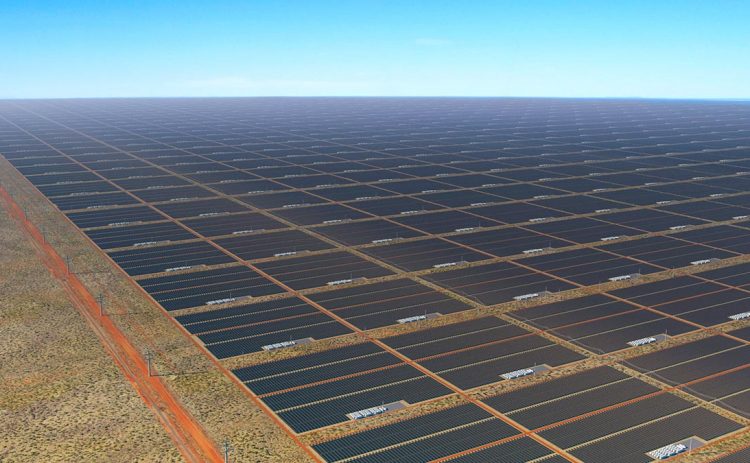
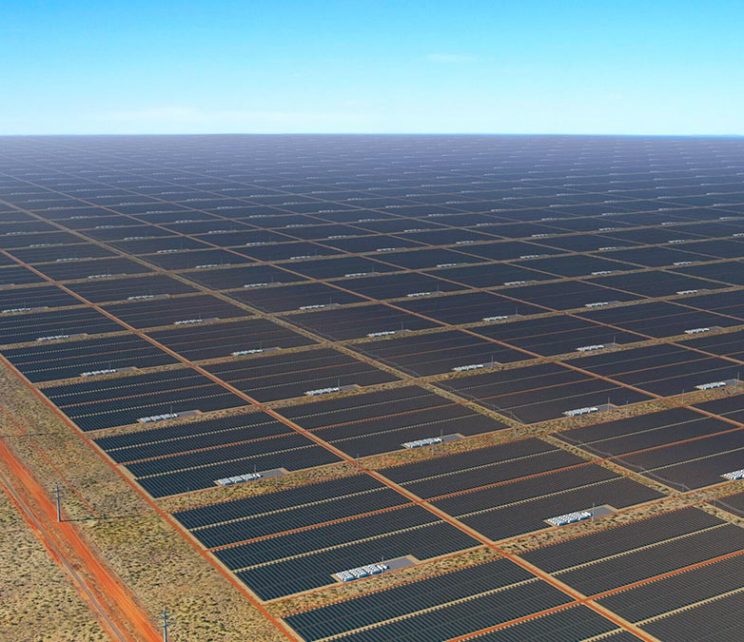
What Sun Cable’s collapse means for renewable investing
What does the collapse of the ambitious Sun Cable solar project say about investing in renewables?
Backed by Atlassian’s Mike Cannon-Brookes and Fortescue’s Andrew Forrest, Sun Cable had grand plans to supply electricity to Singapore from a vast solar array in the Northern Territory.
But the pair disagreed over the method of export – undersea cable versus green hydrogen and ammonia – and the venture is now in voluntary administration.
“The main takeaway is that Sun Cable collapsed over a dispute about exporting – not over the idea of a huge solar array in the NT,” says Pendal ESG credit analyst Murray Ackman.
But it raises questions about a potential Australian energy export industry and the role of green hydrogen.
“Historically, governments and private entrepreneurs are typically best placed to carry the risk of these types of early-stage innovations,” he says.
“For most investors, it’s too early to be going all in on hydrogen.”
Could polluting companies be forced to pay a climate tax?
Quick view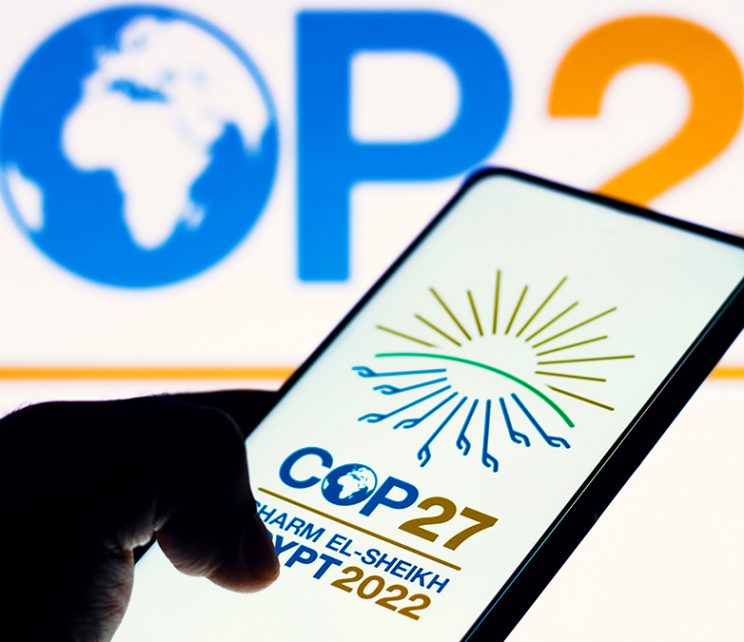
Could polluting companies be forced to pay a climate tax?
War, floods and China policy changes pushed this year’s COP27 climate change conference off the front pages.
But there was one thing investors should note, says Pendal Credit ESG analyst Murray Ackman.
COP27’s main achievement was an agreement that bigger polluting countries would compensate developing countries for the effects of climate change.
Some are now calling for this same logic to be applied to companies.
“This has obvious implications for investors,” says Murray.
“If the logic is high emitters bear responsibility for mitigating the impacts of climate change, this adds credit risk.”

Take care when investing in sustainability-linked bonds
Quick view
Take care when investing in sustainability-linked bonds
More companies are issuing “sustainability-linked bonds” — debt securities that pay a coupon linked to environmental or social outcomes.
These bonds typically don’t fund a specific project — instead they set overarching goals such as reducing emissions or improving corporate diversity.
If an issuer fails to hit its goal, usually it pays a penalty in the form of a higher coupon.
Sustainability-linked bond issuance hit US$103 billion globally last year — a yearly increase of 803 per cent, according to World Bank research.
But investors should take care that issuers are genuinely making changes and not simply greenwashing, says Pendal Credit ESG analyst Murray Ackman.
“In theory, they are great — but we’re starting to see some things we are not happy about with these structures.”

How green hydrogen will impact natural gas investors
Quick view
How green hydrogen will impact natural gas investors
The renewable energy transition is increasing the risk of “stranded assets” – such as fossil fuel infrastructure that no longer has an economic use due to redundant technology or high costs.
Green hydrogen is often touted as a potential solution for stranded asset risk in the natural gas industry. Is it really an answer?
“There’s this moon shot that green hydrogen will be a one-for-one replacement for gas,” says Pendal credit ESG analyst Murray Ackman.
The idea is some natural gas pipeline and storage infrastructure could be repurposed for hydrogen.
The economics don’t yet stack up, “but then that was true for solar panels for a long time too”, says Murray.
Hydrogen can even be blended into natural gas – but above 10 or 20 per cent it can damage existing pipes and household appliances would need to be updated.

ESG: What Albo’s 43pc emissions target means for investors
Quick view
ESG: What Albo’s 43pc emissions target means for investors
Energy security and workplace relations were among the biggest ESG themes in the recent ASX reporting season, says Pendal’s Rajinder Singh.
On the labour front, Rajinder says investors should take a look at a company’s agreements with workers.
“If you’ve got an agreement that’s due for renegotiation in the next 12 months versus one that was signed for five years, that could have a material impact on your forecast growth of your labour costs.”
For energy, security of supply is critical, says Rajinder.
“The other thing that matters for investors is understanding the capital expenditure required to address these issues.
“What’s the capital allocation to these initiatives? And is there an actual measurable benefit for the amount they are planning to spend?”

ESG: Fixed interest investors can make the world better too
Quick view
ESG: Fixed interest investors can make the world better too
Sustainable investors should expect fixed interest managers to engage with bond issuers, just as equity managers do with companies, says Pendal credit ESG analyst Murray Ackman.
Engagement refers to dialogue between investors and investees that seeks to improve policies or public disclosure on social, environmental and governance matters.
But it’s not just for equity investors.
Since large parts of the market are unlisted, fixed interest investors are discovering they have a critical role driving change at some of the world’s most important companies.
“Look at the biggest players in the climate transition — most of the utilities, many of the infrastructure owners — they are not listed entities,” says Murray.
“But they issue debt — so we have access to influence them.”
Pendal’s Income and Fixed Interest team has undertaken 73 engagements so far this year.

ESG: Beware the ‘brownium’ penalty
Quick view
ESG: Beware the ‘brownium’ penalty
With high energy prices and oil and gas company revenues soaring, shouldn’t the big fossil fuel companies be outperforming in credit and equity markets?
In a pre-ESG world the answer would be ‘yes’.
But now big fossil fuel-based companies are paying a ‘brownium’ penalty to raise money in fixed interest markets — and are trading on lower earnings multiples in equity markets compared to previous years, says Pendal ESG credit analyst Murray Ackman.
“Bond people don’t tend to like taking as much risk,” says Murray. “And bond investors look at the downside risk of ESG as pretty significant.
“In the bond world, an investor could feel uncomfortable buying some energy bonds and holding them til maturity because the world in seven years or so will be very different.
“What if there’s a sudden policy change that no one saw coming?
“Pricing can be severely affected, and you don’t want to get stuck with a bond that you don’t want until maturity.”

Russia ‘self-sanctions’ are a coming of age for ESG
Quick view
Russia ‘self-sanctions’ are a coming of age for ESG
“Self-sanctioning” of Russia by brands such as McDonalds and Apple shows ESG is now a fundamental aspect of investing says Pendal ESG credit analyst Murray Ackman.
The voluntary sanctions demonstrate that society expects business to step up and take its environmental, social and governance obligations seriously, says Murray.
“Going forward, it’s going to be a lot harder for companies to pick and choose their ESG concerns.
“What’s interesting about Russia is that everyone is being called to account – by their investors, by their customers and by society – and asked to explain their exposure to anything Russian-related.
“This represents a normalisation of ESG.”
Taking an ESG approach to investing will help investors avoid this kind of risk in the future, says Murray.
“How do you predict an invasion? Can you forecast when a war will happen? An ESG approach to investing is basically the only alternative.”
Loading posts...

Subscribe to The Point
Get regular insights on investing, market analysis and portfolio management from the experts at Perpetual Group.