Close
Leave Feedback
Welcome to the new btim.com.auTake a two minute tour to see what we've changed
Hi there! Welcome to the new look Pendal website... Take a two minute tour to see what we’ve changed.
Mainstream Online Web Portal
LoginInvestors can view their accounts online via a secure web portal. After registering, you can access your account balances, periodical statements, tax statements, transaction histories and distribution statements / details.
Advisers will also have access to view their clients’ accounts online via the secure web portal.

The Point
Quick, actionable insights for investors


Mar 12
How AI concerns are impacting India | What GDP is saying about inflation and rates | How bonds can drive gender equality
Loading posts...








Latest updates from our fund managers


Income and Fixed Interest
Tim Hext: What February inflation data means in the context of Iran conflict
March 25, 2026
See all
Emerging Markets
Emerging markets: Look past commodity exports to countries with strong domestic demand
July 26, 2023
See allSubscribe to The Point
Get regular insights on investing, market analysis and portfolio management from the experts at Perpetual Group.
Follow
The Point


These podcasts are for general information purposes only, should not be considered as a comprehensive statement on any matter and should not be relied upon as such. They have been prepared without taking into account any recipient’s personal objectives, financial situation or needs. Because of this, recipients should, before acting on the information, consider its appropriateness having regard to their or their clients’ individual objectives, financial situation and needs. The information is not to be regarded as a securities recommendation.
The information in these podcasts may contain material provided by third parties, is given in good faith and has been derived from sources believed to be accurate as at its issue date. While such material is published with necessary permission, and while all reasonable care has been taken to ensure that the information in this presentation is complete and correct, to the maximum extent permitted by law neither Pendal nor any company in the Pendal group accepts any responsibility or liability for the accuracy or completeness of this information.
Any projections contained in these podcasts are predictive and should not be relied upon when making an investment decision or recommendation. Whilst we have used every effort to ensure that the assumptions on which the projections are based are reasonable, the projections may be based on incorrect assumptions or may not take into account known or unknown risks and uncertainties. The actual results may differ materially from these projections.
Performance figures are calculated in accordance with the Financial Services Council (FSC) standards. Performance data (post-fee) assumes reinvestment of distributions and is calculated using exit prices, net of management costs. Performance data (pre-fee) is calculated by adding back management costs to the post-fee performance. Past performance is not a reliable indicator of future performance.
For more information, please call Customer Relations on 1300 346 821 8.00am to 6:00pm (Sydney time) or visit our website www.pendalgroup.com


Three big questions facing ESG investors (and how to answer them)
Sustainable investor Regnan continues to strongly believe that including ESG criteria in the investing process provides information to make better investment decisions.
The challenge is, the more it evolves, the more complicated it becomes for investors trying to judge the effect of these criteria on their investments.
In a new article, Regnan senior ESG and impact analyst Murray Ackman outlines the three big questions facing investors:
- ESG data providers often have different views and methodologies for rating different companies. That means ESG requires more interpretation than, for example, credit ratings
- A lack of standard language and ESG definitions means it’s sometimes difficult to compare apples with apples
- It’s not always clear if or how ESG is actually affecting an investment
While there is progress in solving these chellenges, these questions still require deep expertise.
Advisers also need to be able to help clients work out their own ESG needs.

Murray Ackman: Ignore the billionaires – diversity, equity and inclusion are good for investors
Quick view
Murray Ackman: Ignore the billionaires – diversity, equity and inclusion are good for investors
US billionaires seem to be picking fights with big brands and civil rights groups over whether corporate diversity, equity and inclusion (DEI) policies are a negative.
Tesla’s Elon Musk, hedge fund manager Bill Ackman and Lululemon founder Chip Wilson have recently criticised DEI as discriminatory or even responsible for aircraft malfunctions.
“DEI must DIE,” said Musk on his X social network. Does he have a point?
It is true that many businesses think about DEI in a flawed way, writes Pendal ESG credit analyst Murray Ackman.
For example, DEI policies often focus on the needs of minority groups, while majorities are not always adequately considered.
“Organisational settings should allow all talent to flourish – including ‘majority talent’,” says Murray.
But there are plenty of studies – including from Pereptual’s Regnan sustainable investing business – suggesting DEI can drive business outperformance. And it is still a good indicator of how well a company is managing risk.

New guidelines warn investors away from ‘nature-negative’ companies
Quick view
New guidelines warn investors away from ‘nature-negative’ companies
More than half of global GDP depends on natural resources – and these days investors are well aware of biodiversity risk when making portfolio decisions.
Now a group of companies representing sectors exposed to the impact of nature loss is guiding investors away from what they call “nature-negative outcomes” towards “nature-positive outcomes”.
The Australian-backed Taskforce on Nature-related Financial Disclosures is made up of 40 organisations in agribusiness, the blue economy, food and beverage, mining, construction and infrastructure.
Last month, the taskforce issued a set of guidelines which aims to integrate nature into decision-making and give organisations a complete picture of their environmental risks, says Pendal ESG credit analyst Murray Ackman.
“Biodiversity should be considered in managing business risks, and also in terms of system-wide risks,” says Murray. “It can be seen as a proxy for resilience.
“Companies that have an understanding of their biodiversity risk are more likely to have a multi-faceted understanding of all their risks.”

Why ‘true’ social bonds are in short supply
Quick view
Why ‘true’ social bonds are in short supply
Most social bonds investors have the same aim: to make money while making a positive difference in society.
An example is the National Housing Finance and Investment Corporation, which last year issued $200 million in social bonds, making returns for investors while providing cheap funding for social and affordable homes.
But not all social bonds are equal when it comes to use of proceeds, cautions Murray Ackman, a credit ESG analyst with Pendal’s income and fixed interest team.
Pendal takes a relatively refined view, focusing on social bonds where the proceeds benefit the underprivileged.
Social bonds “don’t always meet our criteria”, says Ackman.
“For example, in the Netherlands around 70 per cent of the population is eligible for social housing. So, a Dutch Housing Authority ‘social bond’ isn’t going to fit our criteria.
“Our view is that a social bond should be an instrument to serve the underprivileged in society.”

Sustainable fixed interest: How to weigh up WA’s new green bond
Quick view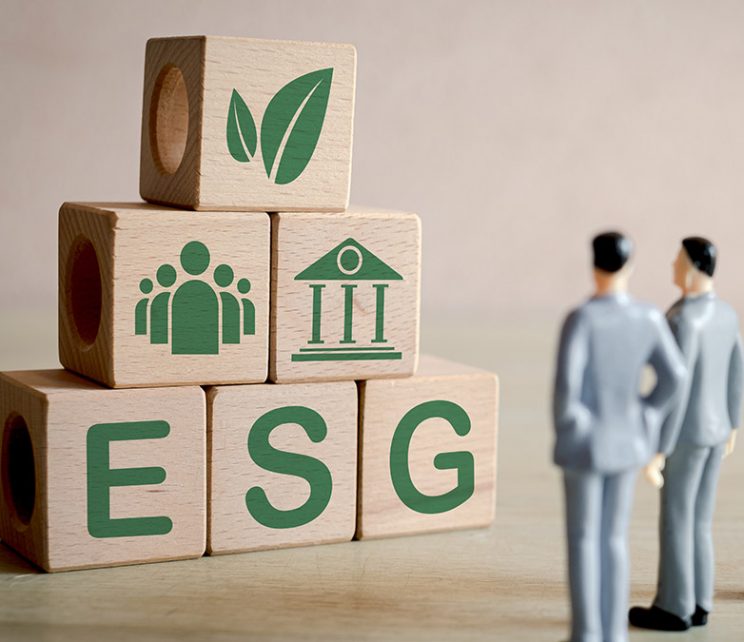
Sustainable fixed interest: How to weigh up WA’s new green bond
Australians invest some $25 billion a year in local green, climate and social impact bonds, according to the Responsible Investment Association’s latest benchmark report.
But only some meet the highest standards of sustainable investors. And it’s not always obvious which ones.
Consider these three examples of recent issuers:
- A national electricity network connecting renewables to the grid
- A telco giant reducing power consumption on its network
- Mining super power Western Australia – the only Australian state that emits more carbon now than it did in 2005
You may be surprised to learn that only the WA bond – announced last week – met with the approval of Pendal’s income and fixed interest team, including ESG credit analyst Murray Ackman.
WA’s green bond “reflects the focus of the government to green up their economy and their energy use,” says Murray.

How to evaluate Australia’s first sovereign green bond
Quick view
How to evaluate Australia’s first sovereign green bond
The federal government last month announced plans for its first ever green bond in 2024.
The bond will offer a return while funding projects – such as hydrogen, batteries and biodiversity – that support a transition to net-zero carbon emissions.
What should investors make of it?
“We’re excited to see the government show interest in green bonds,” says Murray Ackman, credit ESG analyst in our income and fixed interest team.
“But not all green bonds are equal.”
Murray has four main questions that investors should ask when considering the government’s plans:
- Is the bond supporting genuinely new projects?
- Are the projects truly revolutionary?
- Are expectations about reporting clear and transparent?
- Is the green bond connected to a genuine policy commitment to address climate change?

How investors will be affected by changes to a major Australian climate policy
Quick view
How investors will be affected by changes to a major Australian climate policy
The Albanese government’s plan to revamp a Coalition emissions reduction mechanism raise a number of issues for sustainable investors – and the economy.
To help achieve its climate targets, the government plans to revamp a Tony Abbott-era policy known as the “Safeguard Mechanism“.
The policy was designed to reduce carbon emissions by regulating the amount of greenhouse gases that big industrial facilities could emit.
But baselines were too high and the policy generally was not enforced, say critics.
From July, the Albanese government wants to strengthen the mechanism in a number of ways, including a 4.9 per cent annual cut on allowable emissions for the biggest emitters.
The changes could create winners and losers in investment markets, says Pendal credit ESG analyst Murray Ackman.
But the mechanism still has serious challenges.
It uses offsets which can sometimes be questionable, allows new fossil fuel projects and is susceptible to cost-of-living pressures.

How to use ESG to assess state government bonds
Quick view
How to use ESG to assess state government bonds
If you’re investing in state government bonds, you’re probably not too worried about default.
But you might be concerned about a potential credit downgrade – which could result in lower demand for a bond and a drop in its value.
Pendal’s income and fixed interest team has a tool to assess the ESG credentials of state governments – which can highlight credit risks that might lead to ratings downgrades.
The index shows how each state is addressing the UN’s Sustainable Development Goals – a list of the world’s biggest problems.
The ACT, Tasmania and SA lead the index, while WA, Queensland and the NT lag, says Pendal ESG credit analyst Murray Ackman.
“People always talk about default,” says Murray. “But that’s not all we’re looking at.
“There would have to be something catastrophic for a state government not being able to service its debt.
“What does have an impact on your investment is credit downgrades.”
Loading posts...

Subscribe to The Point
Get regular insights on investing, market analysis and portfolio management from the experts at Perpetual Group.